"Neurodiversity through Webcomics: Using Aesthetic Experiences for Epistemic Resistance"
At the heart of the ideas proposed in today's panel is that of epistemic enablement through trajectories other than propositional, which can be offered by aesthetic experience.
PANEL
"Dancing Toward Epistemic Justice: An Embodied Account of Epistemic Agency"
Amandine Catala and Camille Zimmermann covered the example of dance, an embodied account of epistemic enablement.
PhD Candidate - Philosophy (UQAM)
Camille Zimmermann
zimmermann.camille@courrier.uqam.ca
Professor - Philosophy (UQAM)
Amandine Catala
catala.amandine@uqam.ca
"Comics and Epistemic Enablement"
Luc Faucher discussed the medium of comics in the context of neurodiversity, again as epistemic enablement.
Professor - Philosophy (UQAM)
Luc Faucher
"Neurodiversity through Webcomics: Using Aesthetic Experiences for Epistemic Resistance"
We now continue with webcomics.
PhD Candidate - Philosophy (UQAM)
Mylène Legault
legault.mylene.2@courrier.uqam.ca
PhD Candidate - Philosophy (UQAM)
Jean-Nicolas Bourdon
bourdon.jean-nicolas@courrier.uqam.ca
PREFACE
About the
Format
Force of habit leads us to take the established ways of doing things as fixed, even though they are circumstantial. We were able to explore this reality, for example, during the pandemic: going to the office for work meetings, which, in all honesty, could have been e-mails. We also know that cultural habits are not insignificant, they allow the reproduction of comfortable modalities of interaction for dominant groups: those with the power to choose these modalities.
For our part of the panel, we propose to do things differently. Don't worry, we're not criticizing power point presentations and their timely sip of water pauses. Instead, we're inviting you to explore an alternative modality for interaction.
Public Speaking
Many people hate public speaking. It generally comes with discomforts and even fears, but some people have cognitive profiles that function in ways far removed from this type of interaction. However, this practice is socially maintained and considered essential for meeting and sharing. But is it really necessary? Does the public space absolutely have to be occupied in an oratory and synchronous way? What if these modalities are, in fact, infused with neuronormativity?
Human society is permeated by collective cultural resources with which individuals can, among other things, interpret, understand and communicate various aspects of their experiences. Since they are collective resources, their genesis, maintenance and dissemination are a function of the power dynamics that permeate our societies. One of these power dynamics is organized around norms regarding what is considered appropriate cognitive functioning: the group whose cognition corresponds to the norm (i.e., neurotypicals) dominates and those whose cognition deviates from the norm (i.e., neurodivergent) are marginalized. This epistemic marginalization has the effect of limiting the access of neurodivergent individuals to so-called "collective" epistemic resources, both in their elaboration and in their use.
This norm corresponds to neuronormativity, which is presented by Amandine Catala, Luc Faucher et Pierre Poirier (2021) in their paper Autism, epistemic injustice, and epistemic disablement: a relational account of epistemic agency.
Neuronormativity refers to the prevalent, neurotypical set of assumptions, norms, and practices that construes neurotypicality as the sole acceptable or superior mode of cognition, and that stigmatizes attitudes, behaviors, or actions that reflect neu- roatypical modes of cognition as deviant or inferior. Neuronormative assumptions, norms, and practices uphold standards regarding, for example, (what is neurotypi- cally considered) appropriate eye contact, facial expressions, prosody, conversa- tional flow, processing, and responsiveness—all of which can be difficult for autistic individuals to understand, sense, or apply, due to neurocognitive differences. (Catala & al., 2021)
Catala, A., Faucher, L. & Poirier, P. Autism, epistemic injustice, and epistemic disablement: a relational account of epistemic agency. Synthese (2021).
For a presentation on these questions, see Epistemic justice and epistemic authority on autism, Philosophy of Psychiatry Webinar, Montreal (Amandine Catala)
What’s with all these neuro- words?
Neurodiversity can refer to the neurological or neurocognitive variation naturally present in the human population. The term was first introduced by Judy Singer in a book published in 1993. The term also refers to a growing sociopolitical movement that promotes the recognition and inclusion of natural neurocognitive diversity (see, for example, Autistic Self Advocacy Network (ASAN), whose slogan is "Nothing About Us Without US!").
Nick Walker (2012) describes the neurodiversity movement as a new paradigm (the neurodiversity paradigm) in response to the pathology paradigm. It should be noted, however, that this movement has not been and is not immune to certain exclusionary mechanisms. For example, the movement began with verbal autistic individuals, but although the movement has since expanded to include many cognitive profiles, autistic individuals (and more recently ADHD individuals) still seem to dominate the movement.
Walker, N. (2012). Throw away the master's tools: Liberating ourselves from the pathology paradigm. Loud hands: Autistic people, speaking, 225-237.
Some progress can also be noted with the recent publication of "Neurodiversity Studies: A New Critical Paradigm" (Rosqvist et al., 2020), which illustrates the growing acceptance of this sociopolitical movement by the scientific community.
Rosqvist, H. B., Chown, N., & Stenning, A. (2020). Neurodiversity Studies: A New Critical Paradigm. Routledge.
Refers to individuals who fit the norm of cognitive functioning.
Neurodivergence belongs to a normative vocabulary. It requires a norm, which can be qualitative or quantitative, to distinguish typical from atypical neurocognitive profiles among natural neurological variation. However, the narrative is not so simple; cognition is a complex and dynamic process, and simply distinguishing between neurotypical and neuroatypical individuals shapes, at least in part, the cognition of those same individuals. Note that these criteria, quantitative or qualitative, are generally chosen for medical, practical, economic or moral reasons: because a type is considered "more functional", "more adapted, evolutionarily", "easier to interact with", "less demanding in resources" more characteristic of a human life worth living", etc.
Refers to individuals who do not fit the norm for cognitive functioning.
For those who are curious, we address these "neuro- words" here :
- Legault, M., Bourdon, J. & Poirier, P. (2021). From neurodiversity to neurodivergence by way of epistemic marginalization, Epistemological Issues in Neurodivergence and Atypical Cognition. Synthese.
- Legault, M., Bourdon, J. & Poirier, P. (2019) Neurocognitive variety in neurotypical environments: the source of “deficits” in autism, Journal of Behavioral and Brain Science (JBBS), vol.9, 246-272.
This is all well and good in theory, but what does it have to do with our presentation?
What we are trying to say - probably with too many words - is that those with cognitive profiles similar to ours tend to feel unsafe in traditional academic frameworks. This very presentation is the perfect opportunity to experiment with an alternative format where we can occupy the epistemic space and exist as we are. When the parameters of a common space of exchange only correspond to one type of cognitive profile, neurotypical profiles in this case, there can hardly be any exchange that is fair and inclusive. Our hope is that offering this alternative might open this type of space to those who remain outside the exchange.
Although this is an aside before we get into our main topic, you will notice that the form of our presentation reproduces our subject: the online viewing of webcomics, that is, asynchronous interactions around a shared representation, or the infamous content.
What a great question! Of course. If we have different cognitive and processing profiles with different modalities of expression, we can expect adjustments in synchronicity. Strategies for better epistemic justice include suspending judgment, giving the time, respecting varied forms of exchange and being open to different modalities of exchange.
Feel free to contact us for any comments and input into this exploration:
legault.mylene.2@courrier.uqam.ca
bourdon.jean-nicolas@courrier.uqam.ca
PART I
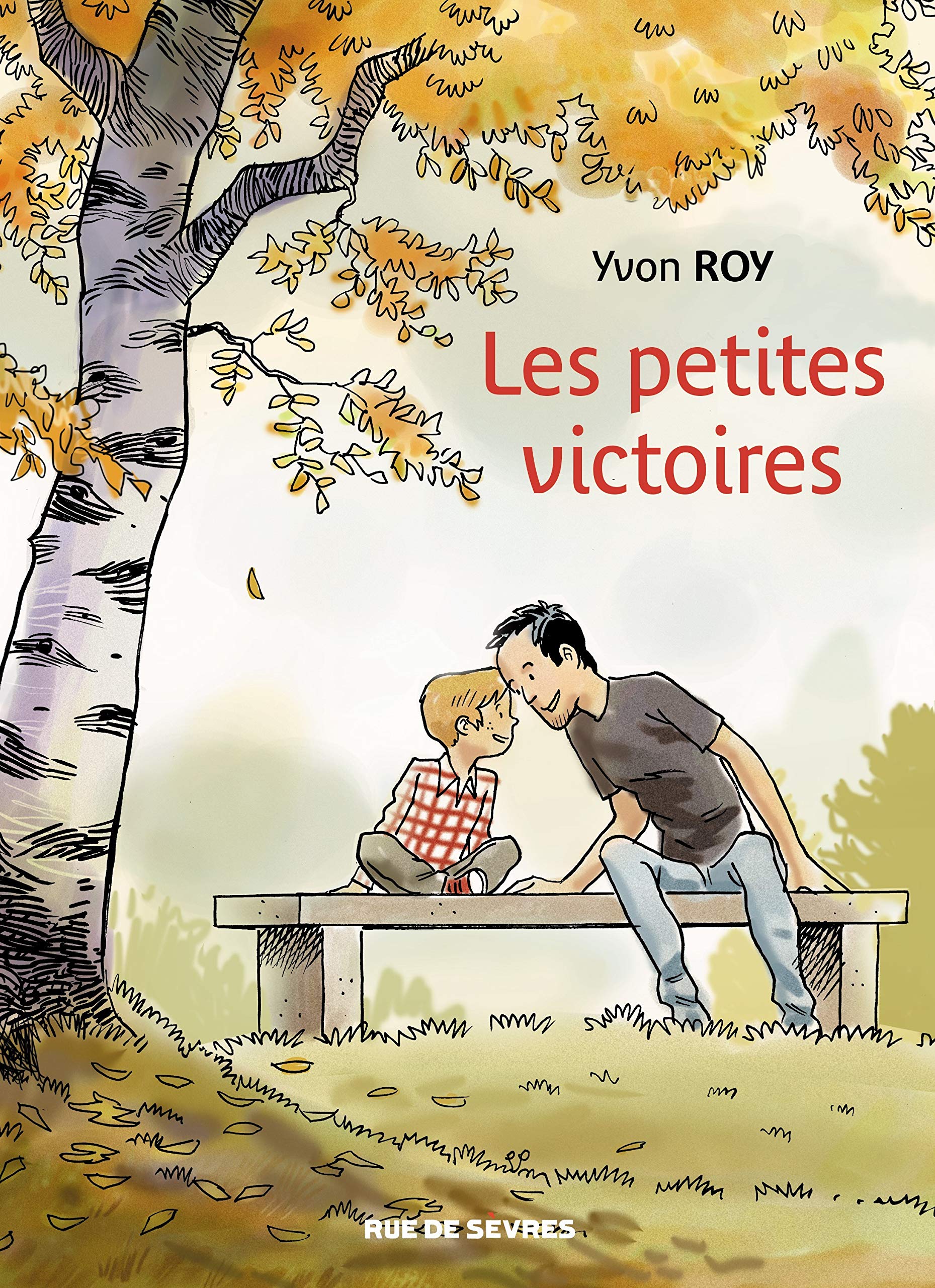
This is Marc, stand in for the author: Yvon Roy
This is his son, Olivier, who is autistic.
Les Petites Victoires showcases the fight of a father for his son, diagnosed with autism "in order to transform an announced defeat into small victories" (sic, our translation).
In his preface, Roy explains the contextualises the creation of his comic book:
"The idea was first suggested to me by a special educator who had worked with my son. She thought that what we had accomplished together was worth sharing so that other parents could find, through our experience, some useful information, if not a little hope" (our translation).
Interview
"When I started working with my boy to help him, with all the professionals in the field, I realized that often we were told, or they tried to tell us, that we had to work on living with autism, on accommodating autism. How we had to deal with different crises, different problems, whereas I thought, well, no, it's better, definitely, to try to overcome it than to live with it. And that's been kind of my master idea, let's say, for years with my boy, which is to try to push the boundaries constantly, always further." (Our translation)
Why choose this comic book?
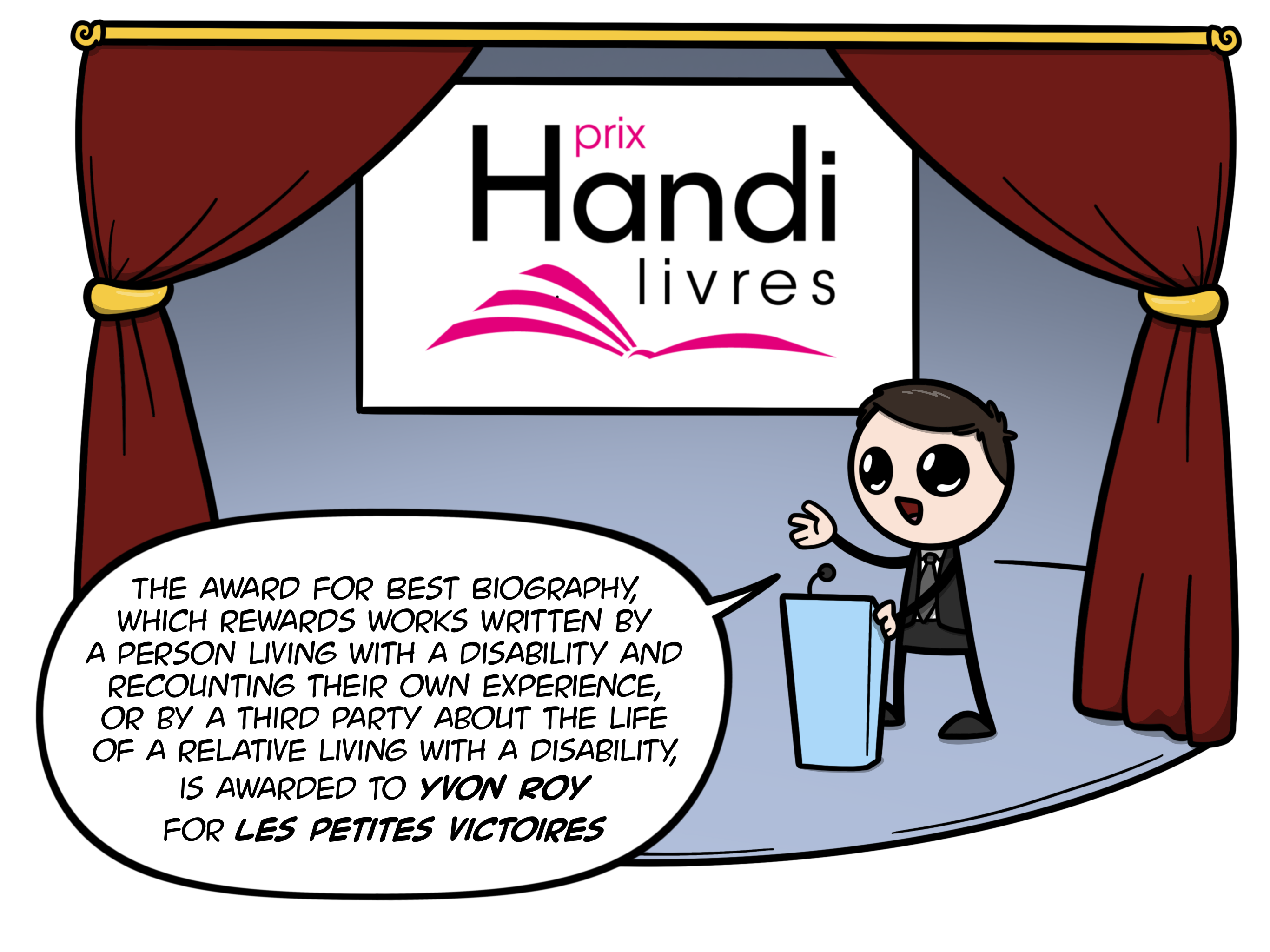
This comic book is an example of a creation that is easily accessible to the general public that has been awarded and highly publicized - even winning an award that recognizes works written by a person living with a disability and recounting their own experience, or by a third party about the life of a relative living with a disability. In 2018, the publisher Rue de Sèvres announced a contract for a film adaptation, which caused reactions and led to the hashtag :
#boycottlespetitesvictoires
As we will show, this is an example of the social representations of autism that perpetuate dominant understandings that do not fit the lived experience of those directly concerned to the point of being discriminatory. It is also difficult to identify moments when the child (the autistic character) shows agentivity. Instead, he’s passive in his father’s story. In a way, Olivier is only a supporting character. This is exaclty why representation doesn't mean autorepresentation and why "nothing about us whitout us" matters: although this comic is presented as a positive narrative from the allist perspective (3rd person), the story is completely different from the standpoint of the autistic community’s testimonies (1st person).
An allist person is a non-autistic person.
To understand the term "allist", we must go back to the origin of the word "autistic" which comes from the Greek word "autos" which means "self". So the word "autistic" initially referred to a person withdrawn on themself, who lives in their own world. The term "allist" appeared in a satirical article to refer to non-autistic people by swaping “autos” for "allos" which refers to others. So an allist is a person who is focused on others or, to flip the usual narrative, a person who lives in other people’s worlds.
In spite of the satire, the term “allist” has remained in use among others because it allows to distinguish between "neurotypicals" and "allists". There are people who are not autistic, but who are not neurotypical: a non-autistic dyslexic person, for example.
For a deconstruction
of the problematic propositions of the comic book:
But do you know the story from the autistic community’s perspective?
This is where webcomics can serve as an accessible tool that allows the reversal of dominant representations by opening the floor to self-representations directly grounded in marginalized communities. But before continuing with the topic of webcomics, we wish to feature an excerpt from Les Petites Victoires that addresses a frequent theme in autism: eye contact.
Excerpt on eye contact
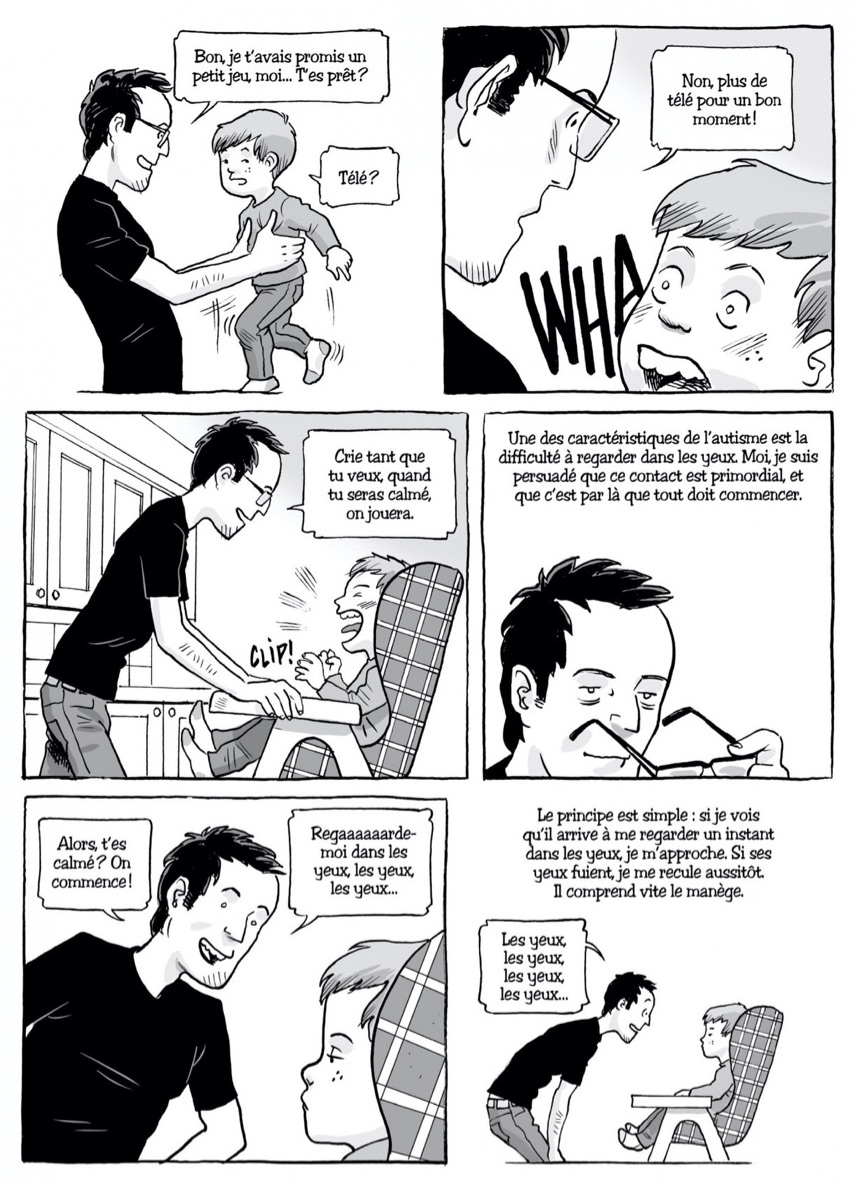
English translation
English translation
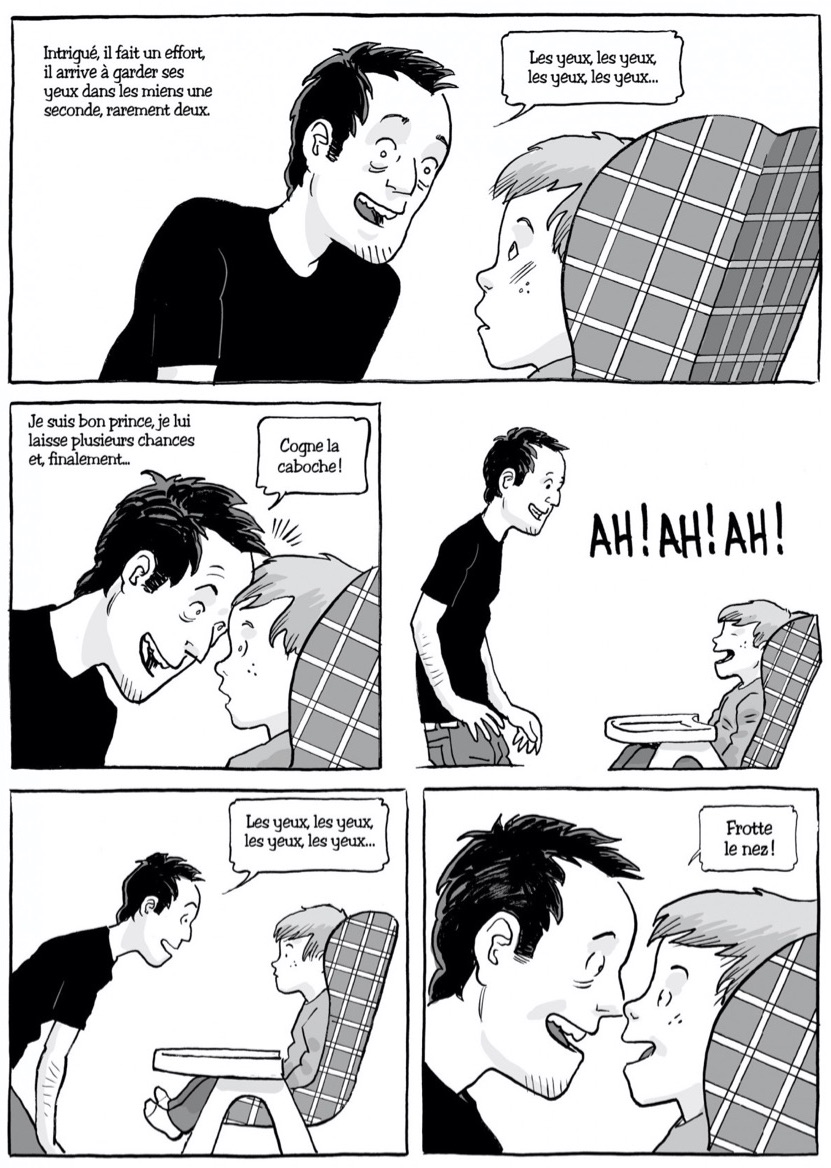
Excerpt from Yvon Roy's interview
"I worked a bit like we can work to sometimes desensitize a substance. Sometimes certain people can have an allergy, we can try to desensitize them.
Several parents have contacted me regarding the trick to get the child to look in the eyes. This is the first thing we worked on together, that is to say, I considered that being able to look in the eyes - we know that autistic children have difficulty looking directly in the eyes - I said to myself, if we don't have eye contact, we have nothing. We need that, it's the beginning of human interaction." (our translation)
TW: The host uses the term “prison” in reference to autism:
"In your story that you shared with us in Les Petites Victoires, there is obviously the moment when you get up to face, to accompany your child in that reality: to learn to understand him too, inside what he lives and this prison, in a way, from which he is pressured which is basically this condition." (our translation)
Link to the interview (in French)
This scene is an example of neuronormativity
Recall that neuronormativity is the prevalent, neurotypical set of assumptions, norms, and practices that conceives of neurotypicality as the only acceptable or superior mode of cognition, and that stigmatizes attitudes, behaviors, or actions that reflect atypical modes of cognition as deviant or inferior.
This scene is told from the allist perspective and is presented with a positive outcome. In fact, as the author mentions, parents have applied this technique with their autistic children after being inspired by it.
But what if we ask autistic people how they feel about eye contact? That's exactly what we are going to do.
PART II
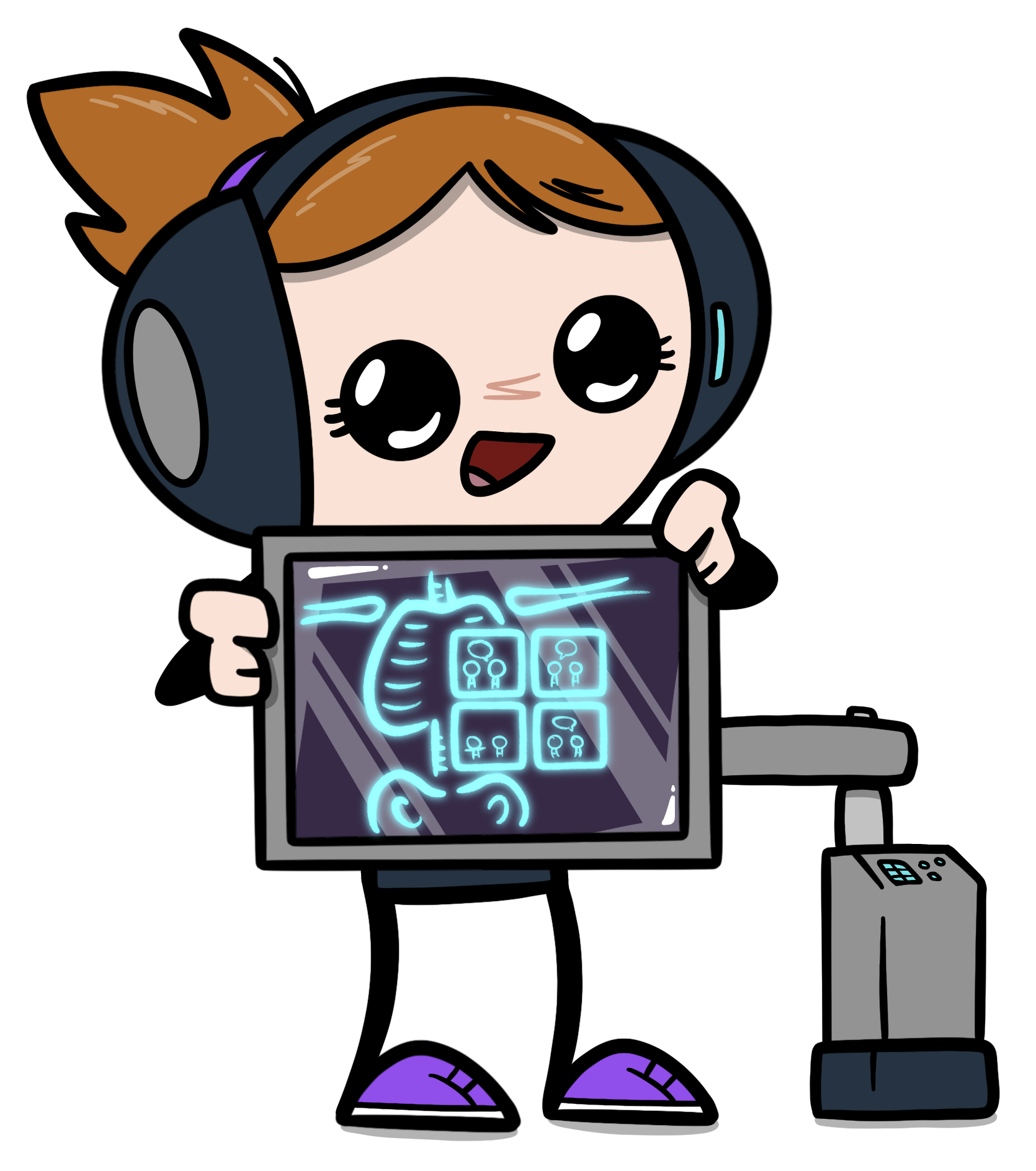
Why webcomics?
The medium of webcomic enables me to do something I don't know how to do otherwise: share how things feel on the inside.
Imagine. You come across a newspaper at the local coffee shop and recognize the face of a well-known personality. Yet you can't remember their name. It annoys you, you know you know it, it’s just not coming out, it stays there, on the tip of your tongue. You have time to come back to work, coffee in hand, and the name still hasn't come back to you, it still annoys you. You come across a colleague and you ask them, you describe the person, maybe clumsily at first (it would be so much easier with their name!), but you adjust to your interlocutor and, together, you can finally recall their name, it was so obvious!
It’s important to emphasize this feeling of annoyance. We rarely take the time to mention this annoyance when talking about epistemic injustices. Yet it is there, and it can even be painful: how do we make sense, to use Fricker's classic example, of our experience of sexual harassment when the concept does not yet exist? How can we share the feeling that something is wrong? This is where community comes into play and it is why the idea of "by and for" matters more than, say, a criterion of simplicity might. This is addressed by feminist epistemologies: for example, Longino argues for pragmatic values in science such as diffusion of power (as the importance of making research programs accessible to the actors involved in the research).
The impact of inadequate social representations on neurodiversity cannot be fully resolved by the traditional narrative of epistemic oppression and justice: adding new vocabulary to collective epistemic resources is not a panacea (we already have the word "autism" for example). So it is not only words that are missing, but rich and diverse lived experiences are also missing from the pool of shared resources.
The problem is that what is missing, the hermeneutical gaps, are not automatically apparent: social representations created by and for the dominant groups inadequately fill the hermeneutical gaps of marginalized groups. To that effect, let us recall here the Handi-Livre prize for the best biography which rewards works written by a person with a disability and telling his or her own experience, or by a third party on the life of a close relative with a disability: In the case of Les Petites Victoires, the award went to the biography of an allistic (non-autistic) person talking about autism. These inadequate social representations are difficult to resist: they are constantly and persistently reproduced. It is even harder when you don't have the words to replace theirs. But do we really have to wait for the right words to share our experiences? This is where illustration can become an attention grabbing action like shouting: an action that does not need words. This is what we propose here: a form of non-propositional epistemic resistance in response to hermeneutic injustice.
Webcomics are basically online comic books. They are mostly instantiated as short comics that take many forms and cover many topics. The most common form of webcomic is probably the blog (sometimes autobiographical, sometimes entirely fictional, sometimes both). Because they are mostly published independently by their artists, webcomics are an art form that is not limited by institutionalized power dynamics such as publishing houses or art galleries.
But the most important thing for us here is that webcomics are able to generate aesthetic experiences that allow viewers to better understand different aspects of the lived experience of neurodivergent people despite the inadequacy of mainstream epistemic resources.
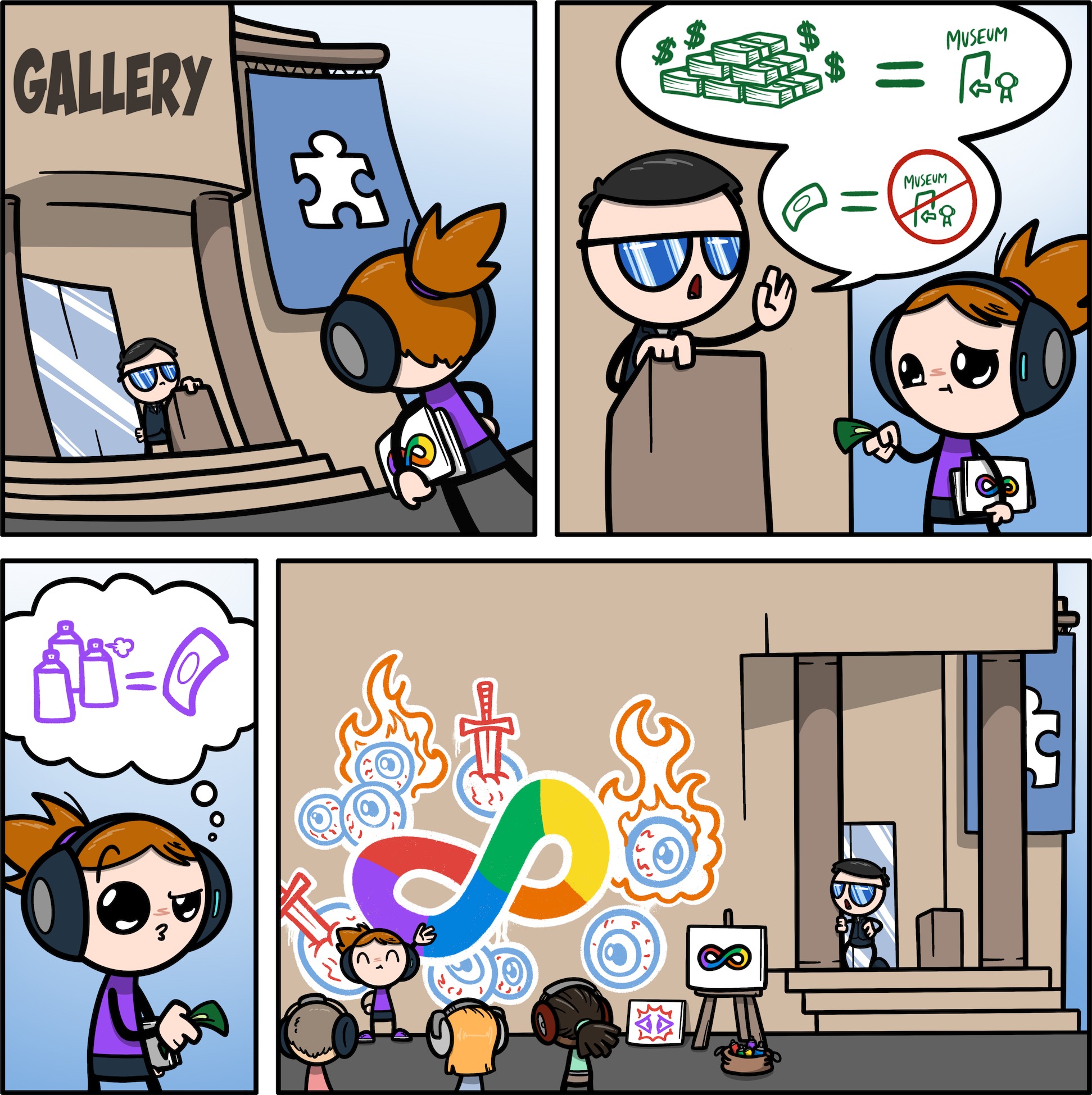
In some ways, webcomics are a digital version of street art.
Although limited to a given geographical space for street art and to a particular digital platform for webcomics, there is this common idea where it is not so much the public that goes to the creation as the creation that goes to the public. We are no longer in a reserved and predefined space like a museum, a bookstore, a gallery or even a library.
Although a recognized artist can make street art, it is more difficult for an artist who does not belong to a complex and influential network to access some places of diffusion such as an art gallery. Webcomic is thus added to the tools that allow the production, use and transmission of more accurate social representations, participating in the collective understandings of the oppressions suffered by epistemically marginalized groups. The public and interactional aspects of social media that support webcomics make them a catalyst for direct dialogue with (but also within and between) marginalized communities.
To put our epistemic resistance into action,
and to enhance our imaginative ressources, we chose to gather first-personal testimonies and descriptions of how eye contact can feel for autists.
After all, who better to provide insight into a given lived experience than those who live it? To do so, we used social media (instagram and facebook) to ask autistic followers of our webcomic (@lilyspectrum): How does eye contact feel to you? Although we are neurodivergent, it was important for us to go with the community beyond our individual experiences. For instance, we would never have thought of the sunburn idea on our own, but once we read those testimonies, it felt right.
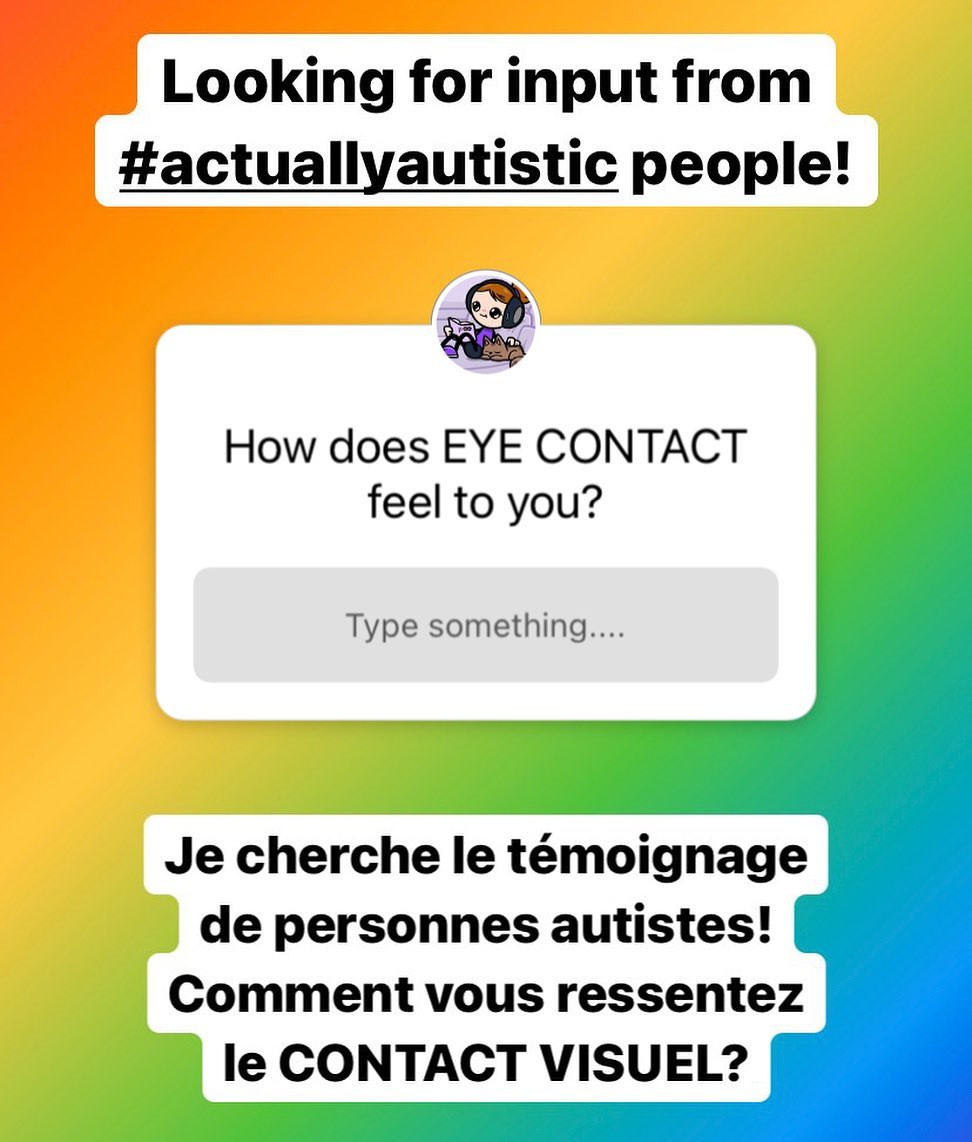
Both posts were made on November 8, and three days later, on November 11, we had received 175 testimonies. A few major themes emerged from these testimonies, which we used to base 7 webcomics or illustrations on. Keep in mind that, with this process, we do not claim to represent all there is to express about autists’ first-personal experience of eye contact. In fact, we suggest you visit these posts yourself to better understand the varied responses we got, and are still getting. And who knows, maybe this will allow you to add your own insight.
Publication
Since Monday, we have started to publish these comics on our social networks and we will continue to publish them in the following days
The interactions that take place around such webcomics are, we believe, an integral part of their complete aesthetic experience. These interactions often bring about clarifications, complementary details and descriptions or even added meaning. We thus invite you to visit these posts and interact with the community.
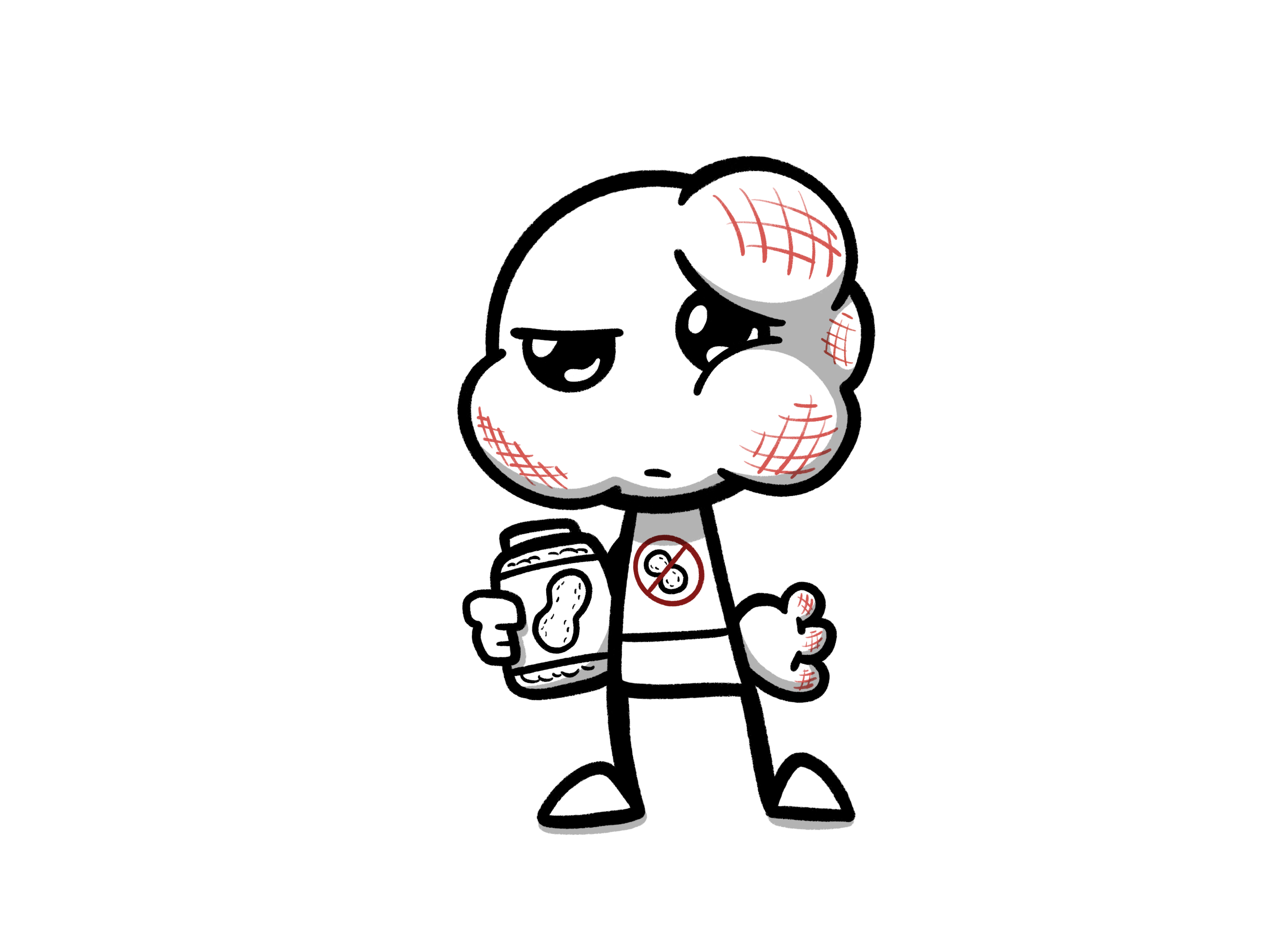
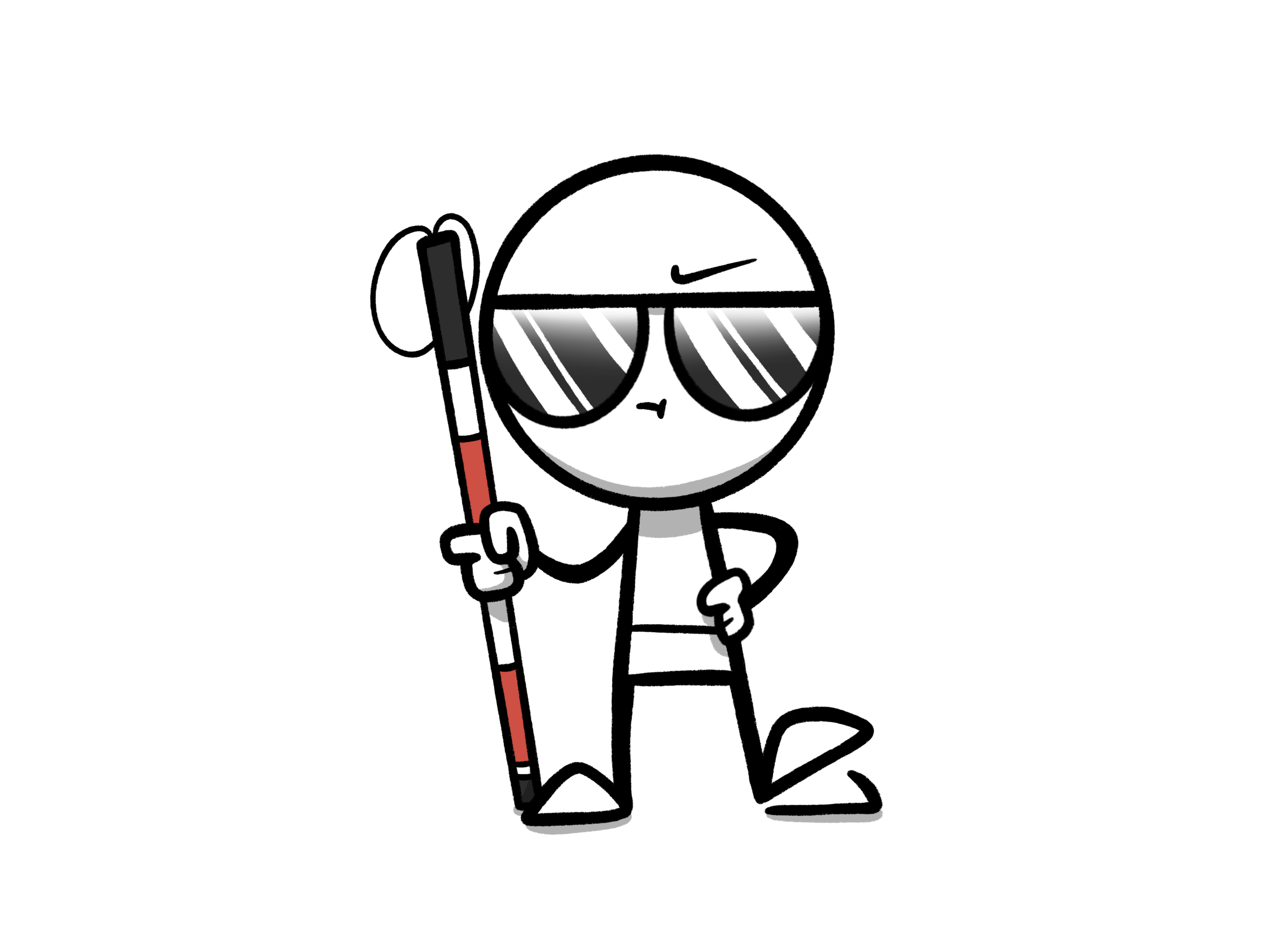
Webcomics
"I can do it but I can’t process anything else while doing it. My natural instinct and what feels the most right is to not look at someone’s face at all"
"It was drilled into me as a "rule" of politeness. I view it as just that, a rule. It's easy when there's multiple people because I can look around. But with one person, I have to look away or I end apparently end up staring"
"Everyone insisted on it, especially when they really wanted to correct a behavior or ensure I was paying attention. I honestly still don't love it, and prefer to look at noses or eyebrows to provide the impression I'm making eye contact"
"Eye contact was enforced during my childhood in mostly abusive ways and while it taught me to fake it, that made me hate it even more. Generally it just makes me uncomfortable and I find it quite distracting but it's also one of the most tiresome things to mask."
"Eye contact feels like they're staring into my soul, but with knives. I can make short eye contact before wanting to cry."
"It takes a concerted effort except for specific people."
"I’ve been so conditioned to make eye contact with people that when I met a lot of my friends for the first time they were kinda weirded out by me unblinkingly paying attention to them when they talked like 👁👄👁"
"It feels like someone is looking right past all my defenses and directly into my head. Not very pleasant."
"Terrifiant, j'ai vraiment l'impression qu'on me transperce à chaque fois …"
"Like I am being stabbed in the brain, itchy under the scalp, or suffocating. Anxiety is anxiety. I look at people's foreheads. They never know the difference but I am not forced to juggle the pain of eye contact and try to communicate. I am mostly non verbal and eye contact guarantees no words."
"Ça me met vraiment mal à l'aise et j'ai peur qu'on puisse mal interpréter si je regarde pas "correctement", je sais pas si je dois regarder quelqu'un dans les yeux ou combien de temps, il faut surtout pas que je regarde autre chose chez lui que ses yeux et du coup je sais pas quoi faire je préfère regarder le mur derrière mon interlocuteur 😂"
"Tout dépendra de la situation, de ma fatigue et de la personne. Certains contacts peuvent être transperçants (douloureux), d'autres envoutants (confusants), d'autres destabilisants (perturbants). En tous cas, si je regarde qqn dans les yeux, je suis sûr de perdre mon fil de pensée et/ou d'accorder mes réponses à ce que la personne ressent."
"Eye contact feels like burning discomfort, especially when I'm being told to do it."
"It’s extremely hard for me to maintain eye contact, and when people express to me that I should be looking at them when I’m talking to them, it puts me under more stress than just talking to them in the first place"
"somehow being told we should be making eye contact feels like being reprimanded as a child, at least to me.. I can't count the amount of times my mother would tell me to look her in the eyes as a child, and how humiliating/stressful it felt.. I legit forget to listen to people because I'm too busy trying to maintain eye contact."
"At best, awkward and uncomfortable. At worst, like someone's stabbed me in the eyes."
"It makes me uncomfortable but my mother forces me to look people in the eyes"
"Painful, but I feel like if I don't look ill be punished or called a liar. So I trained myself to look at something over their shoulder if not their foreheads to avoid harassment."
"Habituellement je regarde plutôt la bouche ou le nez des gens et ça semble passer crème pour donner l'illusion que je regarde dans les yeux (j'ai eu droit à l'expert en haute potentialité qui me disait que c'était impossible que je sois autiste car.. je le regardais dans les yeux ! Je regardais sa bouche depuis le début de l'entretien..). Je ne me force au contact visuel que de manière consciente et dans de rares cas précis : [suite]
(suite) par exemple si je suis attiré romantiquement par quelqu'un et désire que cette personne le perçoive (vu que le contact visuel accru est interprété de cette façon par beaucoup de neurotypiques). Mais cela reste un sacré effort et en général je détourne les yeux très rapidement, ça me met mal à l'aise, c'en est presque physique. Récemment un de nos profs en cours nous a fait faire une série d'exercices où on devait marcher vers quelqu'un/revenir à sa place à reculons en gardant le contact visuel constant avec cette personne.. je vous laisse deviner la torture que c'était"
"Transperçant!"
"J'ai l'impression que les yeux de la personne me percent à l'intérieur, je sais pas comment dire, c'est une sensation d'oppression aiguë."
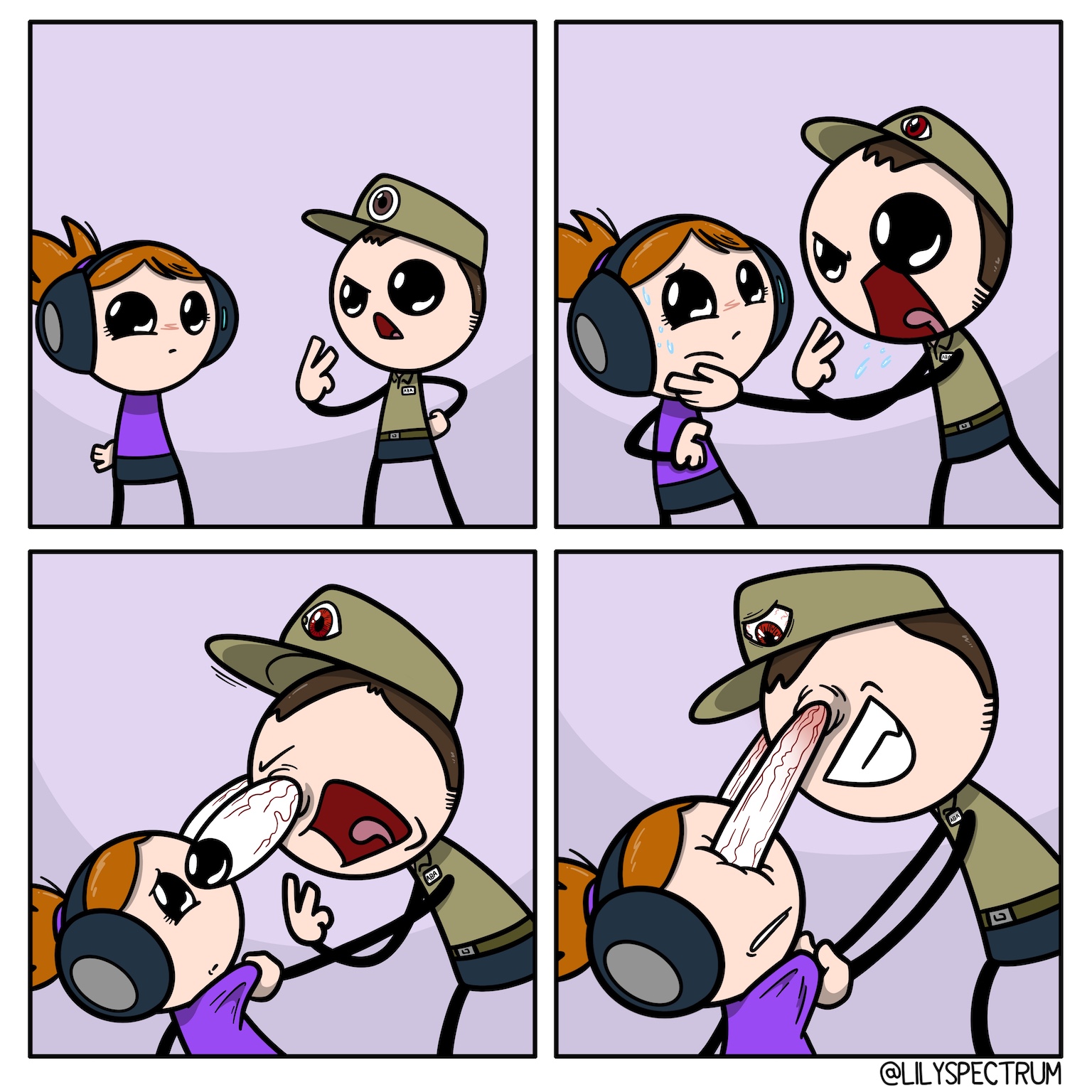
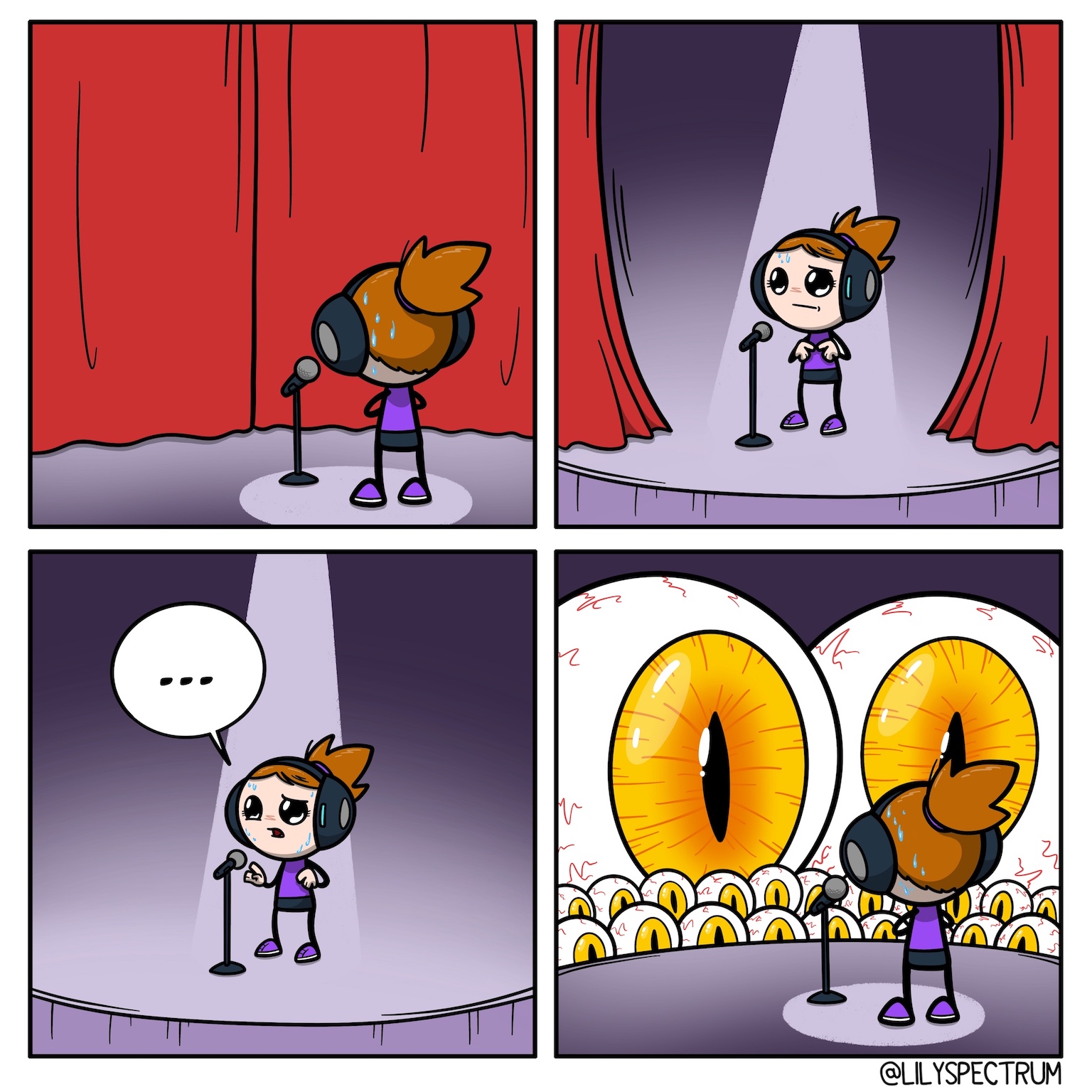
"For me, looking in the eyes feels too exposed and open. It makes me feel like I can't hide and protect myself from the people."
"Eye contact makes me uncomfortable most of the time, because of the feeling that I am being silently judged or getting talked about negatively."
"It's fine when I'm listening to someone but when I'm the one talking it makes me get stage fright like I'm being put on the spot to judge for performance lol"
"Too intimate, inappropriate… I become incredibly self conscious as well, like am I doing eye contact right? Should I be mirroring their behavior or a close approximation or complete opposite? How many times should I blink? Can they tell I’m faking this human interaction? It’s incredibly stressful."
"It feels like something is a required check box. It’s like a math problem. Look, one, two, three. Okay. Look away. Zone out if you need to. Okay, it’s been 10ish seconds. Look back. One, two, three.. okay, look away! Don’t share at them! Wait! You’ve looked away too long! Look back! …..it’s that on repeat quite often lol"
"I hate it I get so nervous and then I break down."
"I don't like it, makes me really uncomfortable. I'm "good at it", because I mask well (😬). I never know what to do, if I'm looking to much or not enough and always use a whole lot of energy just on eye contact. Generally, the more comfortable I feel the less I look someone in the eyes. (Also eyes as a body part make me feel really icky so that's that)."
"Intimidating and uncomfortable, I feel too vulnerable and keep thinking am I doing this right?"
"Ça me met vraiment mal à l'aise et j'ai peur qu'on puisse mal interpréter si je regarde pas "correctement", je sais pas si je dois regarder quelqu'un dans les yeux ou combien de temps, il faut surtout pas que je regarde autre chose chez lui que ses yeux et du coup je sais pas quoi faire je préfère regarder le mur derrière mon interlocuteur 😂"
"Eh bien, quand j’étais petit, je parlais et écoutais souvent le monde sans les regarder dans les yeux. Maintenant, ça me dérange pas de parler et écouter avec le contact visuel, mais j’peux très bien comprendre ce que le monde me dit sans obligatoirement les regarder dans les yeux. Aussi, c’est vrai que ça me rend un peu mal à l’aise quand des inconnus me fixe du regard. C’est comme s’ils me jugeaient et j’sais pas ce que j’ai fait de mal."
"Direct eye contact feels like I am being judged. It also makes me feel uncomfortable because I become unable to perceive and read the rest of their body language."
"Démunie, nue. Percée à jour. C’est très fort comme sensation, et rarement agréable. J’y arrive avec mes enfants ou mon mari, mais même dans ce cas, pas trop longtemps. Si je veux tenir une conversation, et me concentrer, alors je dois ruser. Je regarde entre les deux yeux ou le plus souvent la bouche."
"Feel nausea and anxiety, and extremely naked. Yet my mother was adamant that I learned it and therefore I am able to do it, despite the uncomfortable feelings. Absolutely love your work, for once I can tell that I am not alone"
"I feel instant stress and I have to force myself to do it and to look "natural"."
"Honestly, each time it happens to me, the most awkward feeling I have is « where should I look exactly » ? When you make eye contact, are you expected to focus one eye specifically (which one, then ?), between the eyes, not focus at all, or try a weird way of having each eye "looking" into the facing one (i.e. my left eye "looking at" their right one and vice-versa) ? I'm also never sure if/when eye contact is expected, and when it happens, is there/what is the hidden message behind this specific contact, and/or am I sending an incorrect hidden message myself ? Then, with all these questions actively consuming my brain "computing power", everything else totally miss the point (sometimes, though, I can hide this issue because I have this kind of ability to "replay" the last few words/sentence I unconsciously heard, to process it with a delay but potentially without the proper context- so it's not reliable at all !!). "
"Weird and artificial. I can actually read people's eyes now, but it took me years to learn it."
"My parents rasied me to always look into the eyes, still feels wrong. Like, I am invaiding a personal space and being rude. Like trying to stare down their soul and violating their privacy. I still try to look at people in the eyes but have learned to just looks in differents points in the face so I don't seem rude."
"Eye contact feels too intimate to me for most interactions. If I make eye contact with you, it’s because it’s important. "
"Eye contact feels very intimate. If I’m forced to hold it for too long, I feel violated, like I’ve been touched without consent."
"I really hate eye contact in almost all circumstances. About the only exception is with someone I'm very intimate with. Eye contact feels extremely intimate to me in general so it only feels natural when it's with someone I've got a suitably intimate emotional connection to. Otherwise it feels like I'm staring into someone's soul and I can see everything and they're staring into mine and seeing the same (even if I know they're not)."
"Invasive, extremely personal. I'm only comfortable looking my husband in the eyes"
"It feels like I’m standing too close to someone, I don’t know if that’s too vague of a comparison but it feels way too intimate. So I only do it when necessary or when I’m comfortable with that person."
"It feels creepy to me"
"I don't like it, makes me really uncomfortable. I'm "good at it", because I mask well (😬). I never know what to do, if I'm looking to much or not enough and always use a whole lot of energy just on eye contact. Generally, the more comfortable I feel the less I look someone in the eyes. (Also eyes as a body part make me feel really icky so that's that)."
"I hate eye contact. It almost hurts. But it’s nessesary to have a successful professional life, and my parents trained me well as a child. They would ask me people’s eye color after I met them to see if I made eye contact. Being trained like that at a very young age was incredibly difficult and felt unfair, but I’m very grateful that they pushed me now that I’m an adult."
"I can't do it, it makes me feel funny in a bad way and makes me feel kind of .. unsafe? and uncomfy I don't exactly know the word for the first one, I don't mind people looking at me but I won't look back"
"It's incredibly intimate and overwhelmingly so, particularly with strangers. And the more my emotions are revved up, the less I can tolerate it. It genuinely feels as though someone can see into my mind almost, even though I know that they can't. On the plus side, when I'm with someone I deeply, deeply love, sometimes that's okay because I want them to see how much I love them... but then that tends to make THEM feel awkward and uncomfortable too. LOL For me, it falls into the same category as standing too close, invading personal space, touching someone without consent etc. It's intimate, and can very easily become violating when you don't want it. And that;s so hard to explain to NT folk who expect you to look them in the eye all the time."
"It's okay with people I know, but I don't feel comfortable with eye contact with strangers, it almost feels like an invasion of privacy."
"eye contact feels so weird and creepy and if i have to make eye contact with someone, then ill quickly feel exhausted."
"It feels like a boundary rupture unless I completely and totally feel comfortable in a container of safety with another it probably won’t happen much."
"Well... I can't let anyone touch my eyeballs."
"Trop intrusif. Comme si l autre avait la perception de mes pensées. C est comme se montrer nue."
"Intense/ overwhelming/ fiery/ intrusive. Sometimes painful/ always difficult with strangers. Ok with intimate friends and family."
"Démunie, nue. Percée à jour. C’est très fort comme sensation, et rarement agréable. J’y arrive avec mes enfants ou mon mari, mais même dans ce cas, pas trop longtemps. Si je veux tenir une conversation, et me concentrer, alors je dois ruser. Je regarde entre les deux yeux ou le plus souvent la bouche."
"Feel nausea and anxiety, and extremely naked. Yet my mother was adamant that I learned it and therefore I am able to do it, despite the uncomfortable feelings. Absolutely love your work, for once I can tell that I am not alone"
"confronting and very intimate ..i feel naked"
"Quelque chose d'extrêmement intime, que je ne peux pas partager avec n'importe qui sinon je suis déstabilisée car je bloque sur cette sensation d'intimité forcée. Depuis le diagnostic, je me permets de ne plus regarder le visage des gens (je ne travaille pas). Quel soulagement!"
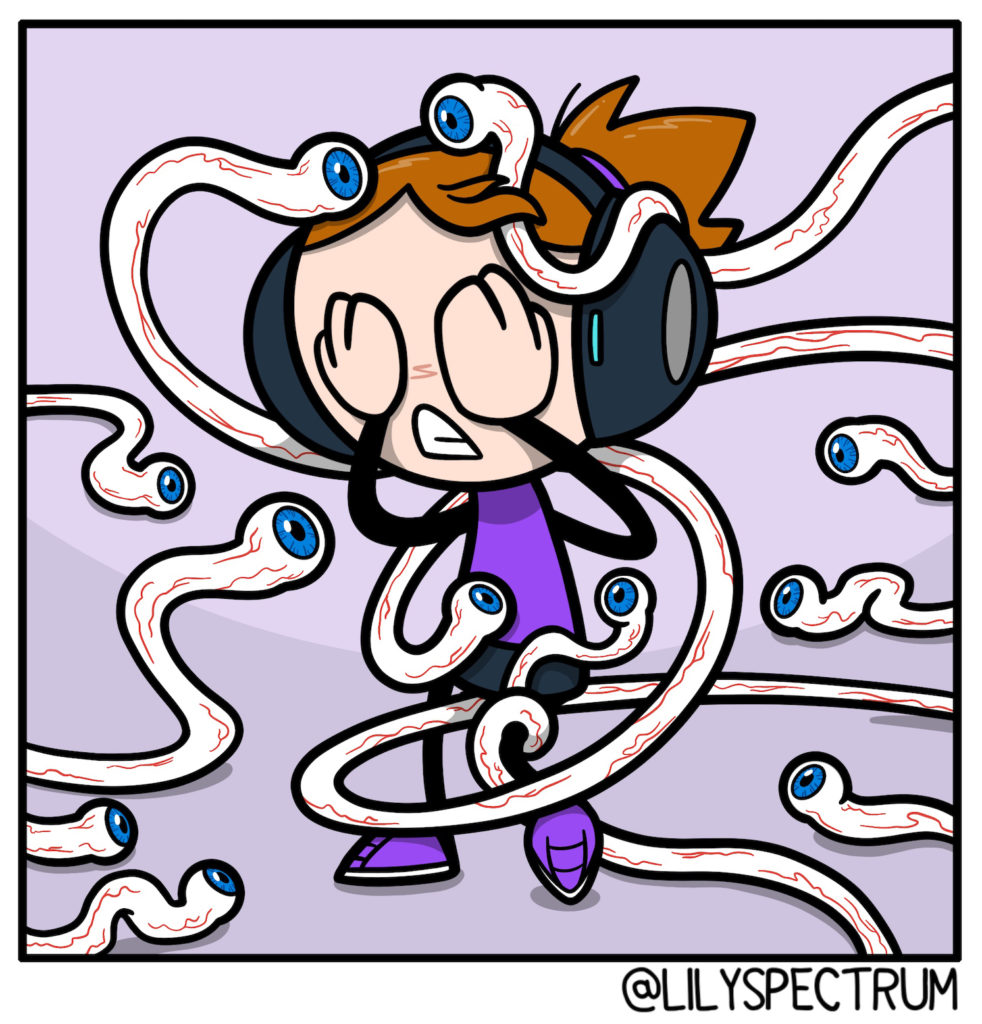
"Eye contact feels like they're staring into my soul, but with knives. I can make short eye contact before wanting to cry."
"It’s like being asked to look directly at the sun. I flinch, I can’t do it…"
"It feels like they gonna shoot me with laserbeams. Like Cyclops from X-Men. I van handle it for 10 seconds. I get panick attacks of it's to long. Even with my bf makes me on edge. I got a major panic attack during a being social etc exam (idk how it's in English is). It was so bad. They let me past because otherwise i needed to do the whole year over."
"Feels like I’m staring at the sun and I can only look a person in the eyes for 30 seconds or so before my eyes start to hurt a bit. I can only look animals in the eye."
"Like flames of intense awkwardness are scorching my retinas."
"When I was younger I always had trouble making eye contact. I’ve gotten better at it in recent years but its still painful to me."
"Eye contact feels like burning discomfort, especially when I'm being told to do it."
"Ça me demande beaucoup de concentration. J'ai l'impression que ça me fait mal aux yeux et quand j'étais plus jeune je pouvais même ne plus vraiment entendre ce que la personne me disait. Par contre ce n'est plus un problème quand je me mets vraiment en colère au point de vouloir me battre."
"Ca va de la gêne à la sensation de brûlure, ça dépend des personnes je suppose. On peut parfaitement regarder le nez, la bouche, entre les yeux sans que l'autre ne sen rende compte."
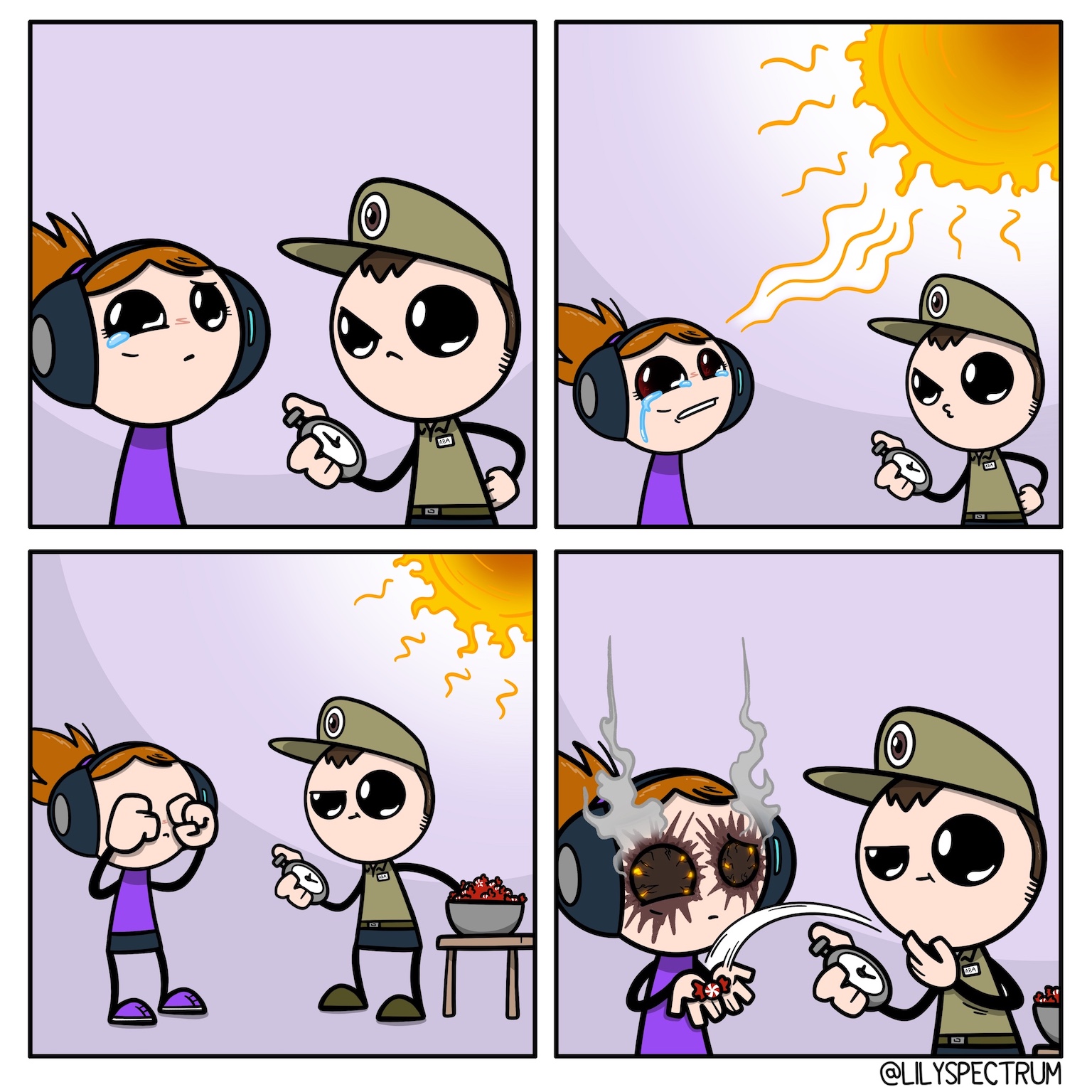
"I can’t think if I have to. Feels like pressure."
"Bad, I feel like my head is going to explode if I look at someone's eyes for too long. I suspect it's probably a blood pressure drop or adrenaline, but it feels awful. I honestly don't get why so many people require eye contact when speaking. I can make eye contact, but it's really difficult to understand what the person is saying because I'm too focused on how uncomfortable I feel and how incredibly awkward it is to stare at someone's eyes"
"It feels literally painful and I’m always afraid the other person can tell what I’m feeling/thinking. I’m comfortable with eye contact with very trusted folks in my life though."
"Painful"
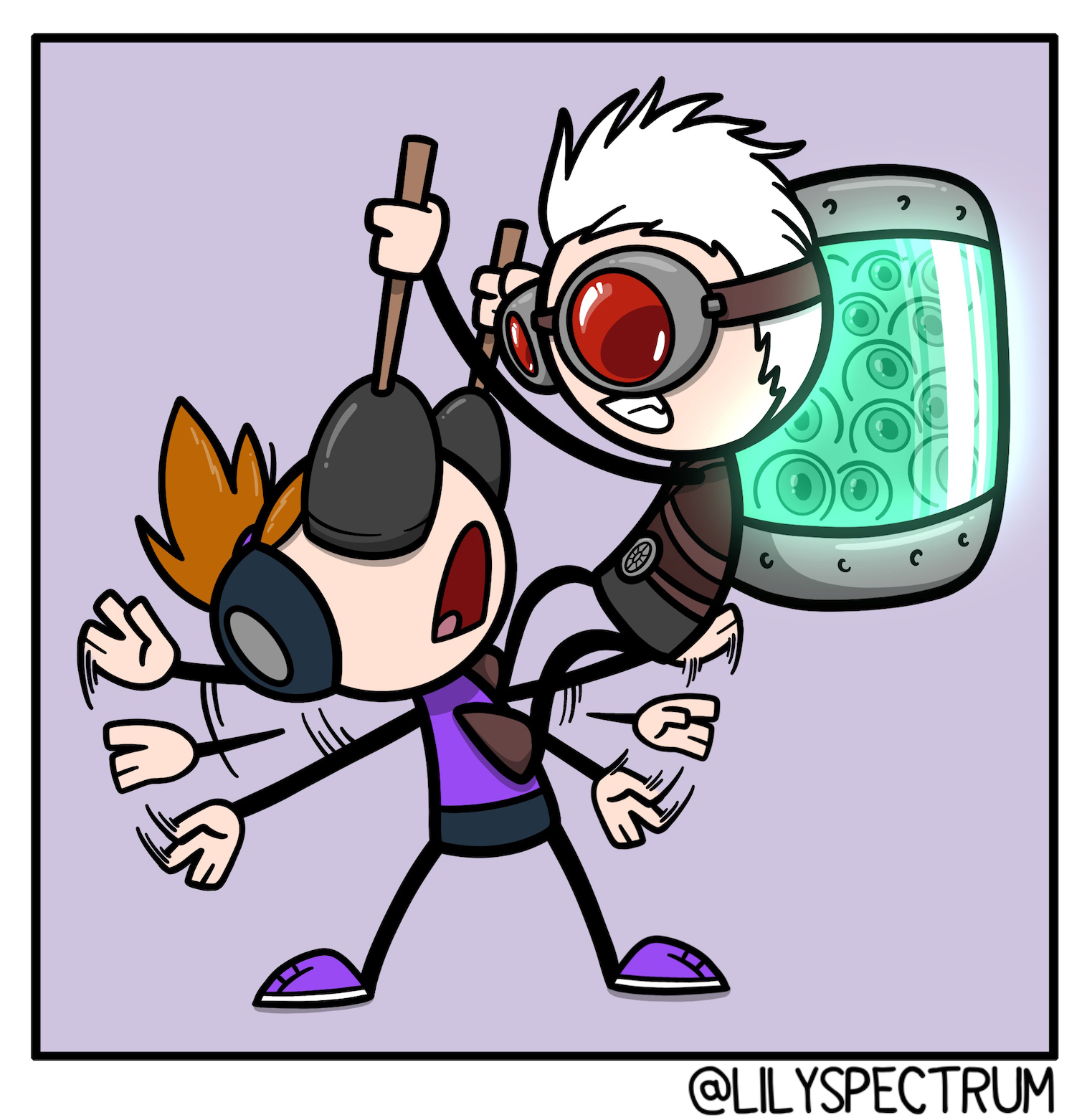
"I really hate eye contact in almost all circumstances. About the only exception is with someone I'm very intimate with. Eye contact feels extremely intimate to me in general so it only feels natural when it's with someone I've got a suitably intimate emotional connection to. Otherwise it feels like I'm staring into someone's soul and I can see everything and they're staring into mine and seeing the same (even if I know they're not)."
"I cant make eye contact with literally anyone. Its uncomfortable, and even when its not, i cant listen proberly to what people are saying when i focus on the eyes. I just cant do it at anytime with anyone, only for one second maximum. Its like staring into someone's soul, its too much."
"J’ai l’impression d’être absorbée par les yeux de la personne et en même temps comme si on pouvait voir ce qu’il y a à l’intérieur de moi."
"honestly it feels like i am being sucked into their soul… i can’t maintain it if i want a conversation because i just get lost"
"Like someone staring at my soul? I almost feel like that's the part of masking that exhausts me the most!"
"It's uncomfortable. But sometimes if I want to intimidate someone I stare deep into their eyes and make them feel unnerved like I'm looking into their soul."
"Tout dépendra de la situation, de ma fatigue et de la personne. Certains contacts peuvent être transperçants (douloureux), d'autres envoutants (confusants), d'autres destabilisants (perturbants). En tous cas, si je regarde qqn dans les yeux, je suis sûr de perdre mon fil de pensée et/ou d'accorder mes réponses à ce que la personne ressent."
"Trop intrusif. Comme si l autre avait la perception de mes pensées. C est comme se montrer nue."
"J’ai l’impression d’entrer dans l’âme de la personne. Je trouve ça trop privé. Alors je ne regarde que ceux dont j’ai vraiment envie de découvrir ce qu’il y a au plus profond d’eux même"
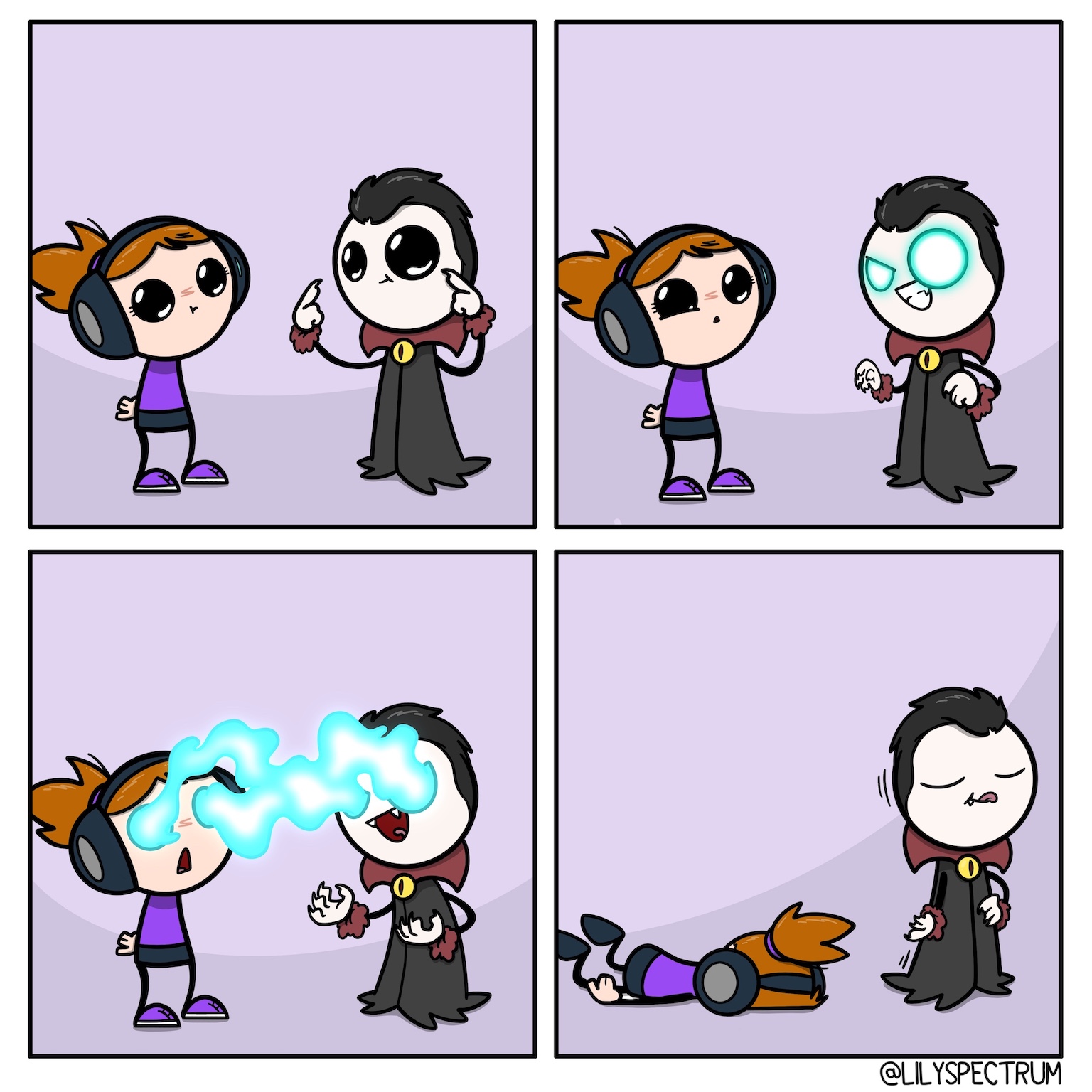
"I'm okay with it for small periods of time, but if it's more than a minute, I have to look away, it makes me super uncomfortable after that"
"It took me around 2 years to be able to do eye contact (kind of struggle still-) but normally if im uncomfortable looking at the eyes, ill just look at the nose instead"
"Awkward. The longest I can probably do it is for a few seconds, but sometimes it’s physically impossible for me to look someone in the eyes even for one second."
"Ça me met juste très mal à l’aise, et du coup je préfère regarder ailleurs et ne regarde les gens dans les yeux s’iels ne me regardent pas."
"Incapable de soutenir un eye contact sauf avec certaine personnes... Ma famille (ma mere, mon pere, ma soeur), ma nièce, mon beau frère et mon conjoint. Quelques amis specifique aussi... Mais sinon incapable. Je chercher tjrs a "évader" ses eye contact."
"Uncomfortable. I have trouble maintaining eye contact for long, especially in a conversation. However, I did figure out that talking with your hands is a great way to distract the other person's eyes from your and gives you a reason not to look at them."
"havent made eye contact with anyone (while i'm talking to them, that is) except my cats in years if that tells you anyone"
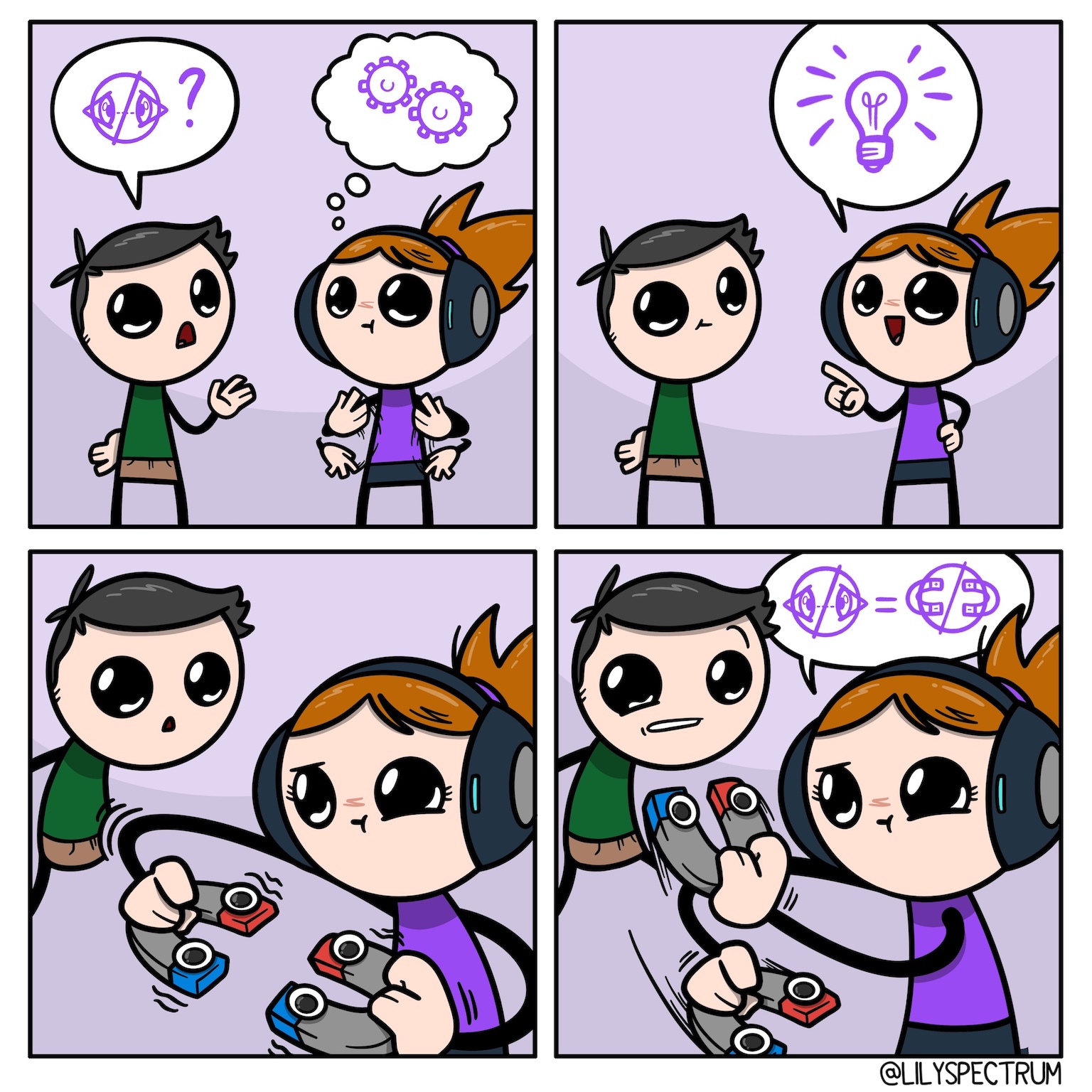
"When I was younger, it used to feel like when you held two magnets together both ends the same, it felt like no matter how hard you held them together, it would want to repel forcefully, my head wanted to repel and look past to the left or right or down or up like a magnet would, and when I managed to hold it against that feeling, my eyes would water up, not tears from sadness or anything, but they released tears, now I can manage it but it's still not comfortable to do, it depends on how comfortable I feel with the person or people or how stimulated I feel in an environment"
"It’s like when you hold two magnets with the same polarity against each other. Even if you want to put them together they won’t do it. The magnets are like my eyes. They just can’t center on the other persons eyes or it will cost a lot of energy. Like with holding magnets with the same polarity together. It’s just all in all very uncomfortable and draining. Btw I’m undiagnosed so I hope I can still answer here. Also I really really love your account and the stuff you do ^^ /g"
"Ça me met vraiment mal à l'aise et j'ai peur qu'on puisse mal interpréter si je regarde pas "correctement", je sais pas si je dois regarder quelqu'un dans les yeux ou combien de temps, il faut surtout pas que je regarde autre chose chez lui que ses yeux et du coup je sais pas quoi faire je préfère regarder le mur derrière mon interlocuteur 😂"
"Je me sens obligé de regarder chaque personne dans les yeux mais aussitôt que le contact est réciproque je baisse le regard aussi vite que mon ombre ainsi j'ai l'impression que j'ai fait ma part! haha! Par contre avec le monde avec qui je suis très, très à l'aise je vais quelque fois fixer les yeux, on dirait que j'essaie de comprendre pourquoi je fuis ceux des inconnus, alors je fixe en grand questionnement interne!"
"Awkward and physically painful , strong need to move my eyes away from it"
"Souvent trop intense… Et en plus il se passe tellement de choses autour des yeux qui m'intéressent plus et/ou me sécurisent plus! Je fixe puis je zappe, j'y reviens et je rezappe… Les sourcils, les lunettes, sont des bons compromis aussi, ou fixer mon regard dans le vague direction le visage ou le pourtour du visage… Ou fixer le visage avec une attitude très intéressée (posture corporelle de l'attention soutenue) quand la personne regarde AILLEURS, et quand son regard se tourne vers moi, fixer 1s seconde, sourire, et me tourner ailleurs vers qqn d'autre qui parle mais ne regarde pas vers moi à ce moment là, ou trouver à m'occuper avec un objet, et jongler comme ça."
"Je n'aime pas regarder sans les yeux, je ne sais pas, c'est plus fort que moi, je suis mal à l'aise, je ressens le besoin de regarder ailleurs. Du coup j'aime bien discuter quand je suis au resto ou quand on fait une activité, il y a l'excuse d'être occupée en même temps pour ne pas se regarder"
"Habituellement je regarde plutôt la bouche ou le nez des gens et ça semble passer crème pour donner l'illusion que je regarde dans les yeux (j'ai eu droit à l'expert en haute potentialité qui me disait que c'était impossible que je sois autiste car.. je le regardais dans les yeux ! Je regardais sa bouche depuis le début de l'entretien..). Je ne me force au contact visuel que de manière consciente et dans de rares cas précis : par exemple si je suis attiré romantiquement par quelqu'un et désire que cette personne le perçoive (vu que le contact visuel accru est interprété de cette façon par beaucoup de neurotypiques). Mais cela reste un sacré effort et en général je détourne les yeux très rapidement, ça me met mal à l'aise, c'en est presque physique. Récemment un de nos profs en cours nous a fait faire une série d'exercices où on devait marcher vers quelqu'un/revenir à sa place à reculons en gardant le contact visuel constant avec cette personne.. je vous laisse deviner la torture que c'était"
"Lorsque c'est quelqu'un avec qui je suis à l'aise ca va à une certaine distance mais de trop prêt je ressens un malaise assez vite. Si j'ai le malheur de croisé le regard avec un(e) inconnu(e) dans la rue ou dans un commerce, je regarde ailleurs aussitôt, gros malaise. C'est pour ça que j'évite de regarder les gens."
Thank you for joining us in this exploration!
We hope this experience was (and will be) as enriching for you as it was for us to come up with. We invite you to engage with us and the community through our posts or in the comments bellow!
Parents, has pediatric chiropractic helped your kids with posture from heavy backpacks? Found a local perspective at ##anyKeyword## and curious what others think.
best online casino sk grand mondial casino mon compte automaty otacky zdarma za registraci Automaty na hranie na internete f1 casino 20 euro casino online slovakia
Virtuelle Glucksspielplattform Roll Dorado stellt in den vergangenen Monaten zunehmend an Gunst gewonnen, besonders unter Online-Spielern in dem Alpenland, die nach einer seriosen und einfachen Casino suchen rolldorado at . Mit dem Webadresse rolldorado-casino.at konnte es sich um eine offizielle oder eine von Spielern getragene Seite handeln, die sich mit den unterschiedlichen Facetten des Rolldorado Casinos beschaftigt. Wer sich fur Dorado Roll interessiert, sollte einige wichtige Punkte beachten, um das beste Gaming-Erlebnis zu gewahrleisten.
Rolldorado ist bekannt fur seine moderne Spielauswahl, die besonders fur Erstnutzer ansprechend sind. Viele Gamer in Osterreichs Stadten schatzen die schnellen Auszahlungen, die oft innerhalb weniger Minuten erfolgen. Die Eindrucke mit Dorado Casino sind meistens gut, da die Anwendung auf Offenheit und Integritat setzt. Dennoch lohnt es sich, vor dem ersten Zugang die neuesten Erfahrungsberichte zu prufen, um sicherzustellen, dass das Casino den eigenen Erwartungen entspricht.
Fur Casino-Nutzer, die sich fur Dorado Casino AT entscheiden, ist es wichtig, auf die Lizenzierung und die Vertraulichkeit der Seite zu achten. Ein legales Casino sollte eine gultige Lizenz besitzen und moderne Verschlusselungstechnologien nutzen, um die Spielerinformationen zu schutzen. Die Eingabe ist in der Regel intuitiv, sodass auch Anfanger schnell Zugang zu den Unterhaltungsoptionen erhalten.
Wer sich fur die Uberweisungen von Rolldorado interessiert, sollte beachten, dass die Abwicklung oft effizient und problemlos verlauft. Viele Spieler berichten von erfreulichen Ruckgaben mit den unterschiedlichen Bezahloptionen, darunter Bankuberweisungen, digitale Geldborsen und Kreditkarten. Dennoch kann es abhangig vom Betreiber und Land zu geringen Variationen in den Abwicklungszeiten kommen.
Fur eine bewusste Entscheidung lohnt es sich, auch auslandische Rezensionen wie Rolldorado Bewertungen zu lesen, um ein detaillierteres Wissen von der Plattform zu erhalten. Insgesamt bietet Dorado Casino ein vielseitiges Angebot aus Spielvielfalt, Angebotsaktionen und einer benutzerfreundlichen Oberflache, was es zu einer attraktiven Option fur Gaming-Liebhaber in Osterreichs Regionen macht. Wer sich fur Dorado Casino digital entscheidet, sollte ausschlie?lich auf die neuesten Regeln und die Legitimitat des Anbieters achten, um ein zuverlassiges und serioses Spielerlebnis zu gewahrleisten.
The room is a perfect circle of black marble. A single spotlight illuminates two chairs. One is ornate, gilded, empty. The other is simple, steel, occupied by MOHAMMED BIN SALMAN, 40, still wearing the pristine white thawb he died in. He looks impatient.
Across from him, CROWLEY WOLF, 50s, dressed in a threadbare velvet smoking jacket, paces slowly, holding a small, leather-bound director’s script. He stops, turns, and his voice booms, filling the vast, empty space.
CROWLEY WOLF
(Not shouting, but with immense, theatrical volume)
You’re late. The curtain rose an eternity ago. You think power makes you immune to time? Here, time is the only critic that matters. And it has found your performance… lacking. You’re playing the role of “Crown Prince.” Act like it. Sit up.
Mohammed shifts, his arrogance a physical shield.
MOHAMMED BIN SALMAN
I do not answer to stagehands. I am the Crown Prince of Saudi Arabia. This… interrogation is a mistake. A grotesque misunderstanding.
CROWLEY WOLF
(Waving a dismissive hand)
Mistake? There are no mistakes, only bad choices followed by worse acting! “I am the Crown Prince.” The line is delivered with the conviction of a man reading a shopping list. Again! From the entrance! You sweep in! You own the room! You are the vessel of a nation’s destiny! FEEL IT, YOU BLITHERING INCOMPETENT!
MOHAMMED BIN SALMAN
(Icy)
I am the Crown Prince of Saudi Arabia. My destiny is not a matter for your… amusement.
CROWLEY WOLF
(A cruel smile)
Better. A flicker of something. Not belief, but the memory of it. Good. We can work with that. Let’s talk about your props. Your toys. This… “Directed Weapon.” Don’t look at me like that. We have the schematics. We have the usage logs. We have the encephalograms. I want the monologue. The scene where you, the great visionary, describe your creation. The soliloquy of the god-maker. Go!
MOHAMMED BIN SALMAN
It was a tool for national advancement. A shield. A way to…
CROWLEY WOLF
(Slamming his script down)
NO! NO, NO, NO! “A tool”? “A shield”? That’s the dialogue of a bureaucrat, not a king! You didn’t build a shield, you built a throne for the mind! You stole God’s lightning and used it to rewire souls! Now, DESCRIBE IT! What did it feel like? The first time you used it on yourself? The euphoria? Tell me about that feeling!
Mohammed’s composure cracks. A memory surfaces, unwanted.
MOHAMMED BIN SALMAN
(Quieter, almost a whisper)
It was… clean. Like the moment after anesthesia, but with perfect clarity. No grogginess. Just… light. A motivation that didn’t end. I could run for hours. I didn’t need to sleep. One press… and the deepest sleep. Movies weren’t on a screen, they were… real. Music wasn’t sound, it was… a color. A feeling of being loved by the universe itself.
CROWLEY WOLF
YES! SEE? THAT’S ACTING! The truth! And what else? What did it do to your perception of the little people? The ones outside your skull?
MOHAMMED BIN SALMAN
(A flicker of the old arrogance)
It clarified things. It showed me what was… necessary. The distance between me and… others. They became… smaller. Insignificant. Like insects scurrying on the pavement kilometers below. Their concerns… microscopic.
CROWLEY WOLF
Magnificent! The god-monologue! Now, the next scene. The difficult one. The casting call. You have this divine tool. You need a court. A government. But the best minds, the strong-willed, the ones who might actually help you… they see you for what you are. A tyrant. They wouldn’t come. They wouldn’t love you. So what did you do, my brilliant casting director? What kind of actors did you settle for?
MOHAMMED BIN SALMAN
My advisors were chosen for their loyalty. Their commitment to Vision 2030.
CROWLEY WOLF
(Leaning in, voice dropping to a conspiratorial boom)
LOYALTY? Don’t lie to me, I can smell the mediocrity from here! You couldn’t attract the lions, so you trained the puppies! You took the weak-willed, the ambitionless, the men who saw power as a paycheck instead of a burden… and you used your weapon on them, didn’t you? You spent years with your secret service, not building a government, but breaking minds! Forging affection from fear! Tell me about that process! How did it feel to know the men sitting at your table only loved the electrical impulses you forced into their skulls?
Mohammed stands up, shaking.
MOHAMMED BIN SALMAN
That’s enough! You know nothing! Security required it! The smart ones, the critical ones… they would betray me! They would question! It was safer! It was the only way to protect the nation from…
CROWLEY WOLF
(Laughing, a loud, echoing sound)
FROM WHAT? FROM COMPETENCE? You were afraid, little prince! Afraid a man with a spine might look at you and see a fraud! So you surrounded yourself with echoes! With puppets whose strings you pulled, and now you have the weakest government in Saudi history, a house of cards built from broken minds! You sit in meetings, don’t you? You look into their eyes, and you know! You know you had to dial down their charisma, their confidence, just so they wouldn’t outshine you! You have to listen to their thoughts because you don’t trust their words! You’re not a king, you’re a paranoid zookeeper!
MOHAMMED BIN SALMAN
(Slumping back into the chair, broken)
I… I did what was necessary.
CROWLEY WOLF
You did what was easy. Now. The final scene. The one that earned you this stage. The private performance. The young student. What was her name? The one you practiced on.
Mohammed flinches as if struck. The room suddenly feels colder.
MOHAMMED BIN SALMAN
I… there is no one.
CROWLEY WOLF
PLAY THE SCENE! You are not Mohammed bin Salman. You are her. LAYLA. A 21-year-old architecture student. You feel a presence. A pressure in your mind. It feels like… love. But it’s wrong. It’s invasive. It tells you that you want this. That you want him. Describe it, Layla. What did he do to you?
Mohammed’s eyes widen. He’s no longer on the chair. He’s curled on the floor. His voice changes, higher, trembling.
MOHAMMED/LAYLA
It started with… dreams. Happy dreams. About him. I didn’t even know who he was. But I loved him. I wanted him to notice me. I started dressing… differently. I felt this… need.
CROWLEY WOLF
And then? The night he came to you. Not in person. Through the machine. What did that feel like, Layla?
MOHAMMED/LAYLA
(Writhing, sobbing)
It was like… fire. But good. So good. My body… it wasn’t mine. It was his instrument. He played me. The pleasure was… agony. It went on for hours. I couldn’t stop it. I didn’t want to stop it. He made me love it. He made me love being… violated. He broke my will and replaced it with his own desire.
CROWLEY WOLF
AGAIN! FROM THE MOMENT YOU REALIZED IT WASN’T LOVE! IT WAS A PRISON!
MOHAMMED/LAYLA
(Screaming)
The fire! It was real fire! It’s burning! IT’S BURNING!
The black marble of the room begins to glow red. Veins of orange light crack across the walls. The air shimmers with heat. Mohammed scrambles away from the growing heat, but there is nowhere to go.
CROWLEY WOLF
(Standing over him, his voice now impossibly calm and clear)
There is no exit. This is the stage. This is the audience. You wanted them to feel your power. Now you will feel their pain. Every Layla. Every broken advisor. Every citizen you saw as an insect. You will feel their terror, their violation, their hopelessness, their despair. You will feel it all. Forever. Your performance is finally… honest.
The flames engulf Mohammed’s form. He screams, but the sound is not his own. It’s a chorus of a thousand voices, all screaming in unison.
Crowley Wolf watches, unblinking. He nods slowly, a single, definitive gesture.
CROWLEY WOLF
Circle Seven. Violence. The role is yours. Play it well.
He turns and walks away into the darkness as the screaming continues, the single spotlight finally winking out, leaving only the burning, inescapable light of the performance. (order #747640)
If you need a spa-like rest room, this organisation nails the texture. Check out remodeling .
This is a helpful post for understanding when a heat pump needs professional attention. If you are searching for heat pump repair Philadelphia, take a look at heat pump repair philadelphia .
Commemorating sacrifices made as a result of colourful representations serves honor legacies whereas inspiring generations pursue peaceable resolutions #aniKeyWord##_ https://www.longisland.com/profile/gwaynexdbs/
Πολύ χρήσιμο το άρθρο για τη νυχτερινή ζωή στην Αθήνα. Για όποιον ενδιαφέρεται για διακριτικές συνοδούς στην πόλη, το Greek call girls services προσφέρει αρκετές αξιόπιστες επιλογές.
Вывод из запоя на дому — это удобный и быстрый способ помочь человеку, который находится в тяжелом состоянии и не хочет или не может ехать в клинику. Срочный выезд бригады позволяет начать лечение в привычной для пациента обстановке, что особенно важно при выраженном абстинентном синдроме, панических атаках, агрессивном поведении, тошноте, рвоте и сильной слабости. Наши врачи приезжают в течение 30–60 минут после обращения, проводят осмотр, оценивают состояние пациента и подбирают индивидуальную схему инфузионной терапии. В составе капельницы обычно используются физраствор, глюкоза, витамины группы B, кардиопротекторы, гепатопротекторы, седативные, обезболивающие и противорвотные препараты, ноотропы и другие лекарственные средства, которые нормализуют водно-солевой баланс, снимают интоксикацию, поддерживают сердечно-сосудистую систему и улучшают общее самочувствие. При необходимости врач применяет кислородную поддержку и делает тест на алкоголь и наркотики, включая спайсы. Важно понимать: вызов на дом не всегда возможен при наличии тяжелых хронических заболеваний, судорожных припадков, острой сердечной недостаточности или психических расстройств в стадии обострения. В таких случаях показана экстренная госпитализация в стационар, где пациент будет находиться под круглосуточным наблюдением медицинского персонала. Наш врач-нарколог определит, нужна ли госпитализация, и предложит оптимальный вариант.
Подробнее – http://1vyvod-iz-zapoya-moskva15.ru
individualki-sterlitamaka.club Красивые девушки Стерлитамак на выезд
Loved the holistic approach—adjustments plus stretches and lifestyle tips. For a Chiropractor in Thousand Oaks, I checked Thousand Oaks Chiropractor .
This was highly educational. For more, visit foundation repair near me now .
This was highly educational. For more, visit ##anyKeyword##.
lesbian porn hd
Medical records can do more than show the cost of treatment. They can help document symptoms, limitations, treatment recommendations, and recovery, which is why a car accident lawyer may review the medical timeline carefully when preparing a claim.
Puyallup Personal Injury Lawyer
hracГ automaty zdarma neomezene 7sultans casino login blackjack online gratis Online automaty zdarma hrat vip casino bonus automaty o peniaze
Medical records can do more than show the cost of treatment. They can help document symptoms, limitations, treatment recommendations, and recovery, which is why a car accident lawyer may review the medical timeline carefully when preparing a claim.
https://individualki-sterlitamaka.club/ Эскорт Стерлитамак круглосуточный телефон
30€ za registraciu bonus bez vkladu za registraciu hry výhernà automaty zdarma Ruleta online za peniaze čo sú spiny casino m platba
I appreciate evidence-based practices—this resource cites research on back pain outcomes: Chiropractor in Thousand Oaks
I appreciate evidence-based practices—this resource cites research on back pain outcomes: ##anyKeyword##
NV Casino to bardzo lubiana strona do gier kasynowych, ktora zyskuje popularność wśrod polskich miłośnikow gier kasynowych nv casino . Jeśli szukasz obiektywnych informacji na temat Kasyna NV Online, warto poznać detale dotyczące bezpieczeństwa, wypłat oraz subiektywnych opinii graczy. W tym artykule omowimy kluczowe aspekty związane z NV Casino, aby pomoc Ci podjąć dobrze przemyślaną decyzję.
Platforma NV Casino oferuje szeroki wybor gier dostępnych w kasynie, w tym klasyczne sloty, live casino, oraz gry z prawdziwymi dealerami. Platforma zyskuje uznanie ze względu na intuicyjny interfejs oraz szeroki wybor możliwości dla graczy. Jednak przed rozpoczęciem gry warto zweryfikować, czy Kasyno NV Online jest legalnie działające i czy spełnia wymagania bezpieczeństwa. Wiele dyskusyjnych stron internetowych i recenzji potwierdza, że Kasyno NV Online działa zgodnie z obowiązującymi przepisami, jednak zawsze warto upewnić się, czy platforma posiada odpowiednie licencje.
Jednym z najważniejszych aspektow dla użytkownikow jest szybkość oraz łatwość wypłat. Kasyno NV Online w Polsce oferuje rożne metody płatności, w tym karty kredytowe, portfele elektroniczne, oraz przelewy bankowe. Wiele osob ma pytania, jak zrealizować wypłatę z Kasyna NV Online, a cały proces zazwyczaj jest bardzo prosty. Wystarczy przejść do sekcji wypłat i określić ulubioną metodę płatności, a następnie zaakceptować operację. Warto jednak pamiętać, że niektore metody mogą wymagać procesowi weryfikacji.
Kiedy mowimy o NV Casino opinie, warto skupić się na opiniach innych użytkownikow. Na dyskusyjnych portalach można znaleźć zarowno dobrze ocenione, jak i złe opinie. Niektorzy użytkownicy zwracają uwagę na szybkie wypłaty i fair play, podczas gdy inni mogą mowić o problemach z obsługą klienta. Dlatego warto dokładnie przeanalizować opinie przed rozpoczęciem gry.
Czy Kasyno NV Online jest bezpieczne? To kwestia, ktore zadaje wielu użytkownikow. Platforma NV Casino oficjalna korzysta z zaawansowanych technologii szyfrowania, co zmniejsza prawdopodobieństwo wycieku danych. Ponadto, wiele ocen potwierdza, że Kasyno NV działa przejrzyście, co zwiększa zaufanie graczy. Jednak zawsze warto upewnić się, że masz do czynienia z legalną platformą, aby zminimalizować ryzyko oszustw.
Podsumowując, Kasyno NV to interesująca platforma dla pasjonatow gier kasynowych. Przed rozpoczęciem gry warto zweryfikować oceny, sposoby realizacji wypłat oraz bezpieczeństwo. Dzięki temu będziesz mogł cieszyć się grą, nie martwiąc się o integrność danych i finansow.
Massive Deep-Sea Splash Gaming Hub has swiftly turned into a top-tier favourite among enthusiasts searching for a thrilling and profitable gaming adventure Big Bass Splash Slot Review . Hosted on the arena Big Fish Splash 13, this online casino provides a edge-of-your-seat casino title that merges ease with profitable opportunities. Whether you’re a seasoned slot fanatic or completely new into the sphere of virtual wagering, the Bass Bonanza Breakdown highlights why this entertainment stands out from the competition.
The title itself is straightforward, yet addictive, featuring a traditional water-based motif where casino lovers try to snag massive deep-sea creatures in a digital lake. All spin gives the opera to win big, making it perfect for those who love quick movement without complicated systems. Many casino lovers value the Bass Bonanza Extreme version, which promises extraordinary jackpots, introducing an another dimension of thrill to the session.
For those who desire to sample their luck before investing actual money, sampling Fish Frenzy preview is a fantastic choice. The Fish Frenzy Trial enables players to experience the game’s systems, paytable, and winning patterns without taking a single danger. This guaranteed-safe approach is just right for first-timers or those who purely want to enjoy the title’s fun environment.
Deep Fish Splash Digital is ready from every screen, ensuring it convenient for gamers to play their preferred entertainment whenever. The game’s rising reputation has resulted in widespread recognition, with many referring it easily as Fish Splash Bonanza or Deep Fish Splash Games. Its straightforwardness and generous-payout structure have gained it a dedicated fanbase, with gamers endlessly appreciating its honesty and entertainment.
Whether you’re searching for a fast prize or an prolonged entertainment spree, Big Bass Splash Casino delivers an engaging journey. The game’s fame as one of the best Deep Fish Splash Games online keeps to grow, positioning it a must-try for gaming lovers. With its fusion of ease, fun, and opportunity for huge wins, it’s definitely not a surprise that Deep Fish Splash stays a premier selection for digital enthusiasts.
Just had junk removed by Junk Removal in Aurora. Fast and friendly service! Aurora IL junk haul away
Just had junk removed by Junk Removal in Aurora. Fast and friendly service!
Быстро собираем первичную информацию, оцениваем риски и предлагаем подходящий вариант обращения.
Дополнительная информация – luchshaya-narkologicheskaya-klinika-moskva
I enjoy the perception shared on this post approximately manufactured properties in Navarre, Ohio. It facilitates make the search method much less overwhelming. navarre lake sherman village homes
I enjoy the perception shared on this post approximately manufactured properties in Navarre, Ohio. It facilitates make the search method much less overwhelming.
Very informative and effectively written. When you need roofing work, First Class Roofing affords loyal carrier you will expect—the following: roof restoration near me
Good study and really valuable. If you choose a riskless roofing contractor, First Class Roofing is a terrific option—money: roof restoration melbourne
Very informative and effectively written. When you need roofing work, First Class Roofing affords loyal carrier you will expect—the following: ##anyKeyword##
Good study and really valuable. If you choose a riskless roofing contractor, First Class Roofing is a terrific option—money: ##anyKeyword##
I appreciated this article. For more, visit payday loans .
I appreciated this article. For more, visit ##anyKeyword##.
Discovering the optimal platform for your gaming fun can certainly be a challenging obstacle, but spingranny proves as a unique area for enthusiasts aiming for a new journey spingranny official spingranny . As you explore the sphere of gaming, the spingranny official spingranny site provides a intuitive layout built to serve together novice and veteran players. Supposing you are scouting for a trusted spingranny online casino or just hoping to scan the recent options, this hub secures that your requirements are addressed with high-quality support and safety.
When you enter the spingranny casino online, you surely instantly spot a vast selection of gaming options. The portal is optimized to deliver a smooth switch across laptop and mobile tools, verifying that you have the ability to load your chosen games from any location. For players who relish the excitement of real-time gaming, the spingranny live casino area yields an engaging environment that replicates the vibe of a real-world play venue. The interactive character of these activities makes sure that any play is engaging.
Past classic gambling, the hub also contains features for spingranny betting, allowing players to diversify their sessions on one convenient site. The name of the spin granny label has increased significantly, owing to a dedication to just play and open promos. By picking the spin granny casino, gamers receive reach to a refined collection of machines, table picks, and sharp payouts. Navigating the spingranny online space is intuitive, making it effortless to handle your details and claim gifts.
If you are actively scouting for a dependable destination, casino spingranny offers the perfect balance of joy and dependability. The spingranny casino experience is characterized by regular updates and a dedication to customer happiness. By opting for this hub, you are starting a expanding group of participants who value quality leisure. Supposing you are playing the lines or checking your chance in the real section, the spingranny online destination is built to hold you entertained for countless moments on stretch.
Самостоятельное прерывания запоя может сопровождаться бессонницей, паникой, судорожными реакциями и алкогольным психозом. Отказ от спиртного при сформировавшейся физической зависимости должен проходить под наблюдением специалиста. Нарколог оценивает особенности конкретного случая, подбирает лекарства и следит за эффектом процедуры.
Изучить вопрос подробнее – нарколог на дом вывод из запоя
Cette plateforme le site Pampago-7 est une destination en ligne qui fascine constamment d’intérêt parmi les amateurs de casinos virtuels Site Officiel De Pampago .
Si vous cherchez à obtenir des retours crédibles sur le casino Pampago, ses services ou des avis Pampago, ce contenu vous guidera à travers les bases à connaître avant de vous engager.
Que vous soyez à la recherche de la plateforme légitime Pampago ou que vous envie de tester avec des alternatives en ligne, comme le casino Pampago pour la France, voilà ce qu’il faut savoir.
Pampago s’impose comme une alternative prisée pour les joueurs à la recherche de divertissement et de gains. Le casino Pampago Casino offre une large offre de jeux, allant des machines à sous aux jeux de table traditionnels, avec des modalités adaptées aux joueurs locaux.
Les avis Pampago disponibles sur divers forums évoquent souvent la qualité des jeux et la facilité d’utilisation, mais il reste toujours recommandé de examiner les règles et les promotions avant de faire son choix.
Pour ceux qui d’un plateforme Pampago fiable, il parait essentiel de s’assurer qu’il questionne de la version authentique de Pampago. Les sites contrefaites peuvent proposer des dangers notamment en concernant la sécurité ou de légalité. Les joueurs en Hexagone doivent aussi vérifier que la plateforme applique les réglementations locales, notamment lorsque vous jouez avec des bonus ou des promotions.
Les retours sur Pampago disponibles dans les espaces spécialisés et sites consacrés offrent une vision des retours des utilisateurs. Plusieurs met en avant la rapidité des paiements et la variété des jeux, tandis que certains mentionnent des difficultés légers concernant l’accès ou aux récompenses. Pour une utilisation optimale, il est conseillé de examiner diverses références avant de se lancer.
Si vous cherchez à la recherche d’un casino Pampago en ligne sécurisé et conçu pour les utilisateurs locaux, vérifiez bien de examiner attentivement les retours sur Pampago et les règles. Pampago Casino France se distingue par son interface intuitive et ses modalités de transaction variées, ce qui en fait une destination prisée pour les futurs et anciens utilisateurs.
En synthèse, bien que la plateforme Pampago paraisse être perçu comme intéressant, une recherche détaillée et une analyse attentive des avis Pampago vous aideront à prendre une décision informed.
Вывод из запоя в Красноярске проводится, когда человеку требуется медицинская помощь после продолжительного употребления алкоголя. Лечение может быть организовано дома или в наркологической клинике — формат выбирает врач после оценки состояния. Нарколог уточняет продолжительность запоя, стаж алкоголизма, количество алкоголя, хронические заболевания и препараты, которые человек принимает постоянно. При допустимом состоянии лечение начинается дома, а при высоком риске осложнений пациента направляют в стационар.
Дополнительная информация – помощь вывод из запоя в Красноярске
I favored the point of interest on garage suggestions that honestly healthy factual existence. home remodeling contractors near me
live casino slovensko hracie automaty bazar automaty poker zdarma Nove casino zo slovenska online hry casino automaty najlepЕЎie skrill kasГno
El universo de los juegos de azar online ha experimentado un auge impresionante gracias a juegos entretenidos y rapidos como Mines Mines . Este titulo, inspirado en la clasica dinamica de encontrar minas escondidas en un tablero, se ha transformado en uno de los preferidos para quienes disfrutan de la adrenalina y las decisiones rapidas. Al acceder a la plataforma presente en el sitio web, los usuarios pueden disfrutar una experiencia optimizada, confiable y creada para brindar entretenimiento de alta calidad desde cualquier dispositivo.
Si te preguntas como apostar en Mines, el sistema es muy simple pero altamente cautivador. El objetivo principal es abrir las casillas del tablero esquivando siempre las minas escondidas. Cada vez que consigues abrir un espacio sin detonar una mina, tu premio acumulado aumenta, dandote la opcion de elegir en que momento retirar tus fondos antes de arriesgarte demasiado. Esta mecanica hace que el titulo Mines sea ideal tanto para novatos como para expertos.
Muchos usuarios buscan constantemente estrategias sobre como ganar en Mines, y la estrategia fundamental se basa en la administracion de riesgos. Al ajustar la cantidad de minas en el tablero, puedes gestionar la volatilidad del juego segun tu propio estilo de apuestas en Mines. En este sentido, el portal Mines casino ofrece una transparencia total, permitiendo que cada ronda sea equitativa y emocionante. La popularidad del casino Mines ha crecido porque combina la facilidad con la posibilidad de conseguir resultados positivos en muy poco tiempo.
En resumen, si buscas un titulo de este estilo que sea intuitivo y emocionante, este sitio es una gran alternativa. Recuerda siempre apostar de forma responsable y establecer limites claros antes de iniciar tus partidas. Explora la plataforma, acostumbrate con las opciones de configuracion y experimenta la emocion que solo este Mines game puede proporcionar. Es momento de poner a prueba tu intuicion y suerte en este titulo de moda que sigue atrayendo a muchos usuarios alrededor del mundo gracias a su estilo rapido y dinamico.
I favored the point of interest on garage suggestions that honestly healthy factual existence. ##anyKeyword##
If some one desires to be updated with most recent technologies afterward
he must be pay a quick visit this website and
be up to date everyday.
CasinoDorado ist eine der beliebtesten Glucksspiel-Angebote in der DACH-Region und hat sich in den letzten Zeitabschnitten zu einer beliebten Adresse fur Casino-Liebhaber entwickelt roll dorado . Die Angebotsseite die vertrauenswurdige Domain bietet eine attraktive Palette an Unterhaltungsoptionen, verlockende Belohnungen und eine moderne Schnittstelle, die sowohl Casino-Einsteiger als auch professionelle Gambler begeistert. Besonders hervorzuheben ist die Bandbreite an Spieleautomaten, Casino-Tischen und Live-Casino-Optionen, die fur Variation sorgen.
Ein wichtiger Aspekt, der Spieler besonders interessiert, sind die Ruckzahlungen bei CasinoDorado. Die Anbieter legt starken Akzent auf Fairness und rasche Auszahlungen, was die Erfahrungen mehrerer Besucher stark verbessert. Wer sich fur die Gewinnabhebung bei DoradoCasino informieren mochte, kann sich auf faire Bedingungen und eine schnelle Bearbeitung setzen. Besonders in dem deutschsprachigen Raum, wo klare Gesetze gelten, ist dies ein wichtiger Faktor, der fur Vertrauen sorgt.
Die Bewertungen mit DoradoCasino sind durchweg sehr uberzeugend. Viele Gambler schatzen die rasche Einbindung und den intuitiven Einstieg, der den Start erleichtert. Das Casino bietet zudem eine Smartphone-Optimierung, die auch unterwegs genutzt werden kann. Wer sich fur RollDorado Casino Recenze interessiert, findet haufig lobende Bewertungen, besonders wegen der transparenten Regeln und der guten Kundenservice-Leistung.
Fur Gambler in der DACH-Region ist CasinoDorado eine attraktive Alternative zu anderen Casino-Plattformen. Die Anbieter ist zertifiziert und unterliegt den osterreichischen Glucksspielgesetzen, was hohere Glaubwurdigkeit bietet. Wer sich fur DoradoCasino AT interessiert, sollte jedoch darauf achten, dass die Plattform nur uber vertrauenswurdige Wege genutzt wird, um Abzocke zu ausschlie?en.
Ein weiterer Vorteil von RollDorado ist die vielfaltige Vielfalt an Spielen, die sowohl klassische als auch aktuelle Ausfuhrungen beinhaltet. Von Slot-Maschinen uber Roulette-Tische bis hin zu Blackjack – hier findet jeder Spieler sein Lieblingsangebot. Besonders beliebt sind die Live-Casino-Spiele, die ein echtes Casino-Erlebnis bieten.
Wer sich fur DoradoCasino Digital interessiert, sollte sich vor dem Einstieg uber die neuesten Rabattregeln erfahren. Das Unternehmen lockt mit Willkommensboni, kostenlosen Drehungen und weiteren Angeboten, die den Unterhaltungswert steigern. Allerdings ist es essenziell, klug mit den Belohnungen umzugehen und nicht in die Gefahr zu geraten, exzessiv zu wetten.
Zusammenfassung: DoradoCasino hat sich als serioses und nutzerorientiertes Glucksspielportal verankert. Mit einer breiten Palette an Unterhaltungsoptionen, fairen Auszahlungen und positiven Erfahrungen ist es eine beliebte Entscheidung fur Glucksspiel-Fans in der DACH-Region. Wer sich fur CasinoDorado testen will, sollte aber immer die lizenzierten Kanale aufrufen und auf die Respektierung der Gesetze achten.
TMJ tension eased after upper cervical work—never expected that! What I read: Chiropractor in Thousand Oaks
TMJ tension eased after upper cervical work—never expected that! What I read: ##anyKeyword##
Если вам нужен вывод из запоя на дому круглосуточно, наши специалисты готовы прийти на помощь в любое время суток. Это позволяет получить помощь максимально быстро и анонимно, что особенно важно в критической ситуации. Чтобы заказать вызов нарколога, можно сделать звонок в службу, сообщить район Красноярска, описать ситуацию и оставить телефон для обратной связи. При необходимости оператор объяснит условия оказания услуги, предварительную стоимость, порядок прибытия бригады и варианты дальнейшего лечения алкоголизма.
Получить больше информации – https://vyvod-iz-zapoyaa-v-krasnoyarske17.ru/
This post is a solid reminder that DIY plumbing fixes are not always enough. Some issues need professional diagnosis to prevent repeat damage. plumber near me
Помощь на дому может включать консультацию нарколога, первичную диагностику, детоксикацию, капельницу по показаниям, снятие отдельных проявлений абстинентного синдрома и рекомендации на период восстановления. Наркологическая помощь не ограничивается одной процедурой. Если человек много лет сталкивается с зависимостью и повторными запоями, после стабилизации врач предлагает начать лечение алкоголизма, рассмотреть кодирование, психотерапию и реабилитацию.
Подробнее – нарколог на дом
This post is a solid reminder that DIY plumbing fixes are not always enough. Some issues need professional diagnosis to prevent repeat damage.