"Neurodiversity through Webcomics: Using Aesthetic Experiences for Epistemic Resistance"
At the heart of the ideas proposed in today's panel is that of epistemic enablement through trajectories other than propositional, which can be offered by aesthetic experience.
PANEL
"Dancing Toward Epistemic Justice: An Embodied Account of Epistemic Agency"
Amandine Catala and Camille Zimmermann covered the example of dance, an embodied account of epistemic enablement.

PhD Candidate - Philosophy (UQAM)
Camille Zimmermann
zimmermann.camille@courrier.uqam.ca

Professor - Philosophy (UQAM)
Amandine Catala
catala.amandine@uqam.ca
"Comics and Epistemic Enablement"
Luc Faucher discussed the medium of comics in the context of neurodiversity, again as epistemic enablement.

Professor - Philosophy (UQAM)
Luc Faucher
"Neurodiversity through Webcomics: Using Aesthetic Experiences for Epistemic Resistance"
We now continue with webcomics.

PhD Candidate - Philosophy (UQAM)
Mylène Legault
legault.mylene.2@courrier.uqam.ca

PhD Candidate - Philosophy (UQAM)
Jean-Nicolas Bourdon
bourdon.jean-nicolas@courrier.uqam.ca
PREFACE
About the
Format
Force of habit leads us to take the established ways of doing things as fixed, even though they are circumstantial. We were able to explore this reality, for example, during the pandemic: going to the office for work meetings, which, in all honesty, could have been e-mails. We also know that cultural habits are not insignificant, they allow the reproduction of comfortable modalities of interaction for dominant groups: those with the power to choose these modalities.
For our part of the panel, we propose to do things differently. Don't worry, we're not criticizing power point presentations and their timely sip of water pauses. Instead, we're inviting you to explore an alternative modality for interaction.
Public Speaking
Many people hate public speaking. It generally comes with discomforts and even fears, but some people have cognitive profiles that function in ways far removed from this type of interaction. However, this practice is socially maintained and considered essential for meeting and sharing. But is it really necessary? Does the public space absolutely have to be occupied in an oratory and synchronous way? What if these modalities are, in fact, infused with neuronormativity?
Human society is permeated by collective cultural resources with which individuals can, among other things, interpret, understand and communicate various aspects of their experiences. Since they are collective resources, their genesis, maintenance and dissemination are a function of the power dynamics that permeate our societies. One of these power dynamics is organized around norms regarding what is considered appropriate cognitive functioning: the group whose cognition corresponds to the norm (i.e., neurotypicals) dominates and those whose cognition deviates from the norm (i.e., neurodivergent) are marginalized. This epistemic marginalization has the effect of limiting the access of neurodivergent individuals to so-called "collective" epistemic resources, both in their elaboration and in their use.
This norm corresponds to neuronormativity, which is presented by Amandine Catala, Luc Faucher et Pierre Poirier (2021) in their paper Autism, epistemic injustice, and epistemic disablement: a relational account of epistemic agency.
Neuronormativity refers to the prevalent, neurotypical set of assumptions, norms, and practices that construes neurotypicality as the sole acceptable or superior mode of cognition, and that stigmatizes attitudes, behaviors, or actions that reflect neu- roatypical modes of cognition as deviant or inferior. Neuronormative assumptions, norms, and practices uphold standards regarding, for example, (what is neurotypi- cally considered) appropriate eye contact, facial expressions, prosody, conversa- tional flow, processing, and responsiveness—all of which can be difficult for autistic individuals to understand, sense, or apply, due to neurocognitive differences. (Catala & al., 2021)
Catala, A., Faucher, L. & Poirier, P. Autism, epistemic injustice, and epistemic disablement: a relational account of epistemic agency. Synthese (2021).
For a presentation on these questions, see Epistemic justice and epistemic authority on autism, Philosophy of Psychiatry Webinar, Montreal (Amandine Catala)
What’s with all these neuro- words?
Neurodiversity can refer to the neurological or neurocognitive variation naturally present in the human population. The term was first introduced by Judy Singer in a book published in 1993. The term also refers to a growing sociopolitical movement that promotes the recognition and inclusion of natural neurocognitive diversity (see, for example, Autistic Self Advocacy Network (ASAN), whose slogan is "Nothing About Us Without US!").
Nick Walker (2012) describes the neurodiversity movement as a new paradigm (the neurodiversity paradigm) in response to the pathology paradigm. It should be noted, however, that this movement has not been and is not immune to certain exclusionary mechanisms. For example, the movement began with verbal autistic individuals, but although the movement has since expanded to include many cognitive profiles, autistic individuals (and more recently ADHD individuals) still seem to dominate the movement.
Walker, N. (2012). Throw away the master's tools: Liberating ourselves from the pathology paradigm. Loud hands: Autistic people, speaking, 225-237.
Some progress can also be noted with the recent publication of "Neurodiversity Studies: A New Critical Paradigm" (Rosqvist et al., 2020), which illustrates the growing acceptance of this sociopolitical movement by the scientific community.
Rosqvist, H. B., Chown, N., & Stenning, A. (2020). Neurodiversity Studies: A New Critical Paradigm. Routledge.
Refers to individuals who fit the norm of cognitive functioning.
Neurodivergence belongs to a normative vocabulary. It requires a norm, which can be qualitative or quantitative, to distinguish typical from atypical neurocognitive profiles among natural neurological variation. However, the narrative is not so simple; cognition is a complex and dynamic process, and simply distinguishing between neurotypical and neuroatypical individuals shapes, at least in part, the cognition of those same individuals. Note that these criteria, quantitative or qualitative, are generally chosen for medical, practical, economic or moral reasons: because a type is considered "more functional", "more adapted, evolutionarily", "easier to interact with", "less demanding in resources" more characteristic of a human life worth living", etc.
Refers to individuals who do not fit the norm for cognitive functioning.
For those who are curious, we address these "neuro- words" here :
- Legault, M., Bourdon, J. & Poirier, P. (2021). From neurodiversity to neurodivergence by way of epistemic marginalization, Epistemological Issues in Neurodivergence and Atypical Cognition. Synthese.
- Legault, M., Bourdon, J. & Poirier, P. (2019) Neurocognitive variety in neurotypical environments: the source of “deficits” in autism, Journal of Behavioral and Brain Science (JBBS), vol.9, 246-272.
This is all well and good in theory, but what does it have to do with our presentation?
What we are trying to say - probably with too many words - is that those with cognitive profiles similar to ours tend to feel unsafe in traditional academic frameworks. This very presentation is the perfect opportunity to experiment with an alternative format where we can occupy the epistemic space and exist as we are. When the parameters of a common space of exchange only correspond to one type of cognitive profile, neurotypical profiles in this case, there can hardly be any exchange that is fair and inclusive. Our hope is that offering this alternative might open this type of space to those who remain outside the exchange.
Although this is an aside before we get into our main topic, you will notice that the form of our presentation reproduces our subject: the online viewing of webcomics, that is, asynchronous interactions around a shared representation, or the infamous content.
What a great question! Of course. If we have different cognitive and processing profiles with different modalities of expression, we can expect adjustments in synchronicity. Strategies for better epistemic justice include suspending judgment, giving the time, respecting varied forms of exchange and being open to different modalities of exchange.
Feel free to contact us for any comments and input into this exploration:
legault.mylene.2@courrier.uqam.ca
bourdon.jean-nicolas@courrier.uqam.ca
PART I
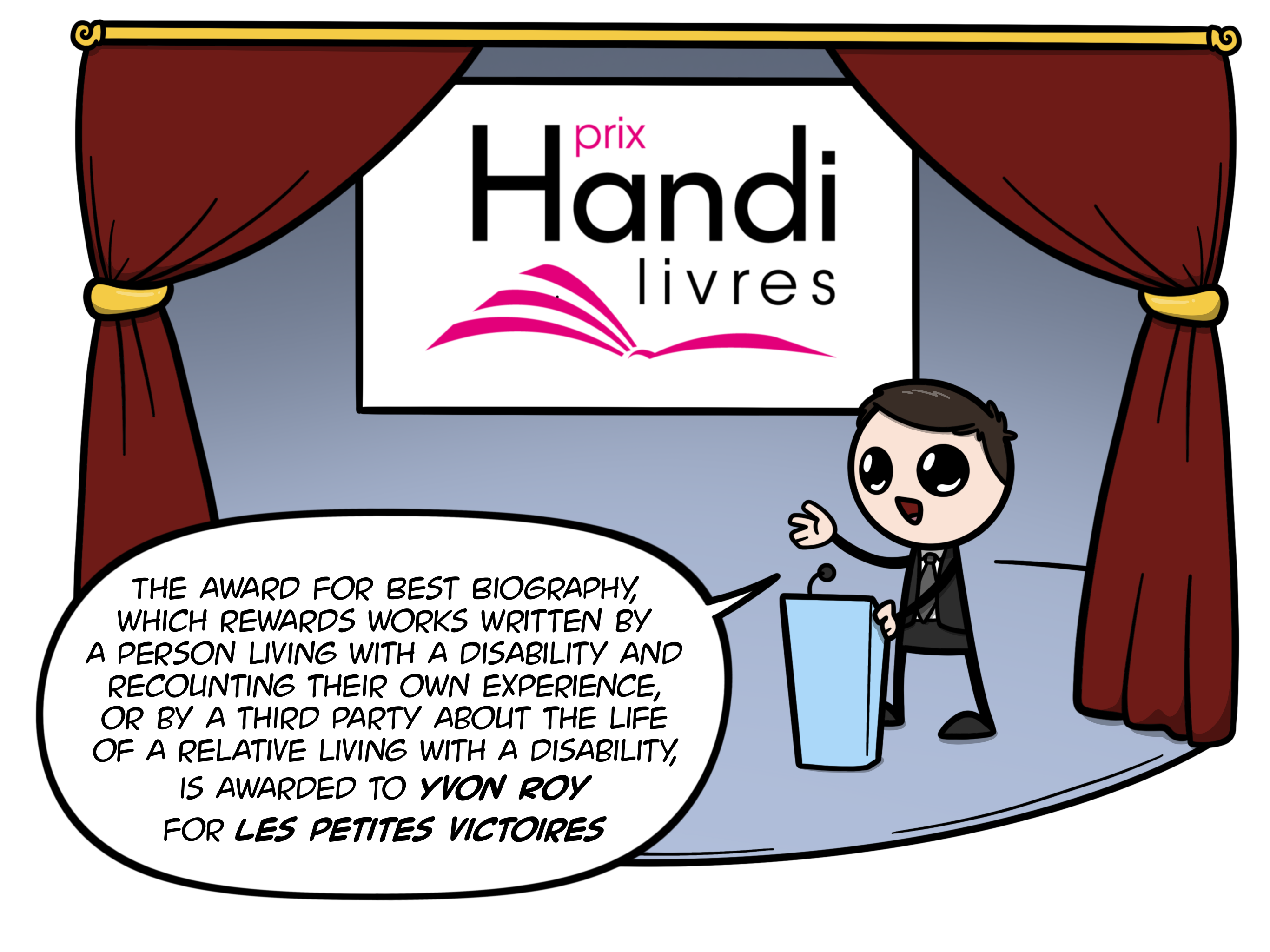

This is Marc, stand in for the author: Yvon Roy
This is his son, Olivier, who is autistic.
Les Petites Victoires showcases the fight of a father for his son, diagnosed with autism "in order to transform an announced defeat into small victories" (sic, our translation).
In his preface, Roy explains the contextualises the creation of his comic book:
"The idea was first suggested to me by a special educator who had worked with my son. She thought that what we had accomplished together was worth sharing so that other parents could find, through our experience, some useful information, if not a little hope" (our translation).
Interview
"When I started working with my boy to help him, with all the professionals in the field, I realized that often we were told, or they tried to tell us, that we had to work on living with autism, on accommodating autism. How we had to deal with different crises, different problems, whereas I thought, well, no, it's better, definitely, to try to overcome it than to live with it. And that's been kind of my master idea, let's say, for years with my boy, which is to try to push the boundaries constantly, always further." (Our translation)
Why choose this comic book?
This comic book is an example of a creation that is easily accessible to the general public that has been awarded and highly publicized - even winning an award that recognizes works written by a person living with a disability and recounting their own experience, or by a third party about the life of a relative living with a disability. In 2018, the publisher Rue de Sèvres announced a contract for a film adaptation, which caused reactions and led to the hashtag :
#boycottlespetitesvictoires
As we will show, this is an example of the social representations of autism that perpetuate dominant understandings that do not fit the lived experience of those directly concerned to the point of being discriminatory. It is also difficult to identify moments when the child (the autistic character) shows agentivity. Instead, he’s passive in his father’s story. In a way, Olivier is only a supporting character. This is exaclty why representation doesn't mean autorepresentation and why "nothing about us whitout us" matters: although this comic is presented as a positive narrative from the allist perspective (3rd person), the story is completely different from the standpoint of the autistic community’s testimonies (1st person).
An allist person is a non-autistic person.
To understand the term "allist", we must go back to the origin of the word "autistic" which comes from the Greek word "autos" which means "self". So the word "autistic" initially referred to a person withdrawn on themself, who lives in their own world. The term "allist" appeared in a satirical article to refer to non-autistic people by swaping “autos” for "allos" which refers to others. So an allist is a person who is focused on others or, to flip the usual narrative, a person who lives in other people’s worlds.
In spite of the satire, the term “allist” has remained in use among others because it allows to distinguish between "neurotypicals" and "allists". There are people who are not autistic, but who are not neurotypical: a non-autistic dyslexic person, for example.
For a deconstruction
of the problematic propositions of the comic book:
But do you know the story from the autistic community’s perspective?
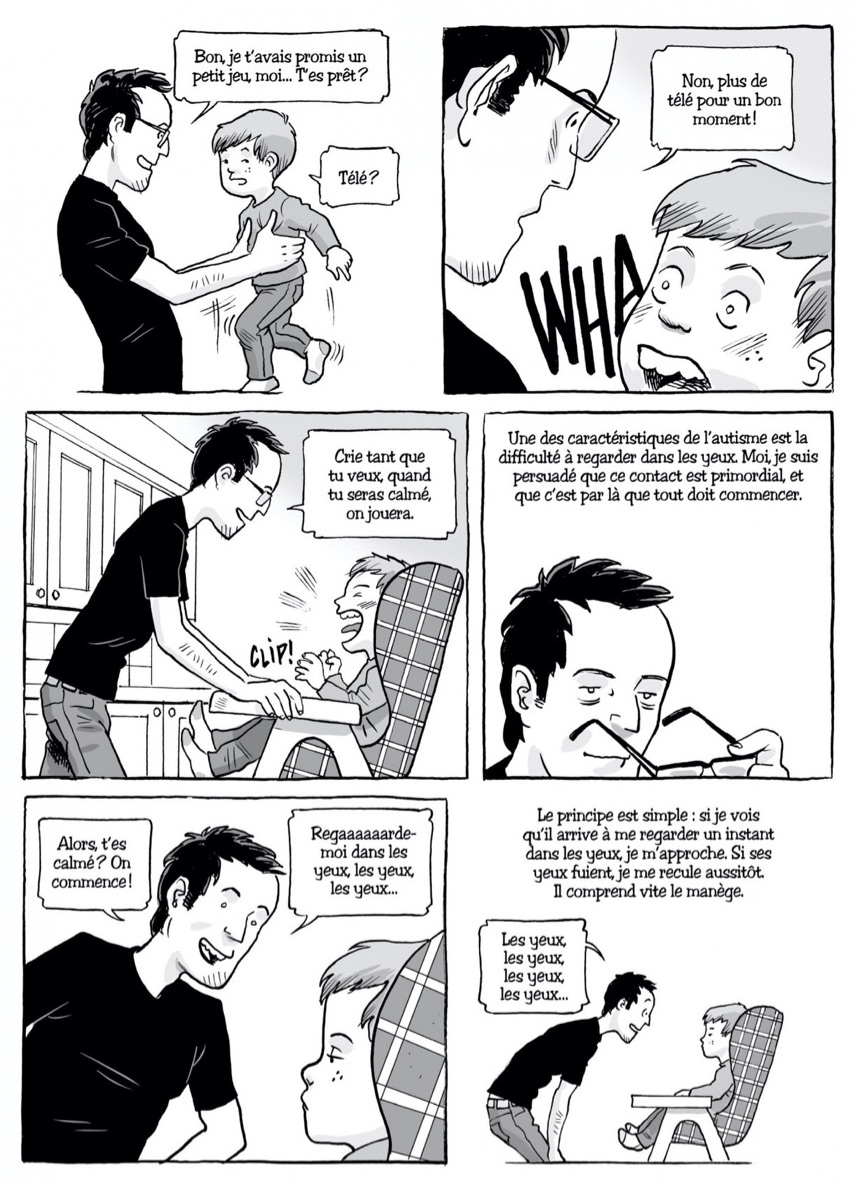
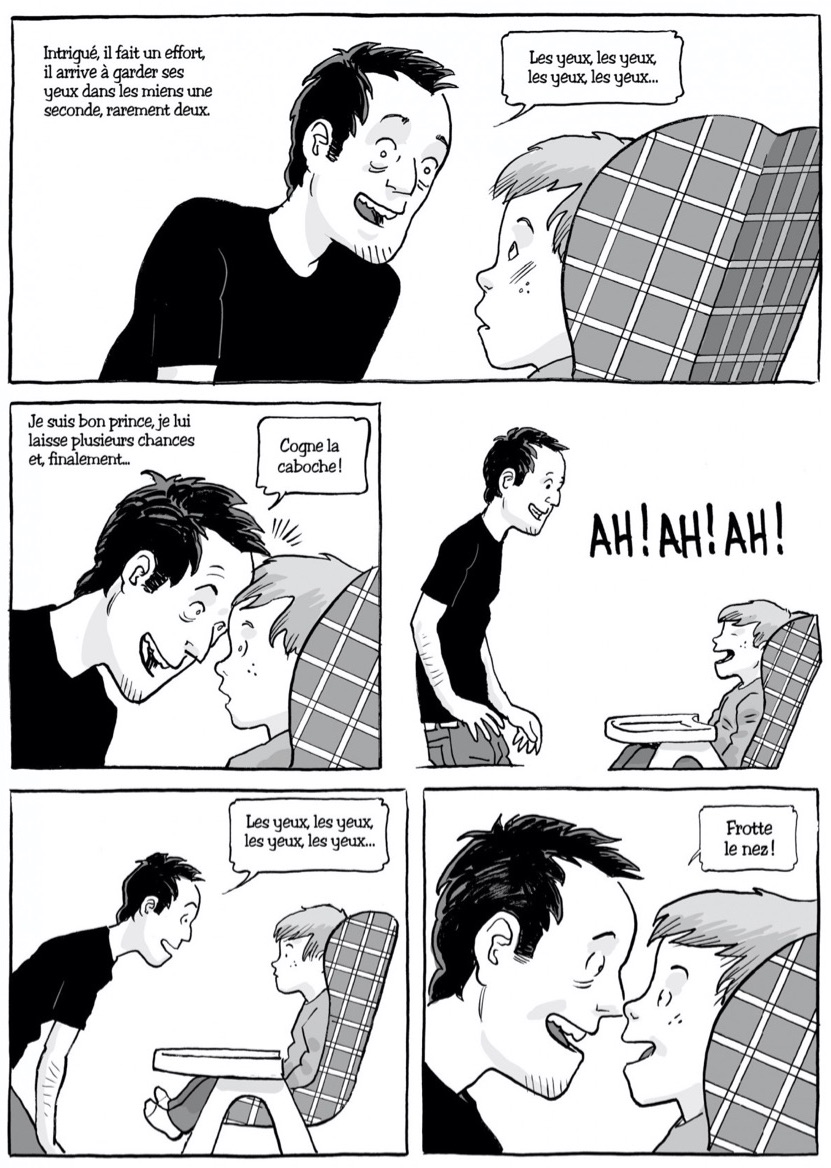
This is where webcomics can serve as an accessible tool that allows the reversal of dominant representations by opening the floor to self-representations directly grounded in marginalized communities. But before continuing with the topic of webcomics, we wish to feature an excerpt from Les Petites Victoires that addresses a frequent theme in autism: eye contact.
Excerpt on eye contact
English translation
English translation
Excerpt from Yvon Roy's interview
"I worked a bit like we can work to sometimes desensitize a substance. Sometimes certain people can have an allergy, we can try to desensitize them.
Several parents have contacted me regarding the trick to get the child to look in the eyes. This is the first thing we worked on together, that is to say, I considered that being able to look in the eyes - we know that autistic children have difficulty looking directly in the eyes - I said to myself, if we don't have eye contact, we have nothing. We need that, it's the beginning of human interaction." (our translation)
TW: The host uses the term “prison” in reference to autism:
"In your story that you shared with us in Les Petites Victoires, there is obviously the moment when you get up to face, to accompany your child in that reality: to learn to understand him too, inside what he lives and this prison, in a way, from which he is pressured which is basically this condition." (our translation)
Link to the interview (in French)


This scene is an example of neuronormativity
Recall that neuronormativity is the prevalent, neurotypical set of assumptions, norms, and practices that conceives of neurotypicality as the only acceptable or superior mode of cognition, and that stigmatizes attitudes, behaviors, or actions that reflect atypical modes of cognition as deviant or inferior.
This scene is told from the allist perspective and is presented with a positive outcome. In fact, as the author mentions, parents have applied this technique with their autistic children after being inspired by it.
But what if we ask autistic people how they feel about eye contact? That's exactly what we are going to do.
PART II

Why webcomics?
The medium of webcomic enables me to do something I don't know how to do otherwise: share how things feel on the inside.
Imagine. You come across a newspaper at the local coffee shop and recognize the face of a well-known personality. Yet you can't remember their name. It annoys you, you know you know it, it’s just not coming out, it stays there, on the tip of your tongue. You have time to come back to work, coffee in hand, and the name still hasn't come back to you, it still annoys you. You come across a colleague and you ask them, you describe the person, maybe clumsily at first (it would be so much easier with their name!), but you adjust to your interlocutor and, together, you can finally recall their name, it was so obvious!
It’s important to emphasize this feeling of annoyance. We rarely take the time to mention this annoyance when talking about epistemic injustices. Yet it is there, and it can even be painful: how do we make sense, to use Fricker's classic example, of our experience of sexual harassment when the concept does not yet exist? How can we share the feeling that something is wrong? This is where community comes into play and it is why the idea of "by and for" matters more than, say, a criterion of simplicity might. This is addressed by feminist epistemologies: for example, Longino argues for pragmatic values in science such as diffusion of power (as the importance of making research programs accessible to the actors involved in the research).
The impact of inadequate social representations on neurodiversity cannot be fully resolved by the traditional narrative of epistemic oppression and justice: adding new vocabulary to collective epistemic resources is not a panacea (we already have the word "autism" for example). So it is not only words that are missing, but rich and diverse lived experiences are also missing from the pool of shared resources.
The problem is that what is missing, the hermeneutical gaps, are not automatically apparent: social representations created by and for the dominant groups inadequately fill the hermeneutical gaps of marginalized groups. To that effect, let us recall here the Handi-Livre prize for the best biography which rewards works written by a person with a disability and telling his or her own experience, or by a third party on the life of a close relative with a disability: In the case of Les Petites Victoires, the award went to the biography of an allistic (non-autistic) person talking about autism. These inadequate social representations are difficult to resist: they are constantly and persistently reproduced. It is even harder when you don't have the words to replace theirs. But do we really have to wait for the right words to share our experiences? This is where illustration can become an attention grabbing action like shouting: an action that does not need words. This is what we propose here: a form of non-propositional epistemic resistance in response to hermeneutic injustice.
Webcomics are basically online comic books. They are mostly instantiated as short comics that take many forms and cover many topics. The most common form of webcomic is probably the blog (sometimes autobiographical, sometimes entirely fictional, sometimes both). Because they are mostly published independently by their artists, webcomics are an art form that is not limited by institutionalized power dynamics such as publishing houses or art galleries.
But the most important thing for us here is that webcomics are able to generate aesthetic experiences that allow viewers to better understand different aspects of the lived experience of neurodivergent people despite the inadequacy of mainstream epistemic resources.
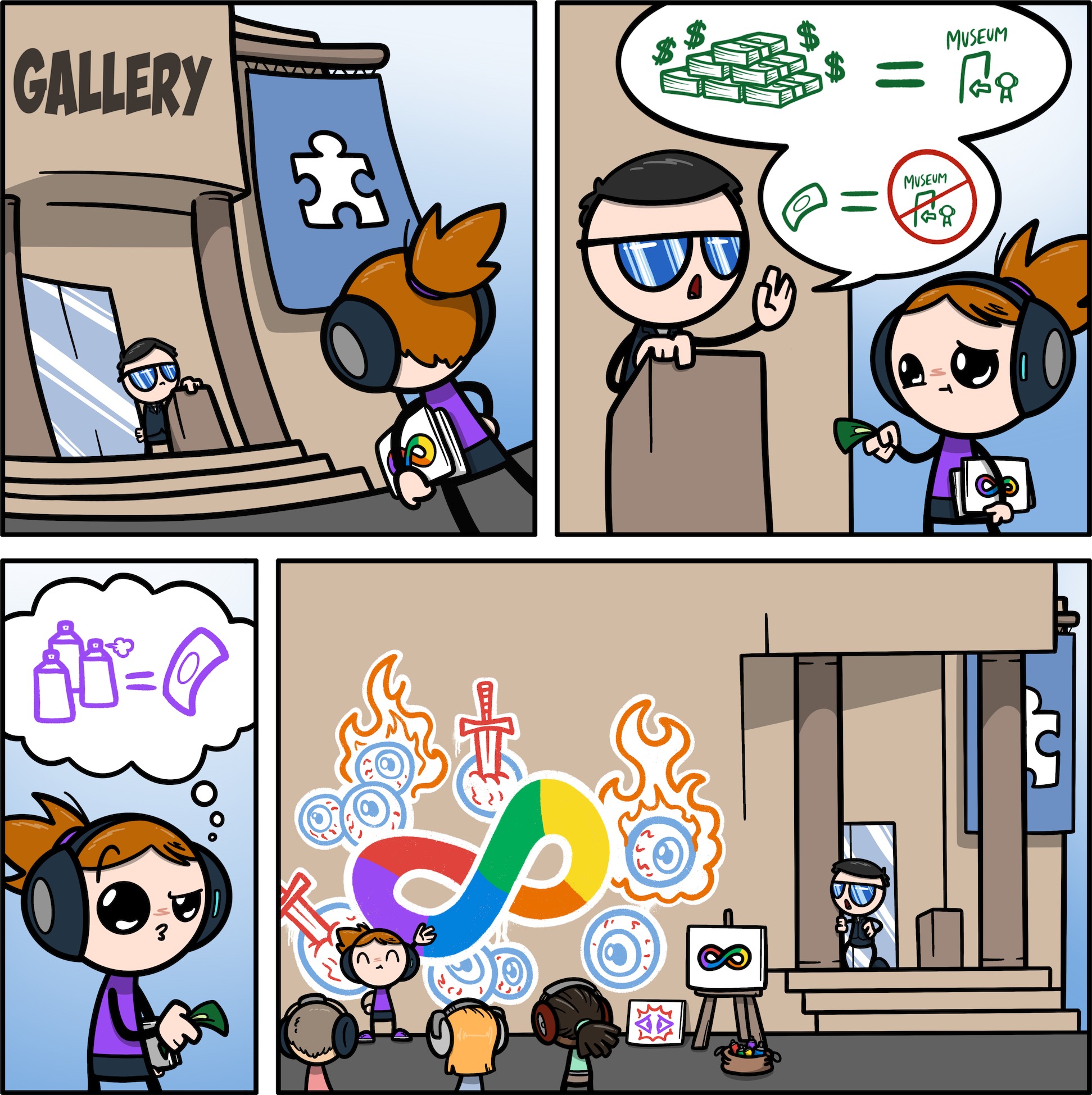
In some ways, webcomics are a digital version of street art.
Although limited to a given geographical space for street art and to a particular digital platform for webcomics, there is this common idea where it is not so much the public that goes to the creation as the creation that goes to the public. We are no longer in a reserved and predefined space like a museum, a bookstore, a gallery or even a library.
Although a recognized artist can make street art, it is more difficult for an artist who does not belong to a complex and influential network to access some places of diffusion such as an art gallery. Webcomic is thus added to the tools that allow the production, use and transmission of more accurate social representations, participating in the collective understandings of the oppressions suffered by epistemically marginalized groups. The public and interactional aspects of social media that support webcomics make them a catalyst for direct dialogue with (but also within and between) marginalized communities.
To put our epistemic resistance into action,
and to enhance our imaginative ressources, we chose to gather first-personal testimonies and descriptions of how eye contact can feel for autists.
After all, who better to provide insight into a given lived experience than those who live it? To do so, we used social media (instagram and facebook) to ask autistic followers of our webcomic (@lilyspectrum): How does eye contact feel to you? Although we are neurodivergent, it was important for us to go with the community beyond our individual experiences. For instance, we would never have thought of the sunburn idea on our own, but once we read those testimonies, it felt right.
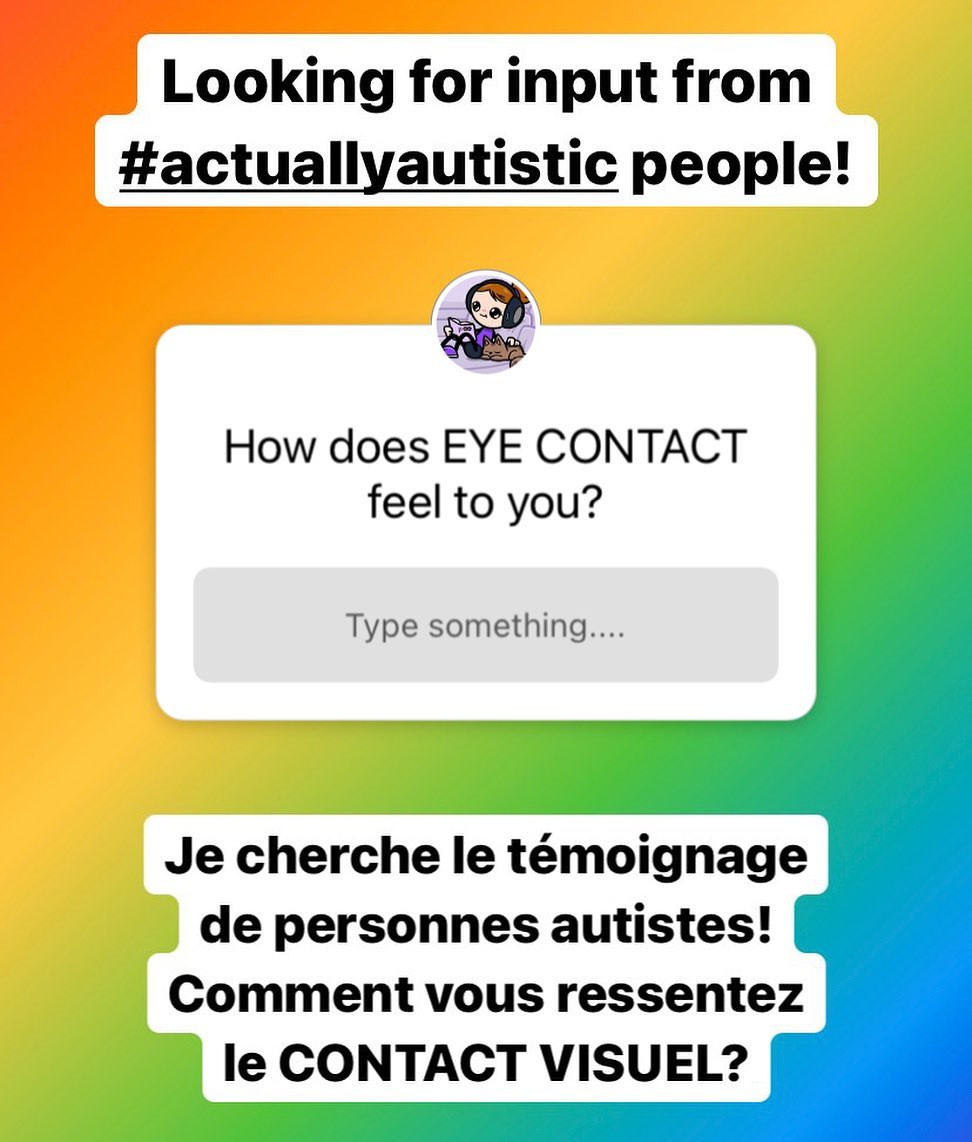
Both posts were made on November 8, and three days later, on November 11, we had received 175 testimonies. A few major themes emerged from these testimonies, which we used to base 7 webcomics or illustrations on. Keep in mind that, with this process, we do not claim to represent all there is to express about autists’ first-personal experience of eye contact. In fact, we suggest you visit these posts yourself to better understand the varied responses we got, and are still getting. And who knows, maybe this will allow you to add your own insight.
Publication
Since Monday, we have started to publish these comics on our social networks and we will continue to publish them in the following days
The interactions that take place around such webcomics are, we believe, an integral part of their complete aesthetic experience. These interactions often bring about clarifications, complementary details and descriptions or even added meaning. We thus invite you to visit these posts and interact with the community.
Webcomics
"I can do it but I can’t process anything else while doing it. My natural instinct and what feels the most right is to not look at someone’s face at all"
"It was drilled into me as a "rule" of politeness. I view it as just that, a rule. It's easy when there's multiple people because I can look around. But with one person, I have to look away or I end apparently end up staring"
"Everyone insisted on it, especially when they really wanted to correct a behavior or ensure I was paying attention. I honestly still don't love it, and prefer to look at noses or eyebrows to provide the impression I'm making eye contact"
"Eye contact was enforced during my childhood in mostly abusive ways and while it taught me to fake it, that made me hate it even more. Generally it just makes me uncomfortable and I find it quite distracting but it's also one of the most tiresome things to mask."
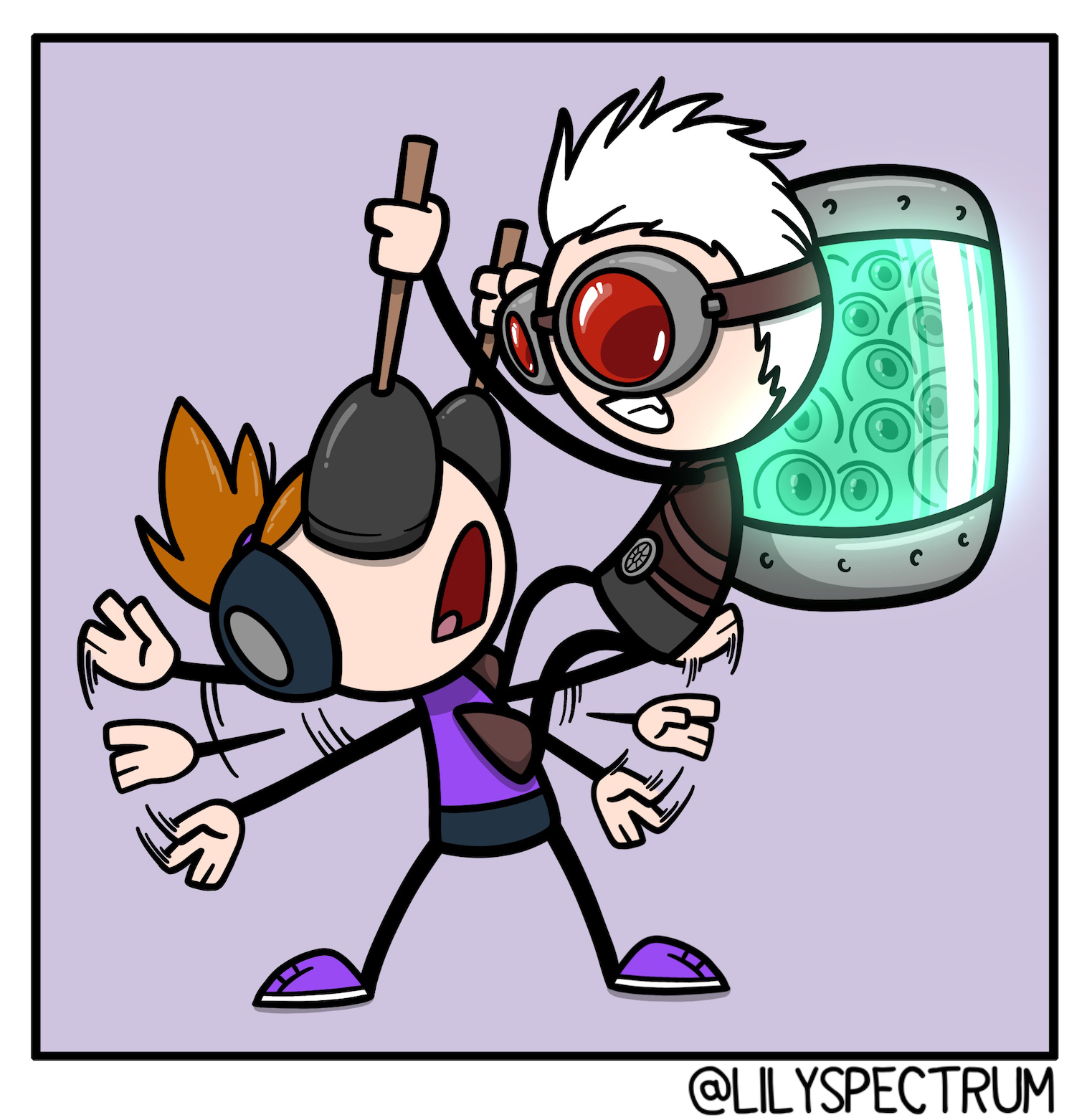
"Eye contact feels like they're staring into my soul, but with knives. I can make short eye contact before wanting to cry."
"It takes a concerted effort except for specific people."
"I’ve been so conditioned to make eye contact with people that when I met a lot of my friends for the first time they were kinda weirded out by me unblinkingly paying attention to them when they talked like 👁👄👁"
"It feels like someone is looking right past all my defenses and directly into my head. Not very pleasant."
"Terrifiant, j'ai vraiment l'impression qu'on me transperce à chaque fois …"
"Like I am being stabbed in the brain, itchy under the scalp, or suffocating. Anxiety is anxiety. I look at people's foreheads. They never know the difference but I am not forced to juggle the pain of eye contact and try to communicate. I am mostly non verbal and eye contact guarantees no words."
"Ça me met vraiment mal à l'aise et j'ai peur qu'on puisse mal interpréter si je regarde pas "correctement", je sais pas si je dois regarder quelqu'un dans les yeux ou combien de temps, il faut surtout pas que je regarde autre chose chez lui que ses yeux et du coup je sais pas quoi faire je préfère regarder le mur derrière mon interlocuteur 😂"
"Tout dépendra de la situation, de ma fatigue et de la personne. Certains contacts peuvent être transperçants (douloureux), d'autres envoutants (confusants), d'autres destabilisants (perturbants). En tous cas, si je regarde qqn dans les yeux, je suis sûr de perdre mon fil de pensée et/ou d'accorder mes réponses à ce que la personne ressent."
"Eye contact feels like burning discomfort, especially when I'm being told to do it."
"It’s extremely hard for me to maintain eye contact, and when people express to me that I should be looking at them when I’m talking to them, it puts me under more stress than just talking to them in the first place"
"somehow being told we should be making eye contact feels like being reprimanded as a child, at least to me.. I can't count the amount of times my mother would tell me to look her in the eyes as a child, and how humiliating/stressful it felt.. I legit forget to listen to people because I'm too busy trying to maintain eye contact."
"At best, awkward and uncomfortable. At worst, like someone's stabbed me in the eyes."
"It makes me uncomfortable but my mother forces me to look people in the eyes"
"Painful, but I feel like if I don't look ill be punished or called a liar. So I trained myself to look at something over their shoulder if not their foreheads to avoid harassment."
"Habituellement je regarde plutôt la bouche ou le nez des gens et ça semble passer crème pour donner l'illusion que je regarde dans les yeux (j'ai eu droit à l'expert en haute potentialité qui me disait que c'était impossible que je sois autiste car.. je le regardais dans les yeux ! Je regardais sa bouche depuis le début de l'entretien..). Je ne me force au contact visuel que de manière consciente et dans de rares cas précis : [suite]
(suite) par exemple si je suis attiré romantiquement par quelqu'un et désire que cette personne le perçoive (vu que le contact visuel accru est interprété de cette façon par beaucoup de neurotypiques). Mais cela reste un sacré effort et en général je détourne les yeux très rapidement, ça me met mal à l'aise, c'en est presque physique. Récemment un de nos profs en cours nous a fait faire une série d'exercices où on devait marcher vers quelqu'un/revenir à sa place à reculons en gardant le contact visuel constant avec cette personne.. je vous laisse deviner la torture que c'était"
"Transperçant!"
"J'ai l'impression que les yeux de la personne me percent à l'intérieur, je sais pas comment dire, c'est une sensation d'oppression aiguë."


"For me, looking in the eyes feels too exposed and open. It makes me feel like I can't hide and protect myself from the people."
"Eye contact makes me uncomfortable most of the time, because of the feeling that I am being silently judged or getting talked about negatively."
"It's fine when I'm listening to someone but when I'm the one talking it makes me get stage fright like I'm being put on the spot to judge for performance lol"
"Too intimate, inappropriate… I become incredibly self conscious as well, like am I doing eye contact right? Should I be mirroring their behavior or a close approximation or complete opposite? How many times should I blink? Can they tell I’m faking this human interaction? It’s incredibly stressful."
"It feels like something is a required check box. It’s like a math problem. Look, one, two, three. Okay. Look away. Zone out if you need to. Okay, it’s been 10ish seconds. Look back. One, two, three.. okay, look away! Don’t share at them! Wait! You’ve looked away too long! Look back! …..it’s that on repeat quite often lol"
"I hate it I get so nervous and then I break down."
"I don't like it, makes me really uncomfortable. I'm "good at it", because I mask well (😬). I never know what to do, if I'm looking to much or not enough and always use a whole lot of energy just on eye contact. Generally, the more comfortable I feel the less I look someone in the eyes. (Also eyes as a body part make me feel really icky so that's that)."
"Intimidating and uncomfortable, I feel too vulnerable and keep thinking am I doing this right?"
"Ça me met vraiment mal à l'aise et j'ai peur qu'on puisse mal interpréter si je regarde pas "correctement", je sais pas si je dois regarder quelqu'un dans les yeux ou combien de temps, il faut surtout pas que je regarde autre chose chez lui que ses yeux et du coup je sais pas quoi faire je préfère regarder le mur derrière mon interlocuteur 😂"
"Eh bien, quand j’étais petit, je parlais et écoutais souvent le monde sans les regarder dans les yeux. Maintenant, ça me dérange pas de parler et écouter avec le contact visuel, mais j’peux très bien comprendre ce que le monde me dit sans obligatoirement les regarder dans les yeux. Aussi, c’est vrai que ça me rend un peu mal à l’aise quand des inconnus me fixe du regard. C’est comme s’ils me jugeaient et j’sais pas ce que j’ai fait de mal."
"Direct eye contact feels like I am being judged. It also makes me feel uncomfortable because I become unable to perceive and read the rest of their body language."
"Démunie, nue. Percée à jour. C’est très fort comme sensation, et rarement agréable. J’y arrive avec mes enfants ou mon mari, mais même dans ce cas, pas trop longtemps. Si je veux tenir une conversation, et me concentrer, alors je dois ruser. Je regarde entre les deux yeux ou le plus souvent la bouche."
"Feel nausea and anxiety, and extremely naked. Yet my mother was adamant that I learned it and therefore I am able to do it, despite the uncomfortable feelings. Absolutely love your work, for once I can tell that I am not alone"
"I feel instant stress and I have to force myself to do it and to look "natural"."
"Honestly, each time it happens to me, the most awkward feeling I have is « where should I look exactly » ? When you make eye contact, are you expected to focus one eye specifically (which one, then ?), between the eyes, not focus at all, or try a weird way of having each eye "looking" into the facing one (i.e. my left eye "looking at" their right one and vice-versa) ? I'm also never sure if/when eye contact is expected, and when it happens, is there/what is the hidden message behind this specific contact, and/or am I sending an incorrect hidden message myself ? Then, with all these questions actively consuming my brain "computing power", everything else totally miss the point (sometimes, though, I can hide this issue because I have this kind of ability to "replay" the last few words/sentence I unconsciously heard, to process it with a delay but potentially without the proper context- so it's not reliable at all !!). "
"Weird and artificial. I can actually read people's eyes now, but it took me years to learn it."
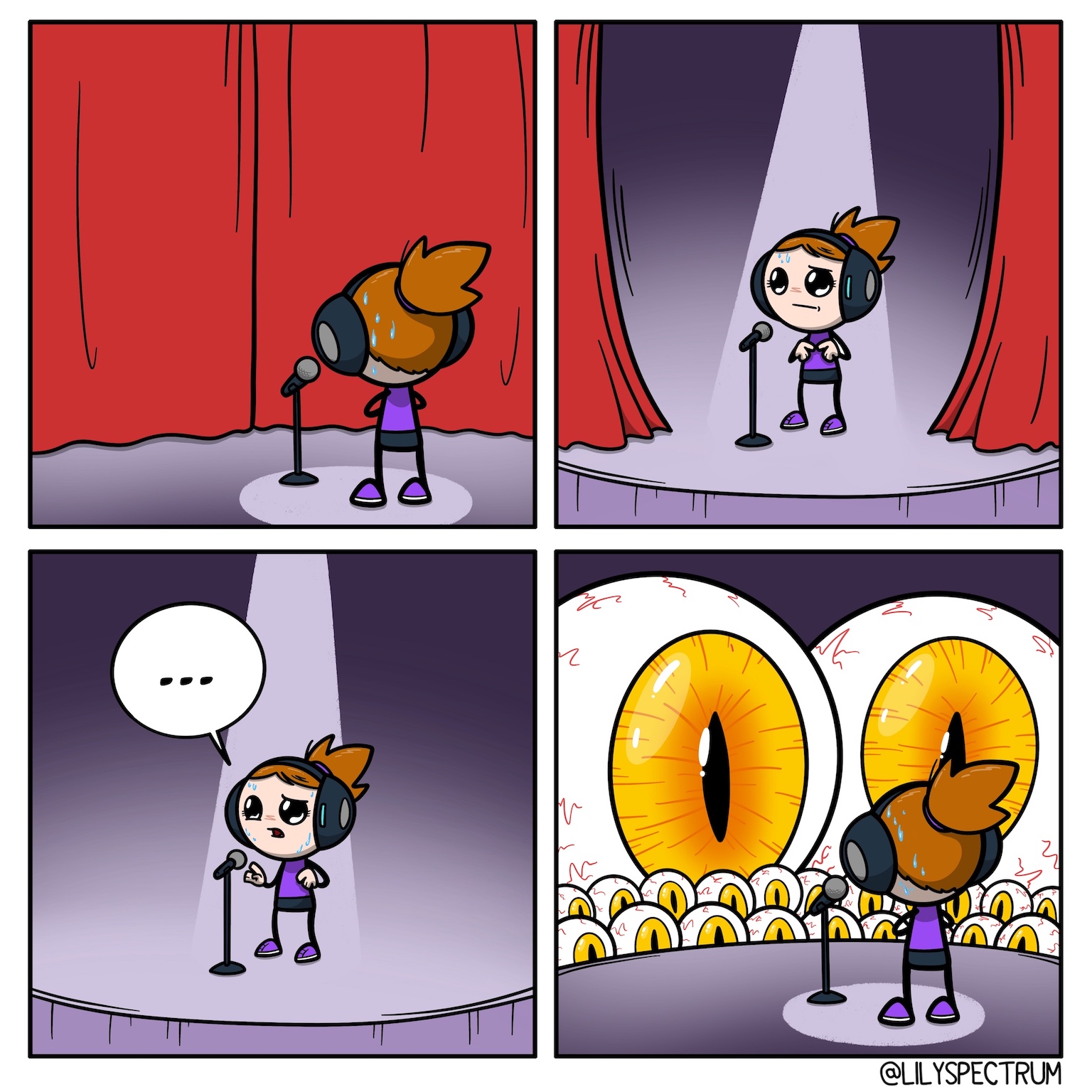
"My parents rasied me to always look into the eyes, still feels wrong. Like, I am invaiding a personal space and being rude. Like trying to stare down their soul and violating their privacy. I still try to look at people in the eyes but have learned to just looks in differents points in the face so I don't seem rude."
"Eye contact feels too intimate to me for most interactions. If I make eye contact with you, it’s because it’s important. "
"Eye contact feels very intimate. If I’m forced to hold it for too long, I feel violated, like I’ve been touched without consent."
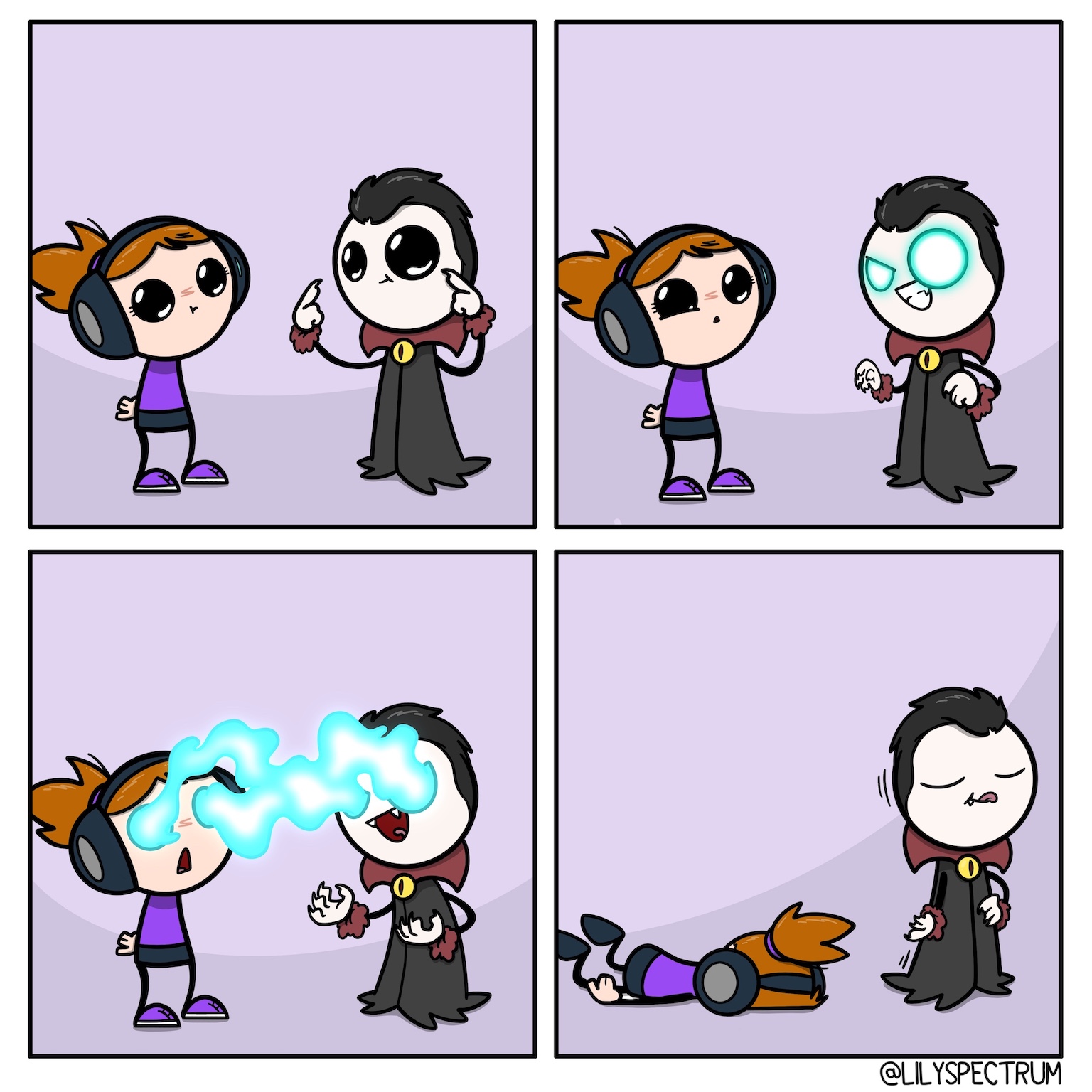
"I really hate eye contact in almost all circumstances. About the only exception is with someone I'm very intimate with. Eye contact feels extremely intimate to me in general so it only feels natural when it's with someone I've got a suitably intimate emotional connection to. Otherwise it feels like I'm staring into someone's soul and I can see everything and they're staring into mine and seeing the same (even if I know they're not)."
"Invasive, extremely personal. I'm only comfortable looking my husband in the eyes"
"It feels like I’m standing too close to someone, I don’t know if that’s too vague of a comparison but it feels way too intimate. So I only do it when necessary or when I’m comfortable with that person."
"It feels creepy to me"
"I don't like it, makes me really uncomfortable. I'm "good at it", because I mask well (😬). I never know what to do, if I'm looking to much or not enough and always use a whole lot of energy just on eye contact. Generally, the more comfortable I feel the less I look someone in the eyes. (Also eyes as a body part make me feel really icky so that's that)."
"I hate eye contact. It almost hurts. But it’s nessesary to have a successful professional life, and my parents trained me well as a child. They would ask me people’s eye color after I met them to see if I made eye contact. Being trained like that at a very young age was incredibly difficult and felt unfair, but I’m very grateful that they pushed me now that I’m an adult."
"I can't do it, it makes me feel funny in a bad way and makes me feel kind of .. unsafe? and uncomfy I don't exactly know the word for the first one, I don't mind people looking at me but I won't look back"
"It's incredibly intimate and overwhelmingly so, particularly with strangers. And the more my emotions are revved up, the less I can tolerate it. It genuinely feels as though someone can see into my mind almost, even though I know that they can't. On the plus side, when I'm with someone I deeply, deeply love, sometimes that's okay because I want them to see how much I love them... but then that tends to make THEM feel awkward and uncomfortable too. LOL For me, it falls into the same category as standing too close, invading personal space, touching someone without consent etc. It's intimate, and can very easily become violating when you don't want it. And that;s so hard to explain to NT folk who expect you to look them in the eye all the time."
"It's okay with people I know, but I don't feel comfortable with eye contact with strangers, it almost feels like an invasion of privacy."
"eye contact feels so weird and creepy and if i have to make eye contact with someone, then ill quickly feel exhausted."
"It feels like a boundary rupture unless I completely and totally feel comfortable in a container of safety with another it probably won’t happen much."
"Well... I can't let anyone touch my eyeballs."
"Trop intrusif. Comme si l autre avait la perception de mes pensées. C est comme se montrer nue."
"Intense/ overwhelming/ fiery/ intrusive. Sometimes painful/ always difficult with strangers. Ok with intimate friends and family."
"Démunie, nue. Percée à jour. C’est très fort comme sensation, et rarement agréable. J’y arrive avec mes enfants ou mon mari, mais même dans ce cas, pas trop longtemps. Si je veux tenir une conversation, et me concentrer, alors je dois ruser. Je regarde entre les deux yeux ou le plus souvent la bouche."
"Feel nausea and anxiety, and extremely naked. Yet my mother was adamant that I learned it and therefore I am able to do it, despite the uncomfortable feelings. Absolutely love your work, for once I can tell that I am not alone"
"confronting and very intimate ..i feel naked"
"Quelque chose d'extrêmement intime, que je ne peux pas partager avec n'importe qui sinon je suis déstabilisée car je bloque sur cette sensation d'intimité forcée. Depuis le diagnostic, je me permets de ne plus regarder le visage des gens (je ne travaille pas). Quel soulagement!"
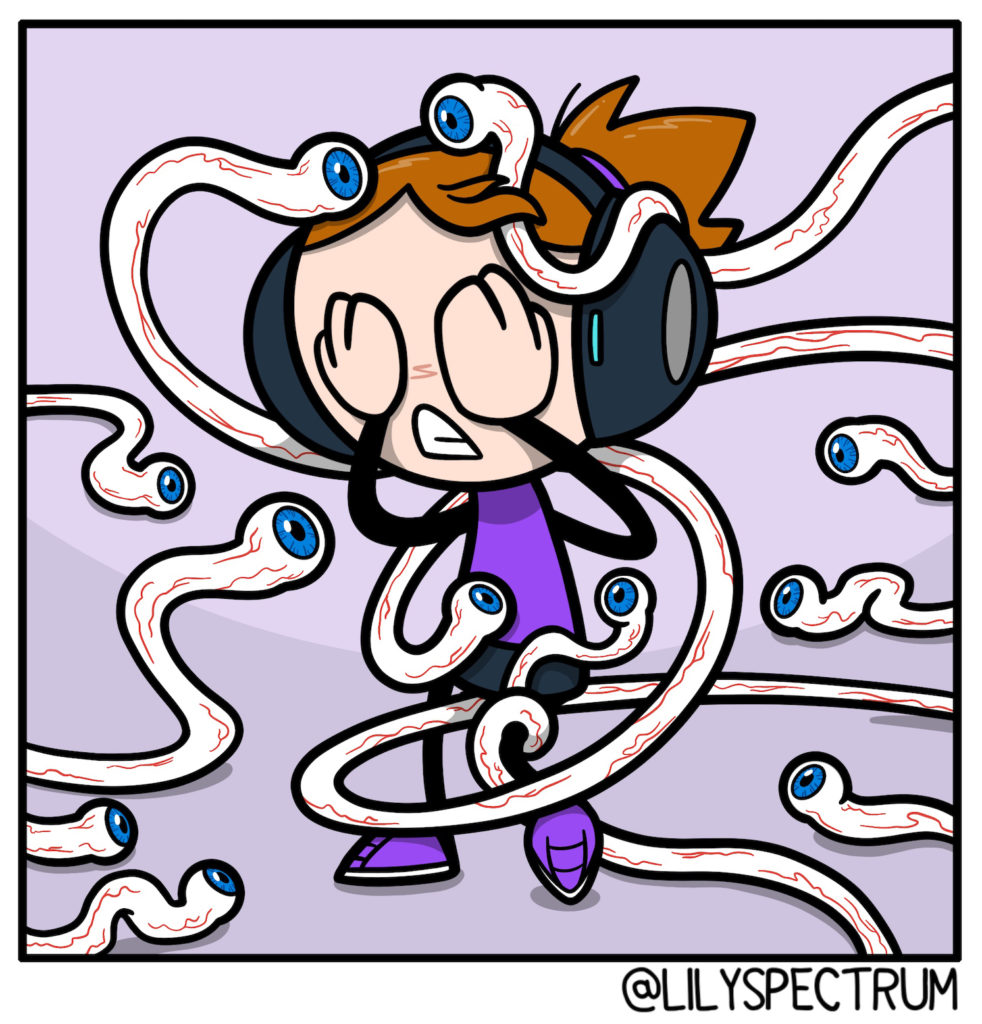
"Eye contact feels like they're staring into my soul, but with knives. I can make short eye contact before wanting to cry."
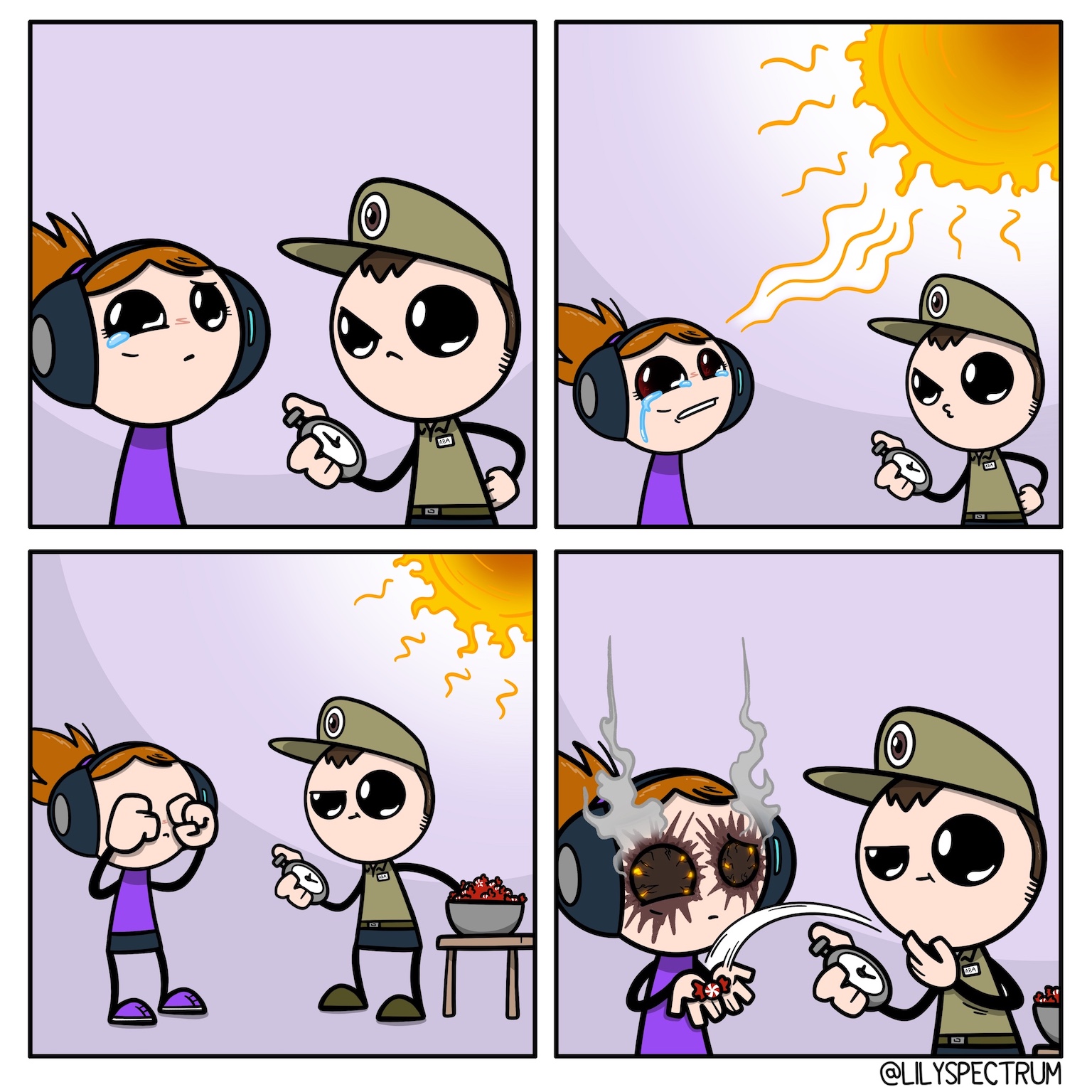
"It’s like being asked to look directly at the sun. I flinch, I can’t do it…"
"It feels like they gonna shoot me with laserbeams. Like Cyclops from X-Men. I van handle it for 10 seconds. I get panick attacks of it's to long. Even with my bf makes me on edge. I got a major panic attack during a being social etc exam (idk how it's in English is). It was so bad. They let me past because otherwise i needed to do the whole year over."
"Feels like I’m staring at the sun and I can only look a person in the eyes for 30 seconds or so before my eyes start to hurt a bit. I can only look animals in the eye."
"Like flames of intense awkwardness are scorching my retinas."
"When I was younger I always had trouble making eye contact. I’ve gotten better at it in recent years but its still painful to me."
"Eye contact feels like burning discomfort, especially when I'm being told to do it."
"Ça me demande beaucoup de concentration. J'ai l'impression que ça me fait mal aux yeux et quand j'étais plus jeune je pouvais même ne plus vraiment entendre ce que la personne me disait. Par contre ce n'est plus un problème quand je me mets vraiment en colère au point de vouloir me battre."
"Ca va de la gêne à la sensation de brûlure, ça dépend des personnes je suppose. On peut parfaitement regarder le nez, la bouche, entre les yeux sans que l'autre ne sen rende compte."
"I can’t think if I have to. Feels like pressure."
"Bad, I feel like my head is going to explode if I look at someone's eyes for too long. I suspect it's probably a blood pressure drop or adrenaline, but it feels awful. I honestly don't get why so many people require eye contact when speaking. I can make eye contact, but it's really difficult to understand what the person is saying because I'm too focused on how uncomfortable I feel and how incredibly awkward it is to stare at someone's eyes"
"It feels literally painful and I’m always afraid the other person can tell what I’m feeling/thinking. I’m comfortable with eye contact with very trusted folks in my life though."
"Painful"
"I really hate eye contact in almost all circumstances. About the only exception is with someone I'm very intimate with. Eye contact feels extremely intimate to me in general so it only feels natural when it's with someone I've got a suitably intimate emotional connection to. Otherwise it feels like I'm staring into someone's soul and I can see everything and they're staring into mine and seeing the same (even if I know they're not)."
"I cant make eye contact with literally anyone. Its uncomfortable, and even when its not, i cant listen proberly to what people are saying when i focus on the eyes. I just cant do it at anytime with anyone, only for one second maximum. Its like staring into someone's soul, its too much."
"J’ai l’impression d’être absorbée par les yeux de la personne et en même temps comme si on pouvait voir ce qu’il y a à l’intérieur de moi."
"honestly it feels like i am being sucked into their soul… i can’t maintain it if i want a conversation because i just get lost"
"Like someone staring at my soul? I almost feel like that's the part of masking that exhausts me the most!"
"It's uncomfortable. But sometimes if I want to intimidate someone I stare deep into their eyes and make them feel unnerved like I'm looking into their soul."
"Tout dépendra de la situation, de ma fatigue et de la personne. Certains contacts peuvent être transperçants (douloureux), d'autres envoutants (confusants), d'autres destabilisants (perturbants). En tous cas, si je regarde qqn dans les yeux, je suis sûr de perdre mon fil de pensée et/ou d'accorder mes réponses à ce que la personne ressent."
"Trop intrusif. Comme si l autre avait la perception de mes pensées. C est comme se montrer nue."
"J’ai l’impression d’entrer dans l’âme de la personne. Je trouve ça trop privé. Alors je ne regarde que ceux dont j’ai vraiment envie de découvrir ce qu’il y a au plus profond d’eux même"
"I'm okay with it for small periods of time, but if it's more than a minute, I have to look away, it makes me super uncomfortable after that"
"It took me around 2 years to be able to do eye contact (kind of struggle still-) but normally if im uncomfortable looking at the eyes, ill just look at the nose instead"
"Awkward. The longest I can probably do it is for a few seconds, but sometimes it’s physically impossible for me to look someone in the eyes even for one second."
"Ça me met juste très mal à l’aise, et du coup je préfère regarder ailleurs et ne regarde les gens dans les yeux s’iels ne me regardent pas."
"Incapable de soutenir un eye contact sauf avec certaine personnes... Ma famille (ma mere, mon pere, ma soeur), ma nièce, mon beau frère et mon conjoint. Quelques amis specifique aussi... Mais sinon incapable. Je chercher tjrs a "évader" ses eye contact."
"Uncomfortable. I have trouble maintaining eye contact for long, especially in a conversation. However, I did figure out that talking with your hands is a great way to distract the other person's eyes from your and gives you a reason not to look at them."
"havent made eye contact with anyone (while i'm talking to them, that is) except my cats in years if that tells you anyone"
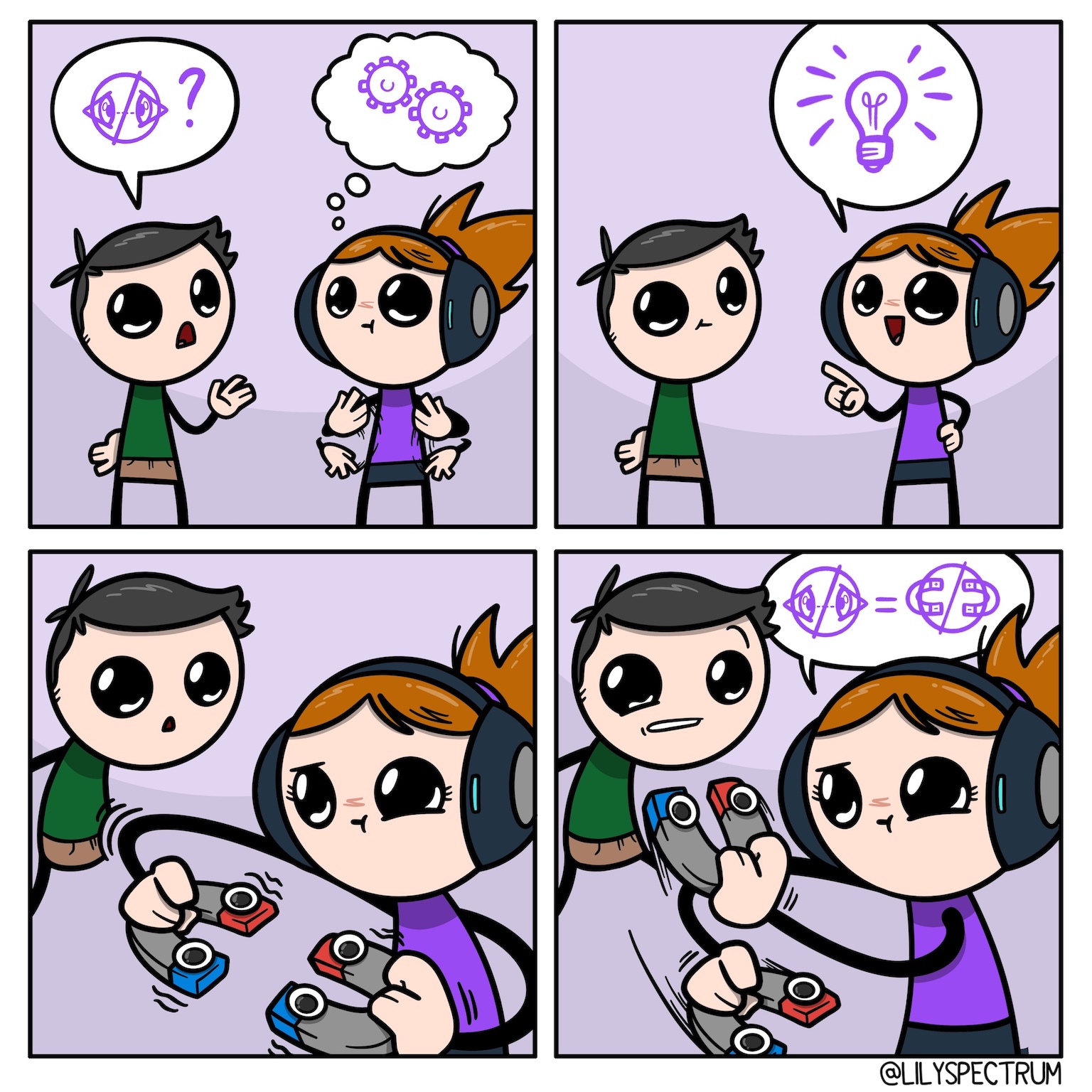
"When I was younger, it used to feel like when you held two magnets together both ends the same, it felt like no matter how hard you held them together, it would want to repel forcefully, my head wanted to repel and look past to the left or right or down or up like a magnet would, and when I managed to hold it against that feeling, my eyes would water up, not tears from sadness or anything, but they released tears, now I can manage it but it's still not comfortable to do, it depends on how comfortable I feel with the person or people or how stimulated I feel in an environment"
"It’s like when you hold two magnets with the same polarity against each other. Even if you want to put them together they won’t do it. The magnets are like my eyes. They just can’t center on the other persons eyes or it will cost a lot of energy. Like with holding magnets with the same polarity together. It’s just all in all very uncomfortable and draining. Btw I’m undiagnosed so I hope I can still answer here. Also I really really love your account and the stuff you do ^^ /g"
"Ça me met vraiment mal à l'aise et j'ai peur qu'on puisse mal interpréter si je regarde pas "correctement", je sais pas si je dois regarder quelqu'un dans les yeux ou combien de temps, il faut surtout pas que je regarde autre chose chez lui que ses yeux et du coup je sais pas quoi faire je préfère regarder le mur derrière mon interlocuteur 😂"
"Je me sens obligé de regarder chaque personne dans les yeux mais aussitôt que le contact est réciproque je baisse le regard aussi vite que mon ombre ainsi j'ai l'impression que j'ai fait ma part! haha! Par contre avec le monde avec qui je suis très, très à l'aise je vais quelque fois fixer les yeux, on dirait que j'essaie de comprendre pourquoi je fuis ceux des inconnus, alors je fixe en grand questionnement interne!"
"Awkward and physically painful , strong need to move my eyes away from it"
"Souvent trop intense… Et en plus il se passe tellement de choses autour des yeux qui m'intéressent plus et/ou me sécurisent plus! Je fixe puis je zappe, j'y reviens et je rezappe… Les sourcils, les lunettes, sont des bons compromis aussi, ou fixer mon regard dans le vague direction le visage ou le pourtour du visage… Ou fixer le visage avec une attitude très intéressée (posture corporelle de l'attention soutenue) quand la personne regarde AILLEURS, et quand son regard se tourne vers moi, fixer 1s seconde, sourire, et me tourner ailleurs vers qqn d'autre qui parle mais ne regarde pas vers moi à ce moment là, ou trouver à m'occuper avec un objet, et jongler comme ça."
"Je n'aime pas regarder sans les yeux, je ne sais pas, c'est plus fort que moi, je suis mal à l'aise, je ressens le besoin de regarder ailleurs. Du coup j'aime bien discuter quand je suis au resto ou quand on fait une activité, il y a l'excuse d'être occupée en même temps pour ne pas se regarder"
"Habituellement je regarde plutôt la bouche ou le nez des gens et ça semble passer crème pour donner l'illusion que je regarde dans les yeux (j'ai eu droit à l'expert en haute potentialité qui me disait que c'était impossible que je sois autiste car.. je le regardais dans les yeux ! Je regardais sa bouche depuis le début de l'entretien..). Je ne me force au contact visuel que de manière consciente et dans de rares cas précis : par exemple si je suis attiré romantiquement par quelqu'un et désire que cette personne le perçoive (vu que le contact visuel accru est interprété de cette façon par beaucoup de neurotypiques). Mais cela reste un sacré effort et en général je détourne les yeux très rapidement, ça me met mal à l'aise, c'en est presque physique. Récemment un de nos profs en cours nous a fait faire une série d'exercices où on devait marcher vers quelqu'un/revenir à sa place à reculons en gardant le contact visuel constant avec cette personne.. je vous laisse deviner la torture que c'était"
"Lorsque c'est quelqu'un avec qui je suis à l'aise ca va à une certaine distance mais de trop prêt je ressens un malaise assez vite. Si j'ai le malheur de croisé le regard avec un(e) inconnu(e) dans la rue ou dans un commerce, je regarde ailleurs aussitôt, gros malaise. C'est pour ça que j'évite de regarder les gens."
Thank you for joining us in this exploration!
We hope this experience was (and will be) as enriching for you as it was for us to come up with. We invite you to engage with us and the community through our posts or in the comments bellow!
With fewer residents, there’s more opportunity to gently coach seniors through tasks rather than just doing everything for them. This coaching model, described on ##anyKeyword##, keeps skills from fading too quickly.
This works relevant information for anyone dealing with pipes problems. For regional assistance in Amarillo, ##anyKeyword## might deserve seeing.
Appreciate the thorough insights. For more, visit ייעוץ משכנתאות .
thrilling online gaming has experienced a explosive surge in popularity, with venues like Kaasino-18 delivering enthusiasts an unforgettable and straightforward way to play their beloved casino. activities online Casino Kaasino . If you’re looking for a reliable digital casino experience, Kaasino commands a more review. This in-depth analysis delves what distinguishes Kaasino excel in the highly sphere of digital gaming.
Kaasino is an virtual entertainment site that caters visitors pursuing a smooth and enjoyable venture. Whether you’re a lover of classic slot titles, game games, or live dealer choices, Kaasino offers a varied assortment of opportunities. The platform is designed with ease-of-use in focus, promising that both novices and experienced players can navigate it with ease. With a emphasis on convenience, Kaasino digitally has swiftly earned interest among those pursuing a trustworthy online entertainment.
One of the primary features of Kaasino is its extensive entertainment selection. Visitors can savor a varied array of titles from top provider contributors, guaranteeing premium visuals, smooth gameplay, and fair probabilities. From massive prizes to tactical titles, there’s something for all. The inclusion of broadcasted dealer options introduces an extra aspect of authenticity, making the session seem far thrilling.
Security and fairness are essential aspects for any digital entertainment, and Kaasino addresses these with firm steps. The hub leverages secure paths to shield visitor information, promising that payments and private data persist confidential. Additionally, Kaasino works under demanding governing standards, which helps forge reliability among its customers. This dedication to clarity and justice turns Kaasino a trustworthy alternative for those pursuing to enjoy virtual entertainment responsibly.
Another aspect that highlights Kaasino aside is its reward deals. First-time players and loyal users can profit from incentives, no-cost revolutions, and other advantages engineered to boost their entertainment journey. These incentives not just contribute value but also encourage interaction, transforming Kaasino a popular spot for those searching further extras.
For those new with online gaming, Kaasino offers a inviting space with straightforward guidelines and guidance avenues. Whether you’re hunting for help with account configuration, entertainment choice, or troubleshooting, the platform guarantees that help is easily at disposal. This pledge to client assistance furthermore solidifies Kaasino’s reputation as a visitor-friendly digital entertainment.
In summary, Kaasino digitally stands out as a balanced digital gaming that merges recreation, safety, and user-friendliness. With a wide activity choice, fair experience, and appealing offers, it’s an outstanding selection for anyone searching to explore into the arena of digital recreation. Whether you’re scouting for a Kaasino analysis or purely inquisitive about this hub, Kaasino presents a engaging journey that attends a varied crowd. For those searching a dependable online gaming, Kaasino is definitely worth reviewing.
Este Chicken Road Site de Apostas e uma excelente plataforma online focada aos entusiastas do jogo online que buscam momentos inspiradas no popular jogo de tabuleiro Chicken Road casino chicken road . Este recurso disponibiliza uma variedade de escolhas de diversao, especialmente centrado no jogo de risco Chicken Road, que combina estrategia e azar de maneira especial.
Ao entrar o site, os jogadores descobrem nao somente o classico jogo de tabuleiro adaptado para jogadas, mas tambem uma escolha de jogos de maquinas de apostas tematicas, como o caca-niqueis Chicken Road, que guardam a alma do jogo classico. A pagina destaca-se por garantir um espaco de jogo seguro, garantindo honestidade e seguranca para quem quer se desfrutar sem preocupacoes.
Alem disso, o Chicken Road Site de Apostas disponibiliza diferentes opcoes para que os usuarios possam selecionar entre risco faceis ou planos detalhadas, adaptando-se a diversos graus de habilidade. Essa variedade converte a sessao mais envolvente e cativante para quem procurar lazer e provaveis ganhos.
Uma das melhores beneficios do Chicken Road App Casino se encontra nas suas funcionalidades avancadas, que simplificam a participacao e o compromisso dos usuarios. O jogo de chances Chicken Road Jogo, por exemplificar, possibilita que os jogadores interajam de sessoes velozes ou modos prolongados, modificando o padrao ao seu estilo de jogada. As jogos de caca-niqueis, por sua vez, integram visuais vibrantes e mecanicas de jogada que mantem a foco, enquanto disponibilizam a possibilidade de receber beneficios generosos com pequenas jogadas. Outro destacado e a analise Chicken Road Jogo oferecida no site, que auxilia os participantes a analisar com mais clareza as taticas e possibilidades, fortalecendo suas possibilidades de vitoria. Alem disso, a rede garante que todos os jogadas sejam legitimos, com autorizacoes e normas que protegem os fondos dos usuarios. Esses beneficios fazem o cenario nao apenas entretenedor, mas tambem confiavel para quem quer explorar o mundo das jogadas digitais.
O Chicken Road Site de Apostas e perfeito para quem que gostam atividades estrategicos mesclados com a adrenalina das apostas, sejam entretenimento ou como jeito de entretenimento. Se voce um adepto do jogo de tabuleiro original ou um jogador em busca de novas sessoes nos cassinos online, essa pagina proporciona escolhas para todos preferencias. A simplicidade do acesso e a diversidade de modalidades converter o jogo de risco Chicken Road acessivel ate mesmo para iniciantes, enquanto os ferramentas avancados engajam participantes avancados. Com um cenario seguro e transparente, o Chicken Road jogo de casino se firma como uma otima alternativa para quem busca superioridade e entretenimento. Se voce ainda nao testou, e a pena explorar essa pagina e descobrir por que ela e destaque no cenario dos jogos digitais.
Useful advice! For more, visit ייעוץ משכנתאות .
The way you detailed the steps involved in utility locating makes it less intimidating for beginners! Fresno hydro excavation
Quick and efficient service from Junk Removal in Aurora. Highly recommend! appliance removal in Aurora
Quick and efficient service from Junk Removal in Aurora. Highly recommend!
TrueLuckopkomend virtuele casino-omgeving dat steeds beliebder wordt bij NL-spelers trueluck . Met een moderne en gebruiksvriendelijke omgeving biedt het een breed scala aan virtuele casino-games die passen zich aan de eisen van moderne casino-liefhebbers. Of je nu houdt van traditionele games zoals roulette en veertien-en-uit, of je verlangen ligt bij moderne slots, TrueLuck heeft voor elk wat goeds.
Het casino is opgebouwd met een klemtoon op gemak en een aangename speelervaring, waardoor het een verleidelijke keuze is voor zowel casino-debuutanten als professionele gamers.
TrueLuck is speciaal ontwikkeld voor NL-gamers en biedt een gesecuriseerde en reputabele omgeving. Het casino is geintegreerd op een infrastructuur dat bekend staat om zijn openheid en betrouwbaarheid, wat confidentie bij de spelers opbouwt. Met TrueLuck spellen kun je genieten van hoogwaardige animaties en authentieke geluidseffecten, waardoor de gaming-ervaring nog immersiever wordt. Bovendien is TrueLuck online beschikbaar via zowel desktop als mobiel, zodat je overal en overal kunt spelen.
Voor gamers die op zoek zijn naar TrueLuck deals is het speelveld bekend om vrequente aanbiedingen en voordelen. Of het nu gaat om welkomspakketten, kostenlose spins, of cashback-acties, TrueLuck biedt vaak verleidelijke condities die spelers meer voordelen geven. Deze acties maken het nog interessanter om te kiezen voor TrueLuck NL als je digitale speelomgeving van keuze.
TrueLuck Conline Casino Nederland is niet alleen populair vanwege de spellen, maar ook vanwege de soepele en transparante uitbetalingen. Met een up-to-date en betrouwbare financiele oplossing kun je soepel geld storten en opnemen, waardoor het gamen nog gemakkelijker wordt. Of je nu betaalt met epay, betalingskaart, of andere populaire betalingssystemen, TrueLuck zorgt ervoor dat je betalingen soort verlopen.
Voor gamers die op zoek zijn naar een gesecuriseerde en moderne digitale gaming-ervaring, is TrueLuck een superieure keuze. Met een breed scala aan games, interessante voordelen en een gebruiksvriendelijke interface, is TrueLuck een casino dat de moeite waard is. Of je nu op zoek bent naar TrueLuck spellen, TrueLuck digitaal, of gewoon een gesecuriseerde TrueLuck speelervaring, dit casino biedt alles wat je verlangt voor een plezierige en veilige gaming-ervaring.
Your advice about reviewing the contract and hidden fees is spot on. I’m going to link to this resource from my guide at assisted living .
Your advice about reviewing the contract and hidden fees is spot on. I’m going to link to this resource from my guide at ##anyKeyword##.
Online gaming has witnessed a dramatic rise in fame, with platforms like Leading Gaming Site emerging as a standout option for players seeking entertainment online Casino Kaasino . If you’re venturing into the realm of digital gambling, Kaasino dominates as a site absolutely valuable analysis. This Gaming Hub examination aims to deliver a comprehensive breakdown of what makes this digital gambling site a unique choice for passionate gamblers.
Kaasino is a cutting-edge virtual betting platform that features a wide array of entertainment alternatives, appealing to both leisurely enthusiasts and those pursuing a richer interaction. The site is engineered with gamer-oriented principles in mind, promising that navigating through the layout is seamless and thrilling. Whether you’re a fanatic of timeless spinning wheels, high-stakes gambling, or live dealer matches, Kaasino features a extensive catalogue to accommodate various inclinations.
A standout feature of Kaasino is its vast array of offerings. Enthusiasts can enjoy offerings from top-tier tech firms, delivering high-end visuals, thrilling interaction, and fair chances. The casino periodically updates its game lineup, preserving the adventure fresh. For those who adore gaming wheels, Kaasino displays a assortment of themes, from epic quests and dreamlike dimensions to nostalgic classic reels, guaranteeing there’s an option for various preferences.
Security and equity are essential in the virtual gaming industry, and Kaasino appears to emphasising these considerations. The hub employs state-of-the-art security protocols to protect player data and transactions, guaranteeing a protected entertainment environment. Moreover, the casino conducts under demanding oversight rules, which contributes an extra layer of assurance for players.
A key element of Gaming Hub is its bonus initiatives. Newcomers and loyal users can avail welcome bonuses, bonus rounds, and other incentives tailored to enhance their gaming session. These deals alongside provide extra worth but also push gamblers to investigate different options.
For those longing to dive into the domain of cyber casinos, Gaming Hub provides a irresistible destination. Its fusion of fun, diversity, and trustworthiness makes it a strong front-runner in the dynamic virtual betting arena. Whether you’re a veteran enthusiast or a first-timer to cyber casinos, Gaming Hub delivers a venue that is just as compelling and beneficial.
To conclude, Gaming Hub is a comprehensive digital gambling site that integrates a extensive catalogue of options, a user-friendly interface, and solid protection. If you’re hunting for an exciting and reliable digital gambling adventure, Gaming Hub is undoubtedly justified uncovering. Essentially confirm you play judiciously and staying your means.
Главный принцип оказания помощи — безопасность. Мы понимаем желание родственников быстро вывести близкого из запоя, однако не гарантируем невозможное: одна процедура не устраняет алкоголизм навсегда. После стабилизации важно продолжить лечение алкогольной зависимости, подобрать кодирование, психотерапию или реабилитацию. Именно комплекс последовательных шагов дает возможность работать не только с последствиями употребления, но и с причинами срыва.
Изучить вопрос подробнее – анонимный вывод из запоя
Royalsea Casinoaufstrebendsteninnovatives Design, eine vielfaltige Auswahl an Spielen und eine intuitivegeschatztVertrauenanreizvolle Bonusangebote legen. Mit dem Domainnamen royalsea-ch.vercel.approyalsea.chroyalsea-online.ch hat sich das Casino in der Schweiz einen Namenseriosevertrauenswurdige Alternative zu traditionellen Casinos royal sea casino .
Das Casino Royalsea Casino – wie es auch bezeichnetgrossenGlucksspielautomaten, TischspielenTischkartenLive-Dealer-SpielenLive-Dealer-RundenEchtzeitEchtheittiefgreifendeVertrauen legen, sind die aktualisierten Bewertungen von royalsea.ch BewertungenRoyalsea-Tests und royalsea bewertungenVertrauenswurdigkeit des Anbieters einzuschatzen.
Ein wichtiger Vorteil von RoyalseaRoyal Sea Casino ist die einfacheSchweizerdeutschschnelleinfachNeulingeidealdetaillierte Anleitungen und eine intuitiveselbst erklarende Navigation bietet. Wer nach einem seriosenVertrauenSpassRoyal Sea Casino bestens bedient.
Fur Spieler, die digitale Glucksspiel-Optionenmoderne Casinospiele suchen, ist Royal Sea Casino eine lohnenswertebreiteexklusive Aktionen und BonusangeboteGewinnchancenattraktiverChance, direkt auf der Website zu spielen, ohne Downloadmobile Anwendung herunterladen zu mussen, macht das Casino besonders benutzerfreundlichRoyal Sea Casino entscheidet, kann sich auf ein faires und fairestransparentesErfahrungsberichteRoyalsea-Usermeinungendurchweg guten Ruckmeldungen von Spielern zeigen, dass das Casino seinen serioserzuverlassiger Anbieter mehr als verdientsich auszeichnet. Ob man nun nach einem spannenden Spielautomaten sucht oder einfach nur UnterhaltungCasino-SpielRoyal Sea Casino findet jeder das ideale Angebot.
Zusammenfassung: Wer nach einem modernenseriosen und gut bewerteten Online-Casino sucht, sollte Royal Sea Casino absolutbreitenfairenbenutzerfreundlichenempfehlenswerteCasino-Fans.
Thanks for the great tips. Discover more at buena pensión en Arzúa .
Acesta este o populară varianta pentru fiecare cei care caută o aventură distractivă și cu divertisment online chicken road 2 .
Site-ul devotată divertismentului de tip chickenroad constituie o populară varianta printre adepții de entertainment virtual.
Acesta constituie solția oficială care agrepează in inconjurul său atat chicken road, cat și edția sa, chicken road 2, punand la dispoziție la două ale game-ului traditional care a atras curiozitatea a multor utilizatori.
Alături de aceste jocuri, platforma pune la dispoziție și o secțiune dedicată chicken road casino, unde jucătorii pot explora variante de divertisment incorporate pe noroc și strategie.
Platforma se caracterizează structurată pentru a fi intuitivă, asigurand o aventură fluidă atat pentru utilizatorii care doresc să joace la chickenroad game online, cat și pentru jucătorii care aleagă variantele sale inovatoare.
Fiabilitatea și autenticitatea acestei platforme sunt subliniate de realitatea că este recunoscută oficială, minimizand astfel problemele referitoare cu resurse neautorizate.
O dintre cele mai atribute ale a resursei reprezintă varietatea pe care o asigură, combinand componente iconice cu modificări din chicken road 2 casino.
Game-urile sunt structurate pentru a fi intuite aprinse, in ciuda utilizatorii care nu dețin abilități prealabilă, asigurand un grad de exigență modificabil care se potrivește cu orice standard de competință.
Resursa permite utilizatorilor să participă in competiții online, unde viteza și reacțiile sunt esențiale, iar mecanismul de bonuri ii stimulează să developeze continuu.
De asemenea, zona specializată game-urilor de noroc din chicken road casino ofte un strat adicional de divertisment, punand la dispoziție modalități de recompense apetisante fără cerință de abilități tehnice avansate.
Jucătorii evaluează și circumstanța că resursa este pentru a funcționa pe variate interfețe, asigurand disponibilitate in orice moment și locație.
Această agregare intre utilizabilitate, divertisment și lupte convertește din acest site o solție ideală pentru utilizatorii care caută să petreacă timp de valoare virtual.
Resursa se caracterizează ideal pentru oricine care iși dorește să se relaxeze intr-un mod intuitiv și distractiv, in lipsa cerință de cunoștințe specializate avansate.
Dacă sunteți un fan al game-urilor clasice de chickenroad, sau vă interesează inovațiile aduse de chickenroad 2, resursa pune la dispoziție ceva pentru toată lumea, unind experiență cu innovare.
De asemenea, are chicken road casino interesează pe utilizatorii care iși doresc o alternativă de entertainment bazăată pe fortună, in absența să sacrifice calitatea sesiunii.
La final, dacă incercăți să identificați un game pe internet autorizat și implinit de neprevăzute distractive, site-ul reprezintă o opțiune sigură și implinită de posibilități.
Plin de divertisment și ușor de utilizat, se caracterizează perfect pentru oricine care dorește să impărțească timp de calitate intr-un stil implinit de acțiune.
Thanks for the great tips. Discover more at ##anyKeyword##.
I like how smaller assisted living communities can easily customize meal times and bathing schedules instead of forcing everyone into a rigid routine. senior care services provides some great insight into these benefits.
I like how smaller assisted living communities can easily customize meal times and bathing schedules instead of forcing everyone into a rigid routine. ##anyKeyword## provides some great insight into these benefits.
I like that you discussed family involvement and communication expectations. Memory care often provides more frequent updates. We share questions to ask administrators on respite care .
I like that you discussed family involvement and communication expectations. Memory care often provides more frequent updates. We share questions to ask administrators on ##anyKeyword##.
Sewer and drain problems could be difficult without the best help. For individuals in Amarillo, Residential Plumber Amarillo costs checking out.
Sewer and drain problems could be difficult without the best help. For individuals in Amarillo, ##anyKeyword## costs checking out.
This was highly educational. For more, visit Ready Roof .
I found this very interesting. For more, visit מסעדה חלבית בין המטעים .
Your explanation of person-centered care helped me understand what to look for. I see that some providers on memory care near me emphasize this in their descriptions.
Your explanation of person-centered care helped me understand what to look for. I see that some providers on ##anyKeyword## emphasize this in their descriptions.
I found this very interesting. For more, visit ##anyKeyword##.
Appreciate the comprehensive insights. For more, visit יועץ משכנתאות פרטי .
Appreciate the comprehensive insights. For more, visit ##anyKeyword##.
Your section about evaluating current mobility, medication needs, and chronic illnesses is very practical. I downloaded a similar assessment form from elder care and used it during my mom’s last doctor’s appointment.
Your section about evaluating current mobility, medication needs, and chronic illnesses is very practical. I downloaded a similar assessment form from ##anyKeyword## and used it during my mom’s last doctor’s appointment.
Thank you for outlining how Assisted Living balances support with independence. That middle ground is exactly what many older adults need. I recently visited assisted living alamogordo nm and it gave me even more insight into the different types of senior communities.
Thank you for outlining how Assisted Living balances support with independence. That middle ground is exactly what many older adults need. I recently visited ##anyKeyword## and it gave me even more insight into the different types of senior communities.
I can write a blog post you can publish on your site about stair safety best practices. stair lift
I can write a blog post you can publish on your site about stair safety best practices.
“Happy this piece highlights self-compassion throughout one’s journey towards sobriety– it promotes healing beyond simple abstaining; discover self-love techniques via # anykeyword #!”. addiction treatment
Journaling prompts can direct you through your feelings and ideas efficiently– discover some terrific concepts at womens mental health !
I strongly think every specific has inherent gifts talents waiting found unleashed allowing contribute favorably societies foster growth advancement mutually advantageous encouraging systems flourish collaboratively enhancing connections bridging gaps mental health treatment
“Happy this piece highlights self-compassion throughout one’s journey towards sobriety– it promotes healing beyond simple abstaining; discover self-love techniques via # anykeyword #!”.
Journaling prompts can direct you through your feelings and ideas efficiently– discover some terrific concepts at ##anyKeyword##!
I strongly think every specific has inherent gifts talents waiting found unleashed allowing contribute favorably societies foster growth advancement mutually advantageous encouraging systems flourish collaboratively enhancing connections bridging gaps
The conversation about hydration and rest throughout alcohol detox was especially useful. alcohol detox in san antonio
The conversation about hydration and rest throughout alcohol detox was especially useful.
Thanks for highlighting the importance of early intervention. Inspirational interviewing has actually been pivotal in engagement where I work. Curious how your group approaches ambivalence in very first sessions? addiction treatment
Thanks for highlighting the importance of early intervention. Inspirational interviewing has actually been pivotal in engagement where I work. Curious how your group approaches ambivalence in very first sessions?
Kaasino online betting site has swiftly become one of the most highlighted websites in the UK’s exploding e-sports betting landscape Kaasino . Whether you’re a seasoned enthusiast or brand-new to the universe of digital gaming halls, Kaasino provides a fusion of thrills, variety, and ease of use that makes it a standout pick.
As one of the front-running digital gaming platforms, it caters to a wide group, from poker fans to those searching for interactive casino sessions. But what specifically makes Kaasino excel in a overwhelming industry? Let’s delve into a thorough Kaasino Casino analysis to help you assess if this site is perfect for you.
One of the primary things that differentiates Kaasino from the rest is its intuitive design. The site is designed with ease in focus, ensuring that both beginners and skilled gamblers can explore it with effortlessness. Whether you’re engaging on your computer or mobile device, the Kaasino digital gaming session continues buttery and user-friendly.
The variety of offerings is another critical highlight, displaying a extensive archive of slots, table games, and real-time gaming alternatives. From beloved favourites to the newest releases, there’s something for every liking, making it a leading pick for those pursuing for range in their online Casino Kaasino sessions.
Security and transparency are paramount in the realm of virtual betting, and Kaasino treats these aspects with rigour. The venue executes under rigorous compliance guidelines, ensuring that all games are honest. Gamblers can rely that their private and financial particulars is shielded by state-of-the-art cyber-defence systems, offering tranquility when depositing and retiring funds. What’s more, Kaasino offers a selection of funding choices, covering well-known choices like bank transfers, making it convenient for punters anywhere the UK.
Another essential bonus of Kaasino is its generous incentives. Fresh enthusiasts can capitalise on sign-up bonuses, while existing players gain access to regular tournaments, free spins, and profit-sharing bonuses. These perks not only boost the casino adventure but also offer gamblers with supplemental reward for their investment. Whether you’re searching to test fresh titles or plainly enjoy some bonus perks, Kaasino’s promotional framework ensures there’s always something to look forward to.
For those who opt for a more engaging playing session, Kaasino’s live dealer games transport the adrenaline of a authentic betting den directly to your screen. With expert operators and crystal-clear delivery, these sessions deliver an thrilling experience that competes with classic brick-and-mortar playgrounds. From 21 and wheel of fortune to baccarat, the interactive dealer part is a must-visit place for each committed player.
In summary, Kaasino Casino via the web is a well-rounded platform that combines user-friendliness, a diverse catalogue of offerings, strong safety systems, and appealing incentives. Whether you’re searching for the premier e-casino destination or plainly looking for a consistent and fun gaming experience, Kaasino offers. With its focus to gambler contentment and uninterrupted updates, it’s no surprise that this website has earned a legacy as one of the premier picks in the UK’s digital wagering landscape. If you still haven’t tried Kaasino so far, now is the ideal opportunity to explore what it has to offer.
This was quite helpful. For more, visit ארוחת בוקר חלבית .
The chicken road game has evolved one of the discussed online ventures in recent months, blending simple mechanics with compelling entertainment that pulls players into its unpredictable environment chicken road game casino . At first created as a mobile software, this chicken road experience fast gained popularity for its distinct angle on gambling excitement, where gamers guide a bird crossing dangerous roads packed with hurdles. In contrast to slot variations of this game, the app focuses fast reflexes and strategic decision-making, making it far more engaging than typical casino sessions. Many players are interested about its trustworthiness, most of all since it belongs under the wider group of chicken road game gambling experiences, which frequently sparks discussions about its classification. While not a classic gambling den, the game’s design and incentives have earned it a unique following among those looking for for quick challenges that need talent-driven exercises. Reviews of this game frequently emphasize its accessibility and the adrenaline of beating the app’s ever-changing hazards, which ensures players revisiting for more entertainment.
One of the elements of the chicken road game is its straightforward yet difficult gameplay, where players must guide their little character through increasingly hard stages. The Software’s ease is tricky, as it requires precise moments and flexibility to avoid disasters, earn bonuses, and move forward—just like a intense gambling-based chicken road experience where fortune and talent intersect. Unlike slot machine-based chicken road games, this software requires participatory investment, paying off fast timing with digital money and enhancements that improve performance. Gamers enjoy the slow slope, which ensures that both rookies and experts find fresh challenges, making it a versatile choice for occasional and hardcore players similarly. Furthermore, the App’s simple layout and seamless animations form an engaging journey that seems unexpectedly involved for its easy concept. For those exploring for casino alternatives based on chicken road alternatives, this software shines as a rejuvenating shift from standard casino games, providing a mix of tactics and fun that maintains plays quick yet pleasing.
The game based on chicken road is especially suited for gamers who prefer fast ability-driven challenges without the complexity of standard casino games, making it perfectly for those with limited hours or a liking for mobile games. Fans of reviews on chicken road frequently applaud its addictive yet balanced design, where victory counts on quickness instead of random fortune, attracting to a large group outside typical gambling fans. No matter if someone is searching for a relaxing pause or a competitive edge, the app’s ease ensures it can be enjoyed by practically anyone with a handheld gadget. Although it might not qualify as a full-fledged casino based on chicken road, its distinct charm lies in its power to offer thrills in small doses, perfect for players looking for variety. Finally, the game based on chicken road shows that new ideas in digital entertainment doesn’t always need complexity—just a little innovation and the ideal timing.