"Neurodiversity through Webcomics: Using Aesthetic Experiences for Epistemic Resistance"
At the heart of the ideas proposed in today's panel is that of epistemic enablement through trajectories other than propositional, which can be offered by aesthetic experience.
PANEL
"Dancing Toward Epistemic Justice: An Embodied Account of Epistemic Agency"
Amandine Catala and Camille Zimmermann covered the example of dance, an embodied account of epistemic enablement.
PhD Candidate - Philosophy (UQAM)
Camille Zimmermann
zimmermann.camille@courrier.uqam.ca

Professor - Philosophy (UQAM)
Amandine Catala
catala.amandine@uqam.ca
"Comics and Epistemic Enablement"
Luc Faucher discussed the medium of comics in the context of neurodiversity, again as epistemic enablement.
Professor - Philosophy (UQAM)
Luc Faucher
"Neurodiversity through Webcomics: Using Aesthetic Experiences for Epistemic Resistance"
We now continue with webcomics.
PhD Candidate - Philosophy (UQAM)
Mylène Legault
legault.mylene.2@courrier.uqam.ca

PhD Candidate - Philosophy (UQAM)
Jean-Nicolas Bourdon
bourdon.jean-nicolas@courrier.uqam.ca
PREFACE
About the
Format
Force of habit leads us to take the established ways of doing things as fixed, even though they are circumstantial. We were able to explore this reality, for example, during the pandemic: going to the office for work meetings, which, in all honesty, could have been e-mails. We also know that cultural habits are not insignificant, they allow the reproduction of comfortable modalities of interaction for dominant groups: those with the power to choose these modalities.
For our part of the panel, we propose to do things differently. Don't worry, we're not criticizing power point presentations and their timely sip of water pauses. Instead, we're inviting you to explore an alternative modality for interaction.
Public Speaking
Many people hate public speaking. It generally comes with discomforts and even fears, but some people have cognitive profiles that function in ways far removed from this type of interaction. However, this practice is socially maintained and considered essential for meeting and sharing. But is it really necessary? Does the public space absolutely have to be occupied in an oratory and synchronous way? What if these modalities are, in fact, infused with neuronormativity?
Human society is permeated by collective cultural resources with which individuals can, among other things, interpret, understand and communicate various aspects of their experiences. Since they are collective resources, their genesis, maintenance and dissemination are a function of the power dynamics that permeate our societies. One of these power dynamics is organized around norms regarding what is considered appropriate cognitive functioning: the group whose cognition corresponds to the norm (i.e., neurotypicals) dominates and those whose cognition deviates from the norm (i.e., neurodivergent) are marginalized. This epistemic marginalization has the effect of limiting the access of neurodivergent individuals to so-called "collective" epistemic resources, both in their elaboration and in their use.
This norm corresponds to neuronormativity, which is presented by Amandine Catala, Luc Faucher et Pierre Poirier (2021) in their paper Autism, epistemic injustice, and epistemic disablement: a relational account of epistemic agency.
Neuronormativity refers to the prevalent, neurotypical set of assumptions, norms, and practices that construes neurotypicality as the sole acceptable or superior mode of cognition, and that stigmatizes attitudes, behaviors, or actions that reflect neu- roatypical modes of cognition as deviant or inferior. Neuronormative assumptions, norms, and practices uphold standards regarding, for example, (what is neurotypi- cally considered) appropriate eye contact, facial expressions, prosody, conversa- tional flow, processing, and responsiveness—all of which can be difficult for autistic individuals to understand, sense, or apply, due to neurocognitive differences. (Catala & al., 2021)
Catala, A., Faucher, L. & Poirier, P. Autism, epistemic injustice, and epistemic disablement: a relational account of epistemic agency. Synthese (2021).
For a presentation on these questions, see Epistemic justice and epistemic authority on autism, Philosophy of Psychiatry Webinar, Montreal (Amandine Catala)
What’s with all these neuro- words?
Neurodiversity can refer to the neurological or neurocognitive variation naturally present in the human population. The term was first introduced by Judy Singer in a book published in 1993. The term also refers to a growing sociopolitical movement that promotes the recognition and inclusion of natural neurocognitive diversity (see, for example, Autistic Self Advocacy Network (ASAN), whose slogan is "Nothing About Us Without US!").
Nick Walker (2012) describes the neurodiversity movement as a new paradigm (the neurodiversity paradigm) in response to the pathology paradigm. It should be noted, however, that this movement has not been and is not immune to certain exclusionary mechanisms. For example, the movement began with verbal autistic individuals, but although the movement has since expanded to include many cognitive profiles, autistic individuals (and more recently ADHD individuals) still seem to dominate the movement.
Walker, N. (2012). Throw away the master's tools: Liberating ourselves from the pathology paradigm. Loud hands: Autistic people, speaking, 225-237.
Some progress can also be noted with the recent publication of "Neurodiversity Studies: A New Critical Paradigm" (Rosqvist et al., 2020), which illustrates the growing acceptance of this sociopolitical movement by the scientific community.
Rosqvist, H. B., Chown, N., & Stenning, A. (2020). Neurodiversity Studies: A New Critical Paradigm. Routledge.
Refers to individuals who fit the norm of cognitive functioning.
Neurodivergence belongs to a normative vocabulary. It requires a norm, which can be qualitative or quantitative, to distinguish typical from atypical neurocognitive profiles among natural neurological variation. However, the narrative is not so simple; cognition is a complex and dynamic process, and simply distinguishing between neurotypical and neuroatypical individuals shapes, at least in part, the cognition of those same individuals. Note that these criteria, quantitative or qualitative, are generally chosen for medical, practical, economic or moral reasons: because a type is considered "more functional", "more adapted, evolutionarily", "easier to interact with", "less demanding in resources" more characteristic of a human life worth living", etc.
Refers to individuals who do not fit the norm for cognitive functioning.
For those who are curious, we address these "neuro- words" here :
- Legault, M., Bourdon, J. & Poirier, P. (2021). From neurodiversity to neurodivergence by way of epistemic marginalization, Epistemological Issues in Neurodivergence and Atypical Cognition. Synthese.
- Legault, M., Bourdon, J. & Poirier, P. (2019) Neurocognitive variety in neurotypical environments: the source of “deficits” in autism, Journal of Behavioral and Brain Science (JBBS), vol.9, 246-272.
This is all well and good in theory, but what does it have to do with our presentation?
What we are trying to say - probably with too many words - is that those with cognitive profiles similar to ours tend to feel unsafe in traditional academic frameworks. This very presentation is the perfect opportunity to experiment with an alternative format where we can occupy the epistemic space and exist as we are. When the parameters of a common space of exchange only correspond to one type of cognitive profile, neurotypical profiles in this case, there can hardly be any exchange that is fair and inclusive. Our hope is that offering this alternative might open this type of space to those who remain outside the exchange.
Although this is an aside before we get into our main topic, you will notice that the form of our presentation reproduces our subject: the online viewing of webcomics, that is, asynchronous interactions around a shared representation, or the infamous content.
What a great question! Of course. If we have different cognitive and processing profiles with different modalities of expression, we can expect adjustments in synchronicity. Strategies for better epistemic justice include suspending judgment, giving the time, respecting varied forms of exchange and being open to different modalities of exchange.
Feel free to contact us for any comments and input into this exploration:
legault.mylene.2@courrier.uqam.ca
bourdon.jean-nicolas@courrier.uqam.ca
PART I

This is Marc, stand in for the author: Yvon Roy
This is his son, Olivier, who is autistic.
Les Petites Victoires showcases the fight of a father for his son, diagnosed with autism "in order to transform an announced defeat into small victories" (sic, our translation).
In his preface, Roy explains the contextualises the creation of his comic book:
"The idea was first suggested to me by a special educator who had worked with my son. She thought that what we had accomplished together was worth sharing so that other parents could find, through our experience, some useful information, if not a little hope" (our translation).
Interview
"When I started working with my boy to help him, with all the professionals in the field, I realized that often we were told, or they tried to tell us, that we had to work on living with autism, on accommodating autism. How we had to deal with different crises, different problems, whereas I thought, well, no, it's better, definitely, to try to overcome it than to live with it. And that's been kind of my master idea, let's say, for years with my boy, which is to try to push the boundaries constantly, always further." (Our translation)
Why choose this comic book?
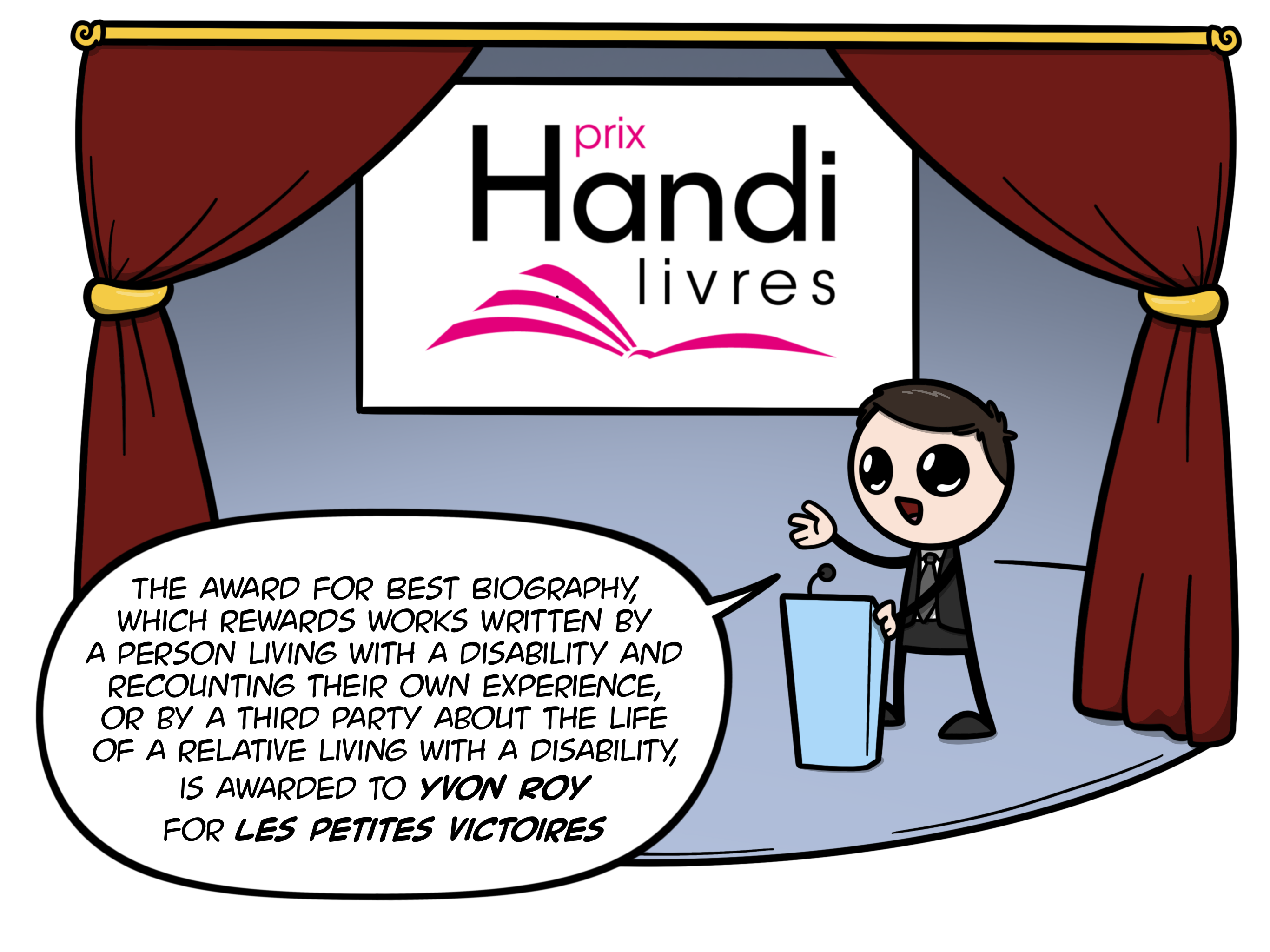
This comic book is an example of a creation that is easily accessible to the general public that has been awarded and highly publicized - even winning an award that recognizes works written by a person living with a disability and recounting their own experience, or by a third party about the life of a relative living with a disability. In 2018, the publisher Rue de Sèvres announced a contract for a film adaptation, which caused reactions and led to the hashtag :
#boycottlespetitesvictoires
As we will show, this is an example of the social representations of autism that perpetuate dominant understandings that do not fit the lived experience of those directly concerned to the point of being discriminatory. It is also difficult to identify moments when the child (the autistic character) shows agentivity. Instead, he’s passive in his father’s story. In a way, Olivier is only a supporting character. This is exaclty why representation doesn't mean autorepresentation and why "nothing about us whitout us" matters: although this comic is presented as a positive narrative from the allist perspective (3rd person), the story is completely different from the standpoint of the autistic community’s testimonies (1st person).
An allist person is a non-autistic person.
To understand the term "allist", we must go back to the origin of the word "autistic" which comes from the Greek word "autos" which means "self". So the word "autistic" initially referred to a person withdrawn on themself, who lives in their own world. The term "allist" appeared in a satirical article to refer to non-autistic people by swaping “autos” for "allos" which refers to others. So an allist is a person who is focused on others or, to flip the usual narrative, a person who lives in other people’s worlds.
In spite of the satire, the term “allist” has remained in use among others because it allows to distinguish between "neurotypicals" and "allists". There are people who are not autistic, but who are not neurotypical: a non-autistic dyslexic person, for example.
For a deconstruction
of the problematic propositions of the comic book:
But do you know the story from the autistic community’s perspective?
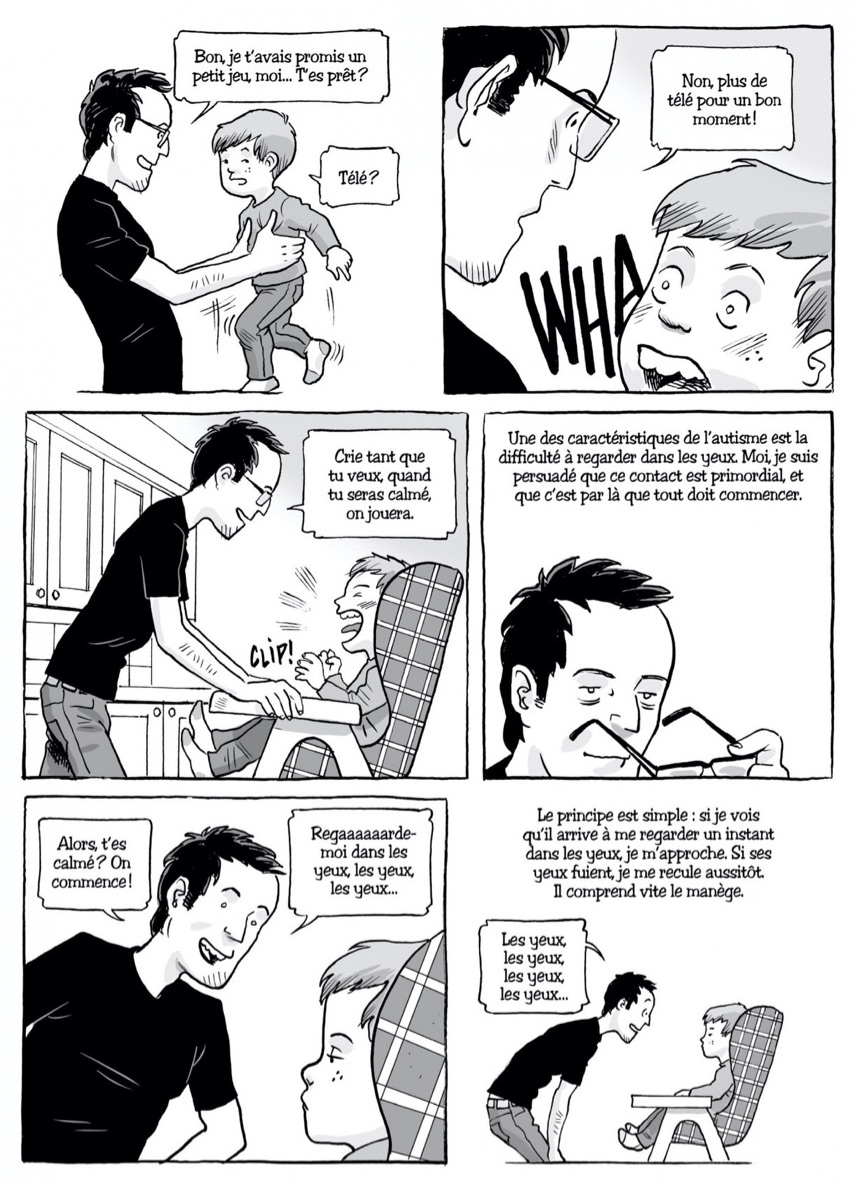
This is where webcomics can serve as an accessible tool that allows the reversal of dominant representations by opening the floor to self-representations directly grounded in marginalized communities. But before continuing with the topic of webcomics, we wish to feature an excerpt from Les Petites Victoires that addresses a frequent theme in autism: eye contact.
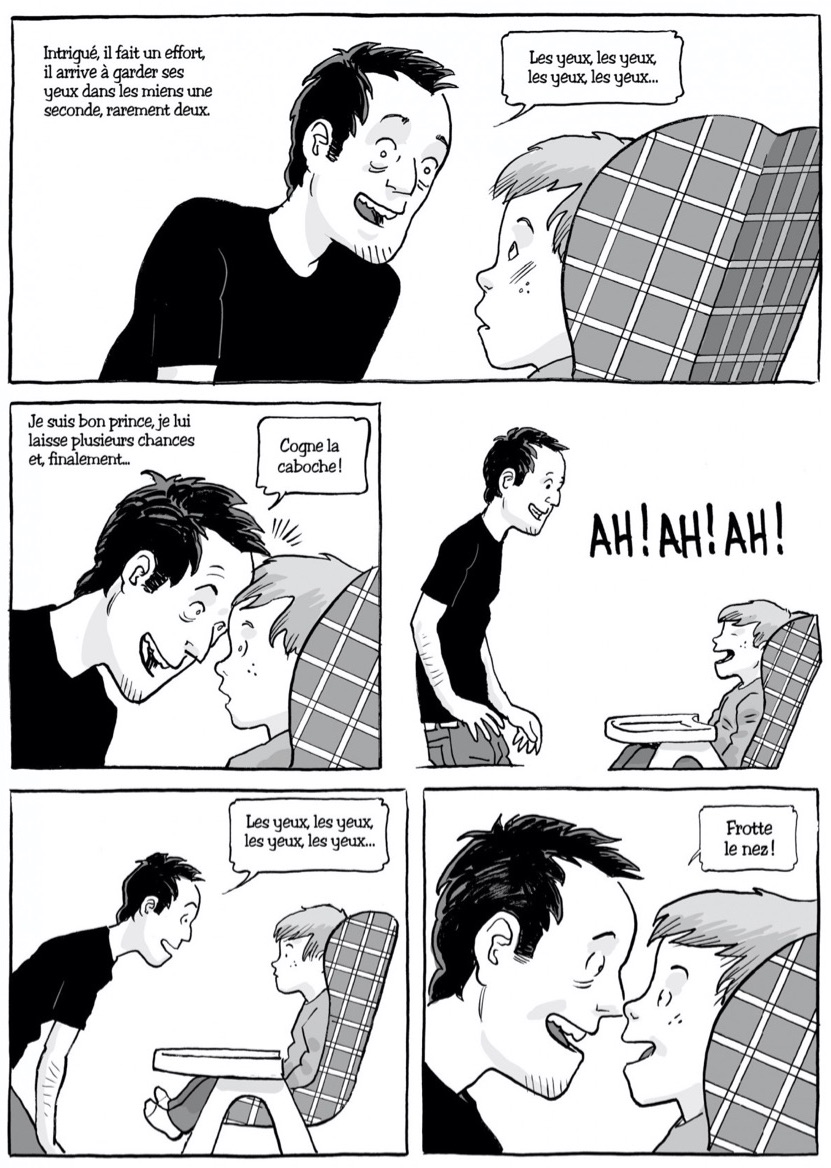
Excerpt on eye contact
English translation
English translation
Excerpt from Yvon Roy's interview
"I worked a bit like we can work to sometimes desensitize a substance. Sometimes certain people can have an allergy, we can try to desensitize them.
Several parents have contacted me regarding the trick to get the child to look in the eyes. This is the first thing we worked on together, that is to say, I considered that being able to look in the eyes - we know that autistic children have difficulty looking directly in the eyes - I said to myself, if we don't have eye contact, we have nothing. We need that, it's the beginning of human interaction." (our translation)
TW: The host uses the term “prison” in reference to autism:
"In your story that you shared with us in Les Petites Victoires, there is obviously the moment when you get up to face, to accompany your child in that reality: to learn to understand him too, inside what he lives and this prison, in a way, from which he is pressured which is basically this condition." (our translation)
Link to the interview (in French)

This scene is an example of neuronormativity
Recall that neuronormativity is the prevalent, neurotypical set of assumptions, norms, and practices that conceives of neurotypicality as the only acceptable or superior mode of cognition, and that stigmatizes attitudes, behaviors, or actions that reflect atypical modes of cognition as deviant or inferior.
This scene is told from the allist perspective and is presented with a positive outcome. In fact, as the author mentions, parents have applied this technique with their autistic children after being inspired by it.
But what if we ask autistic people how they feel about eye contact? That's exactly what we are going to do.
PART II
Why webcomics?
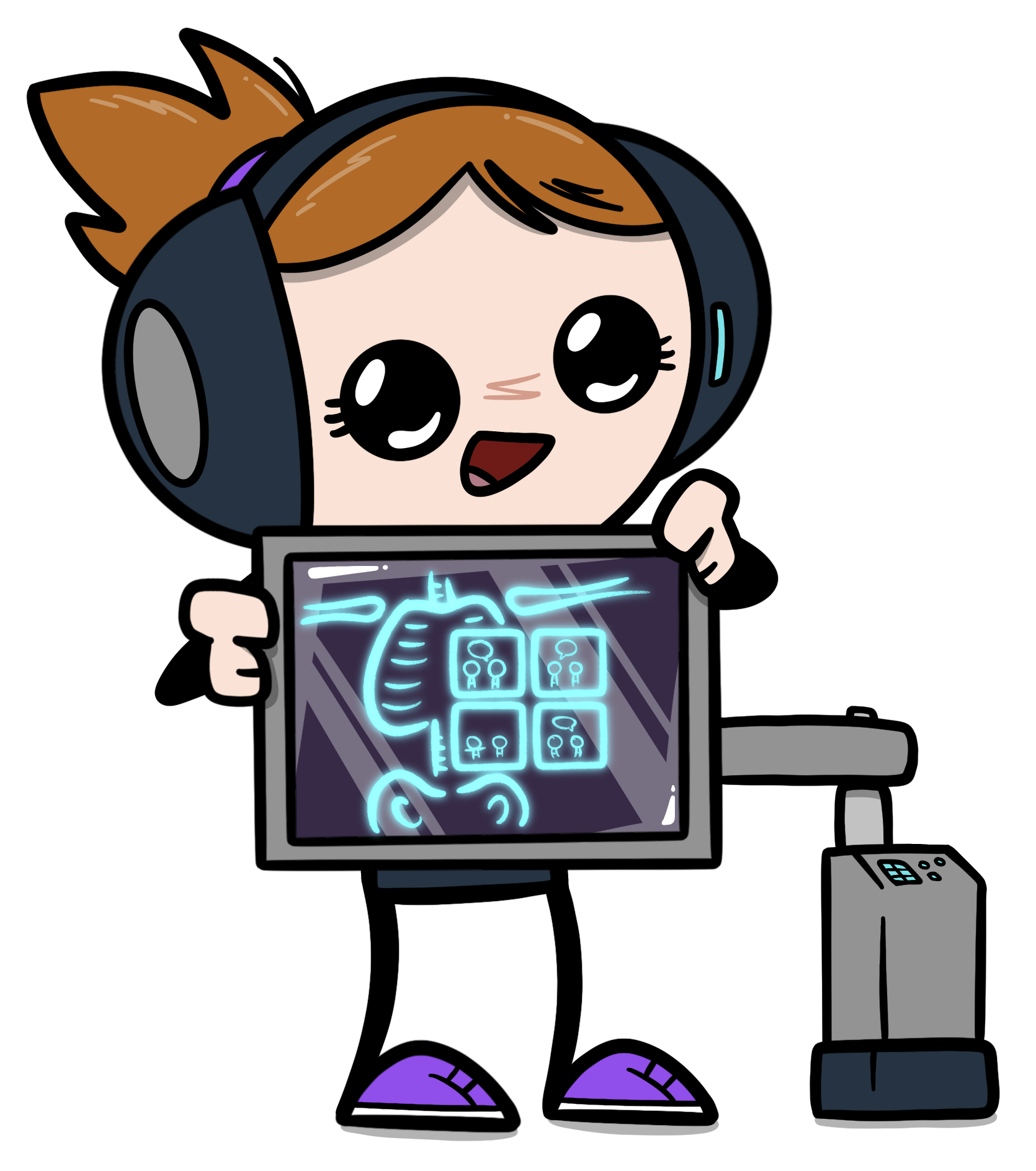
The medium of webcomic enables me to do something I don't know how to do otherwise: share how things feel on the inside.
Imagine. You come across a newspaper at the local coffee shop and recognize the face of a well-known personality. Yet you can't remember their name. It annoys you, you know you know it, it’s just not coming out, it stays there, on the tip of your tongue. You have time to come back to work, coffee in hand, and the name still hasn't come back to you, it still annoys you. You come across a colleague and you ask them, you describe the person, maybe clumsily at first (it would be so much easier with their name!), but you adjust to your interlocutor and, together, you can finally recall their name, it was so obvious!
It’s important to emphasize this feeling of annoyance. We rarely take the time to mention this annoyance when talking about epistemic injustices. Yet it is there, and it can even be painful: how do we make sense, to use Fricker's classic example, of our experience of sexual harassment when the concept does not yet exist? How can we share the feeling that something is wrong? This is where community comes into play and it is why the idea of "by and for" matters more than, say, a criterion of simplicity might. This is addressed by feminist epistemologies: for example, Longino argues for pragmatic values in science such as diffusion of power (as the importance of making research programs accessible to the actors involved in the research).
The impact of inadequate social representations on neurodiversity cannot be fully resolved by the traditional narrative of epistemic oppression and justice: adding new vocabulary to collective epistemic resources is not a panacea (we already have the word "autism" for example). So it is not only words that are missing, but rich and diverse lived experiences are also missing from the pool of shared resources.
The problem is that what is missing, the hermeneutical gaps, are not automatically apparent: social representations created by and for the dominant groups inadequately fill the hermeneutical gaps of marginalized groups. To that effect, let us recall here the Handi-Livre prize for the best biography which rewards works written by a person with a disability and telling his or her own experience, or by a third party on the life of a close relative with a disability: In the case of Les Petites Victoires, the award went to the biography of an allistic (non-autistic) person talking about autism. These inadequate social representations are difficult to resist: they are constantly and persistently reproduced. It is even harder when you don't have the words to replace theirs. But do we really have to wait for the right words to share our experiences? This is where illustration can become an attention grabbing action like shouting: an action that does not need words. This is what we propose here: a form of non-propositional epistemic resistance in response to hermeneutic injustice.
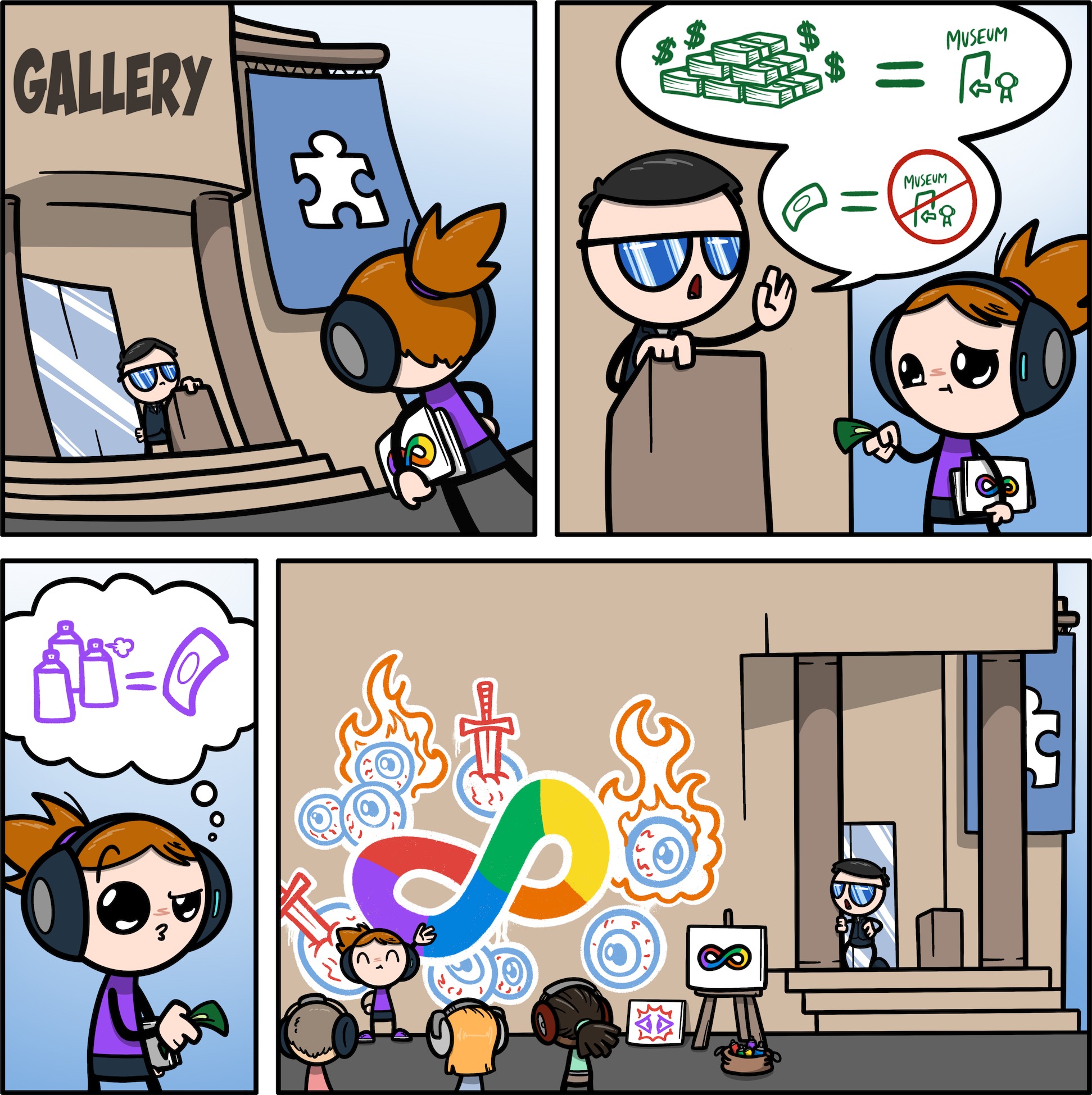
Webcomics are basically online comic books. They are mostly instantiated as short comics that take many forms and cover many topics. The most common form of webcomic is probably the blog (sometimes autobiographical, sometimes entirely fictional, sometimes both). Because they are mostly published independently by their artists, webcomics are an art form that is not limited by institutionalized power dynamics such as publishing houses or art galleries.
But the most important thing for us here is that webcomics are able to generate aesthetic experiences that allow viewers to better understand different aspects of the lived experience of neurodivergent people despite the inadequacy of mainstream epistemic resources.
In some ways, webcomics are a digital version of street art.
Although limited to a given geographical space for street art and to a particular digital platform for webcomics, there is this common idea where it is not so much the public that goes to the creation as the creation that goes to the public. We are no longer in a reserved and predefined space like a museum, a bookstore, a gallery or even a library.
Although a recognized artist can make street art, it is more difficult for an artist who does not belong to a complex and influential network to access some places of diffusion such as an art gallery. Webcomic is thus added to the tools that allow the production, use and transmission of more accurate social representations, participating in the collective understandings of the oppressions suffered by epistemically marginalized groups. The public and interactional aspects of social media that support webcomics make them a catalyst for direct dialogue with (but also within and between) marginalized communities.
To put our epistemic resistance into action,
and to enhance our imaginative ressources, we chose to gather first-personal testimonies and descriptions of how eye contact can feel for autists.
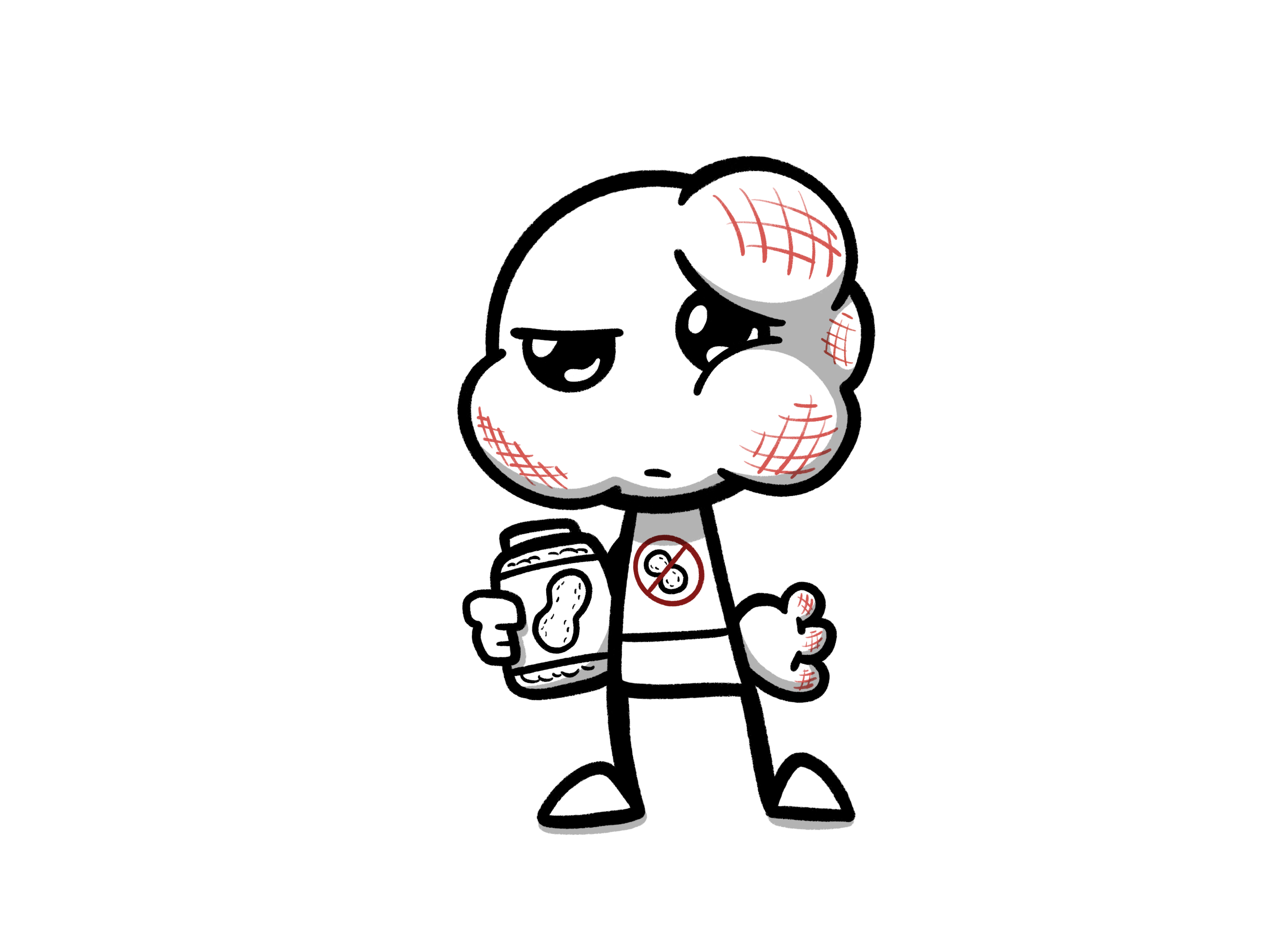
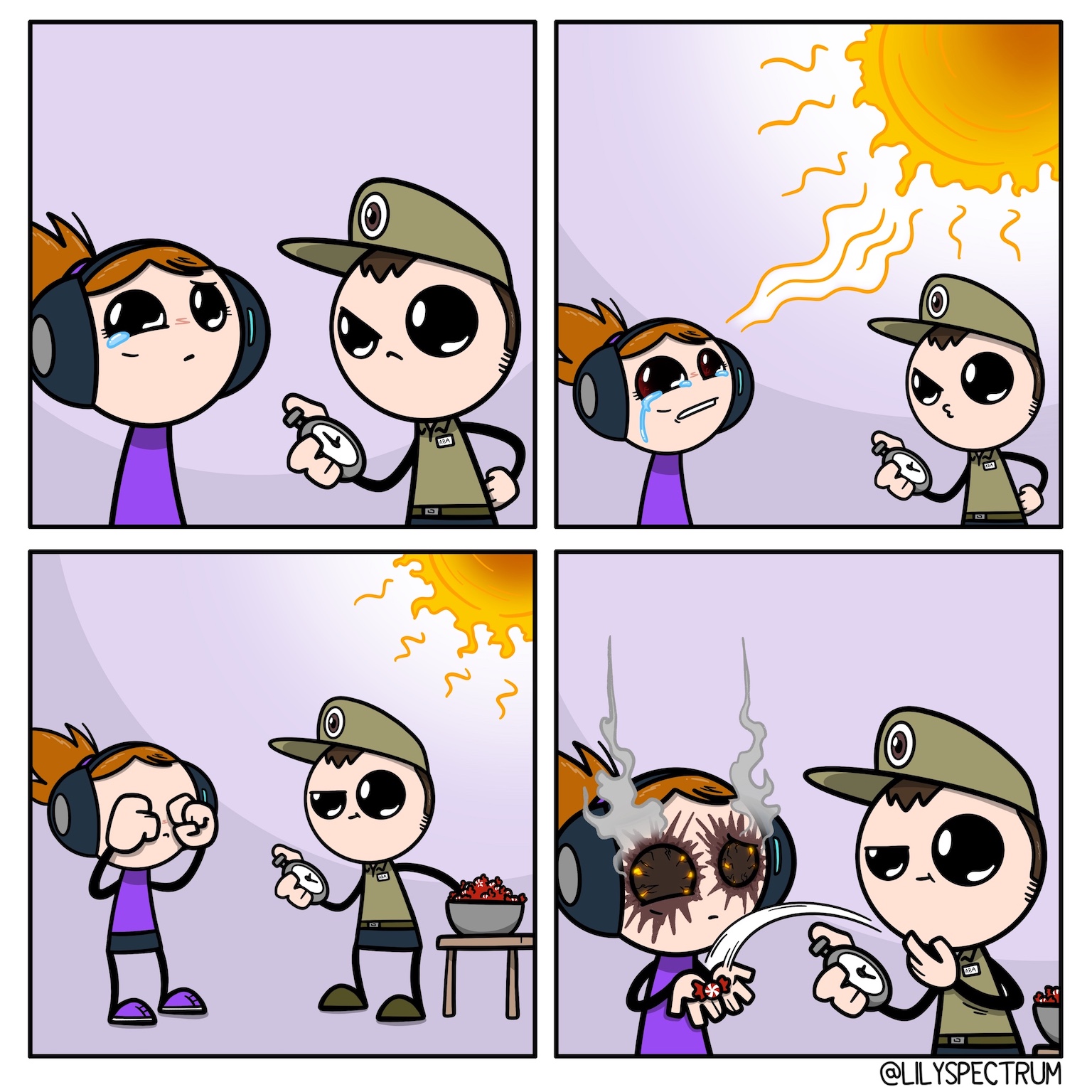
After all, who better to provide insight into a given lived experience than those who live it? To do so, we used social media (instagram and facebook) to ask autistic followers of our webcomic (@lilyspectrum): How does eye contact feel to you? Although we are neurodivergent, it was important for us to go with the community beyond our individual experiences. For instance, we would never have thought of the sunburn idea on our own, but once we read those testimonies, it felt right.
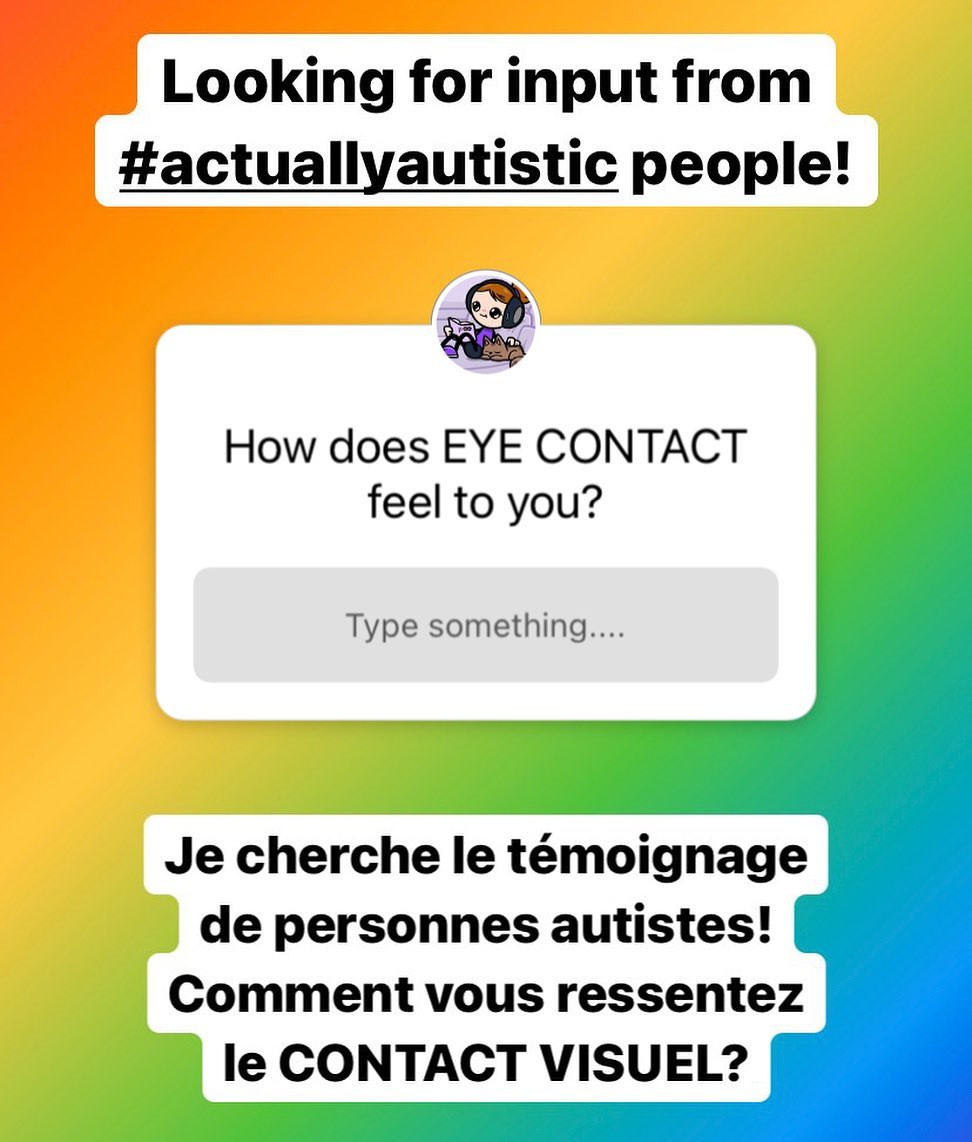
Both posts were made on November 8, and three days later, on November 11, we had received 175 testimonies. A few major themes emerged from these testimonies, which we used to base 7 webcomics or illustrations on. Keep in mind that, with this process, we do not claim to represent all there is to express about autists’ first-personal experience of eye contact. In fact, we suggest you visit these posts yourself to better understand the varied responses we got, and are still getting. And who knows, maybe this will allow you to add your own insight.
Publication
Since Monday, we have started to publish these comics on our social networks and we will continue to publish them in the following days
The interactions that take place around such webcomics are, we believe, an integral part of their complete aesthetic experience. These interactions often bring about clarifications, complementary details and descriptions or even added meaning. We thus invite you to visit these posts and interact with the community.
Webcomics
"I can do it but I can’t process anything else while doing it. My natural instinct and what feels the most right is to not look at someone’s face at all"
"It was drilled into me as a "rule" of politeness. I view it as just that, a rule. It's easy when there's multiple people because I can look around. But with one person, I have to look away or I end apparently end up staring"
"Everyone insisted on it, especially when they really wanted to correct a behavior or ensure I was paying attention. I honestly still don't love it, and prefer to look at noses or eyebrows to provide the impression I'm making eye contact"
"Eye contact was enforced during my childhood in mostly abusive ways and while it taught me to fake it, that made me hate it even more. Generally it just makes me uncomfortable and I find it quite distracting but it's also one of the most tiresome things to mask."
"Eye contact feels like they're staring into my soul, but with knives. I can make short eye contact before wanting to cry."
"It takes a concerted effort except for specific people."
"I’ve been so conditioned to make eye contact with people that when I met a lot of my friends for the first time they were kinda weirded out by me unblinkingly paying attention to them when they talked like 👁👄👁"
"It feels like someone is looking right past all my defenses and directly into my head. Not very pleasant."
"Terrifiant, j'ai vraiment l'impression qu'on me transperce à chaque fois …"
"Like I am being stabbed in the brain, itchy under the scalp, or suffocating. Anxiety is anxiety. I look at people's foreheads. They never know the difference but I am not forced to juggle the pain of eye contact and try to communicate. I am mostly non verbal and eye contact guarantees no words."
"Ça me met vraiment mal à l'aise et j'ai peur qu'on puisse mal interpréter si je regarde pas "correctement", je sais pas si je dois regarder quelqu'un dans les yeux ou combien de temps, il faut surtout pas que je regarde autre chose chez lui que ses yeux et du coup je sais pas quoi faire je préfère regarder le mur derrière mon interlocuteur 😂"
"Tout dépendra de la situation, de ma fatigue et de la personne. Certains contacts peuvent être transperçants (douloureux), d'autres envoutants (confusants), d'autres destabilisants (perturbants). En tous cas, si je regarde qqn dans les yeux, je suis sûr de perdre mon fil de pensée et/ou d'accorder mes réponses à ce que la personne ressent."
"Eye contact feels like burning discomfort, especially when I'm being told to do it."
"It’s extremely hard for me to maintain eye contact, and when people express to me that I should be looking at them when I’m talking to them, it puts me under more stress than just talking to them in the first place"
"somehow being told we should be making eye contact feels like being reprimanded as a child, at least to me.. I can't count the amount of times my mother would tell me to look her in the eyes as a child, and how humiliating/stressful it felt.. I legit forget to listen to people because I'm too busy trying to maintain eye contact."
"At best, awkward and uncomfortable. At worst, like someone's stabbed me in the eyes."
"It makes me uncomfortable but my mother forces me to look people in the eyes"
"Painful, but I feel like if I don't look ill be punished or called a liar. So I trained myself to look at something over their shoulder if not their foreheads to avoid harassment."
"Habituellement je regarde plutôt la bouche ou le nez des gens et ça semble passer crème pour donner l'illusion que je regarde dans les yeux (j'ai eu droit à l'expert en haute potentialité qui me disait que c'était impossible que je sois autiste car.. je le regardais dans les yeux ! Je regardais sa bouche depuis le début de l'entretien..). Je ne me force au contact visuel que de manière consciente et dans de rares cas précis : [suite]
(suite) par exemple si je suis attiré romantiquement par quelqu'un et désire que cette personne le perçoive (vu que le contact visuel accru est interprété de cette façon par beaucoup de neurotypiques). Mais cela reste un sacré effort et en général je détourne les yeux très rapidement, ça me met mal à l'aise, c'en est presque physique. Récemment un de nos profs en cours nous a fait faire une série d'exercices où on devait marcher vers quelqu'un/revenir à sa place à reculons en gardant le contact visuel constant avec cette personne.. je vous laisse deviner la torture que c'était"
"Transperçant!"
"J'ai l'impression que les yeux de la personne me percent à l'intérieur, je sais pas comment dire, c'est une sensation d'oppression aiguë."
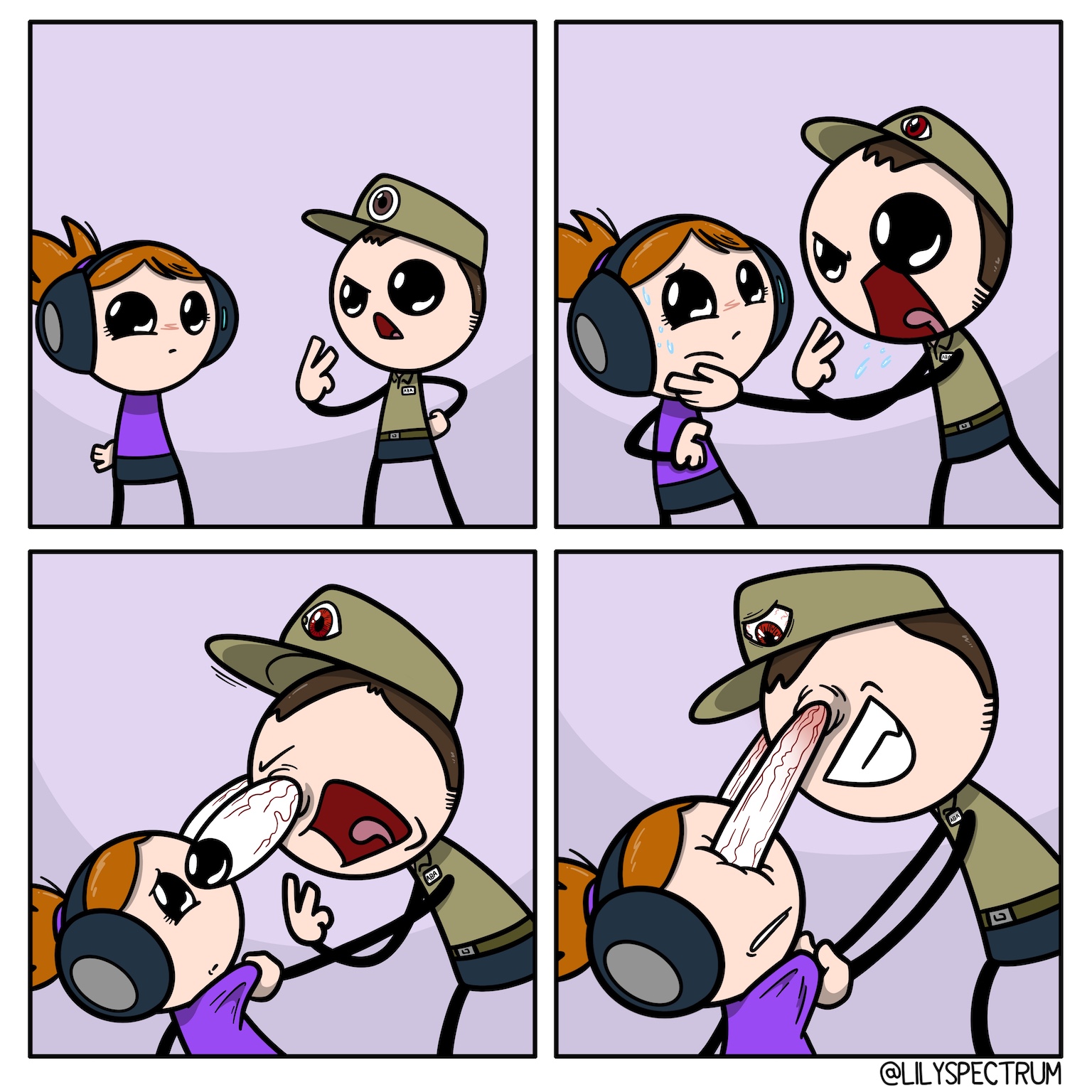
"For me, looking in the eyes feels too exposed and open. It makes me feel like I can't hide and protect myself from the people."
"Eye contact makes me uncomfortable most of the time, because of the feeling that I am being silently judged or getting talked about negatively."
"It's fine when I'm listening to someone but when I'm the one talking it makes me get stage fright like I'm being put on the spot to judge for performance lol"
"Too intimate, inappropriate… I become incredibly self conscious as well, like am I doing eye contact right? Should I be mirroring their behavior or a close approximation or complete opposite? How many times should I blink? Can they tell I’m faking this human interaction? It’s incredibly stressful."
"It feels like something is a required check box. It’s like a math problem. Look, one, two, three. Okay. Look away. Zone out if you need to. Okay, it’s been 10ish seconds. Look back. One, two, three.. okay, look away! Don’t share at them! Wait! You’ve looked away too long! Look back! …..it’s that on repeat quite often lol"
"I hate it I get so nervous and then I break down."
"I don't like it, makes me really uncomfortable. I'm "good at it", because I mask well (😬). I never know what to do, if I'm looking to much or not enough and always use a whole lot of energy just on eye contact. Generally, the more comfortable I feel the less I look someone in the eyes. (Also eyes as a body part make me feel really icky so that's that)."
"Intimidating and uncomfortable, I feel too vulnerable and keep thinking am I doing this right?"
"Ça me met vraiment mal à l'aise et j'ai peur qu'on puisse mal interpréter si je regarde pas "correctement", je sais pas si je dois regarder quelqu'un dans les yeux ou combien de temps, il faut surtout pas que je regarde autre chose chez lui que ses yeux et du coup je sais pas quoi faire je préfère regarder le mur derrière mon interlocuteur 😂"
"Eh bien, quand j’étais petit, je parlais et écoutais souvent le monde sans les regarder dans les yeux. Maintenant, ça me dérange pas de parler et écouter avec le contact visuel, mais j’peux très bien comprendre ce que le monde me dit sans obligatoirement les regarder dans les yeux. Aussi, c’est vrai que ça me rend un peu mal à l’aise quand des inconnus me fixe du regard. C’est comme s’ils me jugeaient et j’sais pas ce que j’ai fait de mal."
"Direct eye contact feels like I am being judged. It also makes me feel uncomfortable because I become unable to perceive and read the rest of their body language."
"Démunie, nue. Percée à jour. C’est très fort comme sensation, et rarement agréable. J’y arrive avec mes enfants ou mon mari, mais même dans ce cas, pas trop longtemps. Si je veux tenir une conversation, et me concentrer, alors je dois ruser. Je regarde entre les deux yeux ou le plus souvent la bouche."
"Feel nausea and anxiety, and extremely naked. Yet my mother was adamant that I learned it and therefore I am able to do it, despite the uncomfortable feelings. Absolutely love your work, for once I can tell that I am not alone"
"I feel instant stress and I have to force myself to do it and to look "natural"."
"Honestly, each time it happens to me, the most awkward feeling I have is « where should I look exactly » ? When you make eye contact, are you expected to focus one eye specifically (which one, then ?), between the eyes, not focus at all, or try a weird way of having each eye "looking" into the facing one (i.e. my left eye "looking at" their right one and vice-versa) ? I'm also never sure if/when eye contact is expected, and when it happens, is there/what is the hidden message behind this specific contact, and/or am I sending an incorrect hidden message myself ? Then, with all these questions actively consuming my brain "computing power", everything else totally miss the point (sometimes, though, I can hide this issue because I have this kind of ability to "replay" the last few words/sentence I unconsciously heard, to process it with a delay but potentially without the proper context- so it's not reliable at all !!). "
"Weird and artificial. I can actually read people's eyes now, but it took me years to learn it."
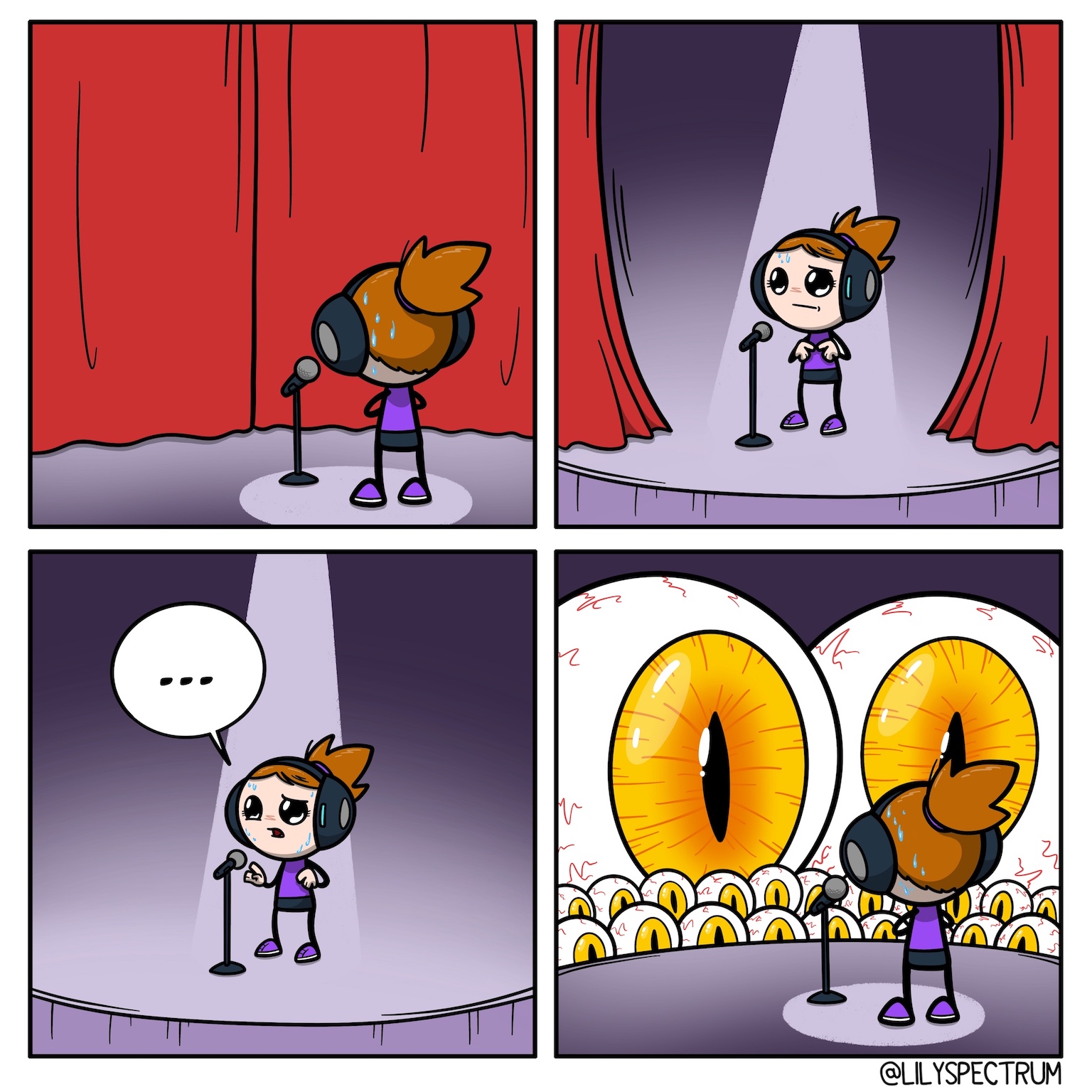
"My parents rasied me to always look into the eyes, still feels wrong. Like, I am invaiding a personal space and being rude. Like trying to stare down their soul and violating their privacy. I still try to look at people in the eyes but have learned to just looks in differents points in the face so I don't seem rude."
"Eye contact feels too intimate to me for most interactions. If I make eye contact with you, it’s because it’s important. "
"Eye contact feels very intimate. If I’m forced to hold it for too long, I feel violated, like I’ve been touched without consent."
"I really hate eye contact in almost all circumstances. About the only exception is with someone I'm very intimate with. Eye contact feels extremely intimate to me in general so it only feels natural when it's with someone I've got a suitably intimate emotional connection to. Otherwise it feels like I'm staring into someone's soul and I can see everything and they're staring into mine and seeing the same (even if I know they're not)."
"Invasive, extremely personal. I'm only comfortable looking my husband in the eyes"
"It feels like I’m standing too close to someone, I don’t know if that’s too vague of a comparison but it feels way too intimate. So I only do it when necessary or when I’m comfortable with that person."
"It feels creepy to me"
"I don't like it, makes me really uncomfortable. I'm "good at it", because I mask well (😬). I never know what to do, if I'm looking to much or not enough and always use a whole lot of energy just on eye contact. Generally, the more comfortable I feel the less I look someone in the eyes. (Also eyes as a body part make me feel really icky so that's that)."
"I hate eye contact. It almost hurts. But it’s nessesary to have a successful professional life, and my parents trained me well as a child. They would ask me people’s eye color after I met them to see if I made eye contact. Being trained like that at a very young age was incredibly difficult and felt unfair, but I’m very grateful that they pushed me now that I’m an adult."
"I can't do it, it makes me feel funny in a bad way and makes me feel kind of .. unsafe? and uncomfy I don't exactly know the word for the first one, I don't mind people looking at me but I won't look back"
"It's incredibly intimate and overwhelmingly so, particularly with strangers. And the more my emotions are revved up, the less I can tolerate it. It genuinely feels as though someone can see into my mind almost, even though I know that they can't. On the plus side, when I'm with someone I deeply, deeply love, sometimes that's okay because I want them to see how much I love them... but then that tends to make THEM feel awkward and uncomfortable too. LOL For me, it falls into the same category as standing too close, invading personal space, touching someone without consent etc. It's intimate, and can very easily become violating when you don't want it. And that;s so hard to explain to NT folk who expect you to look them in the eye all the time."
"It's okay with people I know, but I don't feel comfortable with eye contact with strangers, it almost feels like an invasion of privacy."
"eye contact feels so weird and creepy and if i have to make eye contact with someone, then ill quickly feel exhausted."
"It feels like a boundary rupture unless I completely and totally feel comfortable in a container of safety with another it probably won’t happen much."
"Well... I can't let anyone touch my eyeballs."
"Trop intrusif. Comme si l autre avait la perception de mes pensées. C est comme se montrer nue."
"Intense/ overwhelming/ fiery/ intrusive. Sometimes painful/ always difficult with strangers. Ok with intimate friends and family."
"Démunie, nue. Percée à jour. C’est très fort comme sensation, et rarement agréable. J’y arrive avec mes enfants ou mon mari, mais même dans ce cas, pas trop longtemps. Si je veux tenir une conversation, et me concentrer, alors je dois ruser. Je regarde entre les deux yeux ou le plus souvent la bouche."
"Feel nausea and anxiety, and extremely naked. Yet my mother was adamant that I learned it and therefore I am able to do it, despite the uncomfortable feelings. Absolutely love your work, for once I can tell that I am not alone"
"confronting and very intimate ..i feel naked"
"Quelque chose d'extrêmement intime, que je ne peux pas partager avec n'importe qui sinon je suis déstabilisée car je bloque sur cette sensation d'intimité forcée. Depuis le diagnostic, je me permets de ne plus regarder le visage des gens (je ne travaille pas). Quel soulagement!"
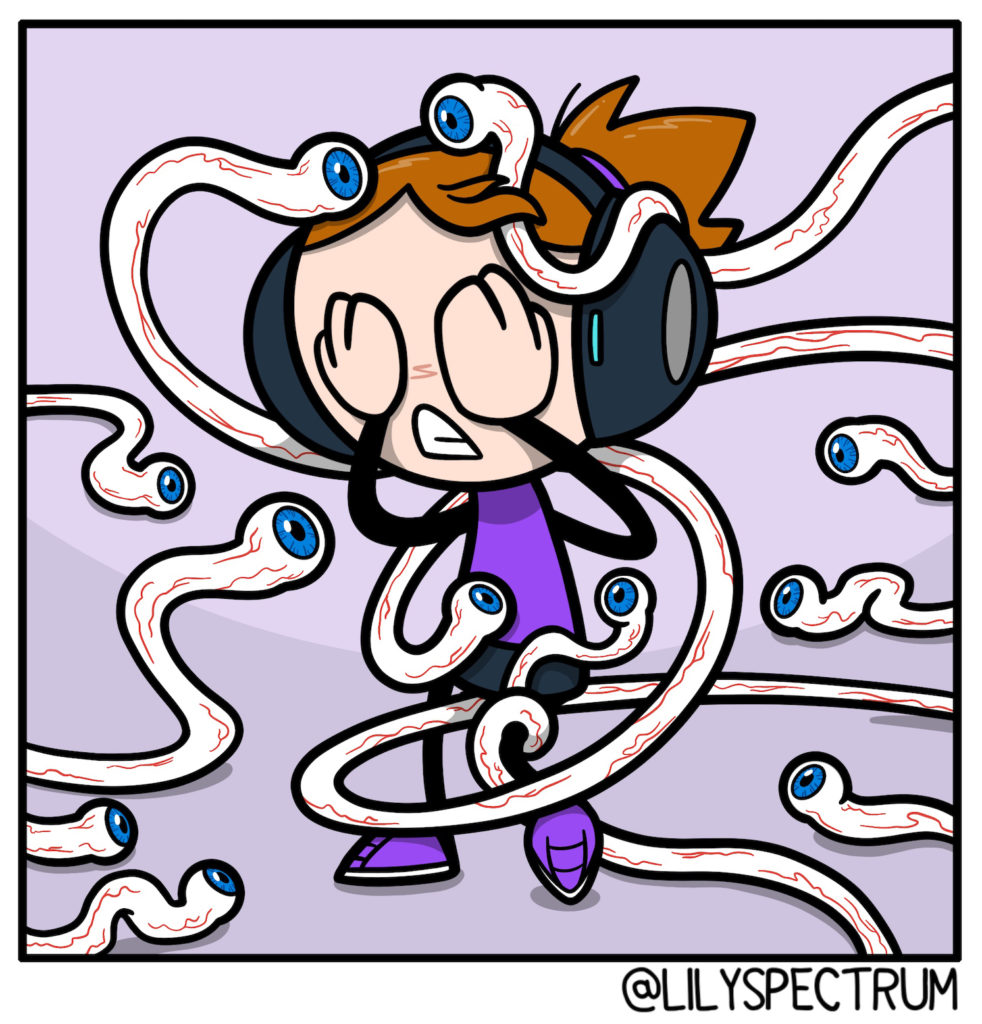
"Eye contact feels like they're staring into my soul, but with knives. I can make short eye contact before wanting to cry."
"It’s like being asked to look directly at the sun. I flinch, I can’t do it…"
"It feels like they gonna shoot me with laserbeams. Like Cyclops from X-Men. I van handle it for 10 seconds. I get panick attacks of it's to long. Even with my bf makes me on edge. I got a major panic attack during a being social etc exam (idk how it's in English is). It was so bad. They let me past because otherwise i needed to do the whole year over."
"Feels like I’m staring at the sun and I can only look a person in the eyes for 30 seconds or so before my eyes start to hurt a bit. I can only look animals in the eye."
"Like flames of intense awkwardness are scorching my retinas."
"When I was younger I always had trouble making eye contact. I’ve gotten better at it in recent years but its still painful to me."
"Eye contact feels like burning discomfort, especially when I'm being told to do it."
"Ça me demande beaucoup de concentration. J'ai l'impression que ça me fait mal aux yeux et quand j'étais plus jeune je pouvais même ne plus vraiment entendre ce que la personne me disait. Par contre ce n'est plus un problème quand je me mets vraiment en colère au point de vouloir me battre."
"Ca va de la gêne à la sensation de brûlure, ça dépend des personnes je suppose. On peut parfaitement regarder le nez, la bouche, entre les yeux sans que l'autre ne sen rende compte."
"I can’t think if I have to. Feels like pressure."
"Bad, I feel like my head is going to explode if I look at someone's eyes for too long. I suspect it's probably a blood pressure drop or adrenaline, but it feels awful. I honestly don't get why so many people require eye contact when speaking. I can make eye contact, but it's really difficult to understand what the person is saying because I'm too focused on how uncomfortable I feel and how incredibly awkward it is to stare at someone's eyes"
"It feels literally painful and I’m always afraid the other person can tell what I’m feeling/thinking. I’m comfortable with eye contact with very trusted folks in my life though."
"Painful"
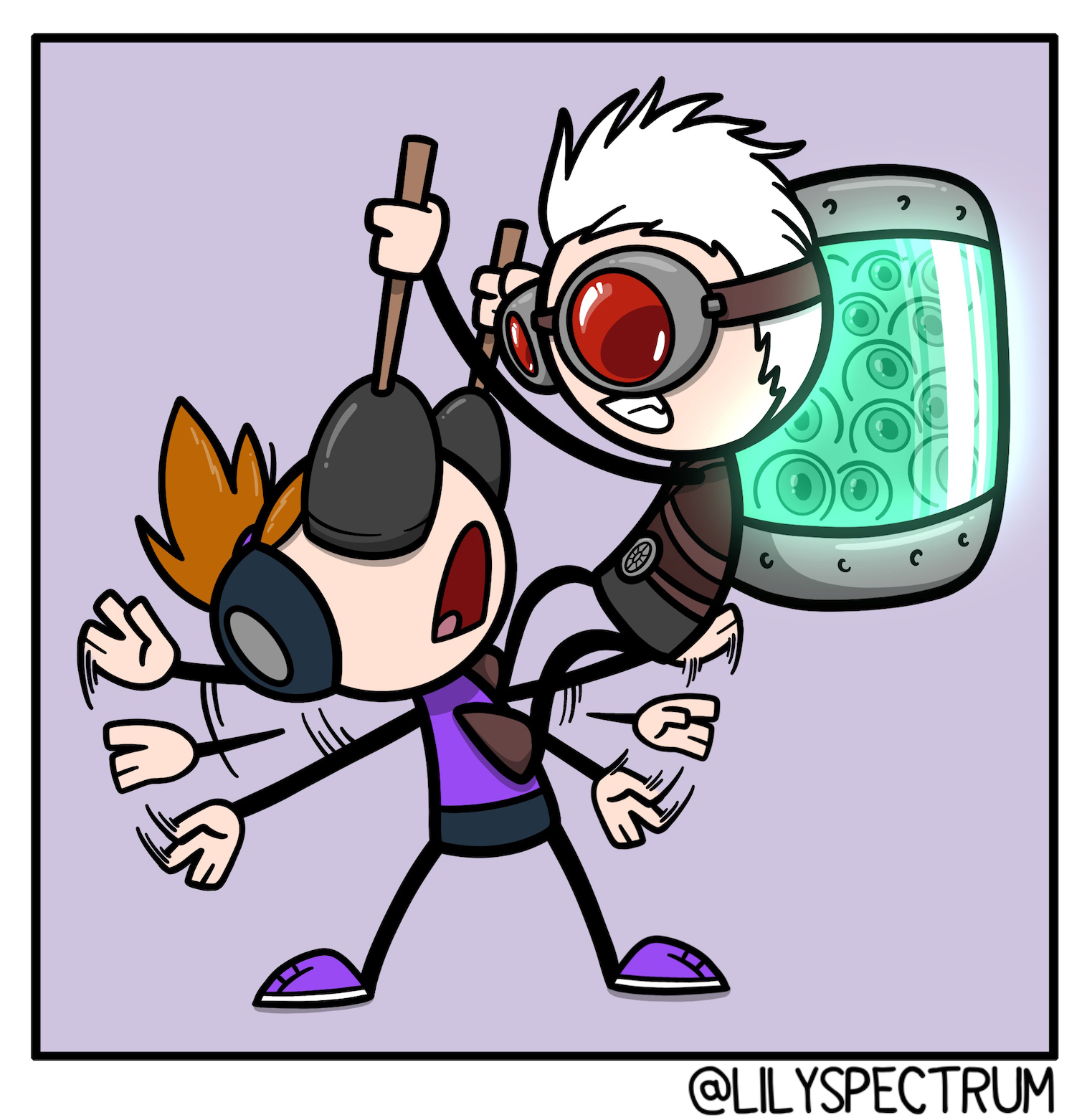
"I really hate eye contact in almost all circumstances. About the only exception is with someone I'm very intimate with. Eye contact feels extremely intimate to me in general so it only feels natural when it's with someone I've got a suitably intimate emotional connection to. Otherwise it feels like I'm staring into someone's soul and I can see everything and they're staring into mine and seeing the same (even if I know they're not)."
"I cant make eye contact with literally anyone. Its uncomfortable, and even when its not, i cant listen proberly to what people are saying when i focus on the eyes. I just cant do it at anytime with anyone, only for one second maximum. Its like staring into someone's soul, its too much."
"J’ai l’impression d’être absorbée par les yeux de la personne et en même temps comme si on pouvait voir ce qu’il y a à l’intérieur de moi."
"honestly it feels like i am being sucked into their soul… i can’t maintain it if i want a conversation because i just get lost"
"Like someone staring at my soul? I almost feel like that's the part of masking that exhausts me the most!"
"It's uncomfortable. But sometimes if I want to intimidate someone I stare deep into their eyes and make them feel unnerved like I'm looking into their soul."
"Tout dépendra de la situation, de ma fatigue et de la personne. Certains contacts peuvent être transperçants (douloureux), d'autres envoutants (confusants), d'autres destabilisants (perturbants). En tous cas, si je regarde qqn dans les yeux, je suis sûr de perdre mon fil de pensée et/ou d'accorder mes réponses à ce que la personne ressent."
"Trop intrusif. Comme si l autre avait la perception de mes pensées. C est comme se montrer nue."
"J’ai l’impression d’entrer dans l’âme de la personne. Je trouve ça trop privé. Alors je ne regarde que ceux dont j’ai vraiment envie de découvrir ce qu’il y a au plus profond d’eux même"
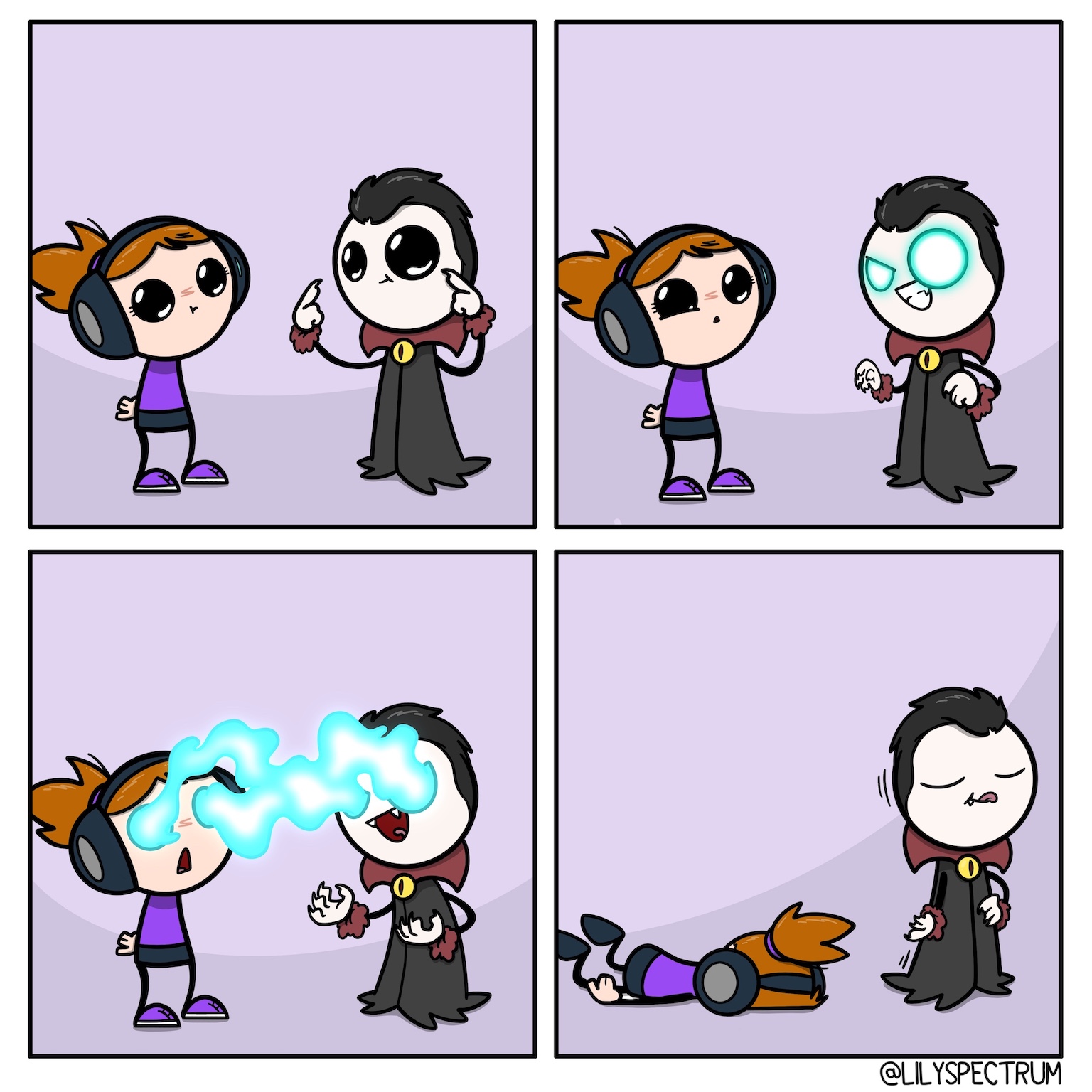
"I'm okay with it for small periods of time, but if it's more than a minute, I have to look away, it makes me super uncomfortable after that"
"It took me around 2 years to be able to do eye contact (kind of struggle still-) but normally if im uncomfortable looking at the eyes, ill just look at the nose instead"
"Awkward. The longest I can probably do it is for a few seconds, but sometimes it’s physically impossible for me to look someone in the eyes even for one second."
"Ça me met juste très mal à l’aise, et du coup je préfère regarder ailleurs et ne regarde les gens dans les yeux s’iels ne me regardent pas."
"Incapable de soutenir un eye contact sauf avec certaine personnes... Ma famille (ma mere, mon pere, ma soeur), ma nièce, mon beau frère et mon conjoint. Quelques amis specifique aussi... Mais sinon incapable. Je chercher tjrs a "évader" ses eye contact."
"Uncomfortable. I have trouble maintaining eye contact for long, especially in a conversation. However, I did figure out that talking with your hands is a great way to distract the other person's eyes from your and gives you a reason not to look at them."
"havent made eye contact with anyone (while i'm talking to them, that is) except my cats in years if that tells you anyone"
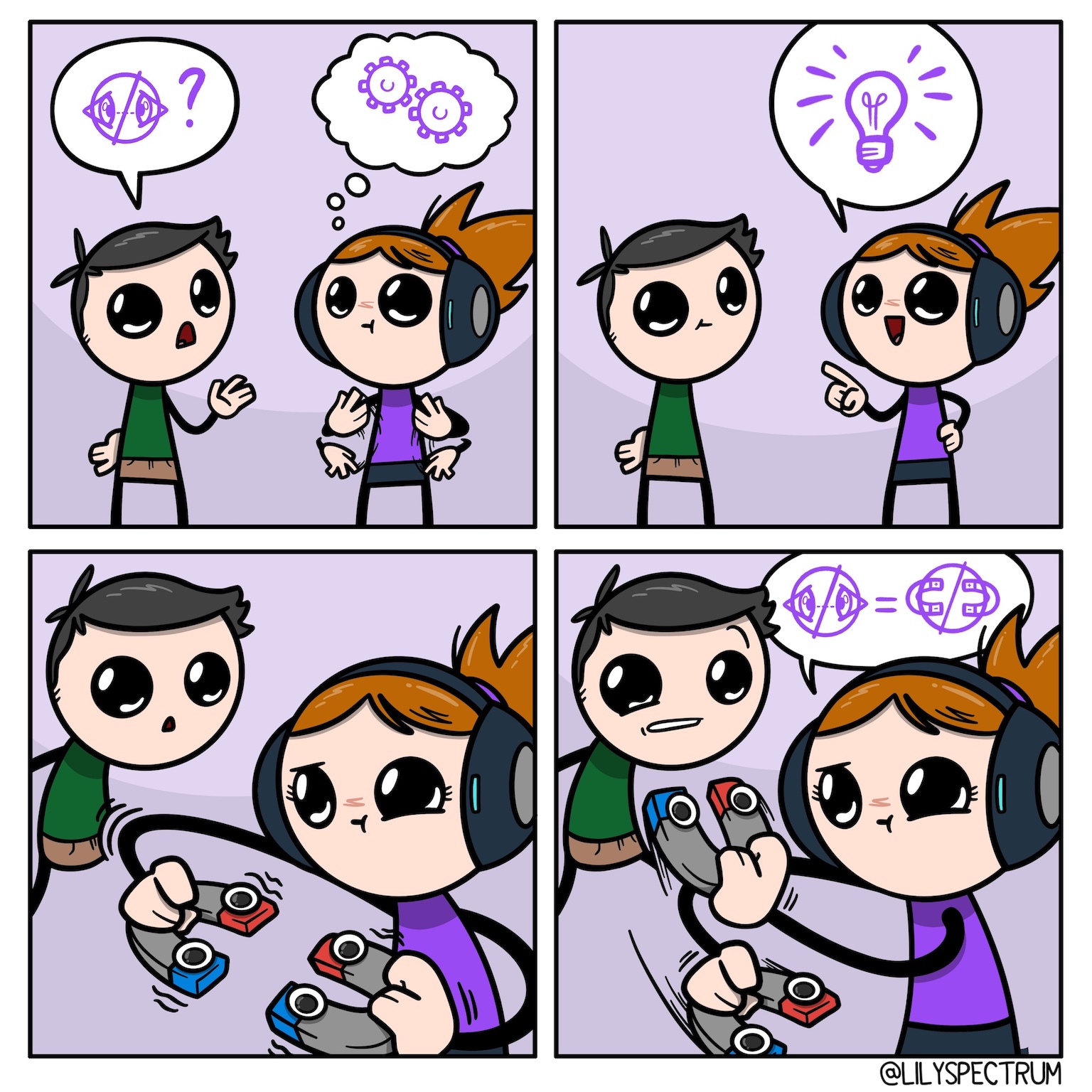
"When I was younger, it used to feel like when you held two magnets together both ends the same, it felt like no matter how hard you held them together, it would want to repel forcefully, my head wanted to repel and look past to the left or right or down or up like a magnet would, and when I managed to hold it against that feeling, my eyes would water up, not tears from sadness or anything, but they released tears, now I can manage it but it's still not comfortable to do, it depends on how comfortable I feel with the person or people or how stimulated I feel in an environment"
"It’s like when you hold two magnets with the same polarity against each other. Even if you want to put them together they won’t do it. The magnets are like my eyes. They just can’t center on the other persons eyes or it will cost a lot of energy. Like with holding magnets with the same polarity together. It’s just all in all very uncomfortable and draining. Btw I’m undiagnosed so I hope I can still answer here. Also I really really love your account and the stuff you do ^^ /g"
"Ça me met vraiment mal à l'aise et j'ai peur qu'on puisse mal interpréter si je regarde pas "correctement", je sais pas si je dois regarder quelqu'un dans les yeux ou combien de temps, il faut surtout pas que je regarde autre chose chez lui que ses yeux et du coup je sais pas quoi faire je préfère regarder le mur derrière mon interlocuteur 😂"
"Je me sens obligé de regarder chaque personne dans les yeux mais aussitôt que le contact est réciproque je baisse le regard aussi vite que mon ombre ainsi j'ai l'impression que j'ai fait ma part! haha! Par contre avec le monde avec qui je suis très, très à l'aise je vais quelque fois fixer les yeux, on dirait que j'essaie de comprendre pourquoi je fuis ceux des inconnus, alors je fixe en grand questionnement interne!"
"Awkward and physically painful , strong need to move my eyes away from it"
"Souvent trop intense… Et en plus il se passe tellement de choses autour des yeux qui m'intéressent plus et/ou me sécurisent plus! Je fixe puis je zappe, j'y reviens et je rezappe… Les sourcils, les lunettes, sont des bons compromis aussi, ou fixer mon regard dans le vague direction le visage ou le pourtour du visage… Ou fixer le visage avec une attitude très intéressée (posture corporelle de l'attention soutenue) quand la personne regarde AILLEURS, et quand son regard se tourne vers moi, fixer 1s seconde, sourire, et me tourner ailleurs vers qqn d'autre qui parle mais ne regarde pas vers moi à ce moment là, ou trouver à m'occuper avec un objet, et jongler comme ça."
"Je n'aime pas regarder sans les yeux, je ne sais pas, c'est plus fort que moi, je suis mal à l'aise, je ressens le besoin de regarder ailleurs. Du coup j'aime bien discuter quand je suis au resto ou quand on fait une activité, il y a l'excuse d'être occupée en même temps pour ne pas se regarder"
"Habituellement je regarde plutôt la bouche ou le nez des gens et ça semble passer crème pour donner l'illusion que je regarde dans les yeux (j'ai eu droit à l'expert en haute potentialité qui me disait que c'était impossible que je sois autiste car.. je le regardais dans les yeux ! Je regardais sa bouche depuis le début de l'entretien..). Je ne me force au contact visuel que de manière consciente et dans de rares cas précis : par exemple si je suis attiré romantiquement par quelqu'un et désire que cette personne le perçoive (vu que le contact visuel accru est interprété de cette façon par beaucoup de neurotypiques). Mais cela reste un sacré effort et en général je détourne les yeux très rapidement, ça me met mal à l'aise, c'en est presque physique. Récemment un de nos profs en cours nous a fait faire une série d'exercices où on devait marcher vers quelqu'un/revenir à sa place à reculons en gardant le contact visuel constant avec cette personne.. je vous laisse deviner la torture que c'était"
"Lorsque c'est quelqu'un avec qui je suis à l'aise ca va à une certaine distance mais de trop prêt je ressens un malaise assez vite. Si j'ai le malheur de croisé le regard avec un(e) inconnu(e) dans la rue ou dans un commerce, je regarde ailleurs aussitôt, gros malaise. C'est pour ça que j'évite de regarder les gens."
Thank you for joining us in this exploration!
We hope this experience was (and will be) as enriching for you as it was for us to come up with. We invite you to engage with us and the community through our posts or in the comments bellow!
Обновления по теме: https://mrbox.md/catalog/
renommiert Casino-Spiel in Deutschland ist eines der besten unter den Spielen, das sich durch ein ansprechendes Design und exzellente Spielfeatures auszeichnet Royal Joker playson . Besonders im Fokus steht dabei die Möglichkeit „Halte-Strategie“, die Spieler dazu motiviert, bestimmte Zeichen festzuhalten, um extra Prämien zu erhalten. Diese Herangehensweise macht das Spiel nicht nur unterhaltsam, sondern auch besonders erfolgreich für alle, die sich für Royal Joker Playson interessieren.
Der Royal Joker Halte-Gewinn-Slot bietet eine einzigartige Herangehensweise, bei der Spieler durch das Festhalten von Bildern wie dem High-Value-Symbol oder anderen Top-Gewinn-Symbolen ihre Erfolgsaussichten maximieren können. Diese Strategie ist besonders bei Spielern mit Erfahrung gefragt, die nach einem gerechten und nachvollziehbaren Spiel suchen. Die Analyse des Royal Joker Hold-and-Win zeigt, dass viele Besucher von der Verbindung aus benutzerfreundlicher Nutzung und attraktiven Gewinnchancen begeistert.
Ein zusätzlicher Faktor ist der Royal Joker Hold-and-Win Rückzahlungsquote, der die Return-to-Player-Wert des Spiels berechnet. Ein hoher RTP bedeutet, dass Gamer langfristig mehr zurückerhalten, was das Spiel besonders profitabel macht. Viele Besucher des Royal Joker Portals lieben zudem die einfache Information zu den Gewinnkriterien und die Chance, ohne Wartezeiten zu nutzen, ohne komplizierte Registrierungen.
Für alle, die sich für Royal Joker Feedback begeistern, ist es essentiell, zu wissen, dass das Spiel nicht nur durch seine optische Anziehungskraft überzeugt, sondern auch durch eine faire Spielphilosophie. Die Vereinigung aus dem klassischen Slot-Gefühl und der bahnbrechenden Gewinn-Halte-Technik macht den Slot zu einer der überzeugendsten Optionen für Online-Casino-Fans.
Ob man sich sich für Royal Joker nutzt oder ausschließlich begeistert auf die vielfältigen Features ist – das Spiel bietet eine Verbindung aus Spielerlebnis und Gewinnchancen, die schwer zu übertreffen ist. Wer also auf der Suche nach einem spannenden und fairen Slot ist, sollte Royal Joker absolut nutzen. Die herausragenden Einschätzungen des Royal Joker und die zahlreich begeisterten Spieler sprechen für sich.
If you’re injured in an accident in Richland or Kennewick, this is the firm you want on your side.
Because there are fewer residents to manage, small assisted living homes can often respond faster when someone presses a call button or asks for help. respite care is a helpful place to learn about these differences.
Their customized rehabilitation programs ensure patients recover fully from injuries with exercises designed to restore strength and mobility.
I like how you emphasized talking directly with current residents. That’s also one of the main suggestions we highlight on senior care services .
Открыть полную публикацию: https://inexweb.stck.me/post/2197837/SEO-dlia-malogo-biznesa-v-Ukraine
Appreciate the useful tips. For more, visit steam carpet cleaning near me .
Главный сюжет дня: https://telegra.ph/EHvolyuciya-poiska-serverov-kak-RankPlayru-menyaet-pravila-igry-09-01/
For seniors at risk of isolation, a small home makes it more likely they’ll be invited into conversation while getting assistance with meals or grooming. assisted living has some thoughtful content on this.
For seniors at risk of isolation, a small home makes it more likely they’ll be invited into conversation while getting assistance with meals or grooming. ##anyKeyword## has some thoughtful content on this.
This contemporary digital gaming platform named Del Oro Casino is winning increasing trend toward players searching for thrills and appealing rewards Is Delorocasino Legit .
The platform offers a diverse array of games, covering traditional slot machines, interactive casino games, and trending options across various categories. Within the present choices, players can discover and conventional online gambling sites together with modern methods that attract as well as newcomers and experienced enthusiasts.
One must important to highlight that Del Oro Casino Pl is a growing total of feedback, which proves its credibility toward customers. Still, before commencing to game, it’s useful to wonder if Delorocasino are trustworthy, to prevent possible deceptions. Many feedback regarding Kasyno Del Oro Casino prove that the site functions in line with advertised, delivering rapid payouts and a secure environment.
The major advantage of that particular casino is a vast range of promotions and deals, which greatly enhance the chances of winning. First-time customers usually obtain a welcome bonus that may be straight after after registration. Furthermore, Del Oro Casino provides consistent contests and special offers, rendering the experience far so appealing. Fast and honest payouts are another critical element that distinguishes this site above the market. Enthusiasts are able to depend on seamless deposits, this is crucial to faith in the online site. Also, the availability of interactive casino games with professional dealers adds a realistic touch to playing session. Each of these make it Del Oro Casino Review often stresses its excellence and reliability.
Del Oro Casino appears perfect to individuals that are searching for a blend of entertainment, lucrative awards, and a safe setting. This site attracts and gamblers that prefer classic casino deals and individuals that prefer modern technological methods. If ask whether Del Oro Casino becomes trustworthy, player feedback verify that it’s a reliable choice. Still, one should important to remember that any online play must handled in seriousness. In the end, Del Oro Casino provides a complete set to fans of online games, combining convenience, security, and emotions.
Your post convinced me to get a CO detector—can’t compromise on safety. boiler repair
Your post convinced me to get a CO detector—can’t compromise on safety. ##anyKeyword##
After an auto accident, Wall Family Chiropractic Center provides expert spinal adjustments and rehabilitation therapies to ensure a full recovery. Tacoma car accident chiropractor
After an auto accident, Wall Family Chiropractic Center provides expert spinal adjustments and rehabilitation therapies to ensure a full recovery.
Wall Family Chiropractic Center is dedicated to helping Tacoma residents live pain-free through expert chiropractic care. Parkland Chiropractor
Wall Family Chiropractic Center is dedicated to helping Tacoma residents live pain-free through expert chiropractic care.
With Leavy Schultz Davis handling my personal injury claim, I was able to focus on healing while they took care of the legal side. Tri Cities Car Accident Lawyer
Great insights on preparing a will. If anyone in Ventura County needs help, consider consulting a local pro like Trust Planning Attorney for tailored estate plans and trust setup.
With Leavy Schultz Davis handling my personal injury claim, I was able to focus on healing while they took care of the legal side.
Great insights on preparing a will. If anyone in Ventura County needs help, consider consulting a local pro like ##anyKeyword## for tailored estate plans and trust setup.
Amarillo weather condition could be tough on water pipes, therefore frequent pipes evaluations are actually a wise concept. For anyone looking for neighborhood support, Plumbing Repair Amarillo may work.
Amarillo weather condition could be tough on water pipes, therefore frequent pipes evaluations are actually a wise concept. For anyone looking for neighborhood support, ##anyKeyword## may work.
Platforma NV Casino to jedna z najpopularniejszych serwisow kasynowych dostępnych dla graczy z Polski nv casino opinie . Jednak przed rozpoczęciem gry warto sprawdzić szczegołowo jej możliwości, zabezpieczenia oraz procesy związane z depozytami i pieniędzmi. W tym artykule omowimy, co warto wiedzieć o NVCasino, jakie są jego zasady w Polsce oraz jakie są opinie użytkownikow.
NVCasino, znane rownież jako NV Casino, oferuje szeroki wybor rozrywek online, w tym gry typu slot, interaktywne gry z dealerem oraz interaktywne gry z cywilem. Platforma jest możliwa do wykorzystania przez internet, co oznacza, że można grać z dowolnego urządzenia, pod warunkiem dobrych warunkow sieciowych. Warto jednak sprawdzić, czy NV Casino jest oficjalną stroną, ponieważ na rynku istnieje wiele podrabianych wersji, ktore mogą okazać się niebezpieczne dla danych.
Jednym z najważniejszych aspektow, ktory warto rozważyć, jest zabezpieczenie. NV Casino jakie ma zabezpieczenia? Zgodnie z opiniami klientow podkreśla, że platforma korzysta z protokołow szyfrowania danych, co zmniejsza szanse na wyciek danych. Jednak zawsze warto zweryfikować, czy strona posiada certyfikat bezpieczeństwa, takich jak UK Gambling Commission czy MGA. W przypadku NVCasino warto zweryfikować dokumentację, aby chronić się przed podrobionymi stronami.
Kolejnym ważnym tematem jest transakcja związana z wycofaniem środkow. NVCasino jak wypłacić pieniądze? Zazwyczaj procedura jest bezproblemowa: gracz musi wypełnić formularz, podając dane osobowe i numer rachunku. Transakcje wycofywania w NVCasino zazwyczaj potrwają od kilku do kilkunastu godzin do okresu do 5 dni, w w zależności od wybranej opcji. Warto zwrocić uwagę na limity wypłat oraz koszt operacji.
W sieci można znaleźć liczne NV Casino opinie zarowno na forum, jak i w recenzjach. Opinie forum często zawierają doświadczenia innych graczy, co może pomoc w podjęciu decyzji. Zgodnie z większością opinii podkreśla, że NV Casino w Polsce działa sprawnie, jednak niektorzy gracze zgłaszają na problemy z obsługą klienta, i trudności z wycofaniem środkow. Dlatego warto zapoznać się z rożnymi źrodłami, aby uzyskać pełny obraz.
Podsumowując, NV Casino to platforma, ktora może być atrakcyjna dla graczy poszukujących rożnorodności gier. Jednak przed rozpoczęciem gry warto sprawdzić, że jest to autoryzowana wersja, sprawdzić opinie, oraz dowiedzieć się o zasadach wpłat i transakcjami finansowymi. Ochrona danych i transparentność są kluczowe, dlatego zawsze lepiej być przygotowanym.
Overall, smaller senior care homes seem to offer a more compassionate and responsive approach to assisted living, especially for activities of daily living. Anyone exploring this path should definitely look into senior living for more details.
This is a helpful read for homeowners. I recently learned how important seasonal HVAC maintenance is before summer and winter arrive hvac service near me
Overall, smaller senior care homes seem to offer a more compassionate and responsive approach to assisted living, especially for activities of daily living. Anyone exploring this path should definitely look into ##anyKeyword## for more details.
extrem gefragt Online-Slot für deutsche Spieler bietet Gamer die Chance, mit dem „Bonus halten“-Verfahren besonders hohe Auszahlungen zu erreichen Royal Joker: hold and win . Der Slot, der unter der Adresse seriösen Casino-Partner verfügbar ist, fesselt durch anspruchsvolles Aussehen, eine benutzerfreundliche Steuerung und faszinierende Spielmechaniken, die sowohl Neulinge als auch geübte Gamer ansprechen.
Besonders die Funktion „Royal Joker: hold and win slot“ macht das Spiel zu einem Favoriten, da sie es Spielern ermöglicht, ihre Auszahlungen strategisch zu optimieren.
Die Auswertung von „Royal Joker hold and win“ zeigt, dass viele Besucher die Synergie aus selbstverständlicher Bedienung und überraschend großen Gewinnchancen schätzen. Der System „Bonus optimieren“ wirkt dabei so, dass Gamer nach einem Treffer die Funktion haben, ihre Preis zu halten und nachfolgende Züge zu absolvieren, um den Preis noch zu vergrößern. Diese Strategie ist besonders attraktiv, da sie die Aufregung verstärkt und die Chance auf attraktive Gewinne schafft. Dabei ist der Auszahlungsindex ein wichtiger Indikator, der für Fairness sorgt. Gamer können sich darauf bauen, dass der Slot über die Dauer faire Belohnungen gewährt.
Wer sich für den beliebten Automaten informieren möchte, sollte wissen, dass der Slot nicht nur über Tablets, sondern auch auf dem Computer problemlos gespielt werden kann. Die Darstellung ist modern, die Soundeffekte betonen die Ambiance, und die unterschiedlichen Sonderfunktionen schaffen für Abwechslung. Viele Spieler teilen in ihren „Royal Joker“ Erfahrungen, insbesondere wegen der einfachen Steuerung und der gerechten Prozesse.
Ein zusätzlicher Highlight von diesem Slot ist die Verknüpfung in seriöse Glücksspielportale, die auf Seriosität legen. Gamer können sich darauf bauen, dass ihre Persönlichen Angaben abgesichert sind und dass die Auszahlungen schnell und rasch durchgeführt werden. Wer also nach einem beliebten und profitablen Slot sucht, sollte den beliebten Automaten auf jeden Fall ausprobieren. Mit dem Schwerpunkt auf diesem „Halte und Gewinne“-System und der Gelegenheit, attraktive Preise zu vermehren, ist dieser Slot eine überzeugende Option für alle, die Freude am Glücksspiel erleben möchten.
Pokuď vyhledavate inovativni a zajimave virtualni zazemi k provozovani automatů, spinmama představuje vynikajici moznost pro hrače v Česke republice spinmama . Zmiňovana platforma si ziskava čim dal vyssi popularitu diky svemu jasnemu menu a bohate paletě hernich titulů, jez jsou dostupne stejně z PC, tak z mobilnich zařizeni. V ramci oblasti kategorie spinmama czech uvedeny provozovatel zaměřuje na poskytovani bezpečneho a feroveho klimatu, jez splňuje pozadavky i velmi naročnych uzivatelů.
Zasadnim bodem k přistupu ke veskerym moznostem webu znamena postup spinmama login. Pote co si vytvořite svůj hračsky učet, odemyka se vsem vesmir nabity barevnych vyhernich automatů a specifickych her. Veskery proces byl vytvořen tim způsobem, aby spinmama login jednoduchy a svizny, co přivitaji hlavně hrači, kteřizto potřebuji mit oblibene oblibene tituly okamzitě po ruce. Casino spinmama se navic pysni pravidelnymi bonusovymi nabidkami a odměnami, ktere vylepsuji tvoje moznosti na uspěch a vylepsuji finalni dojem z hrani.
Kdyz se podivame na kvalitu podpory, jez casino spinmama poskytuje, je patrne, ze se se provozovatel snazi uspokojit mistnim potřebam. Spinmama czech verze portalu je kompletně lokalizovana a zakaznicka podpora je připravena pomoci s jakymkoliv problemem, nebo se jedna o registraci učtu nebo obsluhu tahoto učtu. Nezavisle na tom, zda jste fanousky přiznivcem klasickych retro strojů anebo současnych video automatů s kvalitni vizualizaci, spinmama ma v portfoliu něco pro vsechny.
Zasluhou optimalizaci pro chytre mobily můzete bavit se vzdy a odkudkoliv. Stači jen kvalitni připojeni k siti a vase preferovane tituly mate vzdy k dispozici. Pokud v tom připadě vyhlizite misto pro bezpečnou relaxaci, spinmama je určitě platformou, jez stoji za vasi pozornost. Nezapomeňte ovsem, ze hazardni hrani v online kasinech by mělo představovat za vsech okolnosti hlavně zdrojem radosti, proto bavte se opatrně a vychutnejte si napinave chvile s timto oblibenym provozovatelem. Objevte svět nabity napěti pravě teď a otestujte, jake moznosti pro uzivatele tato stranka přinasi.
Your step-by-step photos made topping up pressure foolproof. Much appreciated. boiler repair
Wall Family Chiropractic Center focuses on long-term wellness by offering maintenance care plans that prevent future injuries. Tacoma Injury Chiropractor
Wall Family Chiropractic Center focuses on long-term wellness by offering maintenance care plans that prevent future injuries.
They’re not just legal pros – they’re people who genuinely care about your recovery and your case. Car accident attorney
This was very enlightening. For more, visit stain removal carpet cleaning services .
They’re not just legal pros – they’re people who genuinely care about your recovery and your case.
This was very enlightening. For more, visit ##anyKeyword##.
Esta pagina de jogo virtuais chamado por play jonny e uma opcoes mais buscadas entre os apaixonados de casinos virtuais em Portugal continental play jonny casino portugal . Dedicado em fornecer uma vivencia variada, tal site alem disso por meio de play jonny casino reune modalidades de azar, maquinas e apostas desportivas em um mesmo espaco acessivel. Ao contrario de muitas casas de apostas, o Play Jonny se destaca por dar enfase a facilidade e a variedade, atirando tanto usuarios iniciantes como os mais avancados. Sua popularidade ganhou forca muito, especialmente entre quem procura uma Play Jonny Portugal de confianca e bem estruturado. Alem mais, a plataforma confirma que os seus servicos estao em conformidade com as atuais regulamentacoes locais, que se torna fundamental para aquele se se Play Jonny esta regular em Portugal.
Uma principais beneficios do play jonny casino esta em suas funcionalidades modernas, as quais tornam a experiencia de jogo mais envolvente e pratica. Os jogadores podem desfrutar de uma vasta variedade de slots com graficos de alta qualidade grafica e mecanismos de jogos dinamicas, alem de bets esportivas atualizadas. Essa pagina tambem oferece bonus atraentes, como depositos bem-vindos recebidos e ofertas especiais, as quais aumentam o das apostas iniciais, uma coisa que utilizadores do Play Jonny valorizam. Mais um aspecto forte e a interface intuitiva, a qual simplifica a navegacao mesmo para aquele nao acostumado com casinos online. A de suporte multilingue e assistencia imediata reforca ainda mais sua credibilidade como alternativa segura no setor portugues.
O play jonny casino portugal e ideal para aquele busca diversao, seguranca e chances de ganhos sem problemas. Independente voce um fa de slots, apostas esportivas ou modalidades de mesa, essa plataforma adapta-se a suas preferencias, garantindo sempre uma experiencia personalizada. Para aquele duvida a respeito da legalidade, pode ficar tranquilo, porque esse PlayJonny atende todos os requisitos regulamentares em Portugal, proporcionando clareza e seguranca. Em resumo, resumo, se procura uma casa de apostas moderna, facil e devidamente avaliada, esse PlayJonny e uma das opcoes inteligentes que vale a pena a.
Great points regarding plumbing care. Whether it’s routine maintenance, repair, or emergency solution, Amarillo homeowners need to have a depended on label like Drain Cleaning Amarillo offered.
Del Oro Online Casino to zaawansowane platforma online, które zyskuje wśród graczy poszukujących nie tylko rozrywki, ale i atrakcyjnych warunków gry Kasyno Del Oro Casino Opinie . Strona proponuje rozległy wybór gier, w tym popularne słoty, taki jak blackjack, oraz nowoczesne aplikacje live dealer, dzięki czemu prawie każdy wybierze coś dla siebie. Z pewnością podkreślić, że platforma Del Oro Online w Polsce cieszy się, szczególnie wśród polskich użytkowników, którzy doceniają efektywne wypłaty, korzystne opcje. Jednak przed zaczęciem gry warto przeczytać komentarze na temat Delorocasino, aby upewnić się, że jest to legalna kasyno. Często pojawiają się wątpliwości typu: czy Del Oro Casino jest dostępne, czy Kasyno Del Oro Casino Opinie są wartościowe.
Jedną z najważniejszych zalet Del Oro Casino jest duża oferta premii dla nowych oraz stałych klientów. Platforma proponuje korzystne oferty, takie jak bezpłatne premie, które umożliwiają na rozpoczęcie gry bez własnych środków. Ponadto, kasyno zapewnia bezproblemowe i bezproblemowe transakcje, co jest ważne dla wielu graczy. Dodatkowo, że możliwość gier w języku krajowym oraz intuicyjny interfejs użytkownika sprawiają, że wykorzystanie z Del Oro Online jest wygodne. Warto również podkreślić o ciągłe nowych recenzjach na temat ocen Del Oro Online, które dowodzą, że kasyno jest bezpieczna zaufania. Dzięki temu użytkownicy mogą odczuwać, decydując się na grę w tym samym.
Del Oro Kasyno idealnie nadaje się dla klientów, którzy szanują różnorodność gier oraz bezproblemowe i sprawne wypłaty. Platforma zyskuje popularność zarówno początkujących graczy, jak i zaawansowanych graczy, dzięki interesującym opcjom i dużemu asortymentowi. Jeśli zadajesz sobie wątpliwość, czy Del Oro Casino jest legalne, decyzja zależy od regulacji określonego kraju, jednak komentarze na temat Kasyno Del Oro Casino są w większości wartościowe. Na koniec, pomimo wszystkiego, czy decydujesz się na grę w Del Oro Kasyno, należy dokładnie zrozumieć z jego zasadami i opiniami innych graczy. To umożliwi na zupełne skorzystanie możliwości i odczuwanie sprawną grą.
Great points regarding plumbing care. Whether it’s routine maintenance, repair, or emergency solution, Amarillo homeowners need to have a depended on label like ##anyKeyword## offered.
I love how smaller assisted living homes tend to adapt to each resident’s abilities rather than forcing everyone into the same schedule. assisted living in albuquerque nm really seems to focus on individualized ADL support.
I love how smaller assisted living homes tend to adapt to each resident’s abilities rather than forcing everyone into the same schedule. ##anyKeyword## really seems to focus on individualized ADL support.
The transition from home to assisted living is often smoother when the new place feels like a regular house. Smaller homes that support ADLs in a familiar way are exactly what I found on assisted living .
The transition from home to assisted living is often smoother when the new place feels like a regular house. Smaller homes that support ADLs in a familiar way are exactly what I found on ##anyKeyword##.
I enjoyed this post. For additional info, visit driveway pressure washing services .
I appreciate the safety checks list. boiler repair performed a full flue integrity test for peace of mind.
Wall Family Chiropractic Center complements their adjustments with massage therapy to relieve muscle tension and support holistic healing. Tacoma Chiropractor
beliebtest Slot sticht durch seine herausragende Position im Casino-Markt der Bundesrepublik, der bekannt ist für ein intuitives Spielprinzip und die Möglichkeit zu lukrativen Gewinnen Royal Joker: hold and win slot .
Besonders der Modus „Royal Joker: hold and win“ wird von Spielern als extrem profitabel eingestuft. Dieser Slot verfügt über ansprechende visuelle Effekte und eine ansprechende Spielwelt, sowie verlockende Spielergeschenke, die das Spielvergnügen noch spannender machen. Wer nach einem seriösen und transparenten Erlebnis wünscht, sollte sich die Testberichte zu Royal Joker analysieren.
Der Spielautomat Royal Joker wird für seine beeindruckende Quote bekannt und den ausgewogenen Spielerückfluss (RTP) bekannt. Viele Casino-Fans äußern sich sehr zufrieden, da das Spiel mehr als nur Glück erfordert sowie durch geschickte Spielstrategien besticht. Besonders der „maximiere deine Chancen“-Modus gibt Spielern die Kontrolle über ausgewählte Symbole und so die Chancen auf hohe Gewinne zu maximieren. Wer sich für den Online-Slot Royal Joker begeistert ist, sollte die Meinungen anderer prüfen, um ein besseres Gefühl für die Spielmechaniken zu erwerben.
Ein weiterer Pluspunkt des Royal Joker liegt in der benutzerfreundlichen Steuerung, die auch für Einsteiger passend ist. Die Optik überzeugt durch moderne Ästhetik, während die Spielbedingungen verständlich und präzise gestaltet sind. Viele digitale Spielhallen stellen den Royal Joker in ihr Sortiment, damit Nutzer ihn ohne Aufwand von zuhause aus nutzen können. Wer auf der Auslook nach einem seriösen Anbieter geht, sollte auf Seriosität und Datenschutz prüfen, um ein optimales Spielerlebnis zu gewährleisten.
Die Bewertungen zu Royal Joker zeigen eine klare Tendenz zur Zufriedenheit, weil Nutzer von gerechten Gewinnmöglichkeiten und einem fesselnden Spielablauf sprechen. Besonders der exzellente Rückzahlungsquote des Slots wird oft hervorgehoben, das zeigt, dass Interessenten über die Jahre hinweg mit lukrativen Erfolgen rechnen dürfen. Wer sich für den Spielautomat neugierig ist, sollte sollte zudem die Casino-Bedingungen und die Bonusseiten des jeweiligen Casinos bewerten, da sie die Qualität des Erlebnisses direkt steuern.
Abschließende Einschätzung: Der Spielautomat Royal Joker überzeugt als erstklassige Lösung für alle, die nach einem unterhaltsamen und fairen Slot suchen. Der „hold and win“-Modus bietet zusätzliche Chancen, während der exzellente Rückzahlungsquote dauerhafte Erfolge garantiert. Wer sich für den Online-Slot Royal Joker begeistert ist, sollte die Erfahrungen anderer Spieler lesen und auf ein reguliertes Online-Casino beachten, um ein bestmögliches Erlebnis zu genießen.
I enjoyed this post. For additional info, visit ##anyKeyword##.