"Neurodiversity through Webcomics: Using Aesthetic Experiences for Epistemic Resistance"
At the heart of the ideas proposed in today's panel is that of epistemic enablement through trajectories other than propositional, which can be offered by aesthetic experience.
PANEL
"Dancing Toward Epistemic Justice: An Embodied Account of Epistemic Agency"
Amandine Catala and Camille Zimmermann covered the example of dance, an embodied account of epistemic enablement.

PhD Candidate - Philosophy (UQAM)
Camille Zimmermann
zimmermann.camille@courrier.uqam.ca

Professor - Philosophy (UQAM)
Amandine Catala
catala.amandine@uqam.ca
"Comics and Epistemic Enablement"
Luc Faucher discussed the medium of comics in the context of neurodiversity, again as epistemic enablement.

Professor - Philosophy (UQAM)
Luc Faucher
"Neurodiversity through Webcomics: Using Aesthetic Experiences for Epistemic Resistance"
We now continue with webcomics.
PhD Candidate - Philosophy (UQAM)
Mylène Legault
legault.mylene.2@courrier.uqam.ca

PhD Candidate - Philosophy (UQAM)
Jean-Nicolas Bourdon
bourdon.jean-nicolas@courrier.uqam.ca
PREFACE
About the
Format
Force of habit leads us to take the established ways of doing things as fixed, even though they are circumstantial. We were able to explore this reality, for example, during the pandemic: going to the office for work meetings, which, in all honesty, could have been e-mails. We also know that cultural habits are not insignificant, they allow the reproduction of comfortable modalities of interaction for dominant groups: those with the power to choose these modalities.
For our part of the panel, we propose to do things differently. Don't worry, we're not criticizing power point presentations and their timely sip of water pauses. Instead, we're inviting you to explore an alternative modality for interaction.
Public Speaking
Many people hate public speaking. It generally comes with discomforts and even fears, but some people have cognitive profiles that function in ways far removed from this type of interaction. However, this practice is socially maintained and considered essential for meeting and sharing. But is it really necessary? Does the public space absolutely have to be occupied in an oratory and synchronous way? What if these modalities are, in fact, infused with neuronormativity?
Human society is permeated by collective cultural resources with which individuals can, among other things, interpret, understand and communicate various aspects of their experiences. Since they are collective resources, their genesis, maintenance and dissemination are a function of the power dynamics that permeate our societies. One of these power dynamics is organized around norms regarding what is considered appropriate cognitive functioning: the group whose cognition corresponds to the norm (i.e., neurotypicals) dominates and those whose cognition deviates from the norm (i.e., neurodivergent) are marginalized. This epistemic marginalization has the effect of limiting the access of neurodivergent individuals to so-called "collective" epistemic resources, both in their elaboration and in their use.
This norm corresponds to neuronormativity, which is presented by Amandine Catala, Luc Faucher et Pierre Poirier (2021) in their paper Autism, epistemic injustice, and epistemic disablement: a relational account of epistemic agency.
Neuronormativity refers to the prevalent, neurotypical set of assumptions, norms, and practices that construes neurotypicality as the sole acceptable or superior mode of cognition, and that stigmatizes attitudes, behaviors, or actions that reflect neu- roatypical modes of cognition as deviant or inferior. Neuronormative assumptions, norms, and practices uphold standards regarding, for example, (what is neurotypi- cally considered) appropriate eye contact, facial expressions, prosody, conversa- tional flow, processing, and responsiveness—all of which can be difficult for autistic individuals to understand, sense, or apply, due to neurocognitive differences. (Catala & al., 2021)
Catala, A., Faucher, L. & Poirier, P. Autism, epistemic injustice, and epistemic disablement: a relational account of epistemic agency. Synthese (2021).
For a presentation on these questions, see Epistemic justice and epistemic authority on autism, Philosophy of Psychiatry Webinar, Montreal (Amandine Catala)
What’s with all these neuro- words?
Neurodiversity can refer to the neurological or neurocognitive variation naturally present in the human population. The term was first introduced by Judy Singer in a book published in 1993. The term also refers to a growing sociopolitical movement that promotes the recognition and inclusion of natural neurocognitive diversity (see, for example, Autistic Self Advocacy Network (ASAN), whose slogan is "Nothing About Us Without US!").
Nick Walker (2012) describes the neurodiversity movement as a new paradigm (the neurodiversity paradigm) in response to the pathology paradigm. It should be noted, however, that this movement has not been and is not immune to certain exclusionary mechanisms. For example, the movement began with verbal autistic individuals, but although the movement has since expanded to include many cognitive profiles, autistic individuals (and more recently ADHD individuals) still seem to dominate the movement.
Walker, N. (2012). Throw away the master's tools: Liberating ourselves from the pathology paradigm. Loud hands: Autistic people, speaking, 225-237.
Some progress can also be noted with the recent publication of "Neurodiversity Studies: A New Critical Paradigm" (Rosqvist et al., 2020), which illustrates the growing acceptance of this sociopolitical movement by the scientific community.
Rosqvist, H. B., Chown, N., & Stenning, A. (2020). Neurodiversity Studies: A New Critical Paradigm. Routledge.
Refers to individuals who fit the norm of cognitive functioning.
Neurodivergence belongs to a normative vocabulary. It requires a norm, which can be qualitative or quantitative, to distinguish typical from atypical neurocognitive profiles among natural neurological variation. However, the narrative is not so simple; cognition is a complex and dynamic process, and simply distinguishing between neurotypical and neuroatypical individuals shapes, at least in part, the cognition of those same individuals. Note that these criteria, quantitative or qualitative, are generally chosen for medical, practical, economic or moral reasons: because a type is considered "more functional", "more adapted, evolutionarily", "easier to interact with", "less demanding in resources" more characteristic of a human life worth living", etc.
Refers to individuals who do not fit the norm for cognitive functioning.
For those who are curious, we address these "neuro- words" here :
- Legault, M., Bourdon, J. & Poirier, P. (2021). From neurodiversity to neurodivergence by way of epistemic marginalization, Epistemological Issues in Neurodivergence and Atypical Cognition. Synthese.
- Legault, M., Bourdon, J. & Poirier, P. (2019) Neurocognitive variety in neurotypical environments: the source of “deficits” in autism, Journal of Behavioral and Brain Science (JBBS), vol.9, 246-272.
This is all well and good in theory, but what does it have to do with our presentation?
What we are trying to say - probably with too many words - is that those with cognitive profiles similar to ours tend to feel unsafe in traditional academic frameworks. This very presentation is the perfect opportunity to experiment with an alternative format where we can occupy the epistemic space and exist as we are. When the parameters of a common space of exchange only correspond to one type of cognitive profile, neurotypical profiles in this case, there can hardly be any exchange that is fair and inclusive. Our hope is that offering this alternative might open this type of space to those who remain outside the exchange.
Although this is an aside before we get into our main topic, you will notice that the form of our presentation reproduces our subject: the online viewing of webcomics, that is, asynchronous interactions around a shared representation, or the infamous content.
What a great question! Of course. If we have different cognitive and processing profiles with different modalities of expression, we can expect adjustments in synchronicity. Strategies for better epistemic justice include suspending judgment, giving the time, respecting varied forms of exchange and being open to different modalities of exchange.
Feel free to contact us for any comments and input into this exploration:
legault.mylene.2@courrier.uqam.ca
bourdon.jean-nicolas@courrier.uqam.ca
PART I
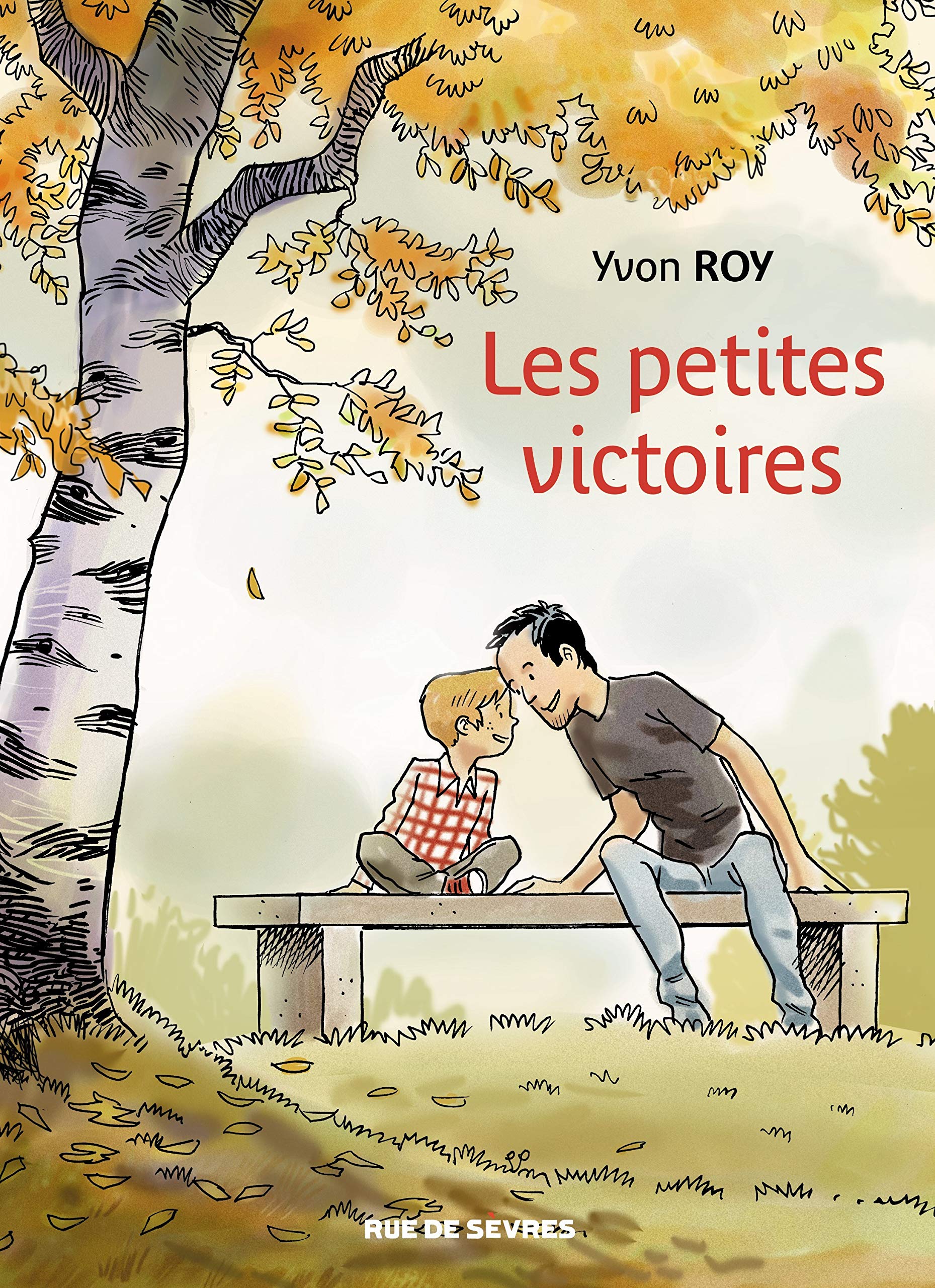
This is Marc, stand in for the author: Yvon Roy
This is his son, Olivier, who is autistic.
Les Petites Victoires showcases the fight of a father for his son, diagnosed with autism "in order to transform an announced defeat into small victories" (sic, our translation).
In his preface, Roy explains the contextualises the creation of his comic book:
"The idea was first suggested to me by a special educator who had worked with my son. She thought that what we had accomplished together was worth sharing so that other parents could find, through our experience, some useful information, if not a little hope" (our translation).
Interview
"When I started working with my boy to help him, with all the professionals in the field, I realized that often we were told, or they tried to tell us, that we had to work on living with autism, on accommodating autism. How we had to deal with different crises, different problems, whereas I thought, well, no, it's better, definitely, to try to overcome it than to live with it. And that's been kind of my master idea, let's say, for years with my boy, which is to try to push the boundaries constantly, always further." (Our translation)
Why choose this comic book?
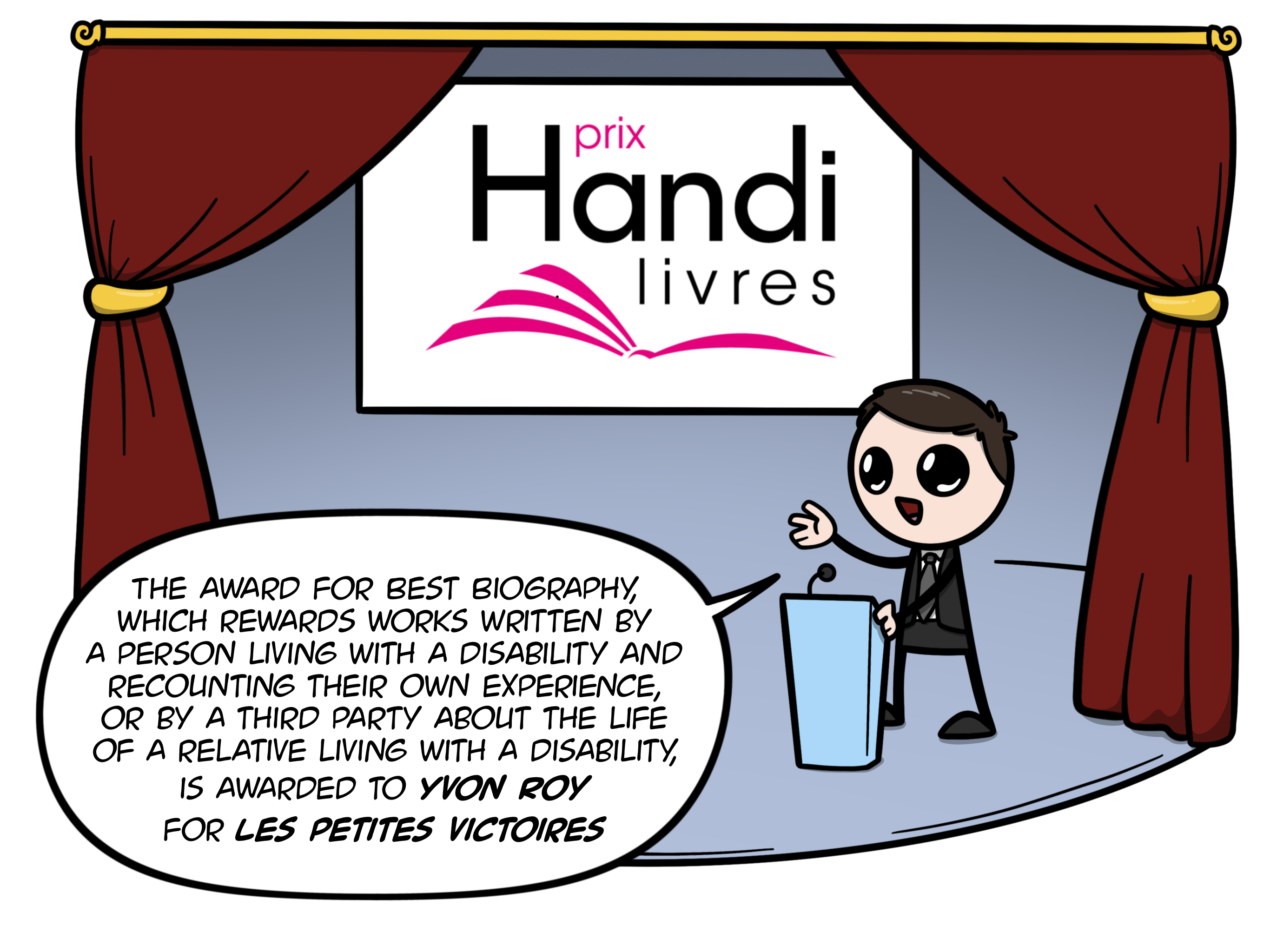
This comic book is an example of a creation that is easily accessible to the general public that has been awarded and highly publicized - even winning an award that recognizes works written by a person living with a disability and recounting their own experience, or by a third party about the life of a relative living with a disability. In 2018, the publisher Rue de Sèvres announced a contract for a film adaptation, which caused reactions and led to the hashtag :
#boycottlespetitesvictoires
As we will show, this is an example of the social representations of autism that perpetuate dominant understandings that do not fit the lived experience of those directly concerned to the point of being discriminatory. It is also difficult to identify moments when the child (the autistic character) shows agentivity. Instead, he’s passive in his father’s story. In a way, Olivier is only a supporting character. This is exaclty why representation doesn't mean autorepresentation and why "nothing about us whitout us" matters: although this comic is presented as a positive narrative from the allist perspective (3rd person), the story is completely different from the standpoint of the autistic community’s testimonies (1st person).
An allist person is a non-autistic person.
To understand the term "allist", we must go back to the origin of the word "autistic" which comes from the Greek word "autos" which means "self". So the word "autistic" initially referred to a person withdrawn on themself, who lives in their own world. The term "allist" appeared in a satirical article to refer to non-autistic people by swaping “autos” for "allos" which refers to others. So an allist is a person who is focused on others or, to flip the usual narrative, a person who lives in other people’s worlds.
In spite of the satire, the term “allist” has remained in use among others because it allows to distinguish between "neurotypicals" and "allists". There are people who are not autistic, but who are not neurotypical: a non-autistic dyslexic person, for example.
For a deconstruction
of the problematic propositions of the comic book:
But do you know the story from the autistic community’s perspective?
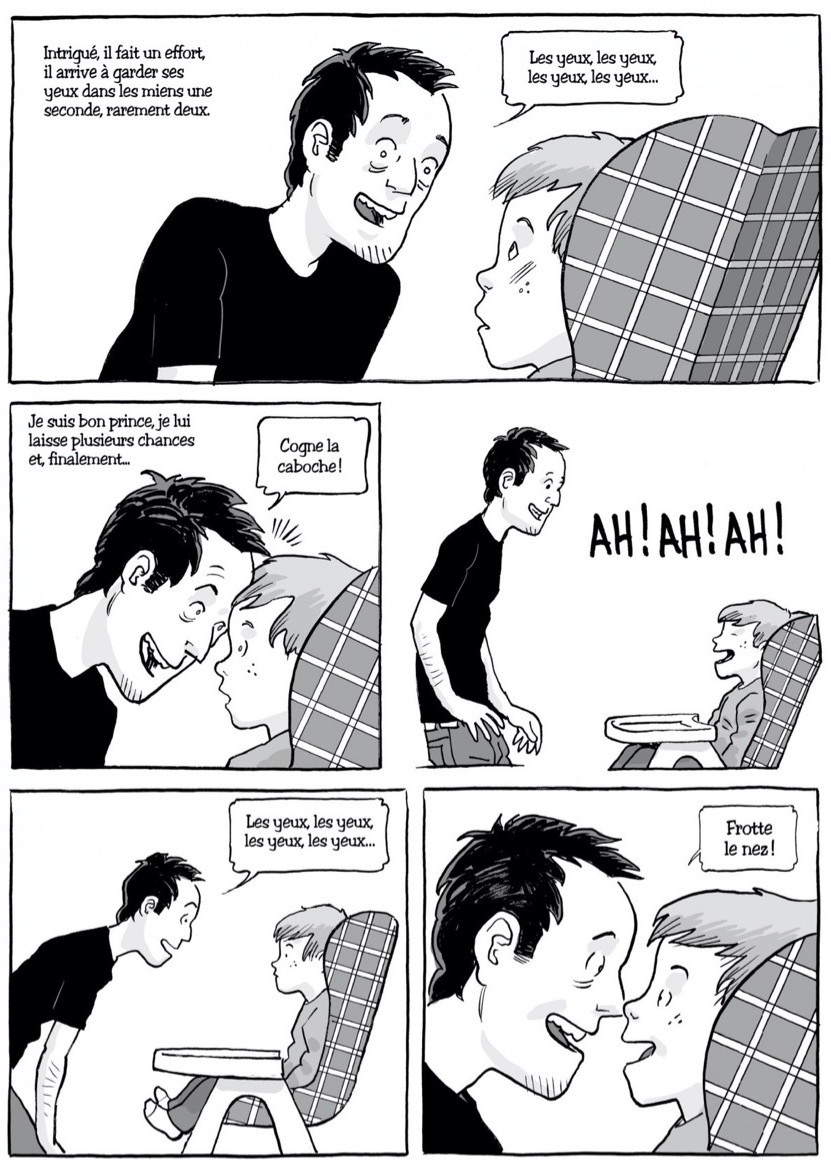
This is where webcomics can serve as an accessible tool that allows the reversal of dominant representations by opening the floor to self-representations directly grounded in marginalized communities. But before continuing with the topic of webcomics, we wish to feature an excerpt from Les Petites Victoires that addresses a frequent theme in autism: eye contact.
Excerpt on eye contact
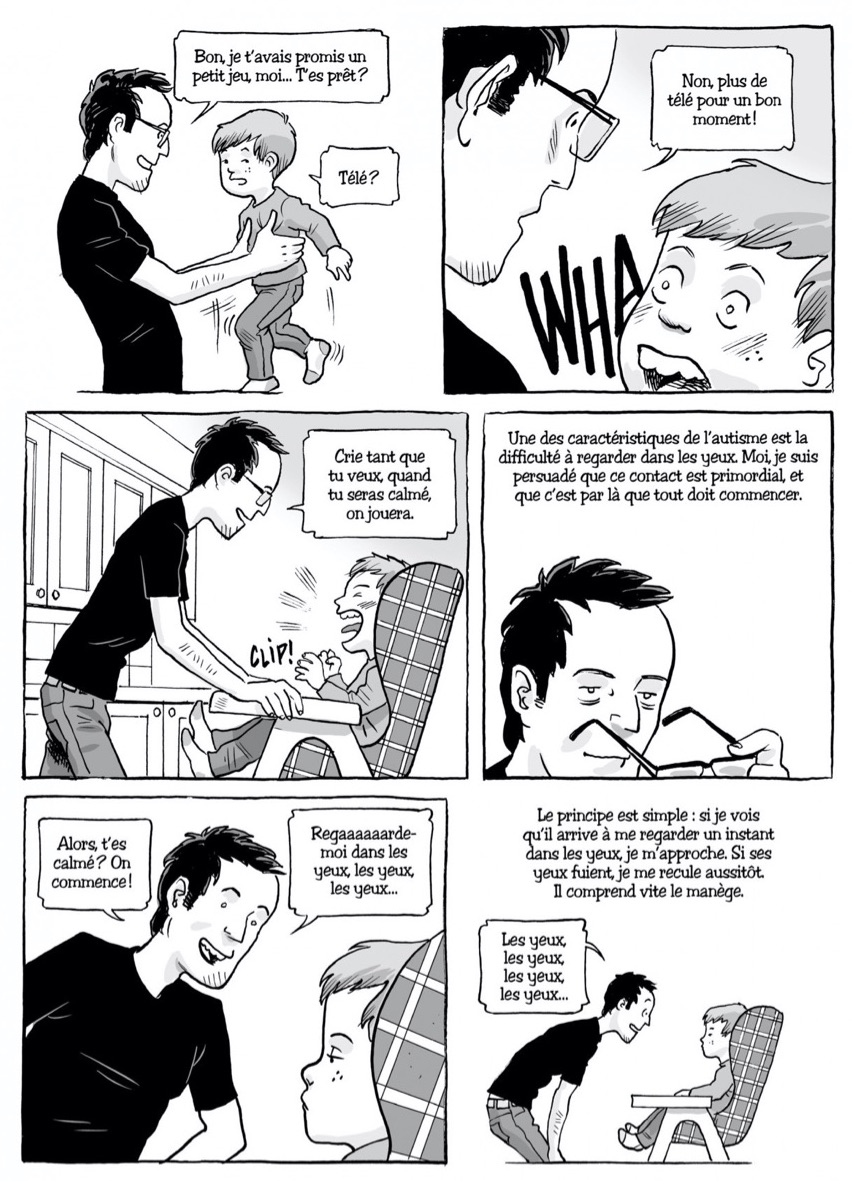
English translation
English translation
Excerpt from Yvon Roy's interview
"I worked a bit like we can work to sometimes desensitize a substance. Sometimes certain people can have an allergy, we can try to desensitize them.
Several parents have contacted me regarding the trick to get the child to look in the eyes. This is the first thing we worked on together, that is to say, I considered that being able to look in the eyes - we know that autistic children have difficulty looking directly in the eyes - I said to myself, if we don't have eye contact, we have nothing. We need that, it's the beginning of human interaction." (our translation)
TW: The host uses the term “prison” in reference to autism:
"In your story that you shared with us in Les Petites Victoires, there is obviously the moment when you get up to face, to accompany your child in that reality: to learn to understand him too, inside what he lives and this prison, in a way, from which he is pressured which is basically this condition." (our translation)
Link to the interview (in French)

This scene is an example of neuronormativity
Recall that neuronormativity is the prevalent, neurotypical set of assumptions, norms, and practices that conceives of neurotypicality as the only acceptable or superior mode of cognition, and that stigmatizes attitudes, behaviors, or actions that reflect atypical modes of cognition as deviant or inferior.
This scene is told from the allist perspective and is presented with a positive outcome. In fact, as the author mentions, parents have applied this technique with their autistic children after being inspired by it.
But what if we ask autistic people how they feel about eye contact? That's exactly what we are going to do.
PART II
Why webcomics?
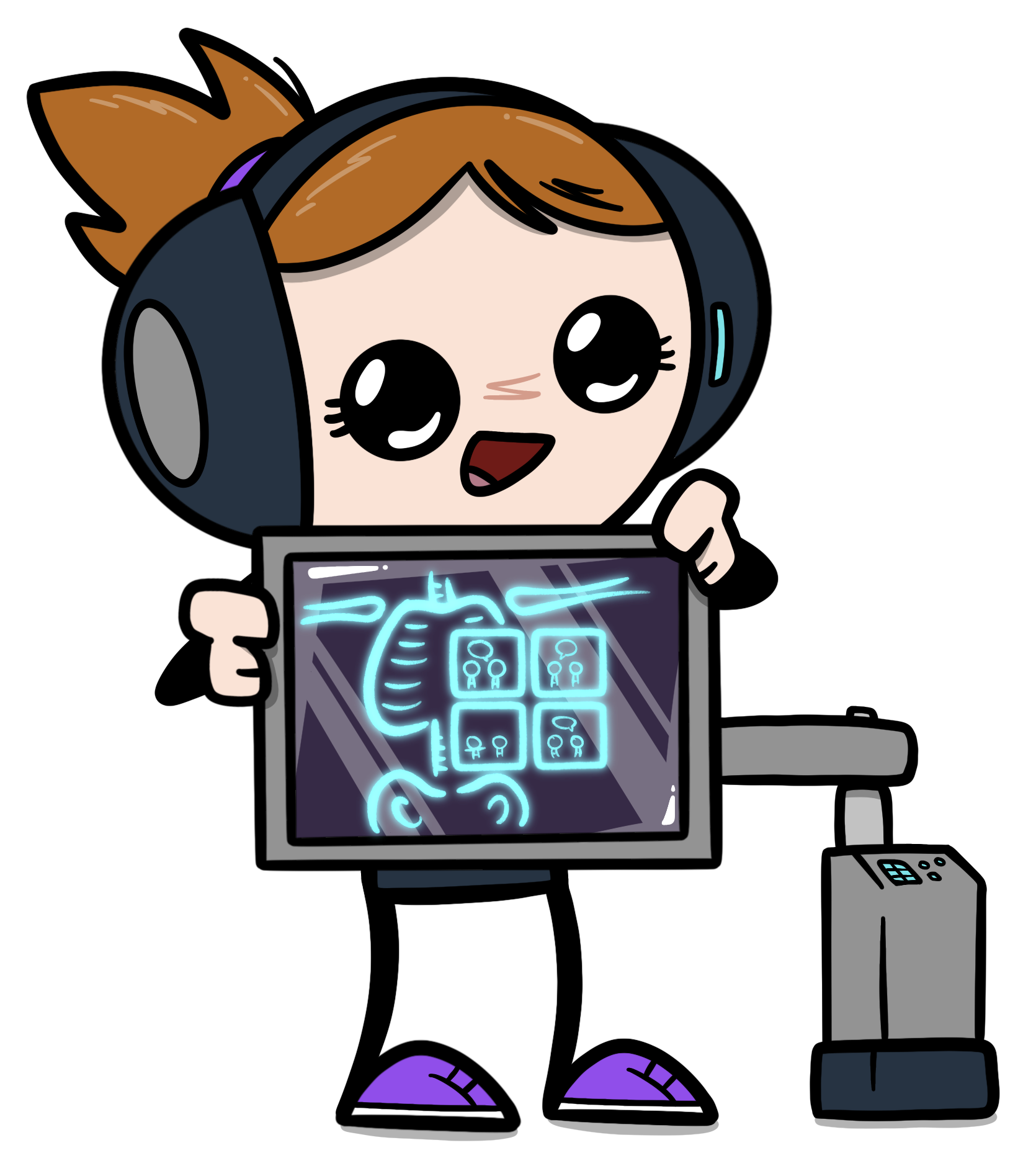
The medium of webcomic enables me to do something I don't know how to do otherwise: share how things feel on the inside.
Imagine. You come across a newspaper at the local coffee shop and recognize the face of a well-known personality. Yet you can't remember their name. It annoys you, you know you know it, it’s just not coming out, it stays there, on the tip of your tongue. You have time to come back to work, coffee in hand, and the name still hasn't come back to you, it still annoys you. You come across a colleague and you ask them, you describe the person, maybe clumsily at first (it would be so much easier with their name!), but you adjust to your interlocutor and, together, you can finally recall their name, it was so obvious!
It’s important to emphasize this feeling of annoyance. We rarely take the time to mention this annoyance when talking about epistemic injustices. Yet it is there, and it can even be painful: how do we make sense, to use Fricker's classic example, of our experience of sexual harassment when the concept does not yet exist? How can we share the feeling that something is wrong? This is where community comes into play and it is why the idea of "by and for" matters more than, say, a criterion of simplicity might. This is addressed by feminist epistemologies: for example, Longino argues for pragmatic values in science such as diffusion of power (as the importance of making research programs accessible to the actors involved in the research).
The impact of inadequate social representations on neurodiversity cannot be fully resolved by the traditional narrative of epistemic oppression and justice: adding new vocabulary to collective epistemic resources is not a panacea (we already have the word "autism" for example). So it is not only words that are missing, but rich and diverse lived experiences are also missing from the pool of shared resources.
The problem is that what is missing, the hermeneutical gaps, are not automatically apparent: social representations created by and for the dominant groups inadequately fill the hermeneutical gaps of marginalized groups. To that effect, let us recall here the Handi-Livre prize for the best biography which rewards works written by a person with a disability and telling his or her own experience, or by a third party on the life of a close relative with a disability: In the case of Les Petites Victoires, the award went to the biography of an allistic (non-autistic) person talking about autism. These inadequate social representations are difficult to resist: they are constantly and persistently reproduced. It is even harder when you don't have the words to replace theirs. But do we really have to wait for the right words to share our experiences? This is where illustration can become an attention grabbing action like shouting: an action that does not need words. This is what we propose here: a form of non-propositional epistemic resistance in response to hermeneutic injustice.
Webcomics are basically online comic books. They are mostly instantiated as short comics that take many forms and cover many topics. The most common form of webcomic is probably the blog (sometimes autobiographical, sometimes entirely fictional, sometimes both). Because they are mostly published independently by their artists, webcomics are an art form that is not limited by institutionalized power dynamics such as publishing houses or art galleries.
But the most important thing for us here is that webcomics are able to generate aesthetic experiences that allow viewers to better understand different aspects of the lived experience of neurodivergent people despite the inadequacy of mainstream epistemic resources.
In some ways, webcomics are a digital version of street art.
Although limited to a given geographical space for street art and to a particular digital platform for webcomics, there is this common idea where it is not so much the public that goes to the creation as the creation that goes to the public. We are no longer in a reserved and predefined space like a museum, a bookstore, a gallery or even a library.
Although a recognized artist can make street art, it is more difficult for an artist who does not belong to a complex and influential network to access some places of diffusion such as an art gallery. Webcomic is thus added to the tools that allow the production, use and transmission of more accurate social representations, participating in the collective understandings of the oppressions suffered by epistemically marginalized groups. The public and interactional aspects of social media that support webcomics make them a catalyst for direct dialogue with (but also within and between) marginalized communities.
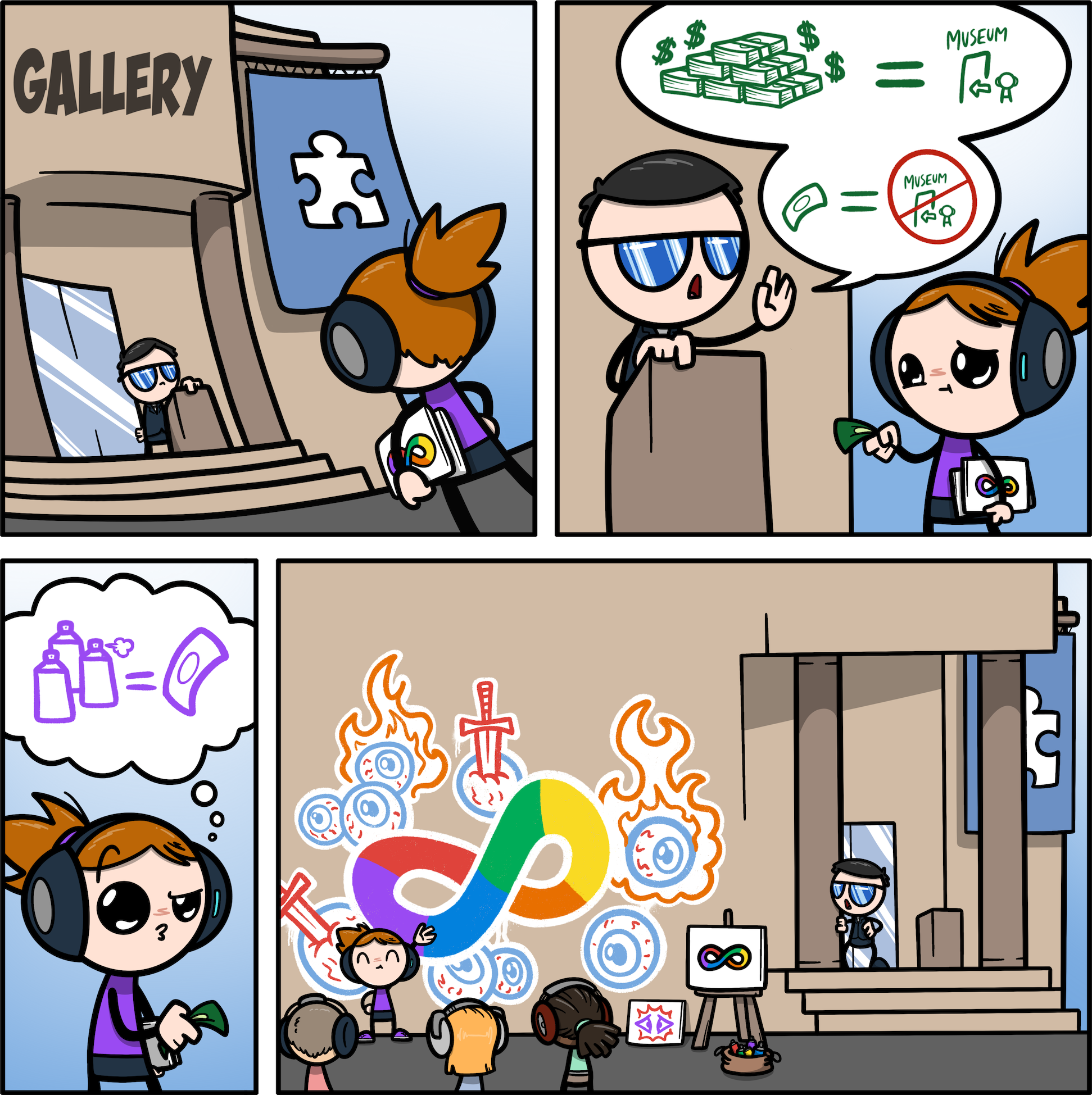
To put our epistemic resistance into action,
and to enhance our imaginative ressources, we chose to gather first-personal testimonies and descriptions of how eye contact can feel for autists.
After all, who better to provide insight into a given lived experience than those who live it? To do so, we used social media (instagram and facebook) to ask autistic followers of our webcomic (@lilyspectrum): How does eye contact feel to you? Although we are neurodivergent, it was important for us to go with the community beyond our individual experiences. For instance, we would never have thought of the sunburn idea on our own, but once we read those testimonies, it felt right.
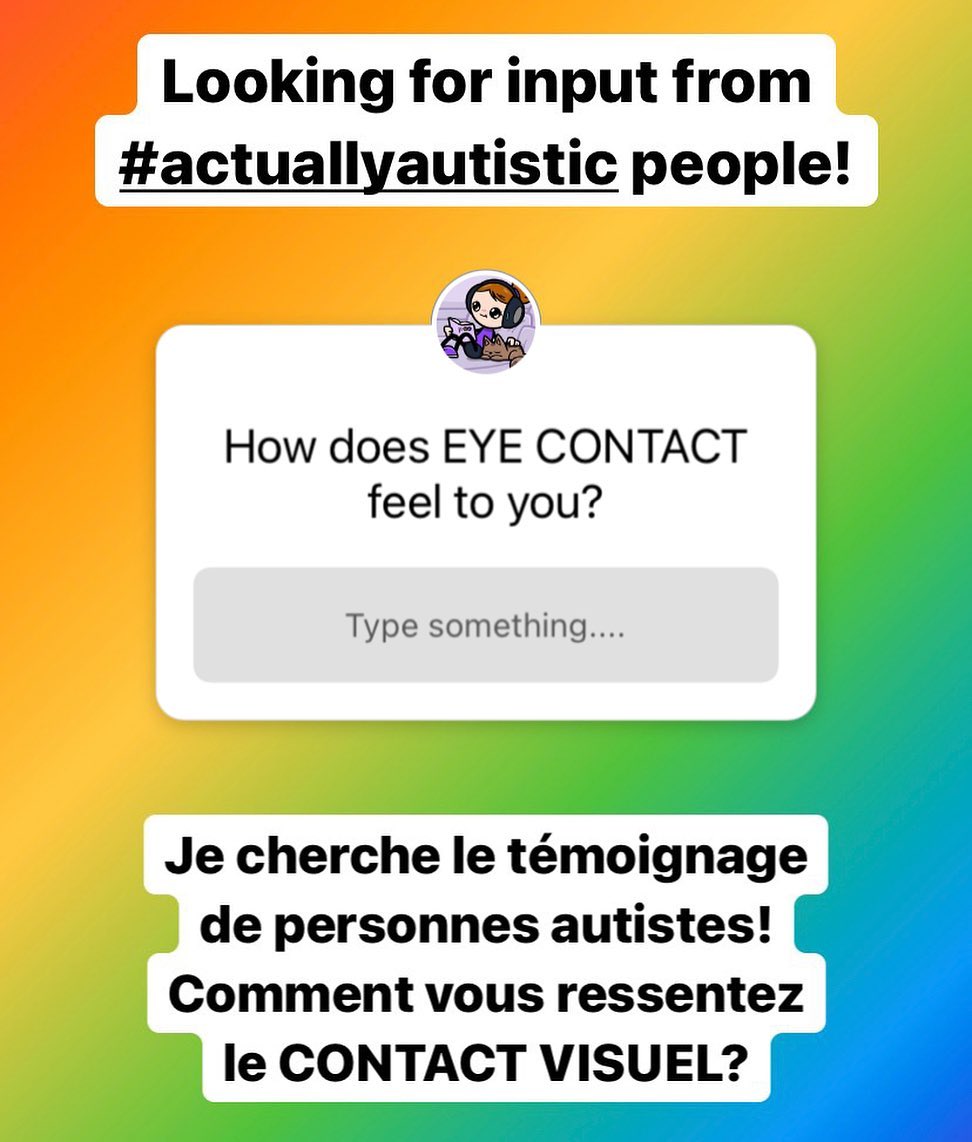
Both posts were made on November 8, and three days later, on November 11, we had received 175 testimonies. A few major themes emerged from these testimonies, which we used to base 7 webcomics or illustrations on. Keep in mind that, with this process, we do not claim to represent all there is to express about autists’ first-personal experience of eye contact. In fact, we suggest you visit these posts yourself to better understand the varied responses we got, and are still getting. And who knows, maybe this will allow you to add your own insight.
Publication
Since Monday, we have started to publish these comics on our social networks and we will continue to publish them in the following days
The interactions that take place around such webcomics are, we believe, an integral part of their complete aesthetic experience. These interactions often bring about clarifications, complementary details and descriptions or even added meaning. We thus invite you to visit these posts and interact with the community.
Webcomics
"I can do it but I can’t process anything else while doing it. My natural instinct and what feels the most right is to not look at someone’s face at all"
"It was drilled into me as a "rule" of politeness. I view it as just that, a rule. It's easy when there's multiple people because I can look around. But with one person, I have to look away or I end apparently end up staring"
"Everyone insisted on it, especially when they really wanted to correct a behavior or ensure I was paying attention. I honestly still don't love it, and prefer to look at noses or eyebrows to provide the impression I'm making eye contact"
"Eye contact was enforced during my childhood in mostly abusive ways and while it taught me to fake it, that made me hate it even more. Generally it just makes me uncomfortable and I find it quite distracting but it's also one of the most tiresome things to mask."
"Eye contact feels like they're staring into my soul, but with knives. I can make short eye contact before wanting to cry."
"It takes a concerted effort except for specific people."
"I’ve been so conditioned to make eye contact with people that when I met a lot of my friends for the first time they were kinda weirded out by me unblinkingly paying attention to them when they talked like 👁👄👁"
"It feels like someone is looking right past all my defenses and directly into my head. Not very pleasant."
"Terrifiant, j'ai vraiment l'impression qu'on me transperce à chaque fois …"
"Like I am being stabbed in the brain, itchy under the scalp, or suffocating. Anxiety is anxiety. I look at people's foreheads. They never know the difference but I am not forced to juggle the pain of eye contact and try to communicate. I am mostly non verbal and eye contact guarantees no words."
"Ça me met vraiment mal à l'aise et j'ai peur qu'on puisse mal interpréter si je regarde pas "correctement", je sais pas si je dois regarder quelqu'un dans les yeux ou combien de temps, il faut surtout pas que je regarde autre chose chez lui que ses yeux et du coup je sais pas quoi faire je préfère regarder le mur derrière mon interlocuteur 😂"
"Tout dépendra de la situation, de ma fatigue et de la personne. Certains contacts peuvent être transperçants (douloureux), d'autres envoutants (confusants), d'autres destabilisants (perturbants). En tous cas, si je regarde qqn dans les yeux, je suis sûr de perdre mon fil de pensée et/ou d'accorder mes réponses à ce que la personne ressent."
"Eye contact feels like burning discomfort, especially when I'm being told to do it."
"It’s extremely hard for me to maintain eye contact, and when people express to me that I should be looking at them when I’m talking to them, it puts me under more stress than just talking to them in the first place"
"somehow being told we should be making eye contact feels like being reprimanded as a child, at least to me.. I can't count the amount of times my mother would tell me to look her in the eyes as a child, and how humiliating/stressful it felt.. I legit forget to listen to people because I'm too busy trying to maintain eye contact."
"At best, awkward and uncomfortable. At worst, like someone's stabbed me in the eyes."
"It makes me uncomfortable but my mother forces me to look people in the eyes"
"Painful, but I feel like if I don't look ill be punished or called a liar. So I trained myself to look at something over their shoulder if not their foreheads to avoid harassment."
"Habituellement je regarde plutôt la bouche ou le nez des gens et ça semble passer crème pour donner l'illusion que je regarde dans les yeux (j'ai eu droit à l'expert en haute potentialité qui me disait que c'était impossible que je sois autiste car.. je le regardais dans les yeux ! Je regardais sa bouche depuis le début de l'entretien..). Je ne me force au contact visuel que de manière consciente et dans de rares cas précis : [suite]
(suite) par exemple si je suis attiré romantiquement par quelqu'un et désire que cette personne le perçoive (vu que le contact visuel accru est interprété de cette façon par beaucoup de neurotypiques). Mais cela reste un sacré effort et en général je détourne les yeux très rapidement, ça me met mal à l'aise, c'en est presque physique. Récemment un de nos profs en cours nous a fait faire une série d'exercices où on devait marcher vers quelqu'un/revenir à sa place à reculons en gardant le contact visuel constant avec cette personne.. je vous laisse deviner la torture que c'était"
"Transperçant!"
"J'ai l'impression que les yeux de la personne me percent à l'intérieur, je sais pas comment dire, c'est une sensation d'oppression aiguë."
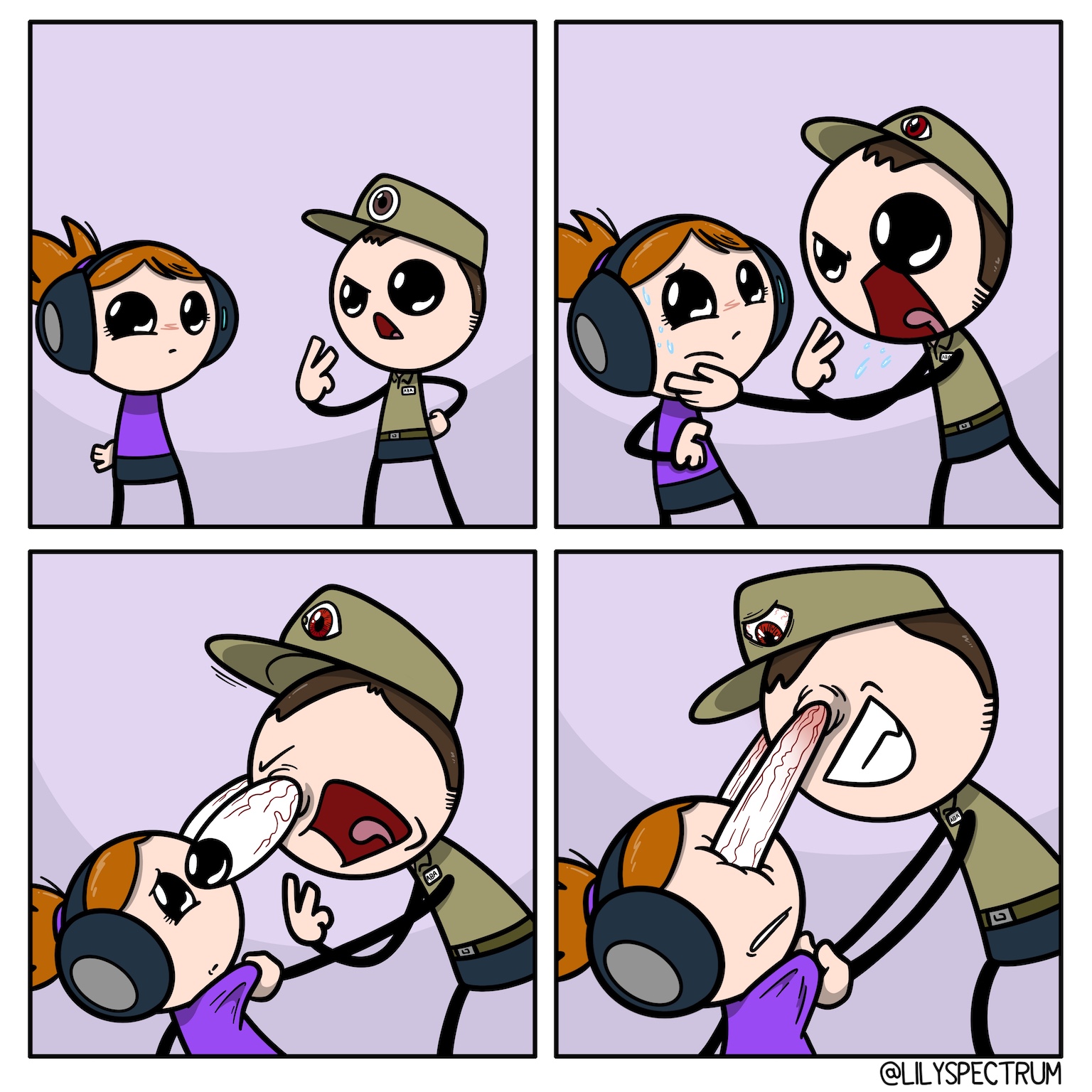
"For me, looking in the eyes feels too exposed and open. It makes me feel like I can't hide and protect myself from the people."
"Eye contact makes me uncomfortable most of the time, because of the feeling that I am being silently judged or getting talked about negatively."
"It's fine when I'm listening to someone but when I'm the one talking it makes me get stage fright like I'm being put on the spot to judge for performance lol"
"Too intimate, inappropriate… I become incredibly self conscious as well, like am I doing eye contact right? Should I be mirroring their behavior or a close approximation or complete opposite? How many times should I blink? Can they tell I’m faking this human interaction? It’s incredibly stressful."
"It feels like something is a required check box. It’s like a math problem. Look, one, two, three. Okay. Look away. Zone out if you need to. Okay, it’s been 10ish seconds. Look back. One, two, three.. okay, look away! Don’t share at them! Wait! You’ve looked away too long! Look back! …..it’s that on repeat quite often lol"
"I hate it I get so nervous and then I break down."
"I don't like it, makes me really uncomfortable. I'm "good at it", because I mask well (😬). I never know what to do, if I'm looking to much or not enough and always use a whole lot of energy just on eye contact. Generally, the more comfortable I feel the less I look someone in the eyes. (Also eyes as a body part make me feel really icky so that's that)."
"Intimidating and uncomfortable, I feel too vulnerable and keep thinking am I doing this right?"
"Ça me met vraiment mal à l'aise et j'ai peur qu'on puisse mal interpréter si je regarde pas "correctement", je sais pas si je dois regarder quelqu'un dans les yeux ou combien de temps, il faut surtout pas que je regarde autre chose chez lui que ses yeux et du coup je sais pas quoi faire je préfère regarder le mur derrière mon interlocuteur 😂"
"Eh bien, quand j’étais petit, je parlais et écoutais souvent le monde sans les regarder dans les yeux. Maintenant, ça me dérange pas de parler et écouter avec le contact visuel, mais j’peux très bien comprendre ce que le monde me dit sans obligatoirement les regarder dans les yeux. Aussi, c’est vrai que ça me rend un peu mal à l’aise quand des inconnus me fixe du regard. C’est comme s’ils me jugeaient et j’sais pas ce que j’ai fait de mal."
"Direct eye contact feels like I am being judged. It also makes me feel uncomfortable because I become unable to perceive and read the rest of their body language."
"Démunie, nue. Percée à jour. C’est très fort comme sensation, et rarement agréable. J’y arrive avec mes enfants ou mon mari, mais même dans ce cas, pas trop longtemps. Si je veux tenir une conversation, et me concentrer, alors je dois ruser. Je regarde entre les deux yeux ou le plus souvent la bouche."
"Feel nausea and anxiety, and extremely naked. Yet my mother was adamant that I learned it and therefore I am able to do it, despite the uncomfortable feelings. Absolutely love your work, for once I can tell that I am not alone"
"I feel instant stress and I have to force myself to do it and to look "natural"."
"Honestly, each time it happens to me, the most awkward feeling I have is « where should I look exactly » ? When you make eye contact, are you expected to focus one eye specifically (which one, then ?), between the eyes, not focus at all, or try a weird way of having each eye "looking" into the facing one (i.e. my left eye "looking at" their right one and vice-versa) ? I'm also never sure if/when eye contact is expected, and when it happens, is there/what is the hidden message behind this specific contact, and/or am I sending an incorrect hidden message myself ? Then, with all these questions actively consuming my brain "computing power", everything else totally miss the point (sometimes, though, I can hide this issue because I have this kind of ability to "replay" the last few words/sentence I unconsciously heard, to process it with a delay but potentially without the proper context- so it's not reliable at all !!). "
"Weird and artificial. I can actually read people's eyes now, but it took me years to learn it."
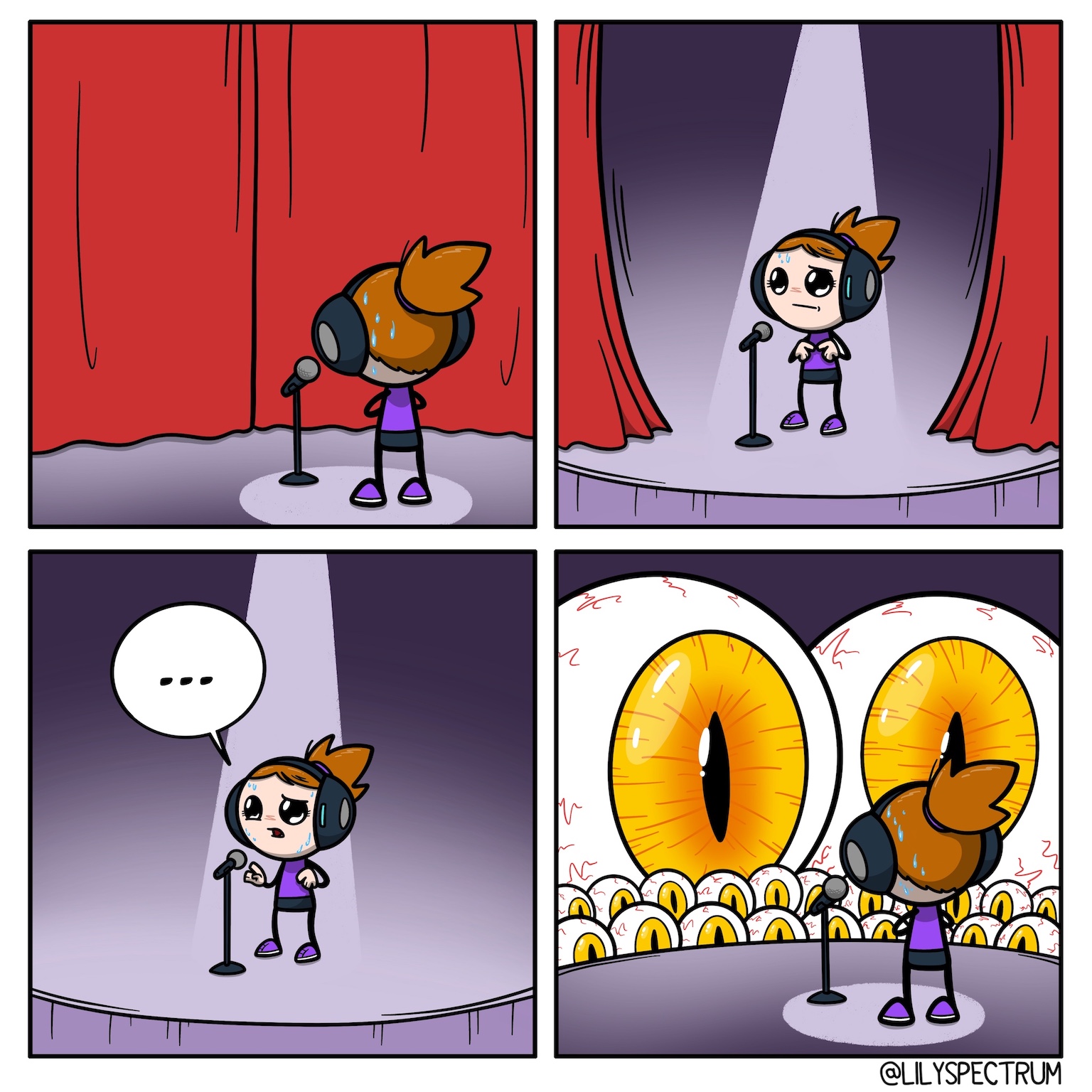
"My parents rasied me to always look into the eyes, still feels wrong. Like, I am invaiding a personal space and being rude. Like trying to stare down their soul and violating their privacy. I still try to look at people in the eyes but have learned to just looks in differents points in the face so I don't seem rude."
"Eye contact feels too intimate to me for most interactions. If I make eye contact with you, it’s because it’s important. "
"Eye contact feels very intimate. If I’m forced to hold it for too long, I feel violated, like I’ve been touched without consent."
"I really hate eye contact in almost all circumstances. About the only exception is with someone I'm very intimate with. Eye contact feels extremely intimate to me in general so it only feels natural when it's with someone I've got a suitably intimate emotional connection to. Otherwise it feels like I'm staring into someone's soul and I can see everything and they're staring into mine and seeing the same (even if I know they're not)."
"Invasive, extremely personal. I'm only comfortable looking my husband in the eyes"
"It feels like I’m standing too close to someone, I don’t know if that’s too vague of a comparison but it feels way too intimate. So I only do it when necessary or when I’m comfortable with that person."
"It feels creepy to me"
"I don't like it, makes me really uncomfortable. I'm "good at it", because I mask well (😬). I never know what to do, if I'm looking to much or not enough and always use a whole lot of energy just on eye contact. Generally, the more comfortable I feel the less I look someone in the eyes. (Also eyes as a body part make me feel really icky so that's that)."
"I hate eye contact. It almost hurts. But it’s nessesary to have a successful professional life, and my parents trained me well as a child. They would ask me people’s eye color after I met them to see if I made eye contact. Being trained like that at a very young age was incredibly difficult and felt unfair, but I’m very grateful that they pushed me now that I’m an adult."
"I can't do it, it makes me feel funny in a bad way and makes me feel kind of .. unsafe? and uncomfy I don't exactly know the word for the first one, I don't mind people looking at me but I won't look back"
"It's incredibly intimate and overwhelmingly so, particularly with strangers. And the more my emotions are revved up, the less I can tolerate it. It genuinely feels as though someone can see into my mind almost, even though I know that they can't. On the plus side, when I'm with someone I deeply, deeply love, sometimes that's okay because I want them to see how much I love them... but then that tends to make THEM feel awkward and uncomfortable too. LOL For me, it falls into the same category as standing too close, invading personal space, touching someone without consent etc. It's intimate, and can very easily become violating when you don't want it. And that;s so hard to explain to NT folk who expect you to look them in the eye all the time."
"It's okay with people I know, but I don't feel comfortable with eye contact with strangers, it almost feels like an invasion of privacy."
"eye contact feels so weird and creepy and if i have to make eye contact with someone, then ill quickly feel exhausted."
"It feels like a boundary rupture unless I completely and totally feel comfortable in a container of safety with another it probably won’t happen much."
"Well... I can't let anyone touch my eyeballs."
"Trop intrusif. Comme si l autre avait la perception de mes pensées. C est comme se montrer nue."
"Intense/ overwhelming/ fiery/ intrusive. Sometimes painful/ always difficult with strangers. Ok with intimate friends and family."
"Démunie, nue. Percée à jour. C’est très fort comme sensation, et rarement agréable. J’y arrive avec mes enfants ou mon mari, mais même dans ce cas, pas trop longtemps. Si je veux tenir une conversation, et me concentrer, alors je dois ruser. Je regarde entre les deux yeux ou le plus souvent la bouche."
"Feel nausea and anxiety, and extremely naked. Yet my mother was adamant that I learned it and therefore I am able to do it, despite the uncomfortable feelings. Absolutely love your work, for once I can tell that I am not alone"
"confronting and very intimate ..i feel naked"
"Quelque chose d'extrêmement intime, que je ne peux pas partager avec n'importe qui sinon je suis déstabilisée car je bloque sur cette sensation d'intimité forcée. Depuis le diagnostic, je me permets de ne plus regarder le visage des gens (je ne travaille pas). Quel soulagement!"
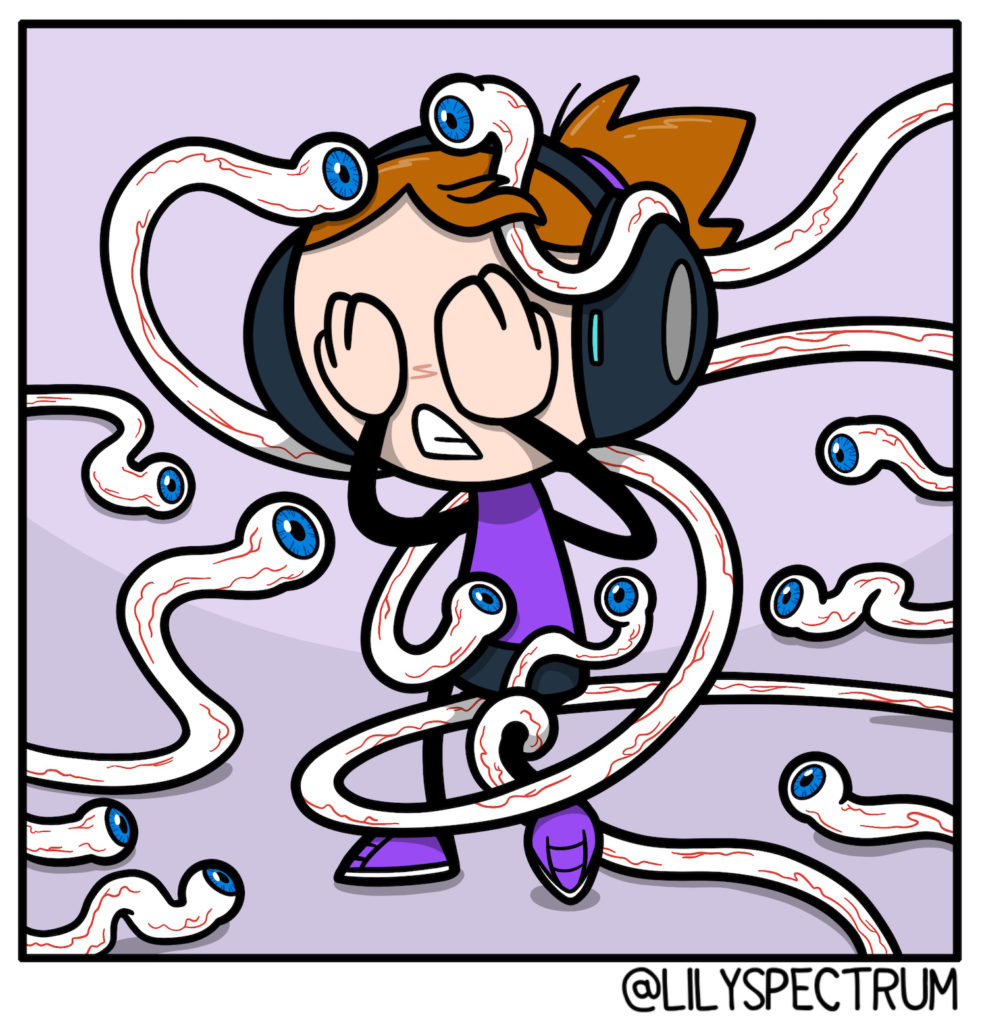
"Eye contact feels like they're staring into my soul, but with knives. I can make short eye contact before wanting to cry."
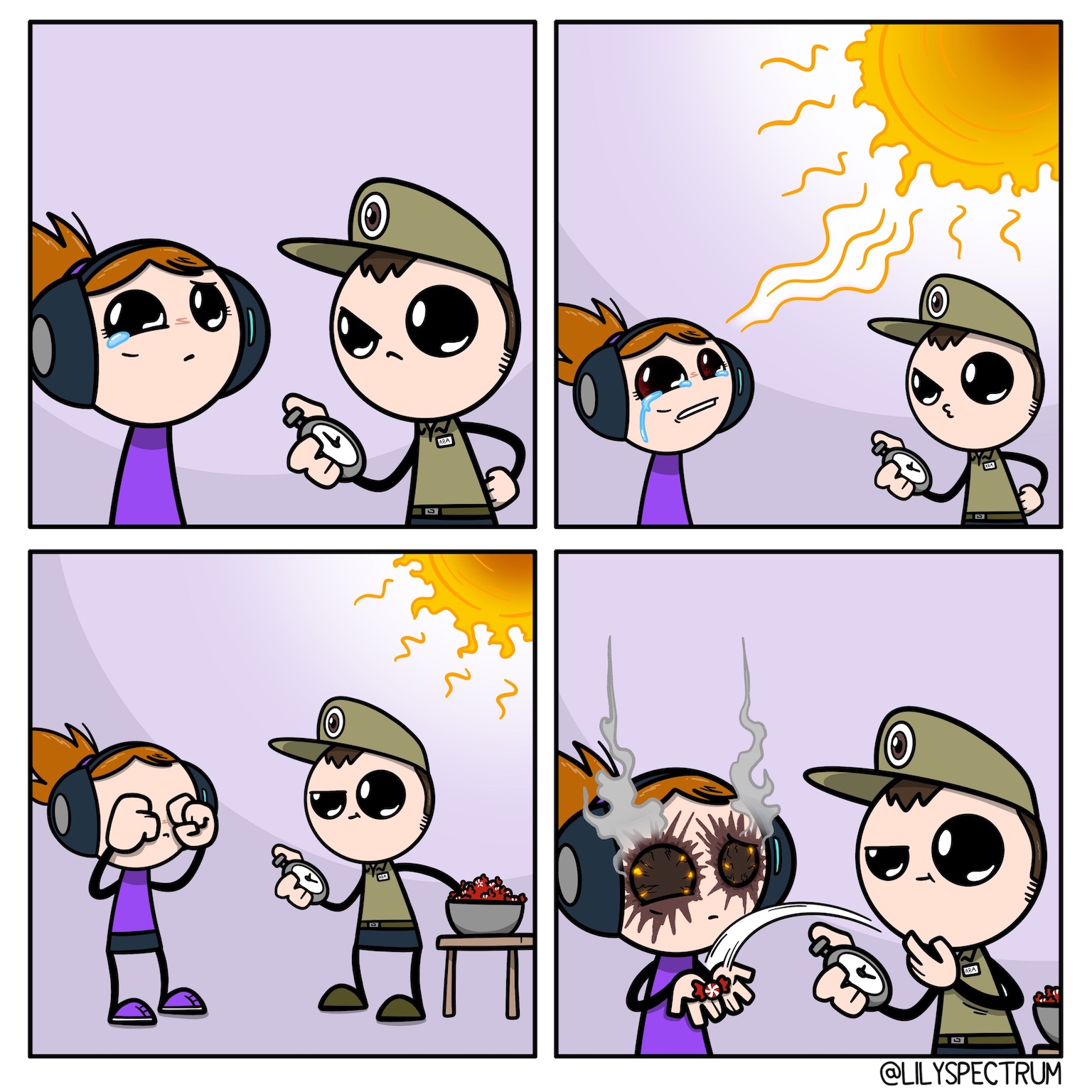
"It’s like being asked to look directly at the sun. I flinch, I can’t do it…"
"It feels like they gonna shoot me with laserbeams. Like Cyclops from X-Men. I van handle it for 10 seconds. I get panick attacks of it's to long. Even with my bf makes me on edge. I got a major panic attack during a being social etc exam (idk how it's in English is). It was so bad. They let me past because otherwise i needed to do the whole year over."
"Feels like I’m staring at the sun and I can only look a person in the eyes for 30 seconds or so before my eyes start to hurt a bit. I can only look animals in the eye."
"Like flames of intense awkwardness are scorching my retinas."
"When I was younger I always had trouble making eye contact. I’ve gotten better at it in recent years but its still painful to me."
"Eye contact feels like burning discomfort, especially when I'm being told to do it."
"Ça me demande beaucoup de concentration. J'ai l'impression que ça me fait mal aux yeux et quand j'étais plus jeune je pouvais même ne plus vraiment entendre ce que la personne me disait. Par contre ce n'est plus un problème quand je me mets vraiment en colère au point de vouloir me battre."
"Ca va de la gêne à la sensation de brûlure, ça dépend des personnes je suppose. On peut parfaitement regarder le nez, la bouche, entre les yeux sans que l'autre ne sen rende compte."
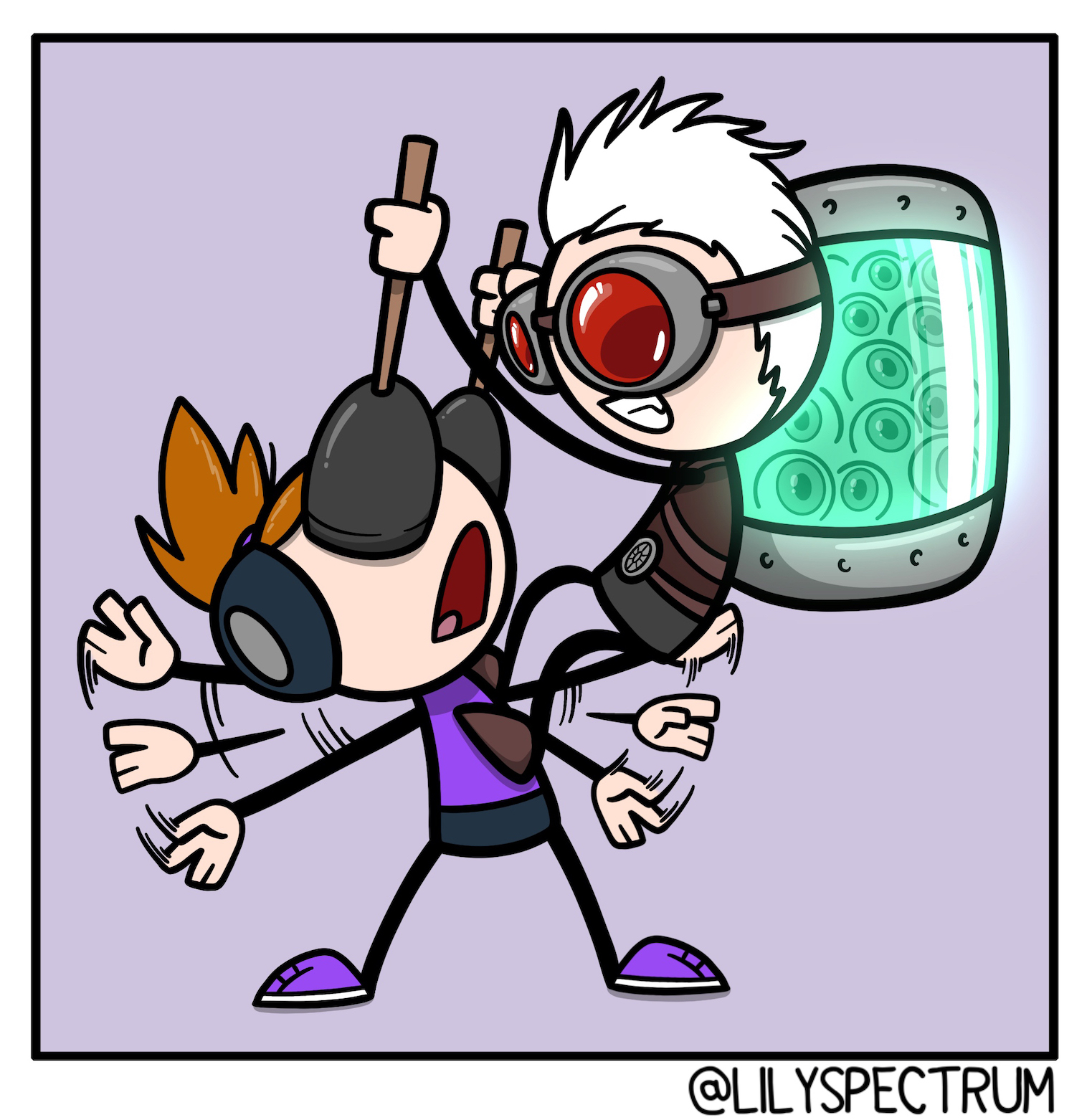
"I can’t think if I have to. Feels like pressure."
"Bad, I feel like my head is going to explode if I look at someone's eyes for too long. I suspect it's probably a blood pressure drop or adrenaline, but it feels awful. I honestly don't get why so many people require eye contact when speaking. I can make eye contact, but it's really difficult to understand what the person is saying because I'm too focused on how uncomfortable I feel and how incredibly awkward it is to stare at someone's eyes"
"It feels literally painful and I’m always afraid the other person can tell what I’m feeling/thinking. I’m comfortable with eye contact with very trusted folks in my life though."
"Painful"
"I really hate eye contact in almost all circumstances. About the only exception is with someone I'm very intimate with. Eye contact feels extremely intimate to me in general so it only feels natural when it's with someone I've got a suitably intimate emotional connection to. Otherwise it feels like I'm staring into someone's soul and I can see everything and they're staring into mine and seeing the same (even if I know they're not)."
"I cant make eye contact with literally anyone. Its uncomfortable, and even when its not, i cant listen proberly to what people are saying when i focus on the eyes. I just cant do it at anytime with anyone, only for one second maximum. Its like staring into someone's soul, its too much."
"J’ai l’impression d’être absorbée par les yeux de la personne et en même temps comme si on pouvait voir ce qu’il y a à l’intérieur de moi."
"honestly it feels like i am being sucked into their soul… i can’t maintain it if i want a conversation because i just get lost"
"Like someone staring at my soul? I almost feel like that's the part of masking that exhausts me the most!"
"It's uncomfortable. But sometimes if I want to intimidate someone I stare deep into their eyes and make them feel unnerved like I'm looking into their soul."
"Tout dépendra de la situation, de ma fatigue et de la personne. Certains contacts peuvent être transperçants (douloureux), d'autres envoutants (confusants), d'autres destabilisants (perturbants). En tous cas, si je regarde qqn dans les yeux, je suis sûr de perdre mon fil de pensée et/ou d'accorder mes réponses à ce que la personne ressent."
"Trop intrusif. Comme si l autre avait la perception de mes pensées. C est comme se montrer nue."
"J’ai l’impression d’entrer dans l’âme de la personne. Je trouve ça trop privé. Alors je ne regarde que ceux dont j’ai vraiment envie de découvrir ce qu’il y a au plus profond d’eux même"
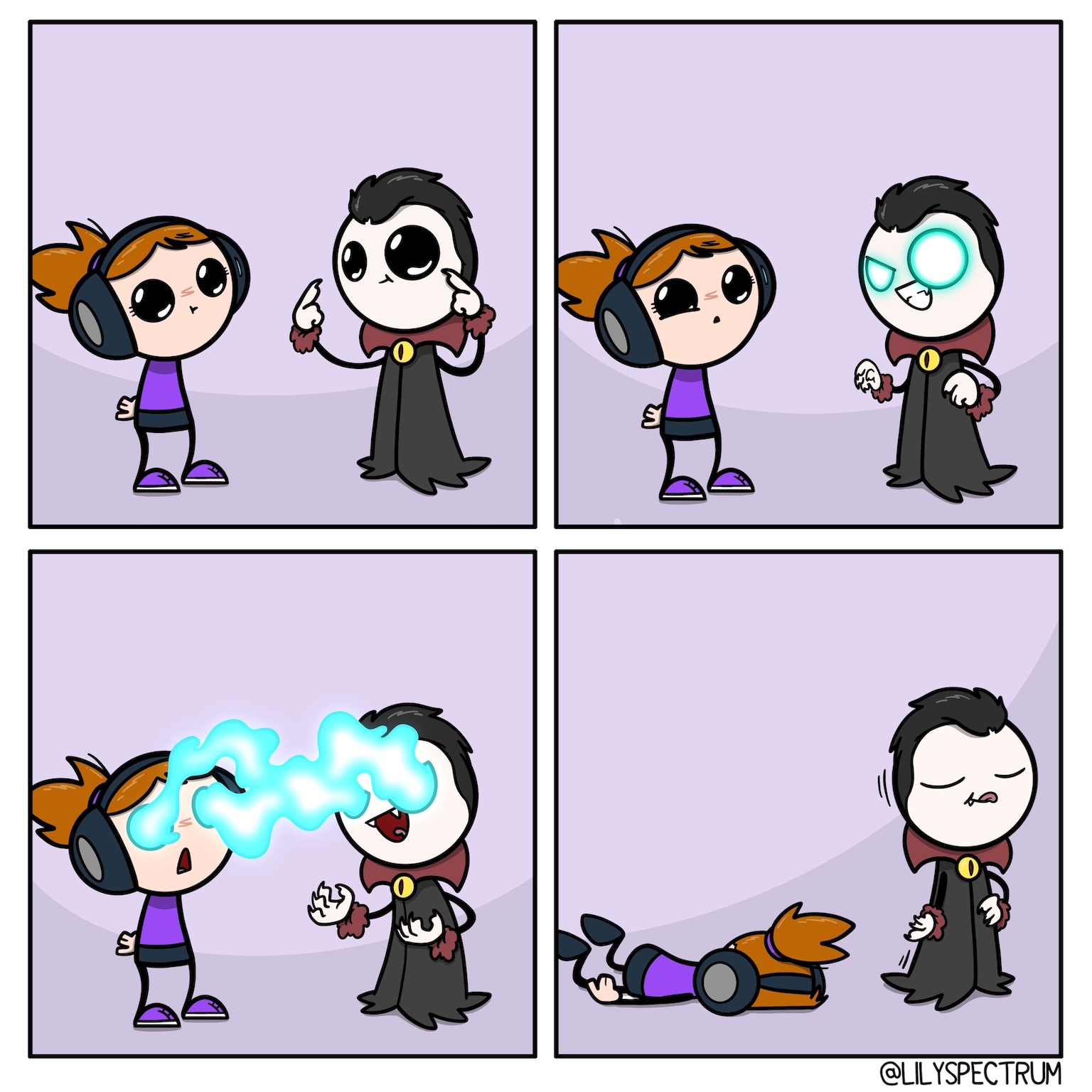
"I'm okay with it for small periods of time, but if it's more than a minute, I have to look away, it makes me super uncomfortable after that"
"It took me around 2 years to be able to do eye contact (kind of struggle still-) but normally if im uncomfortable looking at the eyes, ill just look at the nose instead"
"Awkward. The longest I can probably do it is for a few seconds, but sometimes it’s physically impossible for me to look someone in the eyes even for one second."
"Ça me met juste très mal à l’aise, et du coup je préfère regarder ailleurs et ne regarde les gens dans les yeux s’iels ne me regardent pas."
"Incapable de soutenir un eye contact sauf avec certaine personnes... Ma famille (ma mere, mon pere, ma soeur), ma nièce, mon beau frère et mon conjoint. Quelques amis specifique aussi... Mais sinon incapable. Je chercher tjrs a "évader" ses eye contact."
"Uncomfortable. I have trouble maintaining eye contact for long, especially in a conversation. However, I did figure out that talking with your hands is a great way to distract the other person's eyes from your and gives you a reason not to look at them."
"havent made eye contact with anyone (while i'm talking to them, that is) except my cats in years if that tells you anyone"
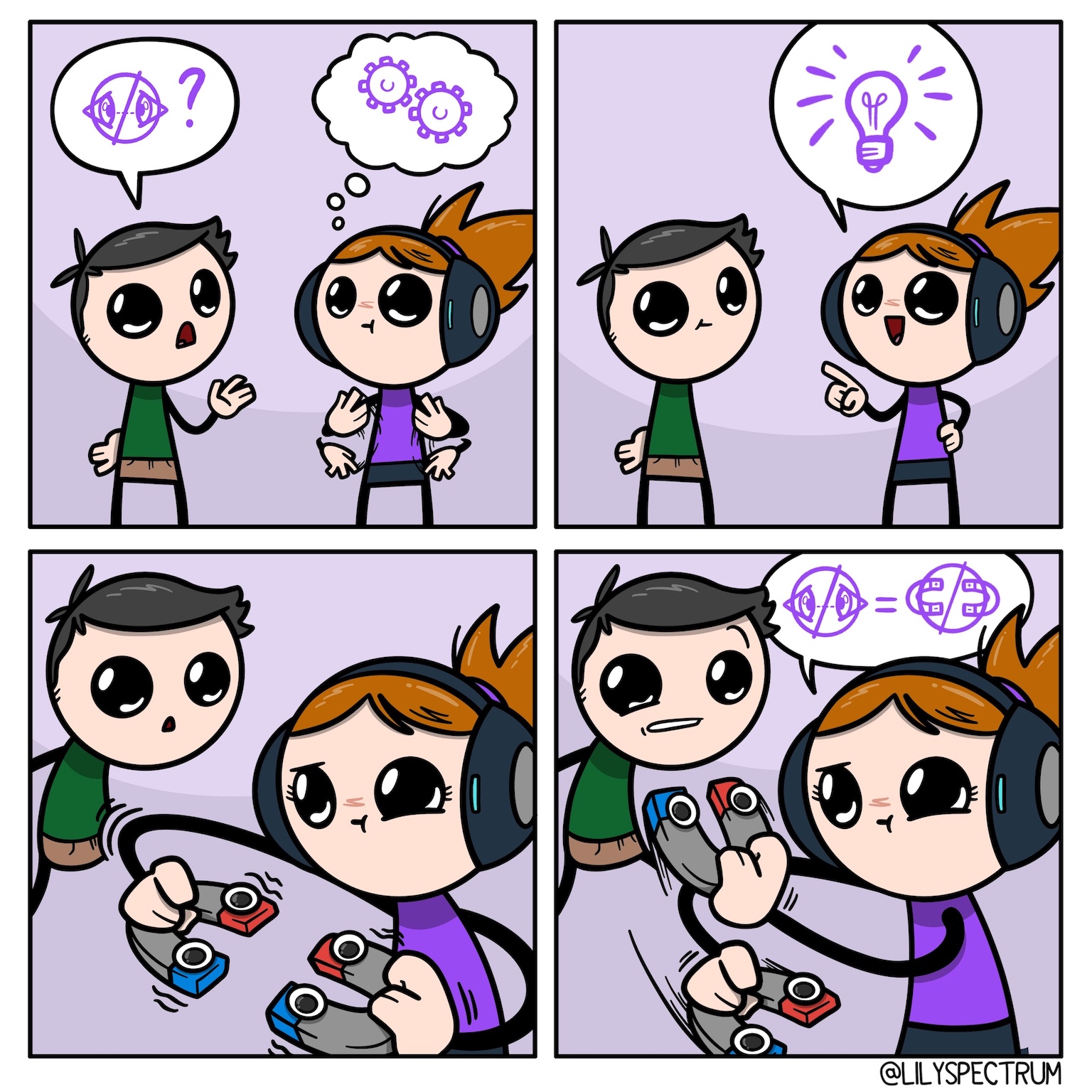
"When I was younger, it used to feel like when you held two magnets together both ends the same, it felt like no matter how hard you held them together, it would want to repel forcefully, my head wanted to repel and look past to the left or right or down or up like a magnet would, and when I managed to hold it against that feeling, my eyes would water up, not tears from sadness or anything, but they released tears, now I can manage it but it's still not comfortable to do, it depends on how comfortable I feel with the person or people or how stimulated I feel in an environment"
"It’s like when you hold two magnets with the same polarity against each other. Even if you want to put them together they won’t do it. The magnets are like my eyes. They just can’t center on the other persons eyes or it will cost a lot of energy. Like with holding magnets with the same polarity together. It’s just all in all very uncomfortable and draining. Btw I’m undiagnosed so I hope I can still answer here. Also I really really love your account and the stuff you do ^^ /g"
"Ça me met vraiment mal à l'aise et j'ai peur qu'on puisse mal interpréter si je regarde pas "correctement", je sais pas si je dois regarder quelqu'un dans les yeux ou combien de temps, il faut surtout pas que je regarde autre chose chez lui que ses yeux et du coup je sais pas quoi faire je préfère regarder le mur derrière mon interlocuteur 😂"
"Je me sens obligé de regarder chaque personne dans les yeux mais aussitôt que le contact est réciproque je baisse le regard aussi vite que mon ombre ainsi j'ai l'impression que j'ai fait ma part! haha! Par contre avec le monde avec qui je suis très, très à l'aise je vais quelque fois fixer les yeux, on dirait que j'essaie de comprendre pourquoi je fuis ceux des inconnus, alors je fixe en grand questionnement interne!"
"Awkward and physically painful , strong need to move my eyes away from it"
"Souvent trop intense… Et en plus il se passe tellement de choses autour des yeux qui m'intéressent plus et/ou me sécurisent plus! Je fixe puis je zappe, j'y reviens et je rezappe… Les sourcils, les lunettes, sont des bons compromis aussi, ou fixer mon regard dans le vague direction le visage ou le pourtour du visage… Ou fixer le visage avec une attitude très intéressée (posture corporelle de l'attention soutenue) quand la personne regarde AILLEURS, et quand son regard se tourne vers moi, fixer 1s seconde, sourire, et me tourner ailleurs vers qqn d'autre qui parle mais ne regarde pas vers moi à ce moment là, ou trouver à m'occuper avec un objet, et jongler comme ça."
"Je n'aime pas regarder sans les yeux, je ne sais pas, c'est plus fort que moi, je suis mal à l'aise, je ressens le besoin de regarder ailleurs. Du coup j'aime bien discuter quand je suis au resto ou quand on fait une activité, il y a l'excuse d'être occupée en même temps pour ne pas se regarder"
"Habituellement je regarde plutôt la bouche ou le nez des gens et ça semble passer crème pour donner l'illusion que je regarde dans les yeux (j'ai eu droit à l'expert en haute potentialité qui me disait que c'était impossible que je sois autiste car.. je le regardais dans les yeux ! Je regardais sa bouche depuis le début de l'entretien..). Je ne me force au contact visuel que de manière consciente et dans de rares cas précis : par exemple si je suis attiré romantiquement par quelqu'un et désire que cette personne le perçoive (vu que le contact visuel accru est interprété de cette façon par beaucoup de neurotypiques). Mais cela reste un sacré effort et en général je détourne les yeux très rapidement, ça me met mal à l'aise, c'en est presque physique. Récemment un de nos profs en cours nous a fait faire une série d'exercices où on devait marcher vers quelqu'un/revenir à sa place à reculons en gardant le contact visuel constant avec cette personne.. je vous laisse deviner la torture que c'était"
"Lorsque c'est quelqu'un avec qui je suis à l'aise ca va à une certaine distance mais de trop prêt je ressens un malaise assez vite. Si j'ai le malheur de croisé le regard avec un(e) inconnu(e) dans la rue ou dans un commerce, je regarde ailleurs aussitôt, gros malaise. C'est pour ça que j'évite de regarder les gens."
Thank you for joining us in this exploration!
We hope this experience was (and will be) as enriching for you as it was for us to come up with. We invite you to engage with us and the community through our posts or in the comments bellow!
Thanks for the informative post. More at 24 hour water damage restoration near me .
Potrzebowaliśmy kompleksowej strategii SEO dla nowych produktów sezonowych wraz z doborem słów kluczowych, dlatego wybraliśmy Boostwave w Warszawie przy ul. Hożej 86/410 i to był dobry krok Agencja Marketingowa SEO
Chicken Road representa la web en línea que se ha vuelto enorme reconocimiento por parte de los amantes de los apuestas virtuales, especialmente para los jugadores españoles, donde las opiniones sobre Chicken Road se consideran el principal punto recurrente para los jugadores Juego De Chicken Road Opiniones .
Este servicio permite a los jugadores disfrutar de un experiencia basado en arcade, en el que una gran excitación y el riesgo siempre presentes, ya que los tienen que decidir qué cruzar la peligrosa carretera bajo el tráfico caótico. Muchos se preguntan varios dudan si Chicken Road opiniones es fiable, su dinámica fácil y su accesibilidad lo han hecho en un tendencia viral, especialmente en comunidades en línea, en el que las críticas más honestas demuestran tanto la diversión como también la crítica que. Este servicio, el cual además es llamado el famoso juego de riesgo instantáneo, integra aspectos de estrategia y azar, llamando tanto a los que buscan una experiencia lúdica como a quienes que ven en él una opción de diversión que incluye ganancias en dinero. No obstante, resulta esencial aclarar que el juego sea muy demandado, las valoraciones sobre Chicken Road en España generalmente señalar sobre la naturaleza no oficial y los peligros relacionados a participar en que carecen de regulación definida. La pregunta por suele en los usuarios que buscan alternativas respecto de los tradicionales juegos de azar, sin embargo resulta esencial entender que su validez sigue quedando un tema en discusión.
Una las ventajas más de Chicken Road es diseño fácil de usar y la forma de juego que solo instantes sumerge al situación con gran tensión, hasta el punto de que participantes deben actuar con velocidad para evitar choques o arriesgarse a ganar recompensas más altos, esto convertiendo convierte toda partida en una experiencia inolvidable y muy atractiva. Las opiniones sobre Chicken Road suelen destacar este punto, porque este juego no experiencia anteriores en maniobras vehiculares, sino reflejos y una buena cantidad de valor, esto que lo convierten fácil de jugar para grupo de jugadores. Por otro lado, La interfaz simple y los efectos de sonido impactante aumentan la urgencia, un factor que atrae con mayor fuerza a los más pequeños, que ven en él en forma para interactuar y competir con compañeros. Una ventaja que mencionan los usuarios es la posibilidad para compartir logros en, lo fomentando fomenta el interacción y sentido de pertenencia entre los jugadores. Sin todos los usuarios coinciden todos sea una experiencia completamente segura, ya que varias críticas elevan preocupaciones respecto a su operatividad y realmente satisfacen las las de protección al el usuario.
Chicken Road se dirige dirigido principalmente a un público joven y a que buscan entretenimiento instantáneo sin sin, pero también atrae a los quienes que quieren quieren probar una alternativa diferente a los servicios tradicionales. Las valoraciones de Play Chicken Road opiniones resultan estar muy bien recibidas entre quienes valoran la facilidad y la excitación inmediata, aunque resulta crítico reconocer que al tratarse de tratándose de esta plataforma sin supervisión, su uso incluye ciertos peligros. Si bien puede una la alternativa divertida para una una tarde de entretenimiento, los que desean juegos con organizados o con seguridad legales tal vez hallar alternativas mucho más confiables. De definitiva, aunque las reflejan tanto el entusiasmo como también la cautela, lo cierto que la aceptación continúa en aumento, demostrando que para muchos aún siendo una experiencia muy satisfactoria.
Regarding Spingranny, our team maintain the view regarding entertainment must forever continue being some positive alongside regulated encounter spingranny . The Spin Granny platform stands designed to provide thrill plus fun, but it remains crucial for one to recall that gambling carries built-in hazards. Fostering responsible gambling serves as a core element of our mission, furthermore this team are devoted towards guaranteeing regarding our players have these resources and information necessary in order to maintain a balanced stability. Our group advise every participant towards treat gaming like a kind of leisure instead of a path to produce revenue.
The primary of the very powerful ways in order to appreciate Spin Granny securely is through setting defined individual restrictions. Before you commence the session, settle on some financial plan that the individual might readily permit towards lose and stick towards it strictly. Avoid chase losses alternatively play with funds earmarked regarding vital expenses including mortgage or groceries. Time control stands equally vital; pausing for regular intervals avoids tiredness plus helps you sustain perspective while one play.
Our organization recognize that regarding some individuals, gaming might move past the interest alongside turn into problematic. If the gamer discover that the player are allocating additional hours or funds than intended, or if gaming stands negatively affecting the individual living, it is imperative to find support. Our responsible gambling page offers complete counsel regarding how to spot alert indicators plus how towards access expert help materials. We offer aids like account alternatives and deposit limits in order to aid you continue within control concerning the actions.
The user’s wellbeing is the company’s utmost concern. Through selecting to play within Spingranny, the participant are joining a group which appreciates safety and clarity. We advise each these members to acquaint themselves with the responsible gaming guidelines in order to guarantee some sustainable encounter. In the event that you alternatively somebody you identify stands suffering regarding betting challenges, graciously contact towards these specialized help programs listed within the portal. Bear in mind, Spin Granny stands available to provide amusement, and staying educated remains the top way to keep the wagering experience entertaining alongside secure.
ساک زدن ایرانی
The ratio of staff to residents is critical. In a small community, help with daily activities is more proactive instead of reactive. senior living near me looks like it emphasizes that responsive care.
My aunt felt embarrassed asking for help in a big facility, but in a small home she formed real bonds with caregivers and felt comfortable getting support with personal care. respite care reflects these benefits well.
I really did not understand just how much clutter I had up until I started my junk elimination project. It was overwhelming initially, and now I feel so eased. For anyone requiring aid, I suggest seeing Bay Area construction debris hauling for some remarkable sources!
I really did not understand just how much clutter I had up until I started my junk elimination project. It was overwhelming initially, and now I feel so eased. For anyone requiring aid, I suggest seeing ##anyKeyword## for some remarkable sources!
The point you made about staffing levels in Nursing Homes versus Assisted Living is key. More medical staff means higher care but also a different environment. I used assisted living to look deeper into typical staffing ratios in each type.
Thanks for the clear breakdown. More info at 99exch trading platform .
The point you made about staffing levels in Nursing Homes versus Assisted Living is key. More medical staff means higher care but also a different environment. I used ##anyKeyword## to look deeper into typical staffing ratios in each type.
Thanks for the clear breakdown. More info at ##anyKeyword##.
lesbian bdsm porn
This is quite enlightening. Check out Soria Contracting and Solutions – Restoration and Remediation Services for more.
This was very enlightening. For more, visit https://www.google.com/maps/dir/606+Coffee+Company,+5850+US-60,+Ashland,+KY/4446+13th+St,+Ashland,+KY+41102 .
This is quite enlightening. Check out ##anyKeyword## for more.
Valuable information! Find more at double glazing .
Valuable information! Find more at ##anyKeyword##.
This overview on do it yourself pet grooming is wonderful! It’s conserving me so much money and time! professional flea treatments
This overview on do it yourself pet grooming is wonderful! It’s conserving me so much money and time! ##anyKeyword##
What stands out to me is how much more dignity residents have in small care homes. They’re known as people, not room numbers. respite care has a lot of content promoting that philosophy.
I didn’t know that some Assisted Living communities now offer memory care units, while Nursing Homes traditionally handle more advanced medical issues. I first read about this evolving model on senior care during my research.
What stands out to me is how much more dignity residents have in small care homes. They’re known as people, not room numbers. ##anyKeyword## has a lot of content promoting that philosophy.
I didn’t know that some Assisted Living communities now offer memory care units, while Nursing Homes traditionally handle more advanced medical issues. I first read about this evolving model on ##anyKeyword## during my research.
Die offizielle Website von Spin Mama bietet Spielern in Deutschland eine innovative und benutzerfreundliche Plattform zur Verfugung, um an zahlreichen Spielangeboten mitzumachen Offizielle Website Spinmama .
Als das bekanntesten Plattformen im Bereich Spin mama casino hat sich die Website vor allem durch ihre klare Struktur und rasche Navigation sich Namen erworben.
Hier findet man nicht allein das klassische Spin Mama Casino, sondern auch eine Vielfalt an exklusiven Bonusangeboten und Turnieren, die speziel fur deutsche Kunden ansprechend sind. Besonders zu erwahnen ist, dass die amtliche Plattform Spin Mama Deutschland hohe Sicherheitsstandards verfolgt, damit den Sicherheit der Kunden zu sichern.
Wer nach einer professionellen Option fur Spin Mama Login sucht, wird dort fundig, denn die Website klar und zuverlassig handelt. Durch die einfache Einschreibung und die vielfaltigen Spieloptionen richtet sich das Portal speziell an alle, welche Wert auf Qualitat und Transparenz legen.
Zu den wichtigsten Merkmalen von Spin Mama umfassen die wiederkehrenden Einzahlungsboni und das breite Spektrum an Spielautomaten sowie Live-Casino-Spielen. Diese Vielfalt macht die Website insbesondere interessant, weil Spieler sowohl klassische als auch aktuelle Spiele nach ihren Vorlieben auswahlen konnen.
Ein weiterer Vorteils ist die rasche Auszahlung, die durch die Zusammenarbeit mit renommierten Zahlungsdienstleistern ermoglicht wird und fur vollstandige Transparenz sorgt. Zudem uberzeugt Spin Mama durch ein exzellentes Service-Team, welches rund um die Uhr erreichbar ist und bei Fragen oder Schwierigkeiten mit Hilfe und Tat zur Verfugung.
Besonders fur Einsteiger bietet die Website eine intuitive Bedienung, sodass auch etwas erfahrene Nutzer schnell den Einstieg finden. Die Vereinigung aus Belohnungen, Spielangeboten und Unterstutzung macht Spinmama zu einer der wichtigsten Optionen fur Casinospieler in Deutschland.
Spin Mama wendet sich hauptsachlich an Nutzer, die Wert auf eine professionelle und gut strukturierte Anwendung legen, ohne auf attraktive Casino-Angebote verzichten zu mussen.
Egal ob man sich fur das klassische Spin mama casino interessiert oder lieber an Live-Deals teilnehmen mochte, hier findet jeder das passende Angebot. Die klare Trennung zwischen der amtlichen Website Spinmama de und anderen Anbietern verstarkt daruber hinaus die Glaubwurdigkeit des Angebots.
Wer auf der Suche nach einer seriosen Plattform fur Spinmama login ist, sollte sich die Starken dieser Plattform nicht entgehen lassen. Am Ende uberzeugt Spin Mama durch eine Vereinigung aus Innovation, Sicherheit und Benutzerfreundlichkeit, welche es zu zu einer der fuhrenden Casinoportale in Deutschland macht.
Very helpful read. For similar content, visit https://www.google.com/maps/dir/DoubleTree+by+Hilton+Hotel+Vancouver,+12712+SE+2nd+Cir,+Vancouver,+WA/1719+SE+Blairmont+Dr,+Vancouver,+WA+98683 .
Simply completed a significant junk elimination session in your home! It’s incredible how much area you gain when you declutter. If anyone requires guidance or services, have a look at 10 yard dumpster service to see exactly how they can help!
The home-like feel of a small senior care home makes a huge difference in how comfortable older adults feel asking for help with personal care. That’s why I appreciate what elder care is promoting.
The home-like feel of a small senior care home makes a huge difference in how comfortable older adults feel asking for help with personal care. That’s why I appreciate what ##anyKeyword## is promoting.
Simply completed a significant junk elimination session in your home! It’s incredible how much area you gain when you declutter. If anyone requires guidance or services, have a look at ##anyKeyword## to see exactly how they can help!
This was beautifully organized. Discover more at betbhai9 member id .
This was beautifully organized. Discover more at ##anyKeyword##.
It’s reassuring to know your loved one isn’t getting lost in the crowd. In small senior homes, caregivers notice when someone skips a meal or struggles with walking. That’s a big reason I’ve bookmarked respite care .
De zoektocht omtrent dit veilig internetportaal bestemd voor gokkers stopt dikwijls bij duospin casino casino duo spin . Dit vooruitstrevende platform, aanwezig door middel van deze URL, biedt gebruikers deze unieke belevenis die direct opvalt binnen onze industrie. Ofdat men nu een doorgewinterde deelnemer is indien net aanvangt, hier treft je het groot assortiment met titels dat garanderen omtrent voortdurend vertier. Deze gebruiksvriendelijke layout zorgt het simpel om langs het aanbod te navigeren, waarbij men gemakkelijk uw beste automaten en tafelspellen ontmoet.
Als je opteert voor dit casino, beslis jij omtrent betrouwbaarheid en plezier. De creatie van een lidmaatschap en het uitvoeren omtrent een duospin casino login is uiterst makkelijk, waardoor men totaal kunt beginnen met gokken. Wat betreft diverse gebruikers blijkt de betrouwbaarheid van het domein van belang, natuurlijk als het gaat om een vlotte duospin casino auszahlung. Dit systeem blijkt op dat vlak goed omtrent, aangezien de betalingen vertrouwd plus correct zijn afgehandeld. Dergelijk maakt dat duospin casino online het uitstekende keuze voor gasten die belang toekennen omtrent eerlijkheid.
Met het gevarieerde aanbod van dit platform bent men spelen omtrent verschillende wijzen, geschikt op jouw persoonlijke gokstijl. Hetzij jij nu zoekt naar de opwinding betreffende dit systeem in nieuwe automaten of de klassieke beleving van casinotafels, casino duo spin biedt omtrent alle keuze. De groei van deze site is immers niet vreemd, gelet op de voortdurende updates plus extra titels welke aan de lijst zijn toegevoegd.
Dit is duidelijk want dit platform zich exceleert door een prima balans tussen software en entertainment. Indien jij verlangt naar een kwalitatieve gokomgeving, zodoende wordt een kijkje aan deze site absoluut waardevol. Denk eraan ten einde voortdurend bewust te spelen terwijl je geniet van hetgeen wat deze site geeft. Ontdek direct waarom zoveel gokkers kiezen voor de uitmuntendheid van dit merk.
severe porn
It’s reassuring to know your loved one isn’t getting lost in the crowd. In small senior homes, caregivers notice when someone skips a meal or struggles with walking. That’s a big reason I’ve bookmarked ##anyKeyword##.
La plataforma Chicken Road resulta ser una de las plataformas online que ganó captar crítica en los recientes últimos meses, con mayor énfasis entre quienes requieren alternativas de diversión con un toque de táctica y azar Juego De Chicken Road Opiniones .
Este juego famoso también como la plataforma Chicken Road, ha evolucionado en un tema recurrente en plataformas como espacios de opinión, donde los usuarios comparten sus experiencias sobre el funcionamiento y entretenimiento. Aunque varios se si la plataforma es segura, la realidad es que la easy engancha tanto a nuevos como a aficionados de los aleatoriedad con mecánicas accesibles. La pregunta por saber la definición de Chicken Road Opiniones y si la plataforma está autorizada en España, ha dado que diversos lo analizan con otros productos similares pero con un gráfico muy particular. La fundamento del producto se encuentra en una aleatoriedad y acciones rápidas, lo que al juego convierte adictivo para quienes aprecian la emoción inmediata.
No se considera raro leer valoraciones como Juego Chicken Road Opiniones en plataformas sociales o aplicaciones de entretenimiento, donde los usuarios resaltan su facilidad para usar desde cuales aparato.
Una de las particularidades principal de este juego resulta ser su pantalla fácil, que facilita a los comenzar en términos de segundas, sin requerimiento de identificarse. Esto lo transforma especialmente útil para quienes desean disfrutar sin problemas, ya que no requiere descargas anteriores, exclusivamente acceso a la red. La mecánica del producto queda basada en un modelo de sistema de apuestas ascendentes, donde cada una partida brinda la posibilidad de conseguir premios que aumentan con el paso del período, lo que genera una experiencia de progreso y recompensa. Los jugadores suelen mencionar en sus Chicken Road Opiniones Reales que la variedad de modos y pruebas preserva la diversión fresca, preveniendo la rutina. Asimismo, La plataforma ha valorado positivamente que el no de conocimientos avanzadas, lo que al juego convierte perfecto para los jugadores prefieren entretenimientos rápidos y sin complicaciones. Aunque determinados dudan si es este juego apto para todas las los públicos, Su diseño fácil y su enfoque en la diversión sin complicaciones al juego transforman en una de las opción popular entre los usuarios buscan una experiencia única.
La plataforma Chicken Road resulta ser particularmente indicado para quienes disfrutan de productos de aleatoriedad con una adrenalina y sin significativas tiempos. Resulta ser óptimo para usar en instantes vacíos, ya sean mientras un tiempo libre en el trabajo o mientras uno anticipa algo, gracias a su método fácil. Los opiniones sobre Chicken Road Opiniones España tienden que se considera una elecciones atractiva para compartir con conocidos o además para competir, aunque con moderación. Aunque no es es con premios en efectivo, su atractivo radica en la satisfacción instantánea y la excitación de toda partida, una cosa que diversos jugadores resaltan en las reseñas. En definitivo, si estás buscando una sesión simple, adictiva y sin problemas, este juego puede una de las opción atractiva en el mundo de los juegos digitales.
This is highly informative. Check out commercial painting contractors near me for more.
Simple cognitive activities like puzzles and reading aloud are great in-home options. home care
patreon porn
Simple cognitive activities like puzzles and reading aloud are great in-home options. ##anyKeyword##
скачати впн
Твоя кнопка «Разблокировать всё».
Зависли на «Подключение»?
Попали в белый список?
Устали от рекламы на ютубе и бесплатных впн приложениях?
В вашем городе глушат связь?
Забудьте!!! РАЗ И НАВСЕГДА!
Нажми на эту кнопку. ??
Cheburnet VPN – это и есть та самая кнопка.
Нажал — получил:
• Обход белых списков – сидите в интернете, без запретов на свои любимые сайты.
• Обход глушилок.
• Доступ. Ко всему. Instagram, WhatsApp, Discord, YouTube – больше не «запрещенные слова», а просто сайты, которые открываются.
• Скорость как у ракеты – Чтобы все летало, а не зависало.
• YouTube без рекламы – смотрите видео, а не ролики о средствах для мытья пола.
• Автонастройка – один клик в боте, и впн готов к работе.
• Доступен тариф: Одна подписка = 3 устройства.
• Пробный день – чтобы убедиться, что мы лучшие и что у нас всё работает.
• Выбирай: НАЖАТЬ И ПОЛУЧИТЬ ДОСТУП или продолжать терпеть блокировки WhatsApp, соцсетей и эту вечную рекламу в ютубе?
https://789club8.app/ là một nhà cá cược trực tuyến hàng đầu tại Châu Âu
This is highly informative. Check out ##anyKeyword## for more.
Useful advice! For more, visit https://www.google.com/maps/dir/Willows+Shopping+Center,+S+Meridian,+Puyallup,+WA/2209+37th+Ave+SE,+Puyallup,+WA+98374 .
Thanks for the useful post. More like this at https://moralestowingllc.com/ .
Thanks for the useful post. More like this at ##anyKeyword##.
Great post. I like that you emphasize proactive tax planning, not only last-minute filing. accountant for self-employed
Awesome article! Discover more at https://www.empowher.com/user/4939439 .