"Neurodiversity through Webcomics: Using Aesthetic Experiences for Epistemic Resistance"
At the heart of the ideas proposed in today's panel is that of epistemic enablement through trajectories other than propositional, which can be offered by aesthetic experience.
PANEL
"Dancing Toward Epistemic Justice: An Embodied Account of Epistemic Agency"
Amandine Catala and Camille Zimmermann covered the example of dance, an embodied account of epistemic enablement.
PhD Candidate - Philosophy (UQAM)
Camille Zimmermann
zimmermann.camille@courrier.uqam.ca
Professor - Philosophy (UQAM)
Amandine Catala
catala.amandine@uqam.ca
"Comics and Epistemic Enablement"
Luc Faucher discussed the medium of comics in the context of neurodiversity, again as epistemic enablement.
Professor - Philosophy (UQAM)
Luc Faucher
"Neurodiversity through Webcomics: Using Aesthetic Experiences for Epistemic Resistance"
We now continue with webcomics.
PhD Candidate - Philosophy (UQAM)
Mylène Legault
legault.mylene.2@courrier.uqam.ca

PhD Candidate - Philosophy (UQAM)
Jean-Nicolas Bourdon
bourdon.jean-nicolas@courrier.uqam.ca
PREFACE
About the
Format
Force of habit leads us to take the established ways of doing things as fixed, even though they are circumstantial. We were able to explore this reality, for example, during the pandemic: going to the office for work meetings, which, in all honesty, could have been e-mails. We also know that cultural habits are not insignificant, they allow the reproduction of comfortable modalities of interaction for dominant groups: those with the power to choose these modalities.
For our part of the panel, we propose to do things differently. Don't worry, we're not criticizing power point presentations and their timely sip of water pauses. Instead, we're inviting you to explore an alternative modality for interaction.
Public Speaking
Many people hate public speaking. It generally comes with discomforts and even fears, but some people have cognitive profiles that function in ways far removed from this type of interaction. However, this practice is socially maintained and considered essential for meeting and sharing. But is it really necessary? Does the public space absolutely have to be occupied in an oratory and synchronous way? What if these modalities are, in fact, infused with neuronormativity?
Human society is permeated by collective cultural resources with which individuals can, among other things, interpret, understand and communicate various aspects of their experiences. Since they are collective resources, their genesis, maintenance and dissemination are a function of the power dynamics that permeate our societies. One of these power dynamics is organized around norms regarding what is considered appropriate cognitive functioning: the group whose cognition corresponds to the norm (i.e., neurotypicals) dominates and those whose cognition deviates from the norm (i.e., neurodivergent) are marginalized. This epistemic marginalization has the effect of limiting the access of neurodivergent individuals to so-called "collective" epistemic resources, both in their elaboration and in their use.
This norm corresponds to neuronormativity, which is presented by Amandine Catala, Luc Faucher et Pierre Poirier (2021) in their paper Autism, epistemic injustice, and epistemic disablement: a relational account of epistemic agency.
Neuronormativity refers to the prevalent, neurotypical set of assumptions, norms, and practices that construes neurotypicality as the sole acceptable or superior mode of cognition, and that stigmatizes attitudes, behaviors, or actions that reflect neu- roatypical modes of cognition as deviant or inferior. Neuronormative assumptions, norms, and practices uphold standards regarding, for example, (what is neurotypi- cally considered) appropriate eye contact, facial expressions, prosody, conversa- tional flow, processing, and responsiveness—all of which can be difficult for autistic individuals to understand, sense, or apply, due to neurocognitive differences. (Catala & al., 2021)
Catala, A., Faucher, L. & Poirier, P. Autism, epistemic injustice, and epistemic disablement: a relational account of epistemic agency. Synthese (2021).
For a presentation on these questions, see Epistemic justice and epistemic authority on autism, Philosophy of Psychiatry Webinar, Montreal (Amandine Catala)
What’s with all these neuro- words?
Neurodiversity can refer to the neurological or neurocognitive variation naturally present in the human population. The term was first introduced by Judy Singer in a book published in 1993. The term also refers to a growing sociopolitical movement that promotes the recognition and inclusion of natural neurocognitive diversity (see, for example, Autistic Self Advocacy Network (ASAN), whose slogan is "Nothing About Us Without US!").
Nick Walker (2012) describes the neurodiversity movement as a new paradigm (the neurodiversity paradigm) in response to the pathology paradigm. It should be noted, however, that this movement has not been and is not immune to certain exclusionary mechanisms. For example, the movement began with verbal autistic individuals, but although the movement has since expanded to include many cognitive profiles, autistic individuals (and more recently ADHD individuals) still seem to dominate the movement.
Walker, N. (2012). Throw away the master's tools: Liberating ourselves from the pathology paradigm. Loud hands: Autistic people, speaking, 225-237.
Some progress can also be noted with the recent publication of "Neurodiversity Studies: A New Critical Paradigm" (Rosqvist et al., 2020), which illustrates the growing acceptance of this sociopolitical movement by the scientific community.
Rosqvist, H. B., Chown, N., & Stenning, A. (2020). Neurodiversity Studies: A New Critical Paradigm. Routledge.
Refers to individuals who fit the norm of cognitive functioning.
Neurodivergence belongs to a normative vocabulary. It requires a norm, which can be qualitative or quantitative, to distinguish typical from atypical neurocognitive profiles among natural neurological variation. However, the narrative is not so simple; cognition is a complex and dynamic process, and simply distinguishing between neurotypical and neuroatypical individuals shapes, at least in part, the cognition of those same individuals. Note that these criteria, quantitative or qualitative, are generally chosen for medical, practical, economic or moral reasons: because a type is considered "more functional", "more adapted, evolutionarily", "easier to interact with", "less demanding in resources" more characteristic of a human life worth living", etc.
Refers to individuals who do not fit the norm for cognitive functioning.
For those who are curious, we address these "neuro- words" here :
- Legault, M., Bourdon, J. & Poirier, P. (2021). From neurodiversity to neurodivergence by way of epistemic marginalization, Epistemological Issues in Neurodivergence and Atypical Cognition. Synthese.
- Legault, M., Bourdon, J. & Poirier, P. (2019) Neurocognitive variety in neurotypical environments: the source of “deficits” in autism, Journal of Behavioral and Brain Science (JBBS), vol.9, 246-272.
This is all well and good in theory, but what does it have to do with our presentation?
What we are trying to say - probably with too many words - is that those with cognitive profiles similar to ours tend to feel unsafe in traditional academic frameworks. This very presentation is the perfect opportunity to experiment with an alternative format where we can occupy the epistemic space and exist as we are. When the parameters of a common space of exchange only correspond to one type of cognitive profile, neurotypical profiles in this case, there can hardly be any exchange that is fair and inclusive. Our hope is that offering this alternative might open this type of space to those who remain outside the exchange.
Although this is an aside before we get into our main topic, you will notice that the form of our presentation reproduces our subject: the online viewing of webcomics, that is, asynchronous interactions around a shared representation, or the infamous content.
What a great question! Of course. If we have different cognitive and processing profiles with different modalities of expression, we can expect adjustments in synchronicity. Strategies for better epistemic justice include suspending judgment, giving the time, respecting varied forms of exchange and being open to different modalities of exchange.
Feel free to contact us for any comments and input into this exploration:
legault.mylene.2@courrier.uqam.ca
bourdon.jean-nicolas@courrier.uqam.ca
PART I
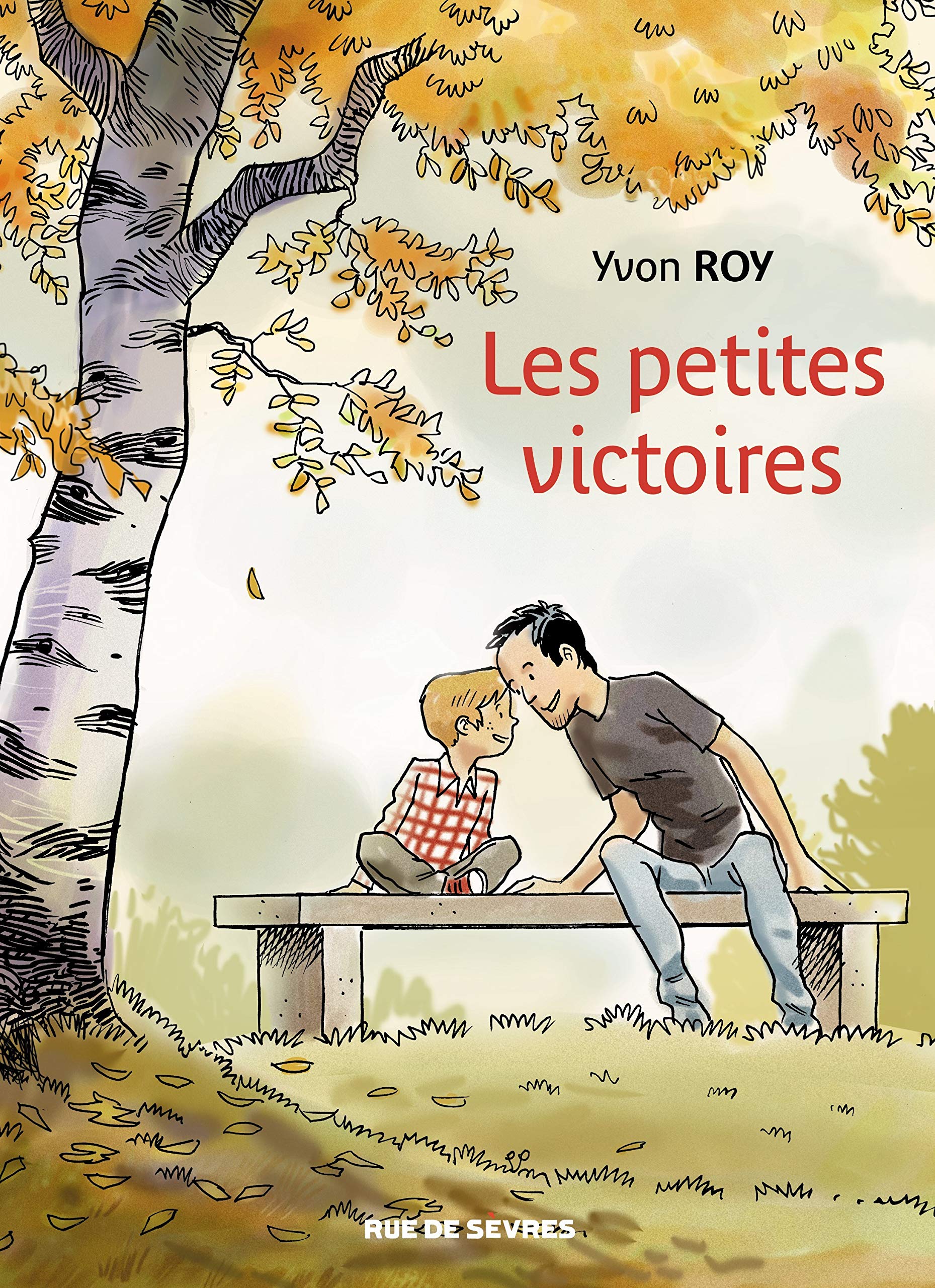
This is Marc, stand in for the author: Yvon Roy
This is his son, Olivier, who is autistic.
Les Petites Victoires showcases the fight of a father for his son, diagnosed with autism "in order to transform an announced defeat into small victories" (sic, our translation).
In his preface, Roy explains the contextualises the creation of his comic book:
"The idea was first suggested to me by a special educator who had worked with my son. She thought that what we had accomplished together was worth sharing so that other parents could find, through our experience, some useful information, if not a little hope" (our translation).
Interview
"When I started working with my boy to help him, with all the professionals in the field, I realized that often we were told, or they tried to tell us, that we had to work on living with autism, on accommodating autism. How we had to deal with different crises, different problems, whereas I thought, well, no, it's better, definitely, to try to overcome it than to live with it. And that's been kind of my master idea, let's say, for years with my boy, which is to try to push the boundaries constantly, always further." (Our translation)
Why choose this comic book?
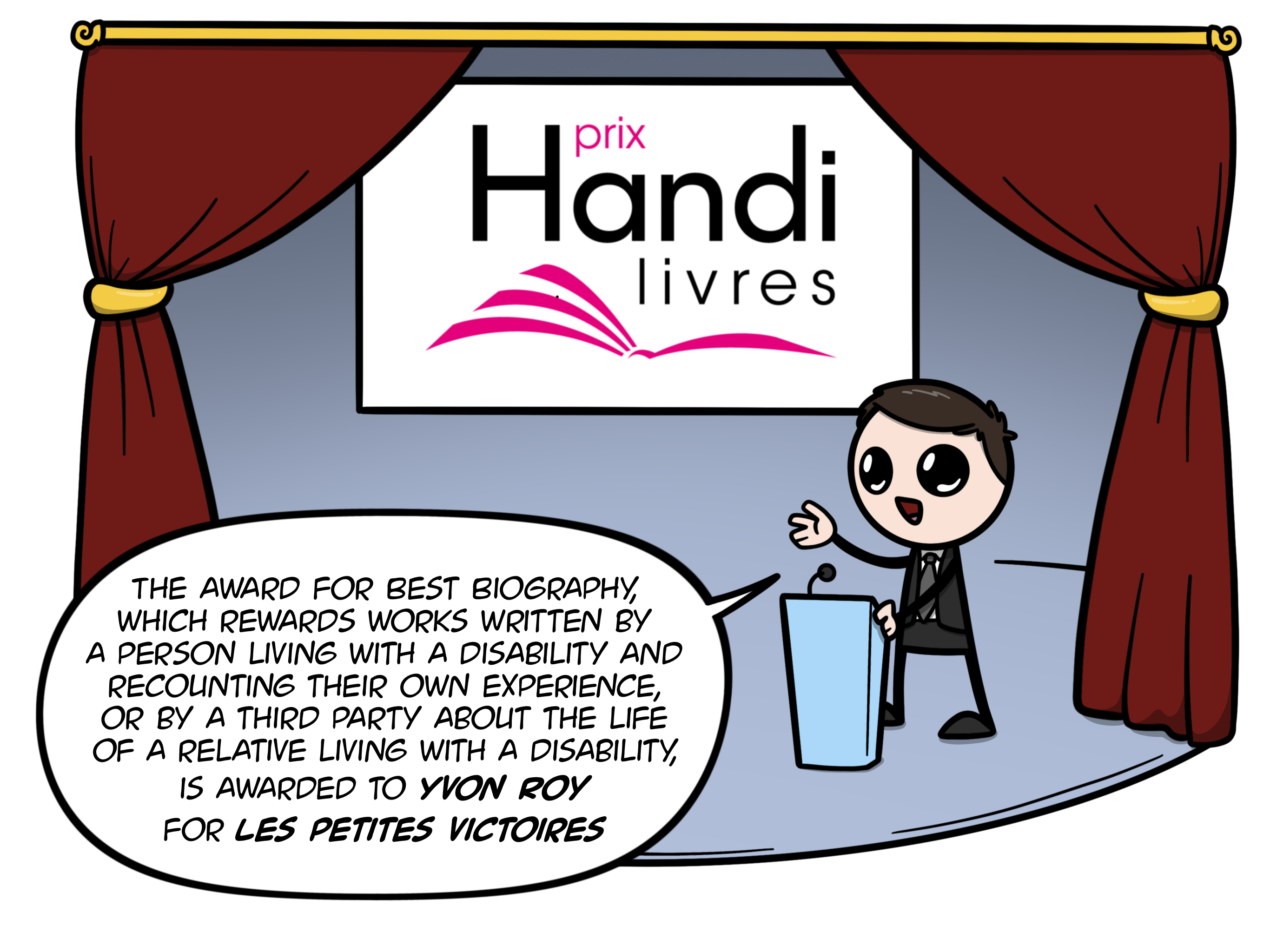
This comic book is an example of a creation that is easily accessible to the general public that has been awarded and highly publicized - even winning an award that recognizes works written by a person living with a disability and recounting their own experience, or by a third party about the life of a relative living with a disability. In 2018, the publisher Rue de Sèvres announced a contract for a film adaptation, which caused reactions and led to the hashtag :
#boycottlespetitesvictoires
As we will show, this is an example of the social representations of autism that perpetuate dominant understandings that do not fit the lived experience of those directly concerned to the point of being discriminatory. It is also difficult to identify moments when the child (the autistic character) shows agentivity. Instead, he’s passive in his father’s story. In a way, Olivier is only a supporting character. This is exaclty why representation doesn't mean autorepresentation and why "nothing about us whitout us" matters: although this comic is presented as a positive narrative from the allist perspective (3rd person), the story is completely different from the standpoint of the autistic community’s testimonies (1st person).
An allist person is a non-autistic person.
To understand the term "allist", we must go back to the origin of the word "autistic" which comes from the Greek word "autos" which means "self". So the word "autistic" initially referred to a person withdrawn on themself, who lives in their own world. The term "allist" appeared in a satirical article to refer to non-autistic people by swaping “autos” for "allos" which refers to others. So an allist is a person who is focused on others or, to flip the usual narrative, a person who lives in other people’s worlds.
In spite of the satire, the term “allist” has remained in use among others because it allows to distinguish between "neurotypicals" and "allists". There are people who are not autistic, but who are not neurotypical: a non-autistic dyslexic person, for example.
For a deconstruction
of the problematic propositions of the comic book:
But do you know the story from the autistic community’s perspective?
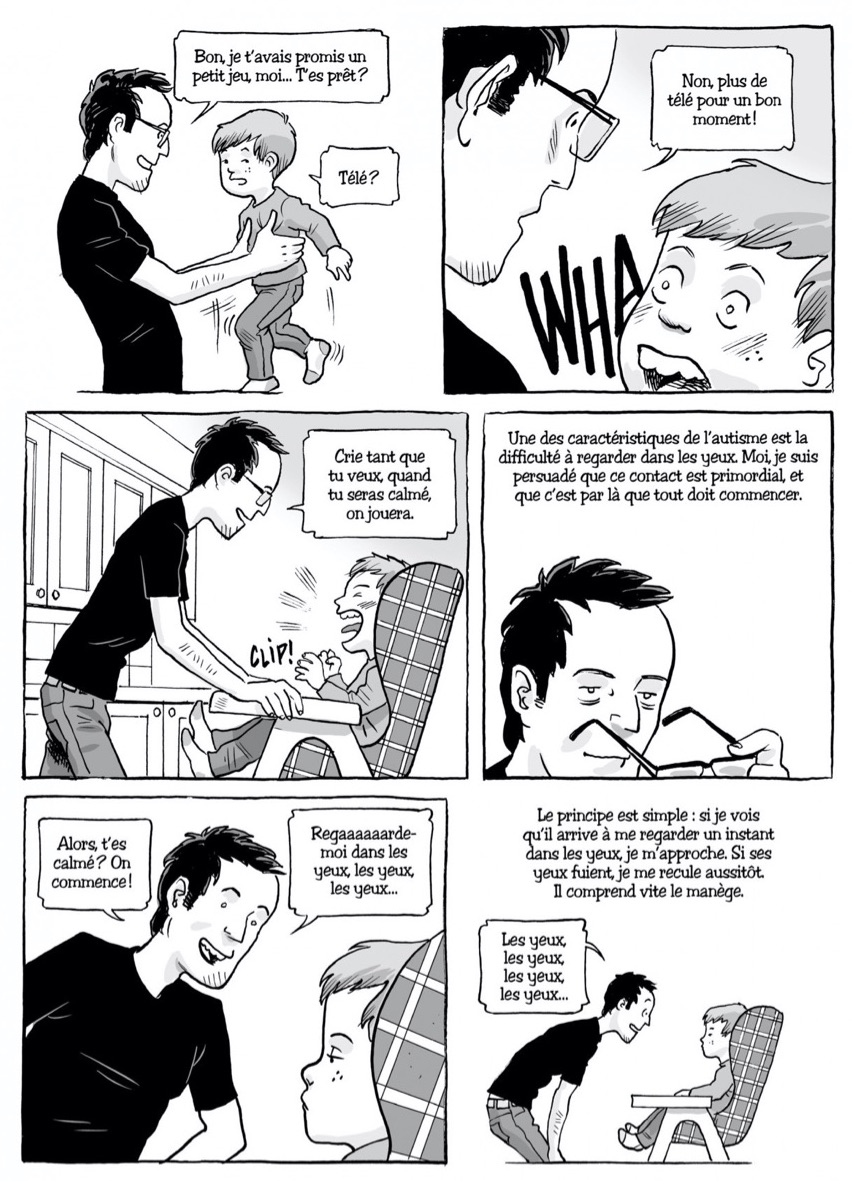
This is where webcomics can serve as an accessible tool that allows the reversal of dominant representations by opening the floor to self-representations directly grounded in marginalized communities. But before continuing with the topic of webcomics, we wish to feature an excerpt from Les Petites Victoires that addresses a frequent theme in autism: eye contact.
Excerpt on eye contact
English translation
English translation
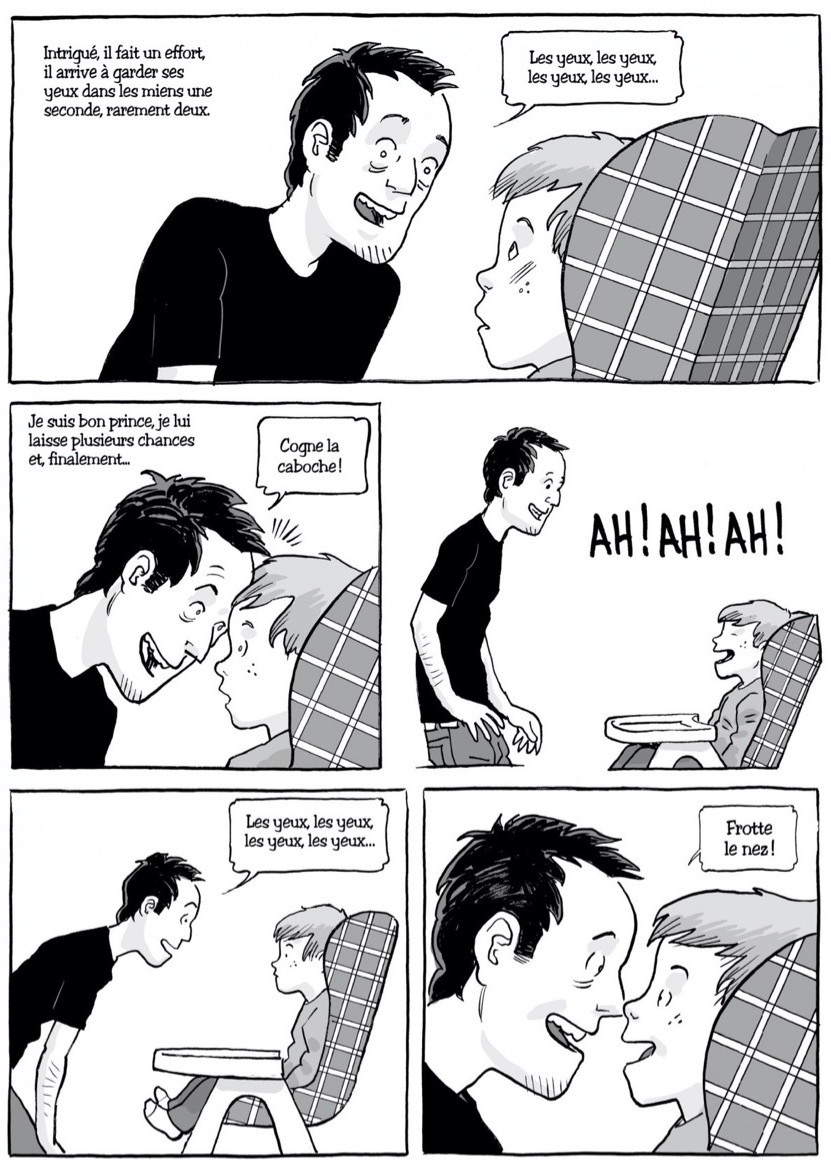
Excerpt from Yvon Roy's interview
"I worked a bit like we can work to sometimes desensitize a substance. Sometimes certain people can have an allergy, we can try to desensitize them.
Several parents have contacted me regarding the trick to get the child to look in the eyes. This is the first thing we worked on together, that is to say, I considered that being able to look in the eyes - we know that autistic children have difficulty looking directly in the eyes - I said to myself, if we don't have eye contact, we have nothing. We need that, it's the beginning of human interaction." (our translation)
TW: The host uses the term “prison” in reference to autism:
"In your story that you shared with us in Les Petites Victoires, there is obviously the moment when you get up to face, to accompany your child in that reality: to learn to understand him too, inside what he lives and this prison, in a way, from which he is pressured which is basically this condition." (our translation)
Link to the interview (in French)
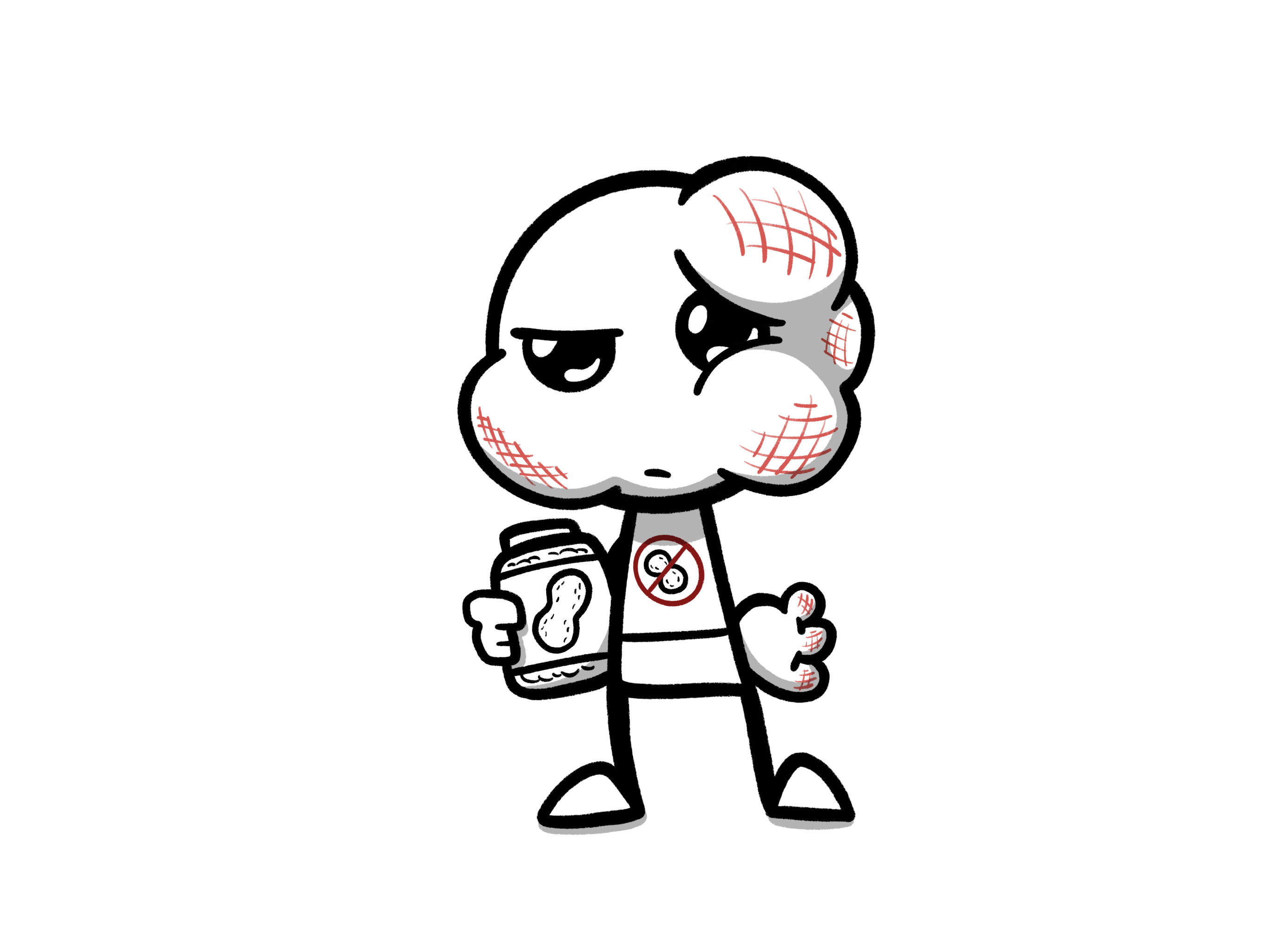
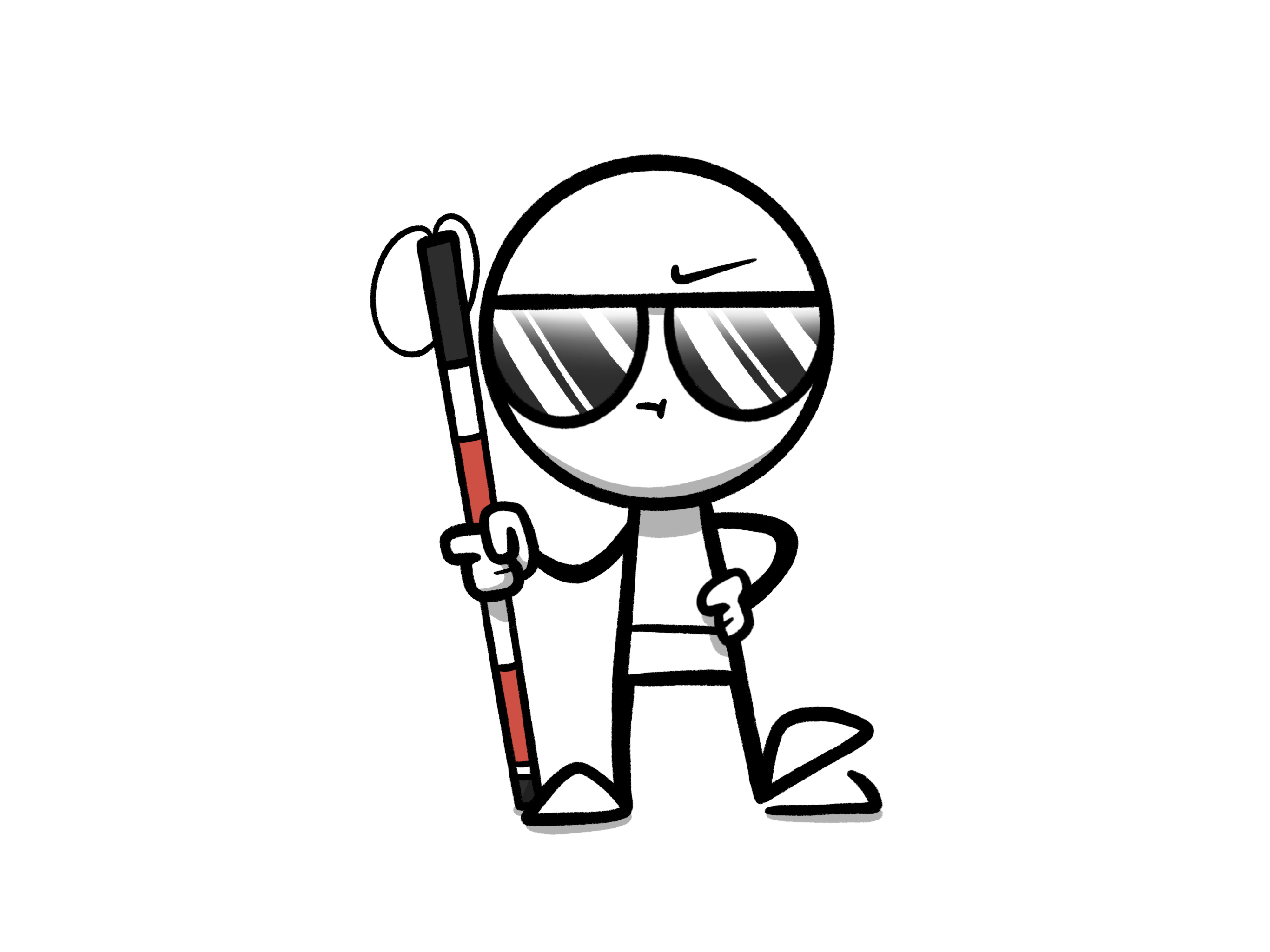
This scene is an example of neuronormativity
Recall that neuronormativity is the prevalent, neurotypical set of assumptions, norms, and practices that conceives of neurotypicality as the only acceptable or superior mode of cognition, and that stigmatizes attitudes, behaviors, or actions that reflect atypical modes of cognition as deviant or inferior.
This scene is told from the allist perspective and is presented with a positive outcome. In fact, as the author mentions, parents have applied this technique with their autistic children after being inspired by it.
But what if we ask autistic people how they feel about eye contact? That's exactly what we are going to do.
PART II
Why webcomics?
The medium of webcomic enables me to do something I don't know how to do otherwise: share how things feel on the inside.
Imagine. You come across a newspaper at the local coffee shop and recognize the face of a well-known personality. Yet you can't remember their name. It annoys you, you know you know it, it’s just not coming out, it stays there, on the tip of your tongue. You have time to come back to work, coffee in hand, and the name still hasn't come back to you, it still annoys you. You come across a colleague and you ask them, you describe the person, maybe clumsily at first (it would be so much easier with their name!), but you adjust to your interlocutor and, together, you can finally recall their name, it was so obvious!
It’s important to emphasize this feeling of annoyance. We rarely take the time to mention this annoyance when talking about epistemic injustices. Yet it is there, and it can even be painful: how do we make sense, to use Fricker's classic example, of our experience of sexual harassment when the concept does not yet exist? How can we share the feeling that something is wrong? This is where community comes into play and it is why the idea of "by and for" matters more than, say, a criterion of simplicity might. This is addressed by feminist epistemologies: for example, Longino argues for pragmatic values in science such as diffusion of power (as the importance of making research programs accessible to the actors involved in the research).
The impact of inadequate social representations on neurodiversity cannot be fully resolved by the traditional narrative of epistemic oppression and justice: adding new vocabulary to collective epistemic resources is not a panacea (we already have the word "autism" for example). So it is not only words that are missing, but rich and diverse lived experiences are also missing from the pool of shared resources.
The problem is that what is missing, the hermeneutical gaps, are not automatically apparent: social representations created by and for the dominant groups inadequately fill the hermeneutical gaps of marginalized groups. To that effect, let us recall here the Handi-Livre prize for the best biography which rewards works written by a person with a disability and telling his or her own experience, or by a third party on the life of a close relative with a disability: In the case of Les Petites Victoires, the award went to the biography of an allistic (non-autistic) person talking about autism. These inadequate social representations are difficult to resist: they are constantly and persistently reproduced. It is even harder when you don't have the words to replace theirs. But do we really have to wait for the right words to share our experiences? This is where illustration can become an attention grabbing action like shouting: an action that does not need words. This is what we propose here: a form of non-propositional epistemic resistance in response to hermeneutic injustice.
Webcomics are basically online comic books. They are mostly instantiated as short comics that take many forms and cover many topics. The most common form of webcomic is probably the blog (sometimes autobiographical, sometimes entirely fictional, sometimes both). Because they are mostly published independently by their artists, webcomics are an art form that is not limited by institutionalized power dynamics such as publishing houses or art galleries.
But the most important thing for us here is that webcomics are able to generate aesthetic experiences that allow viewers to better understand different aspects of the lived experience of neurodivergent people despite the inadequacy of mainstream epistemic resources.
In some ways, webcomics are a digital version of street art.
Although limited to a given geographical space for street art and to a particular digital platform for webcomics, there is this common idea where it is not so much the public that goes to the creation as the creation that goes to the public. We are no longer in a reserved and predefined space like a museum, a bookstore, a gallery or even a library.
Although a recognized artist can make street art, it is more difficult for an artist who does not belong to a complex and influential network to access some places of diffusion such as an art gallery. Webcomic is thus added to the tools that allow the production, use and transmission of more accurate social representations, participating in the collective understandings of the oppressions suffered by epistemically marginalized groups. The public and interactional aspects of social media that support webcomics make them a catalyst for direct dialogue with (but also within and between) marginalized communities.
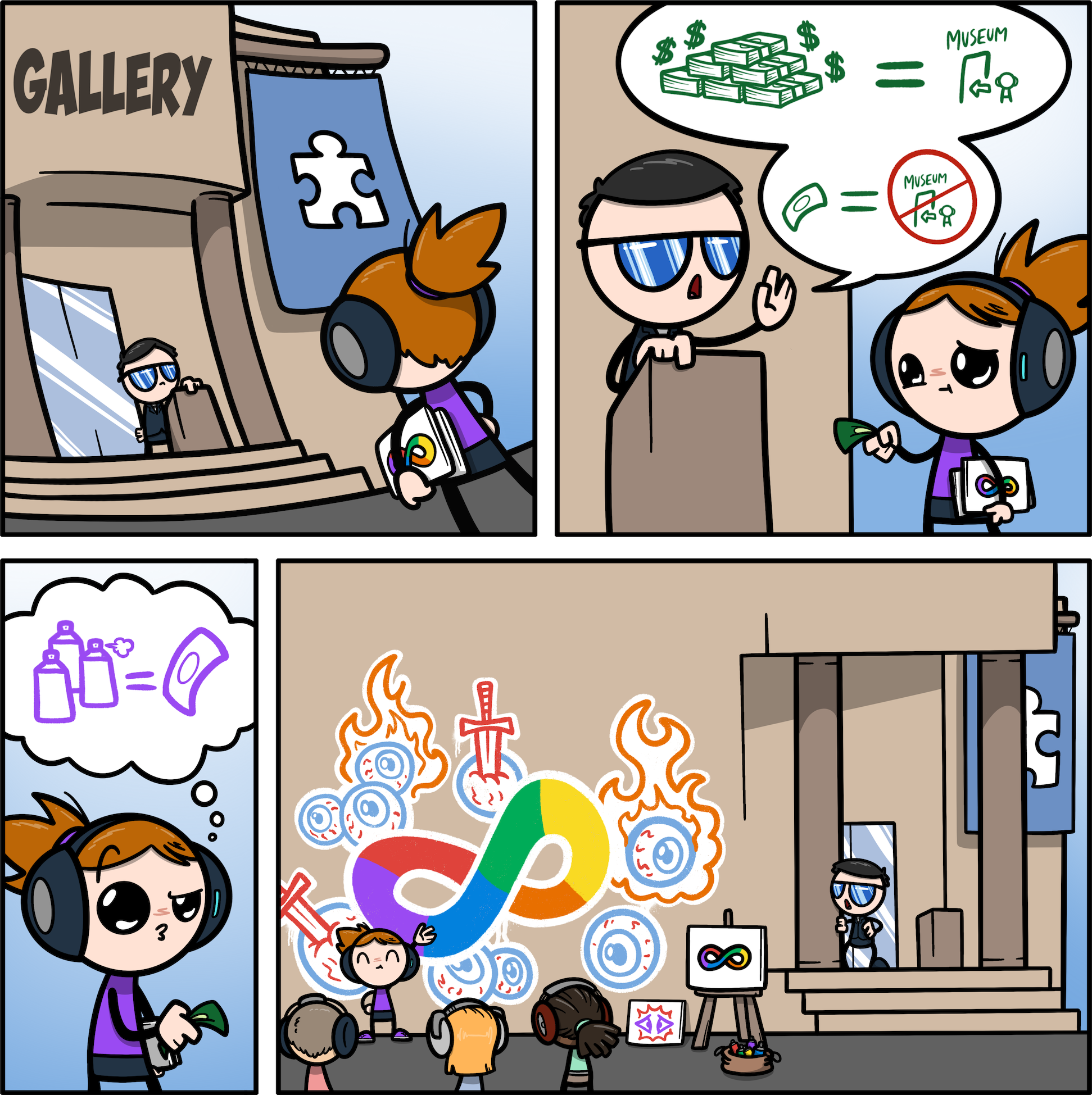
To put our epistemic resistance into action,
and to enhance our imaginative ressources, we chose to gather first-personal testimonies and descriptions of how eye contact can feel for autists.
After all, who better to provide insight into a given lived experience than those who live it? To do so, we used social media (instagram and facebook) to ask autistic followers of our webcomic (@lilyspectrum): How does eye contact feel to you? Although we are neurodivergent, it was important for us to go with the community beyond our individual experiences. For instance, we would never have thought of the sunburn idea on our own, but once we read those testimonies, it felt right.
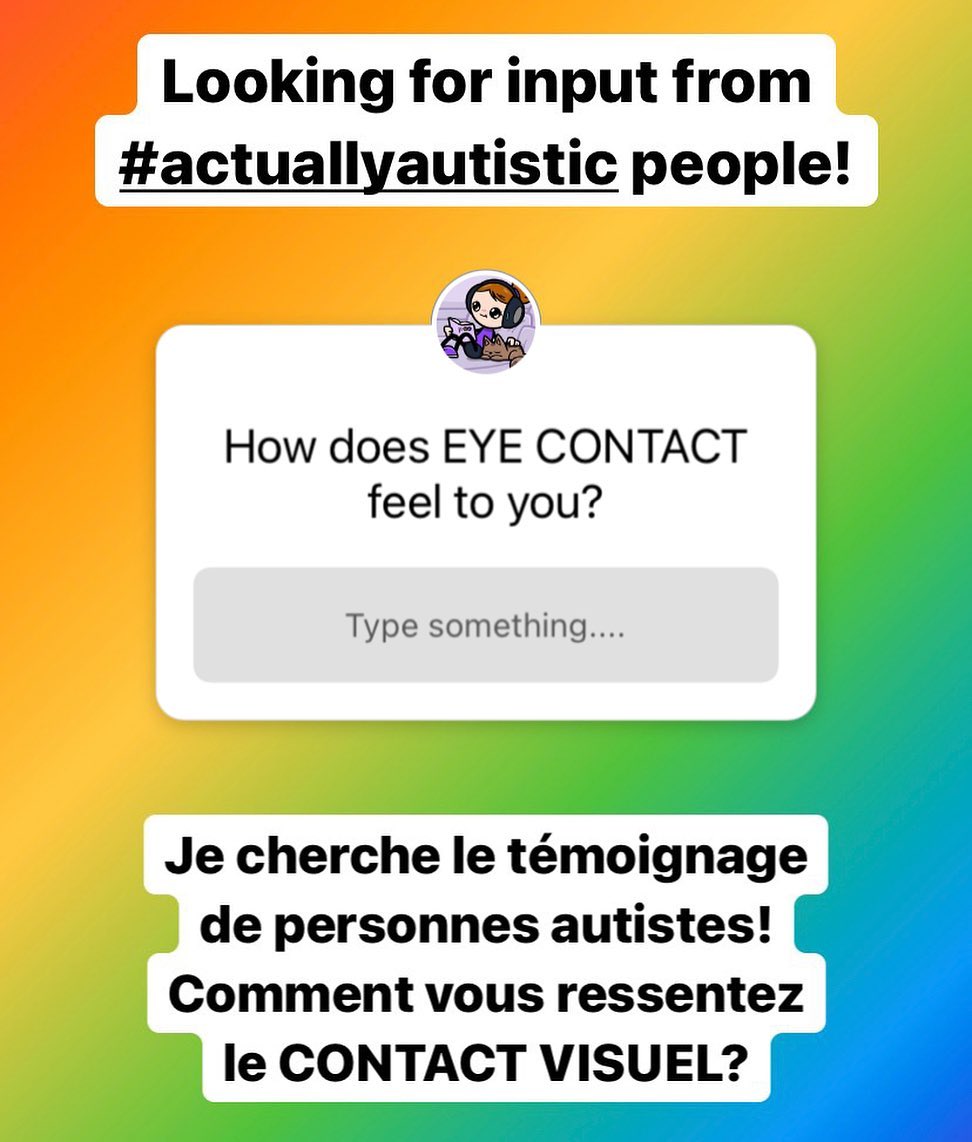
Both posts were made on November 8, and three days later, on November 11, we had received 175 testimonies. A few major themes emerged from these testimonies, which we used to base 7 webcomics or illustrations on. Keep in mind that, with this process, we do not claim to represent all there is to express about autists’ first-personal experience of eye contact. In fact, we suggest you visit these posts yourself to better understand the varied responses we got, and are still getting. And who knows, maybe this will allow you to add your own insight.
Publication
Since Monday, we have started to publish these comics on our social networks and we will continue to publish them in the following days
The interactions that take place around such webcomics are, we believe, an integral part of their complete aesthetic experience. These interactions often bring about clarifications, complementary details and descriptions or even added meaning. We thus invite you to visit these posts and interact with the community.
Webcomics
"I can do it but I can’t process anything else while doing it. My natural instinct and what feels the most right is to not look at someone’s face at all"
"It was drilled into me as a "rule" of politeness. I view it as just that, a rule. It's easy when there's multiple people because I can look around. But with one person, I have to look away or I end apparently end up staring"
"Everyone insisted on it, especially when they really wanted to correct a behavior or ensure I was paying attention. I honestly still don't love it, and prefer to look at noses or eyebrows to provide the impression I'm making eye contact"
"Eye contact was enforced during my childhood in mostly abusive ways and while it taught me to fake it, that made me hate it even more. Generally it just makes me uncomfortable and I find it quite distracting but it's also one of the most tiresome things to mask."
"Eye contact feels like they're staring into my soul, but with knives. I can make short eye contact before wanting to cry."
"It takes a concerted effort except for specific people."
"I’ve been so conditioned to make eye contact with people that when I met a lot of my friends for the first time they were kinda weirded out by me unblinkingly paying attention to them when they talked like 👁👄👁"
"It feels like someone is looking right past all my defenses and directly into my head. Not very pleasant."
"Terrifiant, j'ai vraiment l'impression qu'on me transperce à chaque fois …"
"Like I am being stabbed in the brain, itchy under the scalp, or suffocating. Anxiety is anxiety. I look at people's foreheads. They never know the difference but I am not forced to juggle the pain of eye contact and try to communicate. I am mostly non verbal and eye contact guarantees no words."
"Ça me met vraiment mal à l'aise et j'ai peur qu'on puisse mal interpréter si je regarde pas "correctement", je sais pas si je dois regarder quelqu'un dans les yeux ou combien de temps, il faut surtout pas que je regarde autre chose chez lui que ses yeux et du coup je sais pas quoi faire je préfère regarder le mur derrière mon interlocuteur 😂"
"Tout dépendra de la situation, de ma fatigue et de la personne. Certains contacts peuvent être transperçants (douloureux), d'autres envoutants (confusants), d'autres destabilisants (perturbants). En tous cas, si je regarde qqn dans les yeux, je suis sûr de perdre mon fil de pensée et/ou d'accorder mes réponses à ce que la personne ressent."
"Eye contact feels like burning discomfort, especially when I'm being told to do it."
"It’s extremely hard for me to maintain eye contact, and when people express to me that I should be looking at them when I’m talking to them, it puts me under more stress than just talking to them in the first place"
"somehow being told we should be making eye contact feels like being reprimanded as a child, at least to me.. I can't count the amount of times my mother would tell me to look her in the eyes as a child, and how humiliating/stressful it felt.. I legit forget to listen to people because I'm too busy trying to maintain eye contact."
"At best, awkward and uncomfortable. At worst, like someone's stabbed me in the eyes."
"It makes me uncomfortable but my mother forces me to look people in the eyes"
"Painful, but I feel like if I don't look ill be punished or called a liar. So I trained myself to look at something over their shoulder if not their foreheads to avoid harassment."
"Habituellement je regarde plutôt la bouche ou le nez des gens et ça semble passer crème pour donner l'illusion que je regarde dans les yeux (j'ai eu droit à l'expert en haute potentialité qui me disait que c'était impossible que je sois autiste car.. je le regardais dans les yeux ! Je regardais sa bouche depuis le début de l'entretien..). Je ne me force au contact visuel que de manière consciente et dans de rares cas précis : [suite]
(suite) par exemple si je suis attiré romantiquement par quelqu'un et désire que cette personne le perçoive (vu que le contact visuel accru est interprété de cette façon par beaucoup de neurotypiques). Mais cela reste un sacré effort et en général je détourne les yeux très rapidement, ça me met mal à l'aise, c'en est presque physique. Récemment un de nos profs en cours nous a fait faire une série d'exercices où on devait marcher vers quelqu'un/revenir à sa place à reculons en gardant le contact visuel constant avec cette personne.. je vous laisse deviner la torture que c'était"
"Transperçant!"
"J'ai l'impression que les yeux de la personne me percent à l'intérieur, je sais pas comment dire, c'est une sensation d'oppression aiguë."
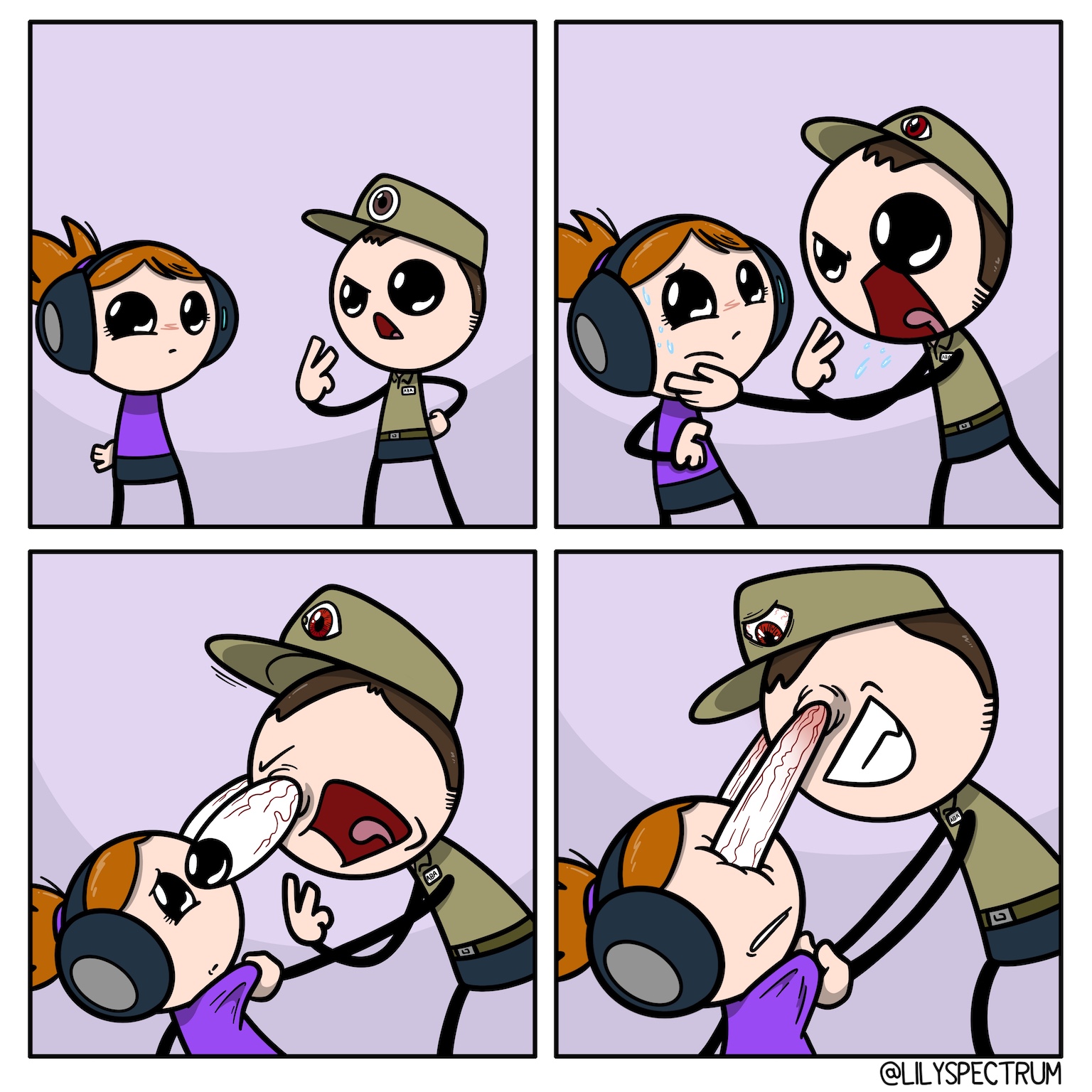
"For me, looking in the eyes feels too exposed and open. It makes me feel like I can't hide and protect myself from the people."
"Eye contact makes me uncomfortable most of the time, because of the feeling that I am being silently judged or getting talked about negatively."
"It's fine when I'm listening to someone but when I'm the one talking it makes me get stage fright like I'm being put on the spot to judge for performance lol"
"Too intimate, inappropriate… I become incredibly self conscious as well, like am I doing eye contact right? Should I be mirroring their behavior or a close approximation or complete opposite? How many times should I blink? Can they tell I’m faking this human interaction? It’s incredibly stressful."
"It feels like something is a required check box. It’s like a math problem. Look, one, two, three. Okay. Look away. Zone out if you need to. Okay, it’s been 10ish seconds. Look back. One, two, three.. okay, look away! Don’t share at them! Wait! You’ve looked away too long! Look back! …..it’s that on repeat quite often lol"
"I hate it I get so nervous and then I break down."
"I don't like it, makes me really uncomfortable. I'm "good at it", because I mask well (😬). I never know what to do, if I'm looking to much or not enough and always use a whole lot of energy just on eye contact. Generally, the more comfortable I feel the less I look someone in the eyes. (Also eyes as a body part make me feel really icky so that's that)."
"Intimidating and uncomfortable, I feel too vulnerable and keep thinking am I doing this right?"
"Ça me met vraiment mal à l'aise et j'ai peur qu'on puisse mal interpréter si je regarde pas "correctement", je sais pas si je dois regarder quelqu'un dans les yeux ou combien de temps, il faut surtout pas que je regarde autre chose chez lui que ses yeux et du coup je sais pas quoi faire je préfère regarder le mur derrière mon interlocuteur 😂"
"Eh bien, quand j’étais petit, je parlais et écoutais souvent le monde sans les regarder dans les yeux. Maintenant, ça me dérange pas de parler et écouter avec le contact visuel, mais j’peux très bien comprendre ce que le monde me dit sans obligatoirement les regarder dans les yeux. Aussi, c’est vrai que ça me rend un peu mal à l’aise quand des inconnus me fixe du regard. C’est comme s’ils me jugeaient et j’sais pas ce que j’ai fait de mal."
"Direct eye contact feels like I am being judged. It also makes me feel uncomfortable because I become unable to perceive and read the rest of their body language."
"Démunie, nue. Percée à jour. C’est très fort comme sensation, et rarement agréable. J’y arrive avec mes enfants ou mon mari, mais même dans ce cas, pas trop longtemps. Si je veux tenir une conversation, et me concentrer, alors je dois ruser. Je regarde entre les deux yeux ou le plus souvent la bouche."
"Feel nausea and anxiety, and extremely naked. Yet my mother was adamant that I learned it and therefore I am able to do it, despite the uncomfortable feelings. Absolutely love your work, for once I can tell that I am not alone"
"I feel instant stress and I have to force myself to do it and to look "natural"."
"Honestly, each time it happens to me, the most awkward feeling I have is « where should I look exactly » ? When you make eye contact, are you expected to focus one eye specifically (which one, then ?), between the eyes, not focus at all, or try a weird way of having each eye "looking" into the facing one (i.e. my left eye "looking at" their right one and vice-versa) ? I'm also never sure if/when eye contact is expected, and when it happens, is there/what is the hidden message behind this specific contact, and/or am I sending an incorrect hidden message myself ? Then, with all these questions actively consuming my brain "computing power", everything else totally miss the point (sometimes, though, I can hide this issue because I have this kind of ability to "replay" the last few words/sentence I unconsciously heard, to process it with a delay but potentially without the proper context- so it's not reliable at all !!). "
"Weird and artificial. I can actually read people's eyes now, but it took me years to learn it."
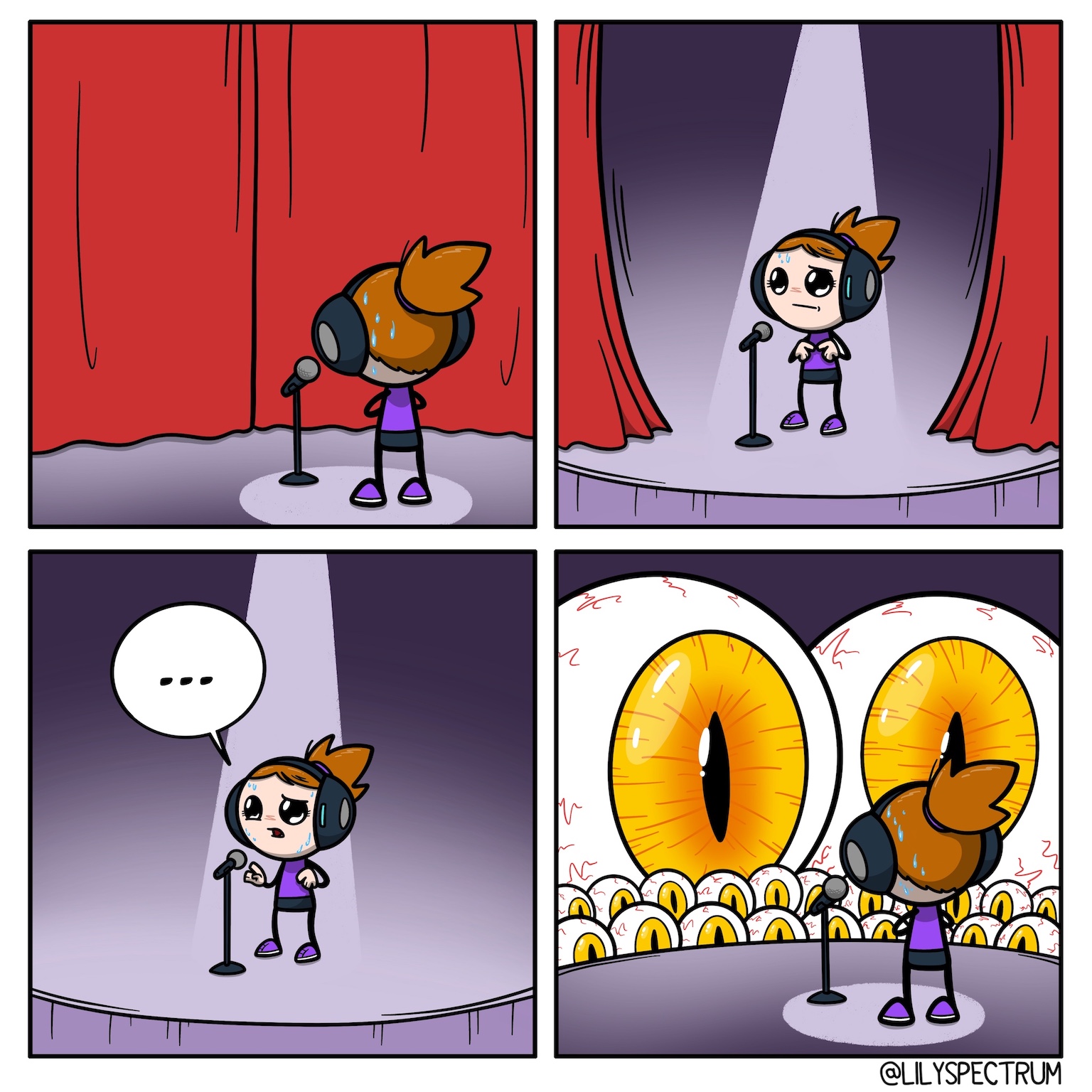
"My parents rasied me to always look into the eyes, still feels wrong. Like, I am invaiding a personal space and being rude. Like trying to stare down their soul and violating their privacy. I still try to look at people in the eyes but have learned to just looks in differents points in the face so I don't seem rude."
"Eye contact feels too intimate to me for most interactions. If I make eye contact with you, it’s because it’s important. "
"Eye contact feels very intimate. If I’m forced to hold it for too long, I feel violated, like I’ve been touched without consent."
"I really hate eye contact in almost all circumstances. About the only exception is with someone I'm very intimate with. Eye contact feels extremely intimate to me in general so it only feels natural when it's with someone I've got a suitably intimate emotional connection to. Otherwise it feels like I'm staring into someone's soul and I can see everything and they're staring into mine and seeing the same (even if I know they're not)."
"Invasive, extremely personal. I'm only comfortable looking my husband in the eyes"
"It feels like I’m standing too close to someone, I don’t know if that’s too vague of a comparison but it feels way too intimate. So I only do it when necessary or when I’m comfortable with that person."
"It feels creepy to me"
"I don't like it, makes me really uncomfortable. I'm "good at it", because I mask well (😬). I never know what to do, if I'm looking to much or not enough and always use a whole lot of energy just on eye contact. Generally, the more comfortable I feel the less I look someone in the eyes. (Also eyes as a body part make me feel really icky so that's that)."
"I hate eye contact. It almost hurts. But it’s nessesary to have a successful professional life, and my parents trained me well as a child. They would ask me people’s eye color after I met them to see if I made eye contact. Being trained like that at a very young age was incredibly difficult and felt unfair, but I’m very grateful that they pushed me now that I’m an adult."
"I can't do it, it makes me feel funny in a bad way and makes me feel kind of .. unsafe? and uncomfy I don't exactly know the word for the first one, I don't mind people looking at me but I won't look back"
"It's incredibly intimate and overwhelmingly so, particularly with strangers. And the more my emotions are revved up, the less I can tolerate it. It genuinely feels as though someone can see into my mind almost, even though I know that they can't. On the plus side, when I'm with someone I deeply, deeply love, sometimes that's okay because I want them to see how much I love them... but then that tends to make THEM feel awkward and uncomfortable too. LOL For me, it falls into the same category as standing too close, invading personal space, touching someone without consent etc. It's intimate, and can very easily become violating when you don't want it. And that;s so hard to explain to NT folk who expect you to look them in the eye all the time."
"It's okay with people I know, but I don't feel comfortable with eye contact with strangers, it almost feels like an invasion of privacy."
"eye contact feels so weird and creepy and if i have to make eye contact with someone, then ill quickly feel exhausted."
"It feels like a boundary rupture unless I completely and totally feel comfortable in a container of safety with another it probably won’t happen much."
"Well... I can't let anyone touch my eyeballs."
"Trop intrusif. Comme si l autre avait la perception de mes pensées. C est comme se montrer nue."
"Intense/ overwhelming/ fiery/ intrusive. Sometimes painful/ always difficult with strangers. Ok with intimate friends and family."
"Démunie, nue. Percée à jour. C’est très fort comme sensation, et rarement agréable. J’y arrive avec mes enfants ou mon mari, mais même dans ce cas, pas trop longtemps. Si je veux tenir une conversation, et me concentrer, alors je dois ruser. Je regarde entre les deux yeux ou le plus souvent la bouche."
"Feel nausea and anxiety, and extremely naked. Yet my mother was adamant that I learned it and therefore I am able to do it, despite the uncomfortable feelings. Absolutely love your work, for once I can tell that I am not alone"
"confronting and very intimate ..i feel naked"
"Quelque chose d'extrêmement intime, que je ne peux pas partager avec n'importe qui sinon je suis déstabilisée car je bloque sur cette sensation d'intimité forcée. Depuis le diagnostic, je me permets de ne plus regarder le visage des gens (je ne travaille pas). Quel soulagement!"
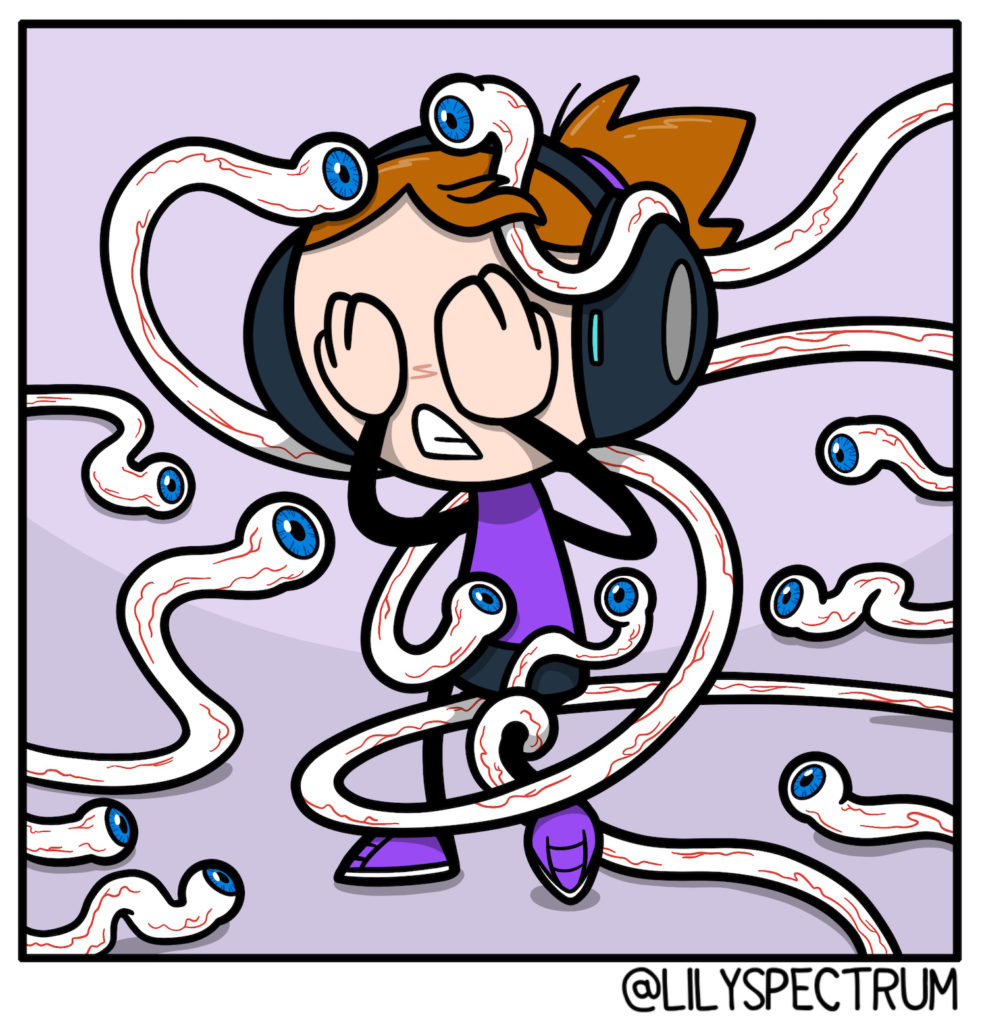
"Eye contact feels like they're staring into my soul, but with knives. I can make short eye contact before wanting to cry."
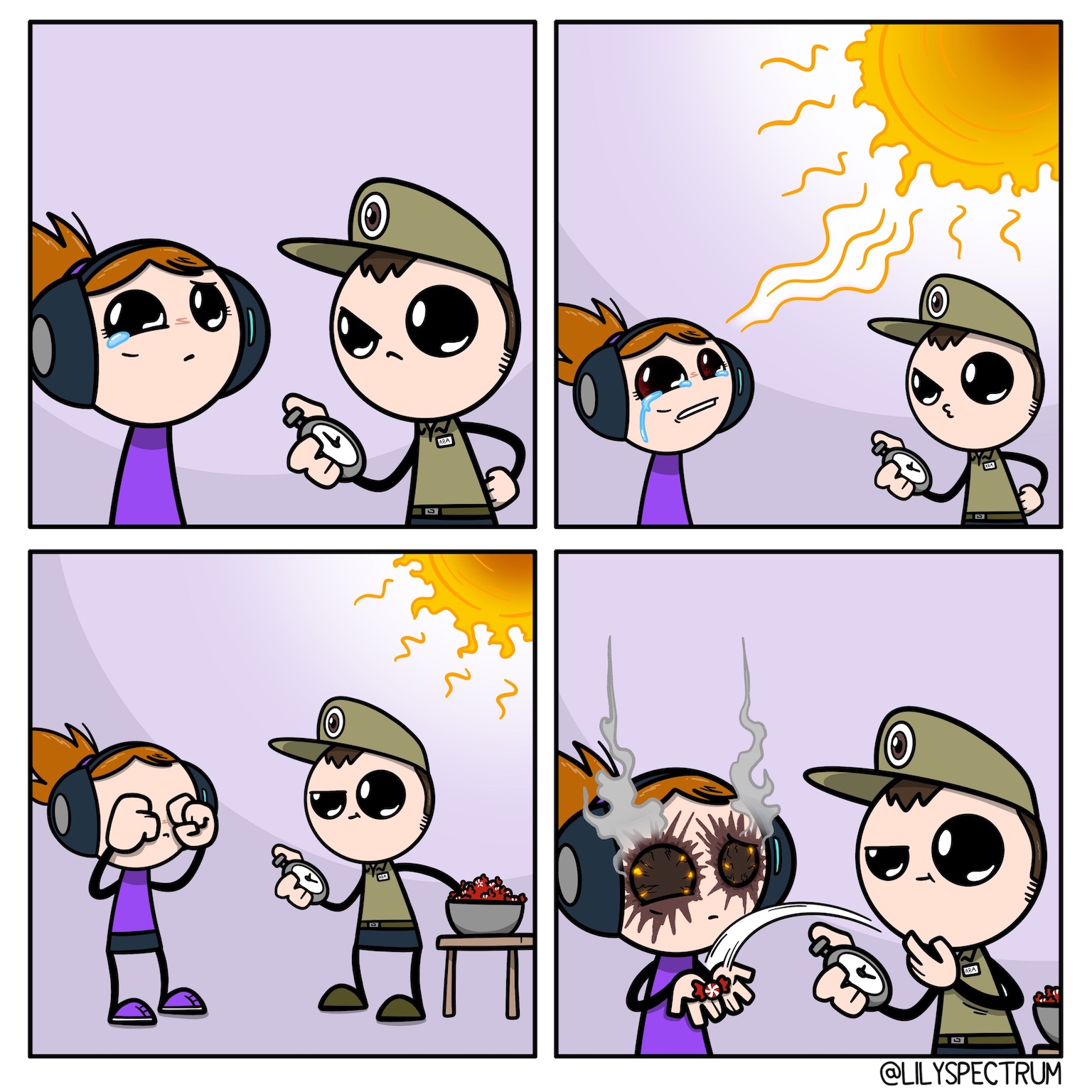
"It’s like being asked to look directly at the sun. I flinch, I can’t do it…"
"It feels like they gonna shoot me with laserbeams. Like Cyclops from X-Men. I van handle it for 10 seconds. I get panick attacks of it's to long. Even with my bf makes me on edge. I got a major panic attack during a being social etc exam (idk how it's in English is). It was so bad. They let me past because otherwise i needed to do the whole year over."
"Feels like I’m staring at the sun and I can only look a person in the eyes for 30 seconds or so before my eyes start to hurt a bit. I can only look animals in the eye."
"Like flames of intense awkwardness are scorching my retinas."
"When I was younger I always had trouble making eye contact. I’ve gotten better at it in recent years but its still painful to me."
"Eye contact feels like burning discomfort, especially when I'm being told to do it."
"Ça me demande beaucoup de concentration. J'ai l'impression que ça me fait mal aux yeux et quand j'étais plus jeune je pouvais même ne plus vraiment entendre ce que la personne me disait. Par contre ce n'est plus un problème quand je me mets vraiment en colère au point de vouloir me battre."
"Ca va de la gêne à la sensation de brûlure, ça dépend des personnes je suppose. On peut parfaitement regarder le nez, la bouche, entre les yeux sans que l'autre ne sen rende compte."
"I can’t think if I have to. Feels like pressure."
"Bad, I feel like my head is going to explode if I look at someone's eyes for too long. I suspect it's probably a blood pressure drop or adrenaline, but it feels awful. I honestly don't get why so many people require eye contact when speaking. I can make eye contact, but it's really difficult to understand what the person is saying because I'm too focused on how uncomfortable I feel and how incredibly awkward it is to stare at someone's eyes"
"It feels literally painful and I’m always afraid the other person can tell what I’m feeling/thinking. I’m comfortable with eye contact with very trusted folks in my life though."
"Painful"
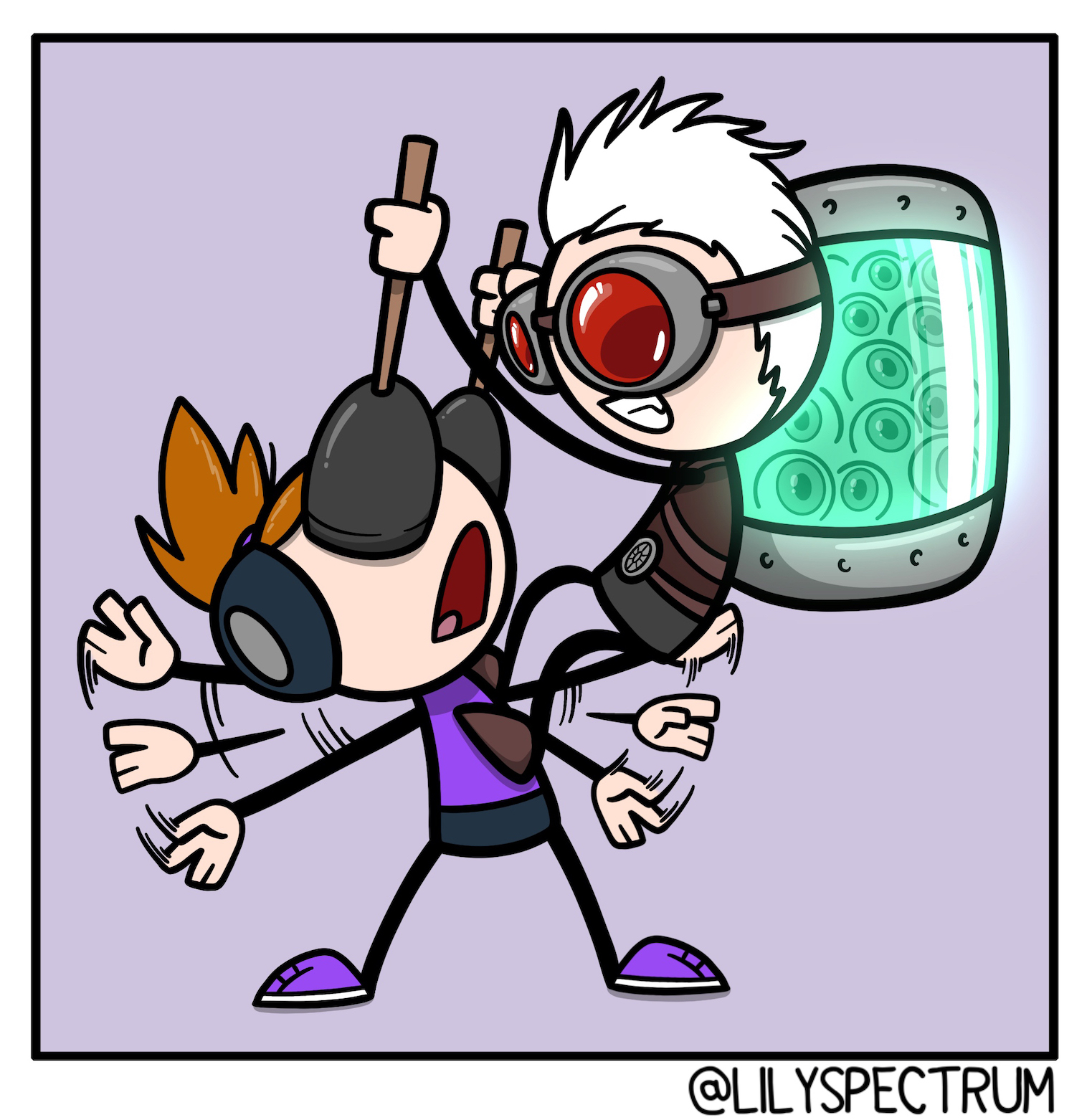
"I really hate eye contact in almost all circumstances. About the only exception is with someone I'm very intimate with. Eye contact feels extremely intimate to me in general so it only feels natural when it's with someone I've got a suitably intimate emotional connection to. Otherwise it feels like I'm staring into someone's soul and I can see everything and they're staring into mine and seeing the same (even if I know they're not)."
"I cant make eye contact with literally anyone. Its uncomfortable, and even when its not, i cant listen proberly to what people are saying when i focus on the eyes. I just cant do it at anytime with anyone, only for one second maximum. Its like staring into someone's soul, its too much."
"J’ai l’impression d’être absorbée par les yeux de la personne et en même temps comme si on pouvait voir ce qu’il y a à l’intérieur de moi."
"honestly it feels like i am being sucked into their soul… i can’t maintain it if i want a conversation because i just get lost"
"Like someone staring at my soul? I almost feel like that's the part of masking that exhausts me the most!"
"It's uncomfortable. But sometimes if I want to intimidate someone I stare deep into their eyes and make them feel unnerved like I'm looking into their soul."
"Tout dépendra de la situation, de ma fatigue et de la personne. Certains contacts peuvent être transperçants (douloureux), d'autres envoutants (confusants), d'autres destabilisants (perturbants). En tous cas, si je regarde qqn dans les yeux, je suis sûr de perdre mon fil de pensée et/ou d'accorder mes réponses à ce que la personne ressent."
"Trop intrusif. Comme si l autre avait la perception de mes pensées. C est comme se montrer nue."
"J’ai l’impression d’entrer dans l’âme de la personne. Je trouve ça trop privé. Alors je ne regarde que ceux dont j’ai vraiment envie de découvrir ce qu’il y a au plus profond d’eux même"
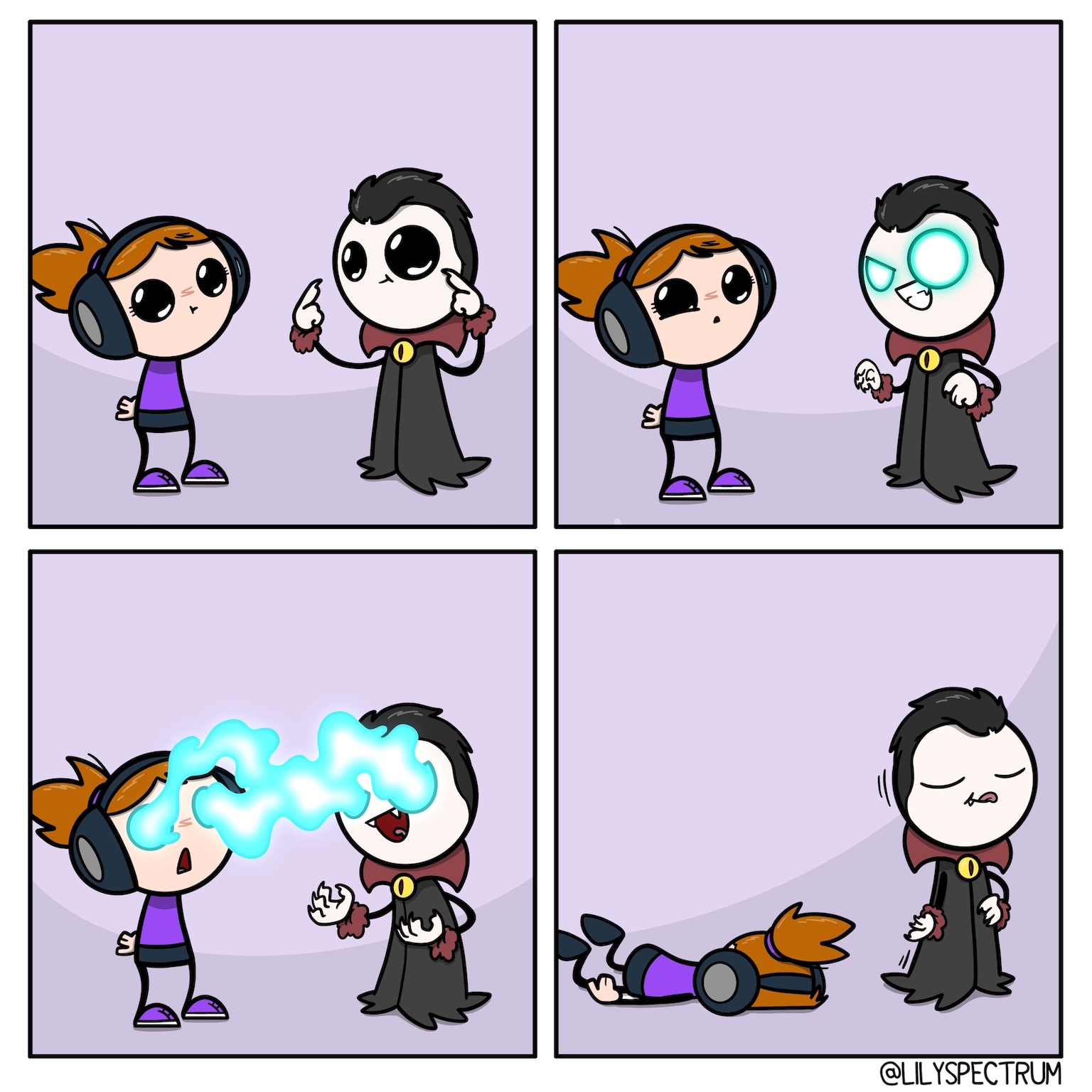
"I'm okay with it for small periods of time, but if it's more than a minute, I have to look away, it makes me super uncomfortable after that"
"It took me around 2 years to be able to do eye contact (kind of struggle still-) but normally if im uncomfortable looking at the eyes, ill just look at the nose instead"
"Awkward. The longest I can probably do it is for a few seconds, but sometimes it’s physically impossible for me to look someone in the eyes even for one second."
"Ça me met juste très mal à l’aise, et du coup je préfère regarder ailleurs et ne regarde les gens dans les yeux s’iels ne me regardent pas."
"Incapable de soutenir un eye contact sauf avec certaine personnes... Ma famille (ma mere, mon pere, ma soeur), ma nièce, mon beau frère et mon conjoint. Quelques amis specifique aussi... Mais sinon incapable. Je chercher tjrs a "évader" ses eye contact."
"Uncomfortable. I have trouble maintaining eye contact for long, especially in a conversation. However, I did figure out that talking with your hands is a great way to distract the other person's eyes from your and gives you a reason not to look at them."
"havent made eye contact with anyone (while i'm talking to them, that is) except my cats in years if that tells you anyone"
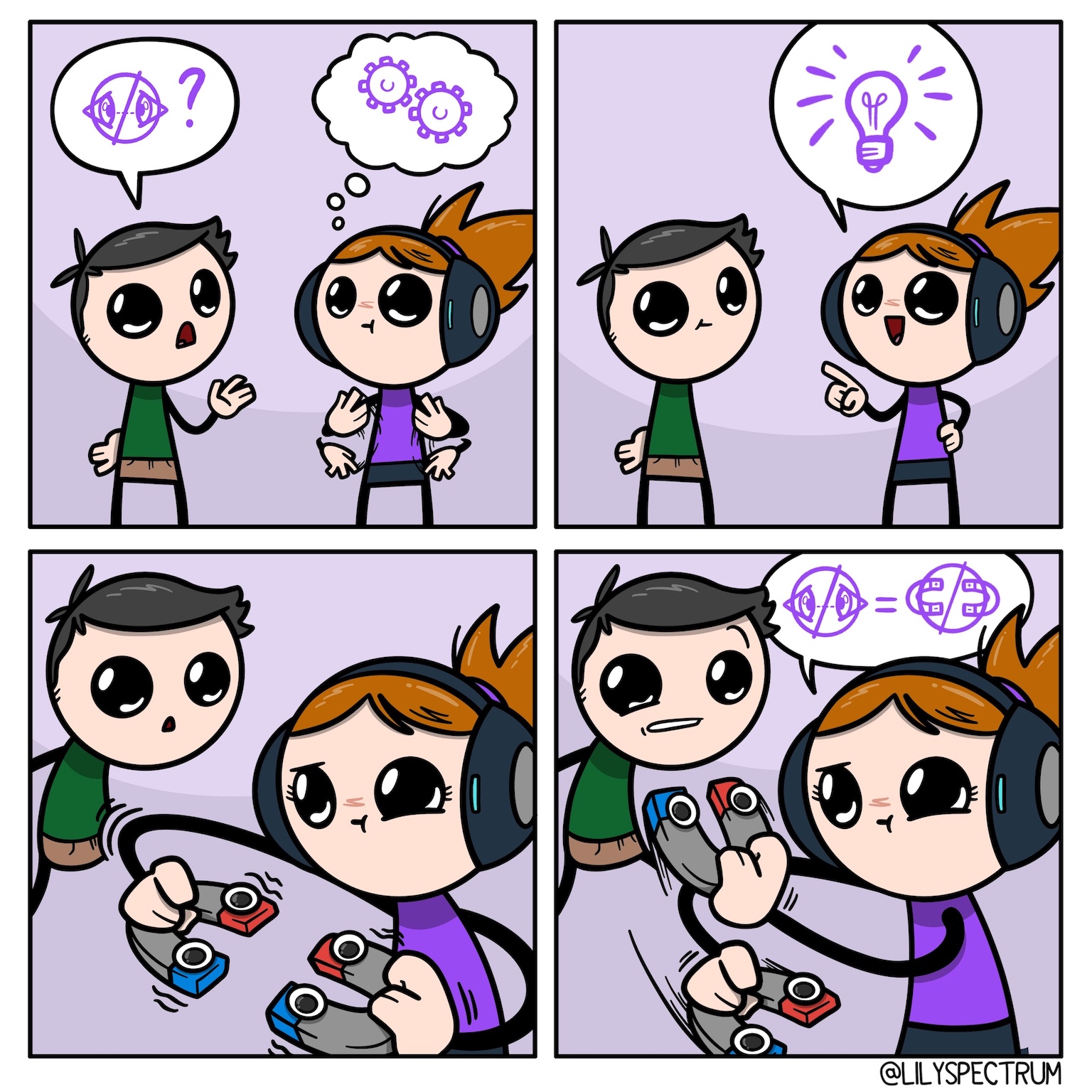
"When I was younger, it used to feel like when you held two magnets together both ends the same, it felt like no matter how hard you held them together, it would want to repel forcefully, my head wanted to repel and look past to the left or right or down or up like a magnet would, and when I managed to hold it against that feeling, my eyes would water up, not tears from sadness or anything, but they released tears, now I can manage it but it's still not comfortable to do, it depends on how comfortable I feel with the person or people or how stimulated I feel in an environment"
"It’s like when you hold two magnets with the same polarity against each other. Even if you want to put them together they won’t do it. The magnets are like my eyes. They just can’t center on the other persons eyes or it will cost a lot of energy. Like with holding magnets with the same polarity together. It’s just all in all very uncomfortable and draining. Btw I’m undiagnosed so I hope I can still answer here. Also I really really love your account and the stuff you do ^^ /g"
"Ça me met vraiment mal à l'aise et j'ai peur qu'on puisse mal interpréter si je regarde pas "correctement", je sais pas si je dois regarder quelqu'un dans les yeux ou combien de temps, il faut surtout pas que je regarde autre chose chez lui que ses yeux et du coup je sais pas quoi faire je préfère regarder le mur derrière mon interlocuteur 😂"
"Je me sens obligé de regarder chaque personne dans les yeux mais aussitôt que le contact est réciproque je baisse le regard aussi vite que mon ombre ainsi j'ai l'impression que j'ai fait ma part! haha! Par contre avec le monde avec qui je suis très, très à l'aise je vais quelque fois fixer les yeux, on dirait que j'essaie de comprendre pourquoi je fuis ceux des inconnus, alors je fixe en grand questionnement interne!"
"Awkward and physically painful , strong need to move my eyes away from it"
"Souvent trop intense… Et en plus il se passe tellement de choses autour des yeux qui m'intéressent plus et/ou me sécurisent plus! Je fixe puis je zappe, j'y reviens et je rezappe… Les sourcils, les lunettes, sont des bons compromis aussi, ou fixer mon regard dans le vague direction le visage ou le pourtour du visage… Ou fixer le visage avec une attitude très intéressée (posture corporelle de l'attention soutenue) quand la personne regarde AILLEURS, et quand son regard se tourne vers moi, fixer 1s seconde, sourire, et me tourner ailleurs vers qqn d'autre qui parle mais ne regarde pas vers moi à ce moment là, ou trouver à m'occuper avec un objet, et jongler comme ça."
"Je n'aime pas regarder sans les yeux, je ne sais pas, c'est plus fort que moi, je suis mal à l'aise, je ressens le besoin de regarder ailleurs. Du coup j'aime bien discuter quand je suis au resto ou quand on fait une activité, il y a l'excuse d'être occupée en même temps pour ne pas se regarder"
"Habituellement je regarde plutôt la bouche ou le nez des gens et ça semble passer crème pour donner l'illusion que je regarde dans les yeux (j'ai eu droit à l'expert en haute potentialité qui me disait que c'était impossible que je sois autiste car.. je le regardais dans les yeux ! Je regardais sa bouche depuis le début de l'entretien..). Je ne me force au contact visuel que de manière consciente et dans de rares cas précis : par exemple si je suis attiré romantiquement par quelqu'un et désire que cette personne le perçoive (vu que le contact visuel accru est interprété de cette façon par beaucoup de neurotypiques). Mais cela reste un sacré effort et en général je détourne les yeux très rapidement, ça me met mal à l'aise, c'en est presque physique. Récemment un de nos profs en cours nous a fait faire une série d'exercices où on devait marcher vers quelqu'un/revenir à sa place à reculons en gardant le contact visuel constant avec cette personne.. je vous laisse deviner la torture que c'était"
"Lorsque c'est quelqu'un avec qui je suis à l'aise ca va à une certaine distance mais de trop prêt je ressens un malaise assez vite. Si j'ai le malheur de croisé le regard avec un(e) inconnu(e) dans la rue ou dans un commerce, je regarde ailleurs aussitôt, gros malaise. C'est pour ça que j'évite de regarder les gens."
Thank you for joining us in this exploration!
We hope this experience was (and will be) as enriching for you as it was for us to come up with. We invite you to engage with us and the community through our posts or in the comments bellow!
Детоксикация — это не одна «капельница», а серия мероприятий, направленных на снижение токсической нагрузки, выравнивание жизненно важных показателей и возвращение контроля над самочувствием. На старте врач проводит осмотр, при необходимости — экспресс-диагностику и ЭКГ, объясняет цели инфузионной терапии, отвечает на вопросы о препаратах и возможных ощущениях в первые часы после начала. Если состояние пациента позволяет, первые шаги выполняются дома: так легче согласиться на помощь и сохранить приватность. При выраженной интоксикации, обезвоживании, скачках давления и пульса, нарушении ориентации или риске судорог безопаснее выбрать стационар: расширенная диагностика и круглосуточный мониторинг снижает вероятность осложнений и даёт возможность гибко корректировать назначения. После купирования острых проявлений команда переходит к стабилизации — настройке сна, питания, гидратации и поддерживающих схем с понятными целями на ближайшие дни.
Подробнее тут – https://narkologicheskaya-klinika-moskva9.ru/anonimnaya-narkologicheskaya-klinika-v-moskve
мелбет казино, мелбет казино поддержка предлагает исключительные возможности для игроков. Здесь вы найдете широкий ассортимент игр, среди которых слоты и настольные игры. Каждый из может получить удовольствие азартом и эмоциями, погружаясь в атмосферу казино.
кактус казино, кактус казино онлайн официальный сайт предлагает уникальные возможности для азартных игроков. В этом заведении вы можете оценить разнообразными игровыми автоматами. Примите свой выбор к триумфам уже сегодня!
casinos crypto fr, https://rasasintegrated.com/les-casinos-crypto-une-revolution-dans-le-monde-du-jeu-en-ligne-1435393937/ offer a fresh approach to wagering. Players can take advantage of fast transactions and better security. In more, many games are available, attracting both gamblers.
Many players seek alternative options for online gambling. A good choice is to explore websites not on GamStop, https://theuncoordinatedmommy.com/discover-new-online-casinos-not-on-gamstop-1800227328/, offering engaging games and bonuses. These platforms allow users to enjoy a more dynamic experience while avoiding restrictions.
Hello there! This post could not be written much better!
Looking through this post reminds me of my previous roommate!
He constantly kept preaching about this. I will forward
this post to him. Fairly certain he’ll have a great read.
I appreciate you for sharing!
Детоксикация — это не одна «капельница», а серия мероприятий, направленных на снижение токсической нагрузки, выравнивание жизненно важных показателей и возвращение контроля над самочувствием. На старте врач проводит осмотр, при необходимости — экспресс-диагностику и ЭКГ, объясняет цели инфузионной терапии, отвечает на вопросы о препаратах и возможных ощущениях в первые часы после начала. Если состояние пациента позволяет, первые шаги выполняются дома: так легче согласиться на помощь и сохранить приватность. При выраженной интоксикации, обезвоживании, скачках давления и пульса, нарушении ориентации или риске судорог безопаснее выбрать стационар: расширенная диагностика и круглосуточный мониторинг снижает вероятность осложнений и даёт возможность гибко корректировать назначения. После купирования острых проявлений команда переходит к стабилизации — настройке сна, питания, гидратации и поддерживающих схем с понятными целями на ближайшие дни.
Подробнее можно узнать тут – наркологическая больница москвы
Кодирование в «МедТрезвие» — не «волшебная кнопка», а логическое продолжение после стабилизации, когда организм готов к вмешательству, а пациент понимает механизм действия и ограничения метода. Врач подробно обсуждает цели, риски, противопоказания, ожидаемые эффекты и сроки наблюдения, оформляет информированное согласие и объясняет, как встроить процедуру в общий план. Важная часть — профилактика триггеров и обучение распознаванию ранних сигналов тяги: человек получает не только фармакологическую поддержку, но и практические инструменты саморегуляции, сценарии на «сложные дни», способы запросить помощь до того, как ситуация выйдет из-под контроля. Такая связка повышает вероятность устойчивой ремиссии, потому что работает одновременно на биологическом и поведенческом уровнях.
Исследовать вопрос подробнее – https://narkologicheskaya-klinika-moskva9.ru/anonimnaya-narkologicheskaya-klinika-v-moskve
«МедТрезвие» выстраивает лечение зависимости как последовательный и понятный маршрут, где каждый этап имеет чёткую цель, критерии эффективности и прозрачные условия. С первого обращения дежурный врач уточняет жалобы, длительность употребления, сопутствующие заболевания, переносимость лекарств и бытовые ограничения, после чего предлагает безопасный формат начала — выезд на дом или приём без ожидания. Важна не только скорость, но и качество коммуникации: пациент и близкие получают ясное объяснение, зачем назначается конкретная процедура, как оценивать улучшение и какие признаки требуют немедленной связи со специалистом. Круглосуточная доступность и конфиденциальные каналы записи снимают барьер обращения, а внутренняя маршрутизация позволяет переходить от экстренного купирования симптомов к стабилизации и профилактике срывов без пауз и «провалов» между этапами. Такой подход уменьшает риск повторных эпизодов, повышает приверженность и возвращает человеку контроль над повседневной жизнью.
Подробнее можно узнать тут – narkologicheskaya-klinika-v-moskve
https://bltp.at
Rainbow Riches Slot Not on GamStop, https://monomatbaa.com/genel/discover-rainbow-riches-slot-not-on-gamstop/ offers players a unique|distinctive|special|uncommon gaming experience. This popular|well-liked|favored|admired slot allows for exciting|thrilling|entertaining|captivating gameplay without the restrictions of GamStop. Enjoy the fun|excitement|pleasure|joy of spinning the reels and winning big!
Решение обратиться за наркологической помощью часто упирается в страх огласки и сомнения в эффективности. В «МедТрезвие» эти барьеры снимаются за счёт клинической достаточности и предсказуемой организации. Диагностика и вмешательства назначаются строго по показаниям: врач оценит риски сердечно-сосудистых осложнений, состояние печени и поджелудочной железы, уровень тревоги и сна, наличие депрессивных симптомов. При устойчивом состоянии часть процедур выполняется на дому, что снижает стресс, а при признаках нестабильности — рекомендуется стационар с круглосуточным наблюдением. Анонимность поддерживается шифрованием данных, разграничением доступа и информированием родственников только по согласию пациента. Финансовые условия обсуждаются заранее: семья понимает, из чего складывается смета, и может планировать ресурс без опасений «скрытых» позиций. В результате лечение становится управляемым процессом, где медицинская безопасность и уважение к личной жизни человека — обязательные элементы, а не рекламные обещания.
Получить больше информации – http://narkologicheskaya-klinika-moskva9.ru
Подготовка включает оценку соматического статуса, сверку текущих лекарств, обсуждение мотивации и планов на ближайшие недели. После процедуры назначаются контрольные контакты: специалист уточняет самочувствие, помогает адаптировать режим сна и питания, напоминает о «красных флажках» и корректирует план при изменениях графика или стресса. Пациент остаётся не один: ему доступны понятные регламенты действий, чтобы не «провалиться» в первые недели, когда вероятность срыва традиционно выше. Это снижает тревогу и делает поведение предсказуемым, а значит — безопасным для здоровья и работы.
Получить дополнительные сведения – клиника наркологии и психиатрии москва
Кодирование — это медицинский инструмент, который помогает закрепить трезвость, но сам по себе не является «волшебной кнопкой». Его задача — усилить внутреннюю мотивацию и создать физиологические и/или психологические условия, при которых срыв становится маловероятным. В «НаркологЭксперт» кодирование включают в структуру лечения: сначала купируются острые проявления, проводится детокс и стабилизация сна, давления и тревоги, затем — диагностика противопоказаний, подробное информирование, выбор методики и только после этого — сама процедура. Такой порядок снижает риски, повышает переносимость и делает результат предсказуемым. Важно, что любая техника подбирается индивидуально с учётом длительности употребления, анамнеза, сопутствующих заболеваний и рабочей нагрузки пациента, чтобы лечение органично вписалось в реальную жизнь и не сорвалось на первых же неделях.
Изучить вопрос глубже – klinika-kodirovaniya-ot-alkogolizma-moskva
Choosing a student club can be as much about the people as the activity itself. Total Frat Move covers campus life, sports and culture at https://totalfratmove.com/. There is plenty of room for different takes on the same situation.
her response toast wallet
I know this if off topic but I’m looking into starting my own blog and
was wondering what all is needed to get set up? I’m assuming having a blog
like yours would cost a pretty penny? I’m not very web smart so I’m not 100% certain. Any
tips or advice would be greatly appreciated. Thanks
В стейк казино, stake казино официальный сайт можно не только насладиться великолепными блюдами, но и испытать удачу. Такой ресторан предлагает разнообразные еду и развлекаловку, что делает его востребованным среди гостей.
Помощь может включать консультацию, детоксикацию, стационар и дальнейшее сопровождение по показаниям.
Изучить вопрос подробнее – вывод из запоя на дому недорого в Донецке
Караоке веселье
В наркологической практике учитывают не только текущий эпизод, но и общий стаж употребления: он может составлять несколько лет, 10 лет и более. Наркологической оценке подлежат также предыдущие попытки лечения, опыт кодирования и обращения в наркологический диспансер или частную клинику. Если человек много лет страдает зависимостью, риск осложнений и рецидивов обычно выше, поэтому наркологической помощи может потребоваться более длительное продолжение.
Изучить вопрос подробнее – помощь вывод из запоя
Задача врача — не «поставить галочку», а исключить противопоказания и выбрать методику с оптимальным соотношением пользы и риска. Учитываются хронические заболевания, эпизоды потери сознания, аритмии, панические атаки, депрессивные симптомы, переносимость инфузий и фармпрепаратов, взаимодействия с уже назначенными лекарствами. По результатам формируется персональный лист ограничений и список «красных флажков», при которых следует связаться со специалистом без промедления.
Ознакомиться с деталями – кодирование в москве отзывы
До приезда врача важно наблюдать за сознанием и дыханием человека. Выраженная алкогольная интоксикация может сопровождаться не только похмельем, но и психическими расстройствами. Если развивается психоз, белая горячка, судороги или потеря сознания, необходима неотложная помощь скорой, а лечение на дому заменяется госпитализацией.
Дополнительная информация – вывод из запоя цена
https://banya-v-ufe.org/ Аренда сауны Уфа
Перед процедурой обсуждаются цели, ожидаемые эффекты, возможные побочные реакции, сроки наблюдения. Пациент получает письменные рекомендации на первые трое суток: режим сна и жидкости, коррекция нагрузки, контакты для связи, сигналы настороженности. Такой формат сделал результаты более предсказуемыми: меньше импульсивных решений, меньше тревоги и больше контроля над поведением в критический ранний период.
Ознакомиться с деталями – кодирование на дому москва
Решение обратиться за наркологической помощью часто упирается в страх огласки и сомнения в эффективности. В «МедТрезвие» эти барьеры снимаются за счёт клинической достаточности и предсказуемой организации. Диагностика и вмешательства назначаются строго по показаниям: врач оценит риски сердечно-сосудистых осложнений, состояние печени и поджелудочной железы, уровень тревоги и сна, наличие депрессивных симптомов. При устойчивом состоянии часть процедур выполняется на дому, что снижает стресс, а при признаках нестабильности — рекомендуется стационар с круглосуточным наблюдением. Анонимность поддерживается шифрованием данных, разграничением доступа и информированием родственников только по согласию пациента. Финансовые условия обсуждаются заранее: семья понимает, из чего складывается смета, и может планировать ресурс без опасений «скрытых» позиций. В результате лечение становится управляемым процессом, где медицинская безопасность и уважение к личной жизни человека — обязательные элементы, а не рекламные обещания.
Подробнее тут – http://narkologicheskaya-klinika-moskva9.ru/
A short clip can leave out the one detail that explains the whole situation. For a change of pace, there is campus and entertainment content at https://totalfratmove.com/. The small observations tend to be more memorable than the biggest claims.
Госпитализация показана, когда требуется непрерывный контроль и быстрые изменения схем лечения. В стационаре устраняют выраженные симптомы отмены, корректируют электролитные нарушения, поддерживают печёночные функции, при необходимости подключают кислород и аппаратные методы диагностики. Параллельно выравнивают сон и аппетит, закрывают дефициты микроэлементов, подбирают щадящий режим нагрузки. На выписке пациент получает подробные рекомендации: как дозировать активность, когда пить воду и в каких объёмах, какие препараты принимать и при каких признаках обращаться за консультацией без ожидания. Такой формат снижает риск осложнений и даёт предсказуемую динамику уже на горизонте нескольких дней.
Подробнее – http://narkologicheskaya-klinika-moskva9.ru
Состояние пациента отслеживается на каждом этапе, от первичной консультации до дальнейших рекомендаций.
Дополнительная информация – вывод из запоя дешево
Стрип-зона пилон мангал
Маршрут выстроен прозрачно. Сначала идёт короткое предметное интервью — только то, что меняет тактику «сегодня»: длительность запоя, принятые лекарства (включая «самолечение»), аллергии, хронические диагнозы, количество ночей без сна. Затем — объективные показатели (АД/пульс/сатурация/температура), оценка тремора и уровня тревоги; при показаниях проводится экспресс-ЭКГ и базовый неврологический скрининг. После этого врач объясняет, какие компоненты войдут в инфузию и почему: регидратация для восстановления объёма циркулирующей жидкости, коррекция электролитов, печёночная поддержка, при необходимости — гастропротекция и противорвотные; мягкая анксиолитическая коррекция — строго по показаниям. Мы принципиально избегаем «универсальных сильных смесей» и «оглушающих» дозировок: они дают дневной «блеск», но почти всегда провоцируют вечерний откат, ухудшение сна и рост рисков. Во время процедуры пациент и семья получают понятные письменные правила на 48–72 часа: вода и лёгкая еда «по часам», затемнение и тишина вечером, фиксированное время отбоя, «красные флажки» для связи и согласованное утреннее окно контроля. Такой сценарий убирает импровизации, снижает уровень конфликтов и помогает нервной системе перейти из режима тревоги в режим восстановления.
Ознакомиться с деталями – https://kapelnica-ot-zapoya-lyubercy9.ru/kapelnica-ot-zapoya-s-vyezdom-v-lyubercah
Публикация посвящена жизненным историям людей, успешно справившихся с зависимостью. Мы покажем, что выход есть, и он начинается с первого шага — принятия проблемы и желания измениться.
Ознакомиться с теоретической базой – вывод из запоя круглосуточно в Сочи
Круглосуточный вызов нарколога позволяет получить помощь анонимно и без самостоятельной поездки в клинику. Специалисты наркологической службы проводят первичную консультацию, объясняют порядок оказания услуги, ориентировочные цены и дальнейшие шаги. После осмотра врач подбирает лечение индивидуально: детоксикация, капельница, лекарственные препараты, симптоматическая терапия и наблюдение. Если требуется лечение алкоголизма, после стабилизации обсуждаются кодирование, психотерапия и реабилитация.
Ознакомиться с деталями – вывод из запоя на дому недорого
Hi, I do believe this is an excellent web site. I stumbledupon it 😉 I am
going to return once again since i have book marked it.
Money and freedom is the best way to change, may
you be rich and continue to help others.
Соблюдаем конфиденциальность, бережно общаемся с пациентом и его близкими на каждом этапе.
Подробнее – нарколог вывод из запоя Донецк
Соблюдаем конфиденциальность, бережно общаемся с пациентом и его близкими на каждом этапе.
Изучить вопрос подробнее – вывод из запоя дешево
Чтобы заказать выезд, достаточно позвонить в центр или оставить заявку на сайте. Консультация по телефону помогает предварительно оценить срочность, но окончательное лечение назначает только доктор после осмотра. Если человек хочет прокапаться на дому, врач сначала исключает противопоказания и оценивает риск осложнений.
Ознакомиться с деталями – срочный вывод из запоя
Finding reliable online casinos can be challenging. For those seeking options, it’s essential to know what gambling sites are not on GamStop, https://www.free-find.co.uk/2026/08/13/discover-the-world-of-non-gamstop-casinos-2/. These platforms provide a way for players to enjoy gaming without restrictions. Explore a variety of choices, including new sites that offer entertaining games while ensuring security. Many players appreciate the freedom to gamble without limits. Always investigate these alternatives to find the best fit for your gambling needs. Remember to play responsibly!
Dansk casino, https://fly2022.miaoli-youths.com/bedste-casino-uden-rofus-rigtige-spiloplevelser/ дает уникальный опыт веселья. Всякий игрок иметь возможность наслаждаться высококачественной графикой и простым интерфейсом. На платформе множество развлекательных опций, например слоты и настольные игры. Безопасность данных и удобство пользователей всегда в приоритете. С данным подходом, Dansk casino в самом деле выделяется среди конкурентов.
Запой сопровождается накоплением продуктов распада этанола и нарушением работы нервной, сердечно-сосудистой и пищеварительной систем. Выведение алкоголя и стабилизация водно-солевого баланса должны проходить с учетом возраста, стажа употребления и сопутствующих заболеваний. Самостоятельное лечение после длительного запоя может быть опасным, поскольку синдром отмены иногда усиливается в течение первых суток.
Изучить вопрос подробнее – вывод из запоя недорого Донецк
Перед процедурой обсуждаются цели, ожидаемые эффекты, возможные побочные реакции, сроки наблюдения. Пациент получает письменные рекомендации на первые трое суток: режим сна и жидкости, коррекция нагрузки, контакты для связи, сигналы настороженности. Такой формат сделал результаты более предсказуемыми: меньше импульсивных решений, меньше тревоги и больше контроля над поведением в критический ранний период.
Углубиться в тему – адрес кодирования от алкоголизма
Клиника ориентирована на клиническую достаточность: никаких процедур «для галочки», только то, что подтверждено показаниями. С первого контакта дежурный врач уточняет анамнез, лекарства, аллергии, оценивает риски сердечно-сосудистых осложнений, степень обезвоживания, уровень тревоги и качества сна. Если состояние позволяет, подготовка к кодированию проводится амбулаторно или на дому; при нестабильных показателях предлагается короткий стационар для безопасной стабилизации. Важна анонимность — в расписании используются шифры, доступ к данным разграничен, информирование родственников происходит только по согласию пациента. Организация процесса учитывает ритм мегаполиса: гибкие слоты в будни и выходные, выездные бригады, быстрый перевод из домашнего формата в стационар при необходимости. Финансовые условия проговариваются заранее, чтобы исключить скрытые позиции и дать человеку возможность планировать бюджет без догадок.
Детальнее – kodirovanie-ot-alkogolizma-otzyvy-ceny
мелбет казино, melbet casino telegram предлагает исключительные возможности для участников. Здесь откроете широкий ассортимент игр, состоящие из слоты и настольные настольные развлечения. Все может испытать азартом и адреналином, погружаясь в мир казино.
кактус казино, cactus казино официальный сайт — это уникальное место, где развлечение сочетается с возможностью выиграть ачивменты. Здесь игроки наслаждаются разнообразными играми, начиная от слотов до карточных состояний. Не упустите шанс попробовать этот удивительный мир, полный восторга и приключений!
카지노솔루션
짜릿함의 시작: 카지노 솔루션 제작, 무엇이 필요할까요?
안녕하세요! 혹시 나만의 카지노솔루션 제작을 꿈꿔본 적 있으신가요? 영화 속 한 장면처럼 화려하고, 손에 땀을 쥐게 하는 게임들로 가득 찬 그런 공간 말이죠. 상상만 해도 벌써부터 짜릿함이 느껴지지 않나요? 하지만 막상 ‘어떻게 시작해야 할까?’ 하는 막막함에 사로잡히기 쉽습니다. 걱정 마세요! 저희와 함께라면 여러분의 멋진 아이디어를 현실로 만들 수 있습니다. 오늘은 카지노솔루션 제작에 필요한 모든 것을 쉽고 재미있게 알아보는 시간을 가질 거예요.
짜릿함의 시작: 카지노 솔루션 제작, 무엇이 필요할까요?
카지노솔루션 제작은 단순히 웹사이트를 만드는 것과는 조금 다릅니다. 복잡한 기술과 철저한 보안, 그리고 무엇보다 사용자들을 사로잡을 만한 매력적인 콘텐츠가 필요하죠. 마치 잘 지어진 건물처럼, 튼튼한 기초 위에 아름다운 디자인과 편리한 기능들이 조화를 이루어야 합니다. 그렇다면 과연 어떤 것들이 필요할까요?
1. 탄탄한 기술력과 인프라
카지노솔루션 제작의 가장 기본은 바로 기술력입니다. 사용자들이 렉 없이 부드럽게 게임을 즐길 수 있도록 하는 서버 안정성, 예측 불가능한 상황에도 데이터를 안전하게 보호하는 백업 시스템, 그리고 다양한 기기에서 최적의 환경을 제공하는 반응형 웹 디자인 등이 필수적입니다.
서버 인프라: 대규모 동시 접속자 수를 처리할 수 있는 강력한 서버와 네트워크 환경이 중요합니다.
개발 언어 및 프레임워크: 안정성과 확장성을 고려한 최신 개발 기술을 선택해야 합니다. (예: Python, Java, Node.js 등)
데이터베이스 관리: 방대한 사용자 및 게임 데이터를 효율적으로 관리하고 보호하는 시스템이 필요합니다.
2. 매력적인 게임 콘텐츠
사람들이 카지노를 찾는 가장 큰 이유는 바로 게임이죠! 슬롯, 바카라, 룰렛, 블랙잭 등 전통적인 카지노 게임부터 최신 트렌드를 반영한 혁신적인 게임까지, 다양하고 흥미로운 콘텐츠가 준비되어 있어야 합니다.
다양한 게임 포트폴리오: 사용자의 취향을 만족시킬 수 있는 폭넓은 게임 종류를 제공해야 합니다.
고품질 그래픽 및 사운드: 몰입감을 높이는 시각적, 청각적 요소는 필수입니다.
공정성 보장: RNG(난수 생성기)를 통한 게임 결과의 공정성은 사용자 신뢰의 핵심입니다.
3. 철저한 보안 시스템
돈이 오고 가는 만큼, 보안은 카지노솔루션 제작에서 그 어떤 것보다도 중요합니다. 사용자들의 개인 정보와 자산을 안전하게 보호하고, 해킹이나 사기와 같은 위협으로부터 시스템을 지켜낼 수 있는 강력한 보안 솔루션이 필수적입니다.
SSL 암호화: 모든 데이터 전송 구간에 암호화를 적용하여 정보 유출을 방지합니다.
방화벽 및 침입 방지 시스템: 외부 공격으로부터 서버를 보호합니다.
정기적인 보안 감사: 잠재적인 취약점을 찾아내고 개선하는 노력이 필요합니다.
솔루션 제작의 핵심 재료: 기본 구성 요소 파헤치기
성공적인 카지노솔루션 제작을 위해서는 어떤 ‘재료’들이 필요할까요? 크게 세 가지 핵심 구성 요소를 자세히 살펴보겠습니다.
1. 사용자 인터페이스 (UI) 및 사용자 경험 (UX)
사용자들이 솔루션에 처음 접속했을 때 느끼는 첫인상, 그리고 게임을 즐기는 내내 느끼는 편리함은 매우 중요합니다. 직관적이고 아름다운 UI와 부드러운 UX는 사용자들이 다시 찾아오게 만드는 강력한 힘이 됩니다.
직관적인 내비게이션: 원하는 게임이나 기능으로 쉽게 이동할 수 있어야 합니다.
매력적인 디자인: 시각적으로 즐거움을 주고, 브랜드 아이덴티티를 나타내는 디자인이 중요합니다.
반응형 웹 디자인: PC, 모바일, 태블릿 등 어떤 기기에서든 최적화된 화면을 제공해야 합니다.
2. 백엔드 시스템 및 데이터베이스
사용자 눈에는 보이지 않지만, 솔루션의 모든 기능을 움직이는 심장과 같은 역할을 하는 것이 바로 백엔드 시스템입니다. 게임 결과 처리, 자금 관리, 사용자 정보 저장 등 모든 중요한 작업이 이곳에서 이루어집니다.
게임 로직 처리: 각 게임의 규칙과 결과를 정확하게 처리하는 핵심 엔진입니다.
결제 시스템 연동: 안전하고 다양한 결제 수단을 지원해야 합니다.
회원 관리 시스템: 사용자 등록, 로그인, 정보 수정 등을 효율적으로 관리합니다.
운영 및 관리 도구: 관리자가 게임 운영, 이벤트 설정, 고객 지원 등을 할 수 있는 강력한 대시보드가 필요합니다.
3. 보안 및 사기 방지 시스템
앞서 강조했듯이, 보안은 아무리 강조해도 지나치지 않습니다. 카지노솔루션 제작 시에는 단순한 보안을 넘어, 사기 행위를 탐지하고 방지하는 전문적인 시스템까지 갖춰야 합니다.
이상 거래 감지: 비정상적인 베팅 패턴이나 자금 흐름을 자동으로 감지합니다.
IP 추적 및 블랙리스트 관리: 악의적인 사용자들의 접근을 차단합니다.
다중 인증 시스템: 사용자 계정의 보안을 강화합니다.
성공적인 솔루션을 위한 특별 레시피: 고려해야 할 사항들
이제 기본적인 재료들을 알았으니, 맛있는 요리를 위한 특별한 레시피를 알아볼 차례입니다. 카지노솔루션 제작을 성공적으로 이끌기 위해 어떤 점들을 더 고려해야 할까요?
1. 법적 및 규제 준수
가장 중요하면서도 간과하기 쉬운 부분입니다. 카지노솔루션 제작 및 운영은 각 국가 및 지역의 엄격한 법률과 규제를 따릅니다. 합법적인 운영을 위해선 반드시 관련 법규를 숙지하고 준수해야 합니다.
라이선스 취득: 운영하고자 하는 지역의 합법적인 라이선스를 취득해야 합니다.
책임감 있는 게임: 과도한 게임 중독을 방지하기 위한 시스템(예: 자기 제한 기능)을 마련해야 합니다.
AML(자금세탁방지) 규정 준수: 불법 자금의 유입을 막기 위한 철저한 절차를 마련해야 합니다.
2. 시장 분석 및 타겟 고객 설정
누구를 위한 솔루션인지 명확히 해야 합니다. 젊은 층을 위한 모바일 중심의 캐주얼 게임을 선호하는지, 아니면 고액 베팅을 즐기는 VIP 고객을 위한 프리미엄 서비스를 제공할 것인지 등, 타겟 고객에 따라 솔루션의 방향이 달라집니다.
경쟁사 분석: 성공적인 경쟁사들의 강점과 약점을 파악하여 차별화 전략을 수립합니다.
사용자 요구 분석: 어떤 게임, 어떤 기능에 대한 수요가 높은지 파악합니다.
3. 확장성과 유지보수 용이성
솔루션은 한번 만들면 끝이 아닙니다. 새로운 게임을 추가하고, 기능을 개선하며, 최신 기술을 적용하는 등 지속적인 확장과 유지보수가 필요합니다. 처음부터 이러한 점을 고려하여 설계해야 장기적인 운영에 유리합니다.
모듈식 아키텍처: 각 기능을 독립적인 모듈로 구성하여, 특정 부분만 수정하거나 추가하기 쉽게 합니다.
클라우드 기반 인프라: 트래픽 증가에 유연하게 대응하고, 확장성을 확보할 수 있습니다.
4. 고객 지원 및 마케팅 전략
아무리 훌륭한 솔루션이라도 고객 지원이 미흡하면 사용자들은 떠나게 됩니다. 빠르고 정확한 고객 지원은 물론, 효과적인 마케팅 전략을 통해 더 많은 사용자들을 유치해야 합니다.
24/7 고객 지원: 언제든 사용자의 문의에 응대할 수 있는 시스템을 구축합니다.
다국어 지원: 다양한 국가의 사용자를 위해 여러 언어를 지원하는 것이 좋습니다.
데이터 기반 마케팅: 사용자 데이터를 분석하여 맞춤형 프로모션 및 이벤트를 제공합니다.
궁금증 해소! 카지노 솔루션 제작 FAQ
카지노솔루션 제작에 대해 궁금한 점이 많으실 텐데요, 자주 묻는 질문들을 모아봤습니다.
Q1: 카지노솔루션 제작, 비용은 얼마나 들까요?
A1: 카지노솔루션 제작 비용은 프로젝트의 규모, 포함되는 게임의 종류, 디자인의 복잡성, 보안 수준, 개발 기간 등 다양한 요소에 따라 크게 달라집니다. 일반적으로 최소 수천만 원에서 수억 원 이상까지 예상할 수 있습니다. 맞춤형 솔루션의 경우 더 많은 비용이 들 수 있습니다. 정확한 견적은 요구사항을 명확히 한 후 전문 개발사와 상담하는 것이 가장 좋습니다.
Q2: 제작 기간은 얼마나 걸리나요?
A2: 마찬가지로 프로젝트의 복잡성에 따라 천차만별입니다. 기본적인 솔루션의 경우 3개월에서 6개월 정도가 소요될 수 있으며, 고도화된 기능과 다양한 게임을 포함하는 대규모 프로젝트는 1년 이상이 걸리기도 합니다. 기획 단계부터 철저한 로드맵을 수립하는 것이 중요합니다.
Q3: 합법적으로 카지노솔루션을 운영할 수 있나요?
A3: 네, 가능합니다. 하지만 운영하고자 하는 국가 및 지역의 엄격한 법률 및 규제를 준수해야 합니다. 대부분의 경우, 해당 국가의 정부로부터 정식 라이선스를 취득해야만 합법적인 운영이 가능합니다. 라이선스 취득 과정은 매우 복잡하고 시간이 오래 걸릴 수 있으므로, 전문가의 도움을 받는 것이 필수적입니다.
Q4: 기존 솔루션을 구매하는 것과 직접 제작하는 것 중 어느 것이 더 좋을까요?
A4: 각각 장단점이 있습니다.
| 구분 | 장점 | 단점 |
| :— | :— | :— |
| 기존 솔루션 구매 | – 빠른 출시 가능- 초기 비용 절감- 검증된 안정성 | – 커스터마이징의 한계- 독창성 부족- 공급업체 의존성 |
| 직접 제작 (카지노솔루션 제작) | – 완벽한 맞춤형 구현- 독창적인 기능 및 디자인- 장기적인 확장성 | – 높은 초기 비용- 긴 개발 기간- 전문 인력 및 기술력 요구 |
예산, 시간, 그리고 솔루션의 독창성 및 장기적인 비전을 고려하여 신중하게 결정해야 합니다.
Q5: 모바일 환경 지원은 필수적인가요?
A5: 네, 필수적입니다. 오늘날 대부분의 사용자는 스마트폰이나 태블릿을 통해 인터넷에 접속하고 게임을 즐깁니다. 따라서 모바일 환경에 최적화된 반응형 웹 디자인 또는 전용 앱 개발은 사용자 유치 및 만족도 향상에 결정적인 역할을 합니다. 모바일 친화적인 카지노솔루션 제작은 더 이상 선택이 아닌 필수 사항입니다.
꿈의 카지노를 현실로: 당신의 솔루션, 지금 시작하세요!
지금까지 카지노솔루션 제작에 필요한 모든 것을 자세히 알아보았습니다. 어떠셨나요? 생각보다 복잡하고 고려해야 할 점이 많다고 느끼셨을 수도 있습니다. 하지만 걱정 마세요! 저희와 같은 전문 개발팀과 함께라면 여러분의 멋진 아이디어를 현실로 만들 수 있습니다.
카지노솔루션 제작은 단순히 기술적인 작업을 넘어, 사용자들에게 즐거움을 선사하고, 안전하게 게임을 즐길 수 있는 환경을 제공하는 일입니다. 탄탄한 기획과 철저한 준비, 그리고 무엇보다 고객의 입장에서 생각하는 마음이 있다면 분명 성공적인 솔루션을 만들어낼 수 있을 것입니다.
망설이지 마세요! 여러분의 상상 속에서만 존재하던 꿈의 카지노를 현실로 만들 시간입니다. 저희는 여러분의 아이디어를 경청하고, 최신 기술과 노하우를 바탕으로 최고의 카지노솔루션 제작을 도와드릴 준비가 되어 있습니다. 지금 바로 문의하고, 짜릿한 성공의 여정을 함께 시작해 보시죠!
При тяжелой симптоматике лечение должно проводиться в стационаре. Психиатр и нарколог могут оценить психические расстройства, риск делирия и необходимость медикаментозной терапии. Если у пациента диагностированы шизофрения, биполярное расстройство, деменция, ПТСР, ОКР, выраженная депрессия или невроз, выбор лекарственных средств требует особой осторожности.
Узнать больше – https://vyvod-iz-zapoya-donetsk9.ru/
https://banya-v-ufe.org/ Стрип-зона Уфа
Состояние пациента отслеживается на каждом этапе, от первичной консультации до дальнейших рекомендаций.
Ознакомиться с деталями – врач вывод из запоя Донецк
Лечение на дому подходит пациентам без признаков критического состояния. Врач приезжает по указанному адресу, проводит осмотр, собирает анамнез и определяет объем медицинской помощи. Нарколог проверяет пульс, давление, дыхание и общее состояние, после чего решает, возможна ли детоксикация в домашних условиях. Вывод на дому удобен тем, что пациент остается в привычной обстановке, а обращение можно организовать анонимно.
Подробнее – вывод из запоя капельница Донецк
Вы отдаете себе отчет, в сказанном…
раздеть фото онлайн, раздеть девушку по фото стало популярной услугой в сети. Порталы предлагают разнообразные возможности для обработки изображений. С помощью современных технологий можно изменить облик моделей на фотографиях. Эта функция дает возможность пользователям создать авторские работы. Раздеть фото онлайн обращается к каждому, кто хочет попробовать.