
"Neurodiversity through Webcomics: Using Aesthetic Experiences for Epistemic Resistance"
At the heart of the ideas proposed in today's panel is that of epistemic enablement through trajectories other than propositional, which can be offered by aesthetic experience.
PANEL
"Dancing Toward Epistemic Justice: An Embodied Account of Epistemic Agency"
Amandine Catala and Camille Zimmermann covered the example of dance, an embodied account of epistemic enablement.

PhD Candidate - Philosophy (UQAM)
Camille Zimmermann
zimmermann.camille@courrier.uqam.ca

Professor - Philosophy (UQAM)
Amandine Catala
catala.amandine@uqam.ca
"Comics and Epistemic Enablement"
Luc Faucher discussed the medium of comics in the context of neurodiversity, again as epistemic enablement.

Professor - Philosophy (UQAM)
Luc Faucher
"Neurodiversity through Webcomics: Using Aesthetic Experiences for Epistemic Resistance"
We now continue with webcomics.

PhD Candidate - Philosophy (UQAM)
Mylène Legault
legault.mylene.2@courrier.uqam.ca

PhD Candidate - Philosophy (UQAM)
Jean-Nicolas Bourdon
bourdon.jean-nicolas@courrier.uqam.ca
PREFACE
About the
Format
Force of habit leads us to take the established ways of doing things as fixed, even though they are circumstantial. We were able to explore this reality, for example, during the pandemic: going to the office for work meetings, which, in all honesty, could have been e-mails. We also know that cultural habits are not insignificant, they allow the reproduction of comfortable modalities of interaction for dominant groups: those with the power to choose these modalities.
For our part of the panel, we propose to do things differently. Don't worry, we're not criticizing power point presentations and their timely sip of water pauses. Instead, we're inviting you to explore an alternative modality for interaction.
Public Speaking
Many people hate public speaking. It generally comes with discomforts and even fears, but some people have cognitive profiles that function in ways far removed from this type of interaction. However, this practice is socially maintained and considered essential for meeting and sharing. But is it really necessary? Does the public space absolutely have to be occupied in an oratory and synchronous way? What if these modalities are, in fact, infused with neuronormativity?
Human society is permeated by collective cultural resources with which individuals can, among other things, interpret, understand and communicate various aspects of their experiences. Since they are collective resources, their genesis, maintenance and dissemination are a function of the power dynamics that permeate our societies. One of these power dynamics is organized around norms regarding what is considered appropriate cognitive functioning: the group whose cognition corresponds to the norm (i.e., neurotypicals) dominates and those whose cognition deviates from the norm (i.e., neurodivergent) are marginalized. This epistemic marginalization has the effect of limiting the access of neurodivergent individuals to so-called "collective" epistemic resources, both in their elaboration and in their use.
This norm corresponds to neuronormativity, which is presented by Amandine Catala, Luc Faucher et Pierre Poirier (2021) in their paper Autism, epistemic injustice, and epistemic disablement: a relational account of epistemic agency.
Neuronormativity refers to the prevalent, neurotypical set of assumptions, norms, and practices that construes neurotypicality as the sole acceptable or superior mode of cognition, and that stigmatizes attitudes, behaviors, or actions that reflect neu- roatypical modes of cognition as deviant or inferior. Neuronormative assumptions, norms, and practices uphold standards regarding, for example, (what is neurotypi- cally considered) appropriate eye contact, facial expressions, prosody, conversa- tional flow, processing, and responsiveness—all of which can be difficult for autistic individuals to understand, sense, or apply, due to neurocognitive differences. (Catala & al., 2021)
Catala, A., Faucher, L. & Poirier, P. Autism, epistemic injustice, and epistemic disablement: a relational account of epistemic agency. Synthese (2021).
For a presentation on these questions, see Epistemic justice and epistemic authority on autism, Philosophy of Psychiatry Webinar, Montreal (Amandine Catala)
What’s with all these neuro- words?
Neurodiversity can refer to the neurological or neurocognitive variation naturally present in the human population. The term was first introduced by Judy Singer in a book published in 1993. The term also refers to a growing sociopolitical movement that promotes the recognition and inclusion of natural neurocognitive diversity (see, for example, Autistic Self Advocacy Network (ASAN), whose slogan is "Nothing About Us Without US!").
Nick Walker (2012) describes the neurodiversity movement as a new paradigm (the neurodiversity paradigm) in response to the pathology paradigm. It should be noted, however, that this movement has not been and is not immune to certain exclusionary mechanisms. For example, the movement began with verbal autistic individuals, but although the movement has since expanded to include many cognitive profiles, autistic individuals (and more recently ADHD individuals) still seem to dominate the movement.
Walker, N. (2012). Throw away the master's tools: Liberating ourselves from the pathology paradigm. Loud hands: Autistic people, speaking, 225-237.
Some progress can also be noted with the recent publication of "Neurodiversity Studies: A New Critical Paradigm" (Rosqvist et al., 2020), which illustrates the growing acceptance of this sociopolitical movement by the scientific community.
Rosqvist, H. B., Chown, N., & Stenning, A. (2020). Neurodiversity Studies: A New Critical Paradigm. Routledge.
Refers to individuals who fit the norm of cognitive functioning.
Neurodivergence belongs to a normative vocabulary. It requires a norm, which can be qualitative or quantitative, to distinguish typical from atypical neurocognitive profiles among natural neurological variation. However, the narrative is not so simple; cognition is a complex and dynamic process, and simply distinguishing between neurotypical and neuroatypical individuals shapes, at least in part, the cognition of those same individuals. Note that these criteria, quantitative or qualitative, are generally chosen for medical, practical, economic or moral reasons: because a type is considered "more functional", "more adapted, evolutionarily", "easier to interact with", "less demanding in resources" more characteristic of a human life worth living", etc.
Refers to individuals who do not fit the norm for cognitive functioning.
For those who are curious, we address these "neuro- words" here :
- Legault, M., Bourdon, J. & Poirier, P. (2021). From neurodiversity to neurodivergence by way of epistemic marginalization, Epistemological Issues in Neurodivergence and Atypical Cognition. Synthese.
- Legault, M., Bourdon, J. & Poirier, P. (2019) Neurocognitive variety in neurotypical environments: the source of “deficits” in autism, Journal of Behavioral and Brain Science (JBBS), vol.9, 246-272.
This is all well and good in theory, but what does it have to do with our presentation?
What we are trying to say - probably with too many words - is that those with cognitive profiles similar to ours tend to feel unsafe in traditional academic frameworks. This very presentation is the perfect opportunity to experiment with an alternative format where we can occupy the epistemic space and exist as we are. When the parameters of a common space of exchange only correspond to one type of cognitive profile, neurotypical profiles in this case, there can hardly be any exchange that is fair and inclusive. Our hope is that offering this alternative might open this type of space to those who remain outside the exchange.
Although this is an aside before we get into our main topic, you will notice that the form of our presentation reproduces our subject: the online viewing of webcomics, that is, asynchronous interactions around a shared representation, or the infamous content.
What a great question! Of course. If we have different cognitive and processing profiles with different modalities of expression, we can expect adjustments in synchronicity. Strategies for better epistemic justice include suspending judgment, giving the time, respecting varied forms of exchange and being open to different modalities of exchange.
Feel free to contact us for any comments and input into this exploration:
legault.mylene.2@courrier.uqam.ca
bourdon.jean-nicolas@courrier.uqam.ca
PART I
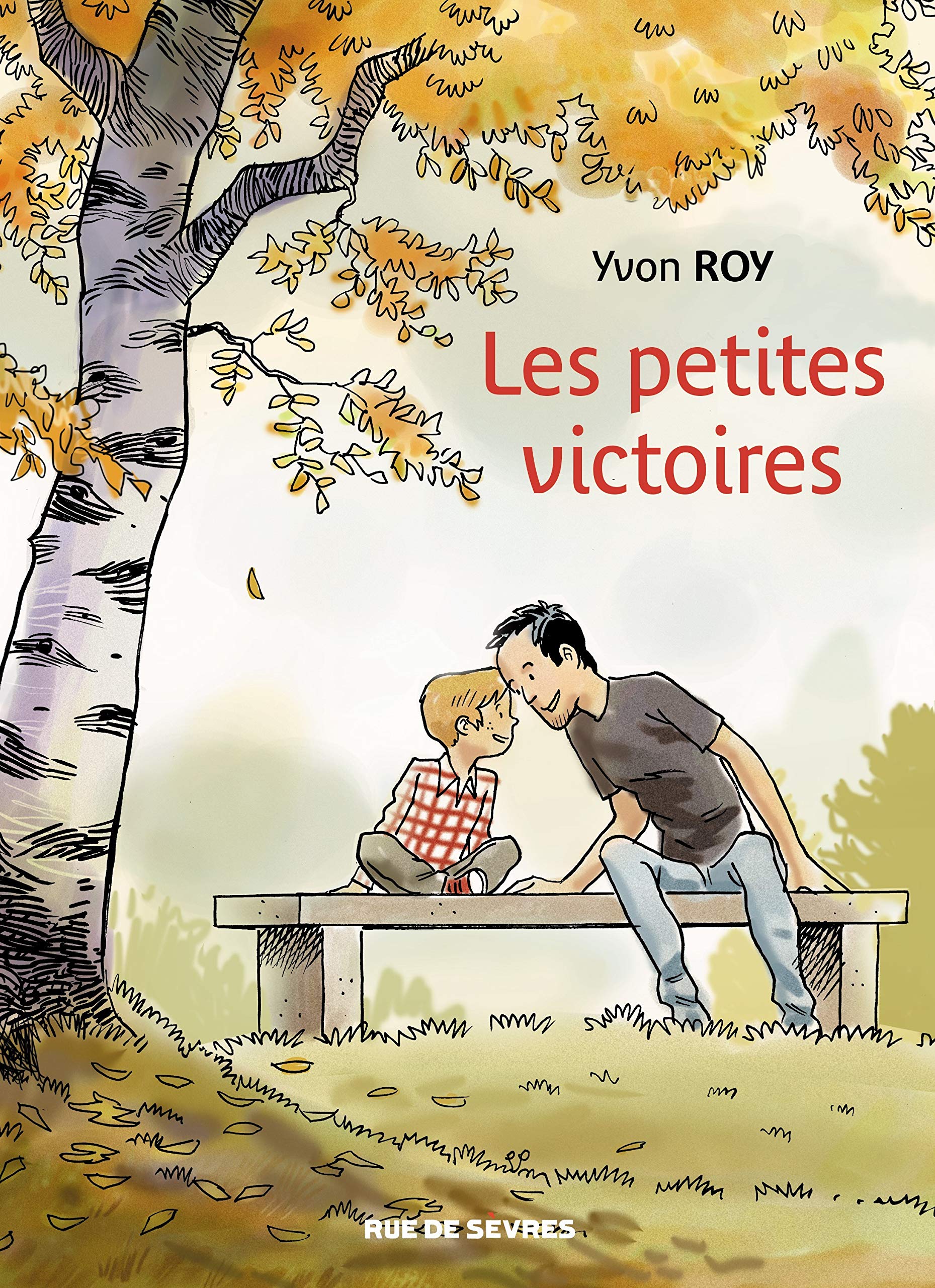
This is Marc, stand in for the author: Yvon Roy
This is his son, Olivier, who is autistic.
Les Petites Victoires showcases the fight of a father for his son, diagnosed with autism "in order to transform an announced defeat into small victories" (sic, our translation).
In his preface, Roy explains the contextualises the creation of his comic book:
"The idea was first suggested to me by a special educator who had worked with my son. She thought that what we had accomplished together was worth sharing so that other parents could find, through our experience, some useful information, if not a little hope" (our translation).
Interview
"When I started working with my boy to help him, with all the professionals in the field, I realized that often we were told, or they tried to tell us, that we had to work on living with autism, on accommodating autism. How we had to deal with different crises, different problems, whereas I thought, well, no, it's better, definitely, to try to overcome it than to live with it. And that's been kind of my master idea, let's say, for years with my boy, which is to try to push the boundaries constantly, always further." (Our translation)
Why choose this comic book?
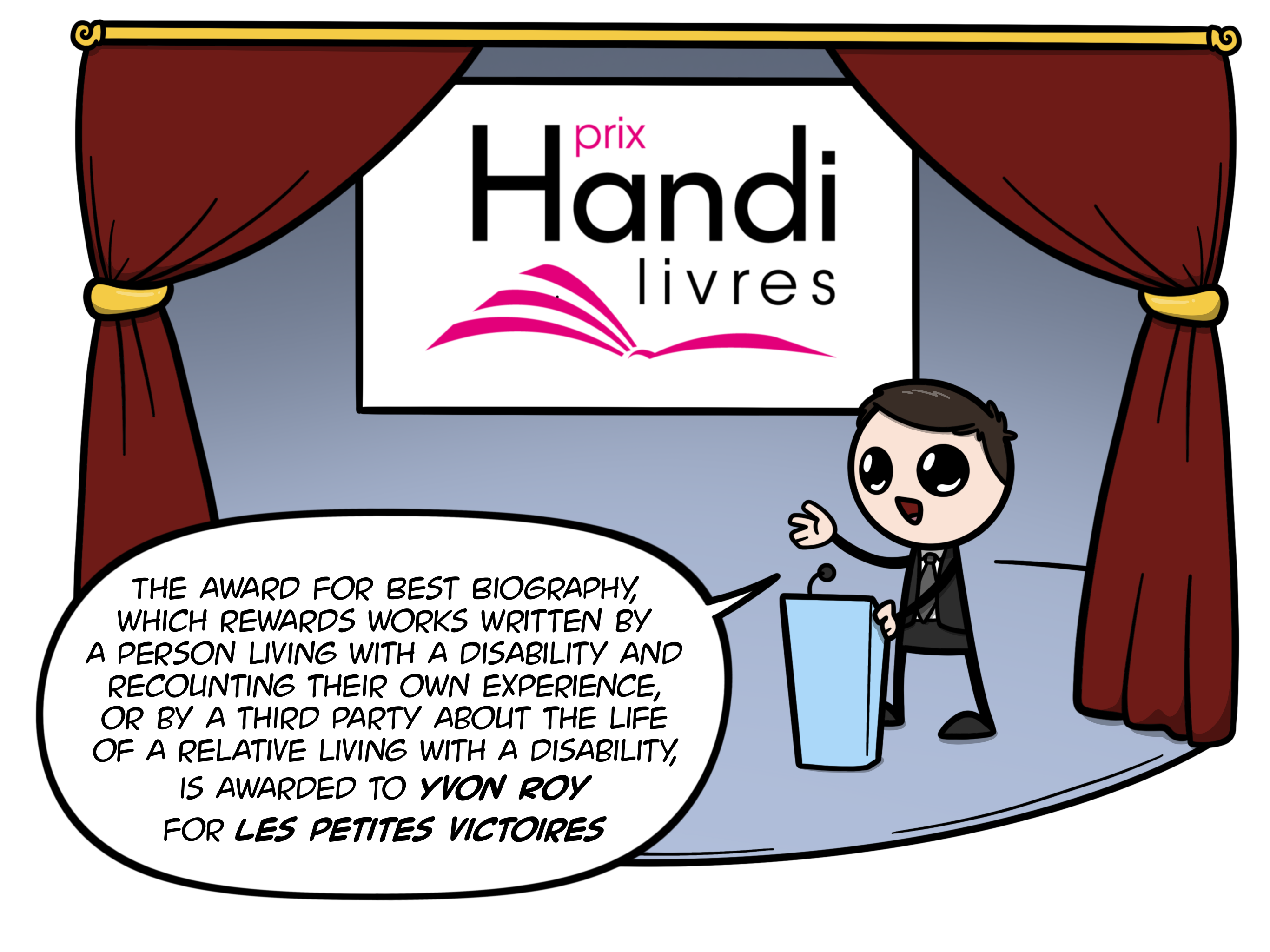
This comic book is an example of a creation that is easily accessible to the general public that has been awarded and highly publicized - even winning an award that recognizes works written by a person living with a disability and recounting their own experience, or by a third party about the life of a relative living with a disability. In 2018, the publisher Rue de Sèvres announced a contract for a film adaptation, which caused reactions and led to the hashtag :
#boycottlespetitesvictoires
As we will show, this is an example of the social representations of autism that perpetuate dominant understandings that do not fit the lived experience of those directly concerned to the point of being discriminatory. It is also difficult to identify moments when the child (the autistic character) shows agentivity. Instead, he’s passive in his father’s story. In a way, Olivier is only a supporting character. This is exaclty why representation doesn't mean autorepresentation and why "nothing about us whitout us" matters: although this comic is presented as a positive narrative from the allist perspective (3rd person), the story is completely different from the standpoint of the autistic community’s testimonies (1st person).
An allist person is a non-autistic person.
To understand the term "allist", we must go back to the origin of the word "autistic" which comes from the Greek word "autos" which means "self". So the word "autistic" initially referred to a person withdrawn on themself, who lives in their own world. The term "allist" appeared in a satirical article to refer to non-autistic people by swaping “autos” for "allos" which refers to others. So an allist is a person who is focused on others or, to flip the usual narrative, a person who lives in other people’s worlds.
In spite of the satire, the term “allist” has remained in use among others because it allows to distinguish between "neurotypicals" and "allists". There are people who are not autistic, but who are not neurotypical: a non-autistic dyslexic person, for example.
For a deconstruction
of the problematic propositions of the comic book:
But do you know the story from the autistic community’s perspective?
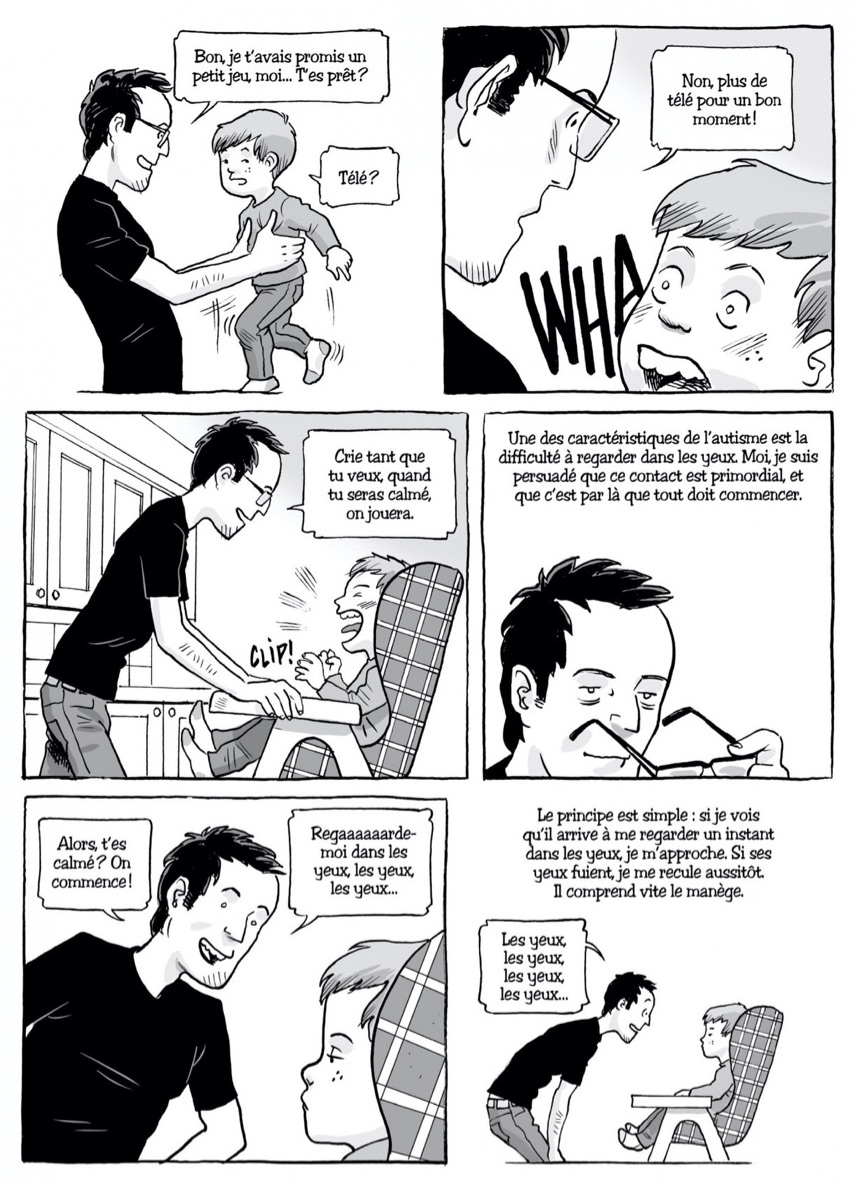
This is where webcomics can serve as an accessible tool that allows the reversal of dominant representations by opening the floor to self-representations directly grounded in marginalized communities. But before continuing with the topic of webcomics, we wish to feature an excerpt from Les Petites Victoires that addresses a frequent theme in autism: eye contact.
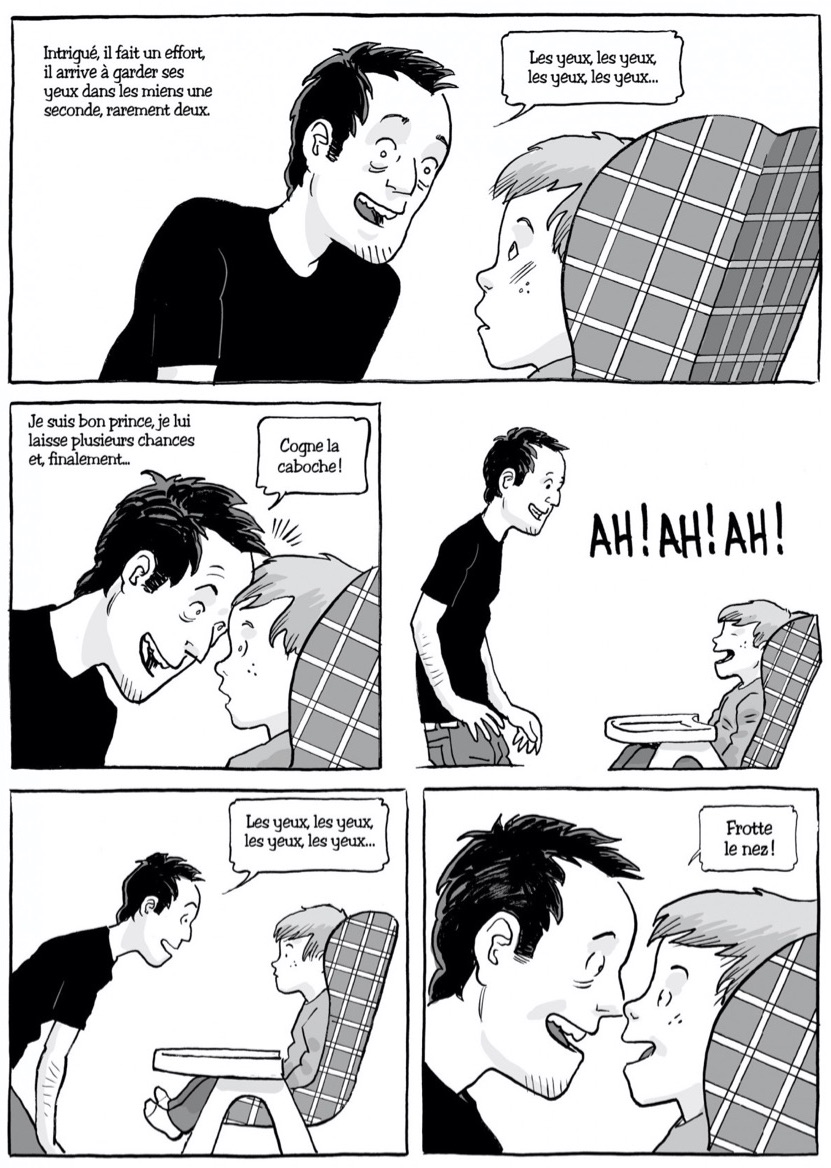
Excerpt on eye contact
English translation
English translation
Excerpt from Yvon Roy's interview
"I worked a bit like we can work to sometimes desensitize a substance. Sometimes certain people can have an allergy, we can try to desensitize them.
Several parents have contacted me regarding the trick to get the child to look in the eyes. This is the first thing we worked on together, that is to say, I considered that being able to look in the eyes - we know that autistic children have difficulty looking directly in the eyes - I said to myself, if we don't have eye contact, we have nothing. We need that, it's the beginning of human interaction." (our translation)
TW: The host uses the term “prison” in reference to autism:
"In your story that you shared with us in Les Petites Victoires, there is obviously the moment when you get up to face, to accompany your child in that reality: to learn to understand him too, inside what he lives and this prison, in a way, from which he is pressured which is basically this condition." (our translation)
Link to the interview (in French)


This scene is an example of neuronormativity
Recall that neuronormativity is the prevalent, neurotypical set of assumptions, norms, and practices that conceives of neurotypicality as the only acceptable or superior mode of cognition, and that stigmatizes attitudes, behaviors, or actions that reflect atypical modes of cognition as deviant or inferior.
This scene is told from the allist perspective and is presented with a positive outcome. In fact, as the author mentions, parents have applied this technique with their autistic children after being inspired by it.
But what if we ask autistic people how they feel about eye contact? That's exactly what we are going to do.
PART II
Why webcomics?
The medium of webcomic enables me to do something I don't know how to do otherwise: share how things feel on the inside.
Imagine. You come across a newspaper at the local coffee shop and recognize the face of a well-known personality. Yet you can't remember their name. It annoys you, you know you know it, it’s just not coming out, it stays there, on the tip of your tongue. You have time to come back to work, coffee in hand, and the name still hasn't come back to you, it still annoys you. You come across a colleague and you ask them, you describe the person, maybe clumsily at first (it would be so much easier with their name!), but you adjust to your interlocutor and, together, you can finally recall their name, it was so obvious!
It’s important to emphasize this feeling of annoyance. We rarely take the time to mention this annoyance when talking about epistemic injustices. Yet it is there, and it can even be painful: how do we make sense, to use Fricker's classic example, of our experience of sexual harassment when the concept does not yet exist? How can we share the feeling that something is wrong? This is where community comes into play and it is why the idea of "by and for" matters more than, say, a criterion of simplicity might. This is addressed by feminist epistemologies: for example, Longino argues for pragmatic values in science such as diffusion of power (as the importance of making research programs accessible to the actors involved in the research).
The impact of inadequate social representations on neurodiversity cannot be fully resolved by the traditional narrative of epistemic oppression and justice: adding new vocabulary to collective epistemic resources is not a panacea (we already have the word "autism" for example). So it is not only words that are missing, but rich and diverse lived experiences are also missing from the pool of shared resources.
The problem is that what is missing, the hermeneutical gaps, are not automatically apparent: social representations created by and for the dominant groups inadequately fill the hermeneutical gaps of marginalized groups. To that effect, let us recall here the Handi-Livre prize for the best biography which rewards works written by a person with a disability and telling his or her own experience, or by a third party on the life of a close relative with a disability: In the case of Les Petites Victoires, the award went to the biography of an allistic (non-autistic) person talking about autism. These inadequate social representations are difficult to resist: they are constantly and persistently reproduced. It is even harder when you don't have the words to replace theirs. But do we really have to wait for the right words to share our experiences? This is where illustration can become an attention grabbing action like shouting: an action that does not need words. This is what we propose here: a form of non-propositional epistemic resistance in response to hermeneutic injustice.
Webcomics are basically online comic books. They are mostly instantiated as short comics that take many forms and cover many topics. The most common form of webcomic is probably the blog (sometimes autobiographical, sometimes entirely fictional, sometimes both). Because they are mostly published independently by their artists, webcomics are an art form that is not limited by institutionalized power dynamics such as publishing houses or art galleries.
But the most important thing for us here is that webcomics are able to generate aesthetic experiences that allow viewers to better understand different aspects of the lived experience of neurodivergent people despite the inadequacy of mainstream epistemic resources.
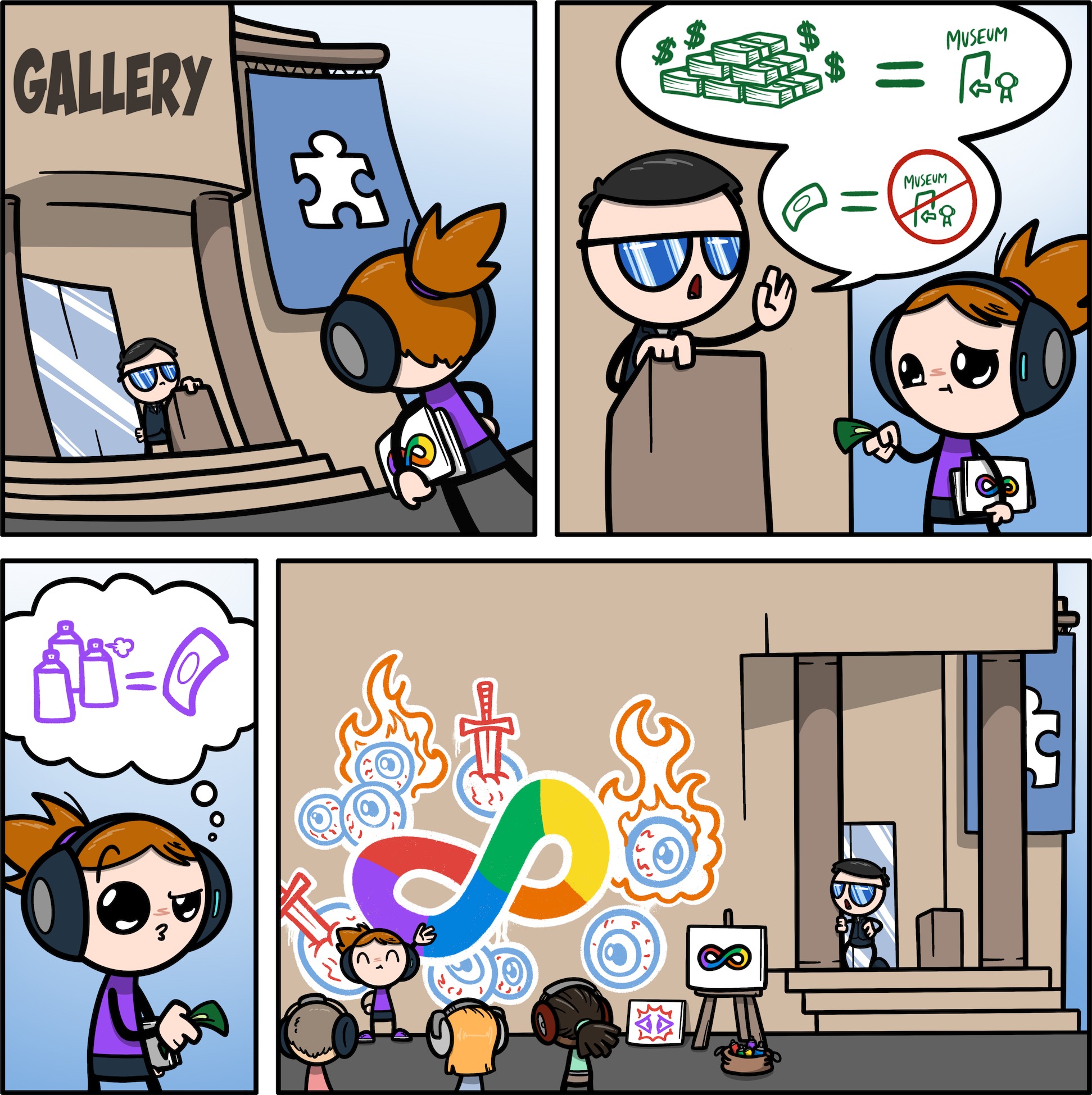
In some ways, webcomics are a digital version of street art.
Although limited to a given geographical space for street art and to a particular digital platform for webcomics, there is this common idea where it is not so much the public that goes to the creation as the creation that goes to the public. We are no longer in a reserved and predefined space like a museum, a bookstore, a gallery or even a library.
Although a recognized artist can make street art, it is more difficult for an artist who does not belong to a complex and influential network to access some places of diffusion such as an art gallery. Webcomic is thus added to the tools that allow the production, use and transmission of more accurate social representations, participating in the collective understandings of the oppressions suffered by epistemically marginalized groups. The public and interactional aspects of social media that support webcomics make them a catalyst for direct dialogue with (but also within and between) marginalized communities.
To put our epistemic resistance into action,
and to enhance our imaginative ressources, we chose to gather first-personal testimonies and descriptions of how eye contact can feel for autists.
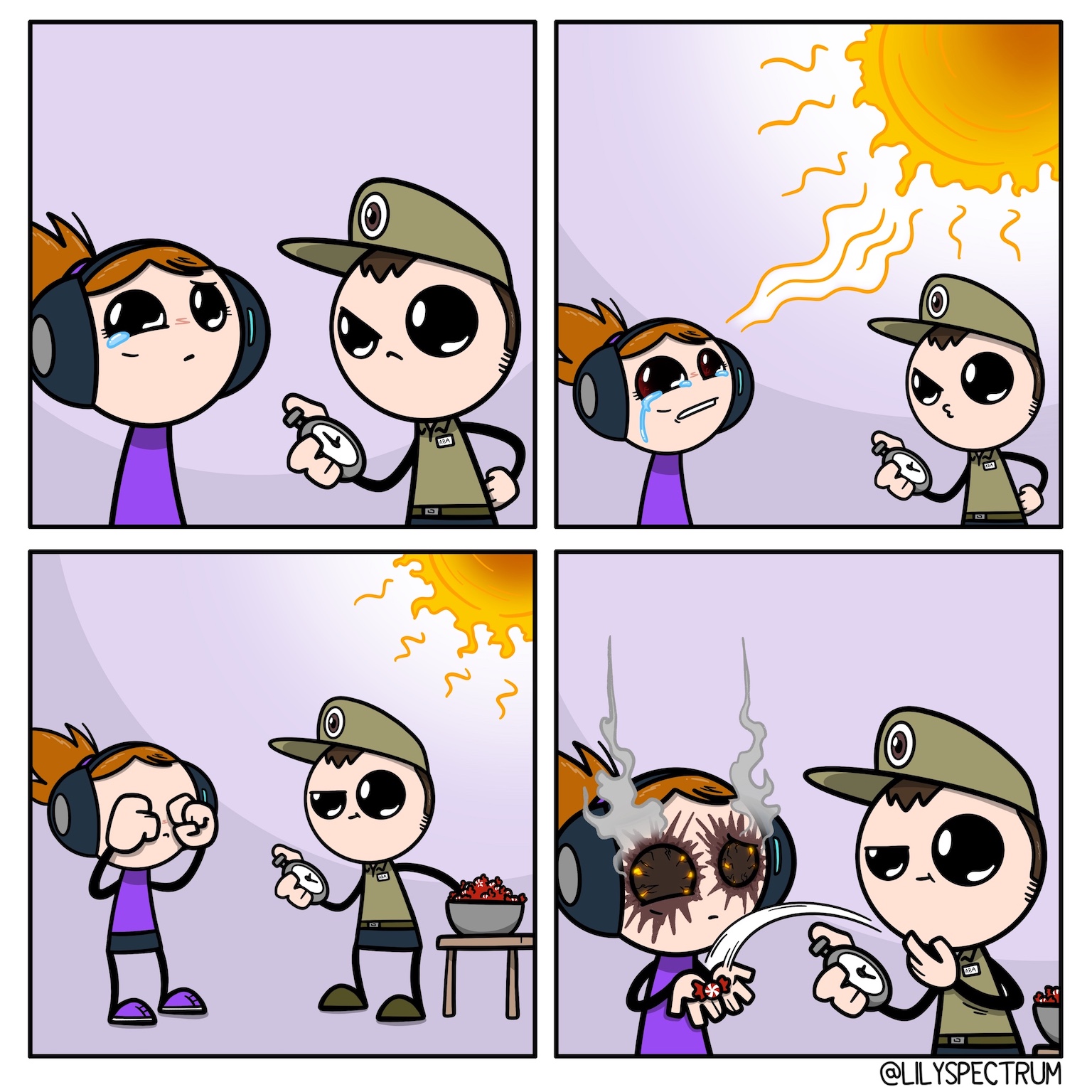
After all, who better to provide insight into a given lived experience than those who live it? To do so, we used social media (instagram and facebook) to ask autistic followers of our webcomic (@lilyspectrum): How does eye contact feel to you? Although we are neurodivergent, it was important for us to go with the community beyond our individual experiences. For instance, we would never have thought of the sunburn idea on our own, but once we read those testimonies, it felt right.
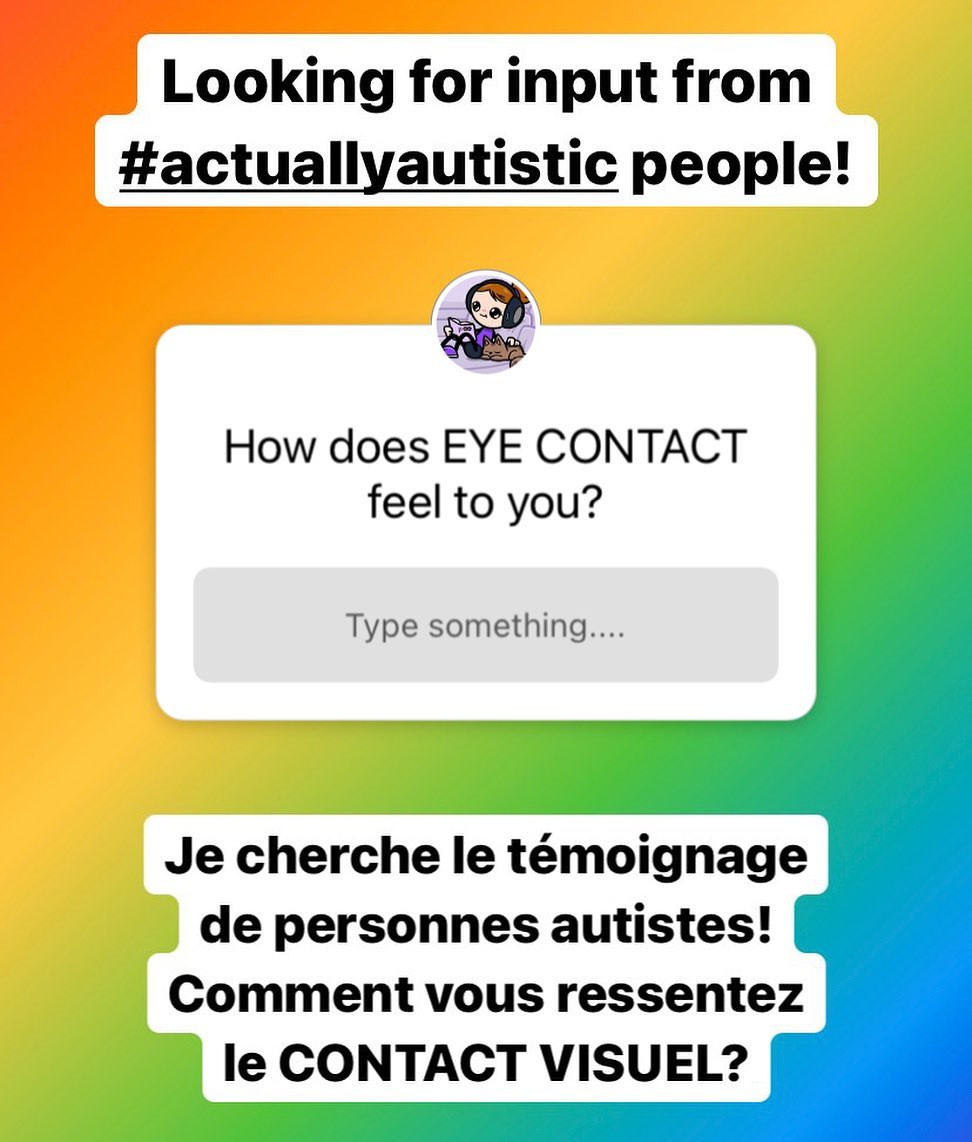
Both posts were made on November 8, and three days later, on November 11, we had received 175 testimonies. A few major themes emerged from these testimonies, which we used to base 7 webcomics or illustrations on. Keep in mind that, with this process, we do not claim to represent all there is to express about autists’ first-personal experience of eye contact. In fact, we suggest you visit these posts yourself to better understand the varied responses we got, and are still getting. And who knows, maybe this will allow you to add your own insight.
Publication
Since Monday, we have started to publish these comics on our social networks and we will continue to publish them in the following days
The interactions that take place around such webcomics are, we believe, an integral part of their complete aesthetic experience. These interactions often bring about clarifications, complementary details and descriptions or even added meaning. We thus invite you to visit these posts and interact with the community.
Webcomics
"I can do it but I can’t process anything else while doing it. My natural instinct and what feels the most right is to not look at someone’s face at all"
"It was drilled into me as a "rule" of politeness. I view it as just that, a rule. It's easy when there's multiple people because I can look around. But with one person, I have to look away or I end apparently end up staring"
"Everyone insisted on it, especially when they really wanted to correct a behavior or ensure I was paying attention. I honestly still don't love it, and prefer to look at noses or eyebrows to provide the impression I'm making eye contact"
"Eye contact was enforced during my childhood in mostly abusive ways and while it taught me to fake it, that made me hate it even more. Generally it just makes me uncomfortable and I find it quite distracting but it's also one of the most tiresome things to mask."
"Eye contact feels like they're staring into my soul, but with knives. I can make short eye contact before wanting to cry."
"It takes a concerted effort except for specific people."
"I’ve been so conditioned to make eye contact with people that when I met a lot of my friends for the first time they were kinda weirded out by me unblinkingly paying attention to them when they talked like 👁👄👁"
"It feels like someone is looking right past all my defenses and directly into my head. Not very pleasant."
"Terrifiant, j'ai vraiment l'impression qu'on me transperce à chaque fois …"
"Like I am being stabbed in the brain, itchy under the scalp, or suffocating. Anxiety is anxiety. I look at people's foreheads. They never know the difference but I am not forced to juggle the pain of eye contact and try to communicate. I am mostly non verbal and eye contact guarantees no words."
"Ça me met vraiment mal à l'aise et j'ai peur qu'on puisse mal interpréter si je regarde pas "correctement", je sais pas si je dois regarder quelqu'un dans les yeux ou combien de temps, il faut surtout pas que je regarde autre chose chez lui que ses yeux et du coup je sais pas quoi faire je préfère regarder le mur derrière mon interlocuteur 😂"
"Tout dépendra de la situation, de ma fatigue et de la personne. Certains contacts peuvent être transperçants (douloureux), d'autres envoutants (confusants), d'autres destabilisants (perturbants). En tous cas, si je regarde qqn dans les yeux, je suis sûr de perdre mon fil de pensée et/ou d'accorder mes réponses à ce que la personne ressent."
"Eye contact feels like burning discomfort, especially when I'm being told to do it."
"It’s extremely hard for me to maintain eye contact, and when people express to me that I should be looking at them when I’m talking to them, it puts me under more stress than just talking to them in the first place"
"somehow being told we should be making eye contact feels like being reprimanded as a child, at least to me.. I can't count the amount of times my mother would tell me to look her in the eyes as a child, and how humiliating/stressful it felt.. I legit forget to listen to people because I'm too busy trying to maintain eye contact."
"At best, awkward and uncomfortable. At worst, like someone's stabbed me in the eyes."
"It makes me uncomfortable but my mother forces me to look people in the eyes"
"Painful, but I feel like if I don't look ill be punished or called a liar. So I trained myself to look at something over their shoulder if not their foreheads to avoid harassment."
"Habituellement je regarde plutôt la bouche ou le nez des gens et ça semble passer crème pour donner l'illusion que je regarde dans les yeux (j'ai eu droit à l'expert en haute potentialité qui me disait que c'était impossible que je sois autiste car.. je le regardais dans les yeux ! Je regardais sa bouche depuis le début de l'entretien..). Je ne me force au contact visuel que de manière consciente et dans de rares cas précis : [suite]
(suite) par exemple si je suis attiré romantiquement par quelqu'un et désire que cette personne le perçoive (vu que le contact visuel accru est interprété de cette façon par beaucoup de neurotypiques). Mais cela reste un sacré effort et en général je détourne les yeux très rapidement, ça me met mal à l'aise, c'en est presque physique. Récemment un de nos profs en cours nous a fait faire une série d'exercices où on devait marcher vers quelqu'un/revenir à sa place à reculons en gardant le contact visuel constant avec cette personne.. je vous laisse deviner la torture que c'était"
"Transperçant!"
"J'ai l'impression que les yeux de la personne me percent à l'intérieur, je sais pas comment dire, c'est une sensation d'oppression aiguë."
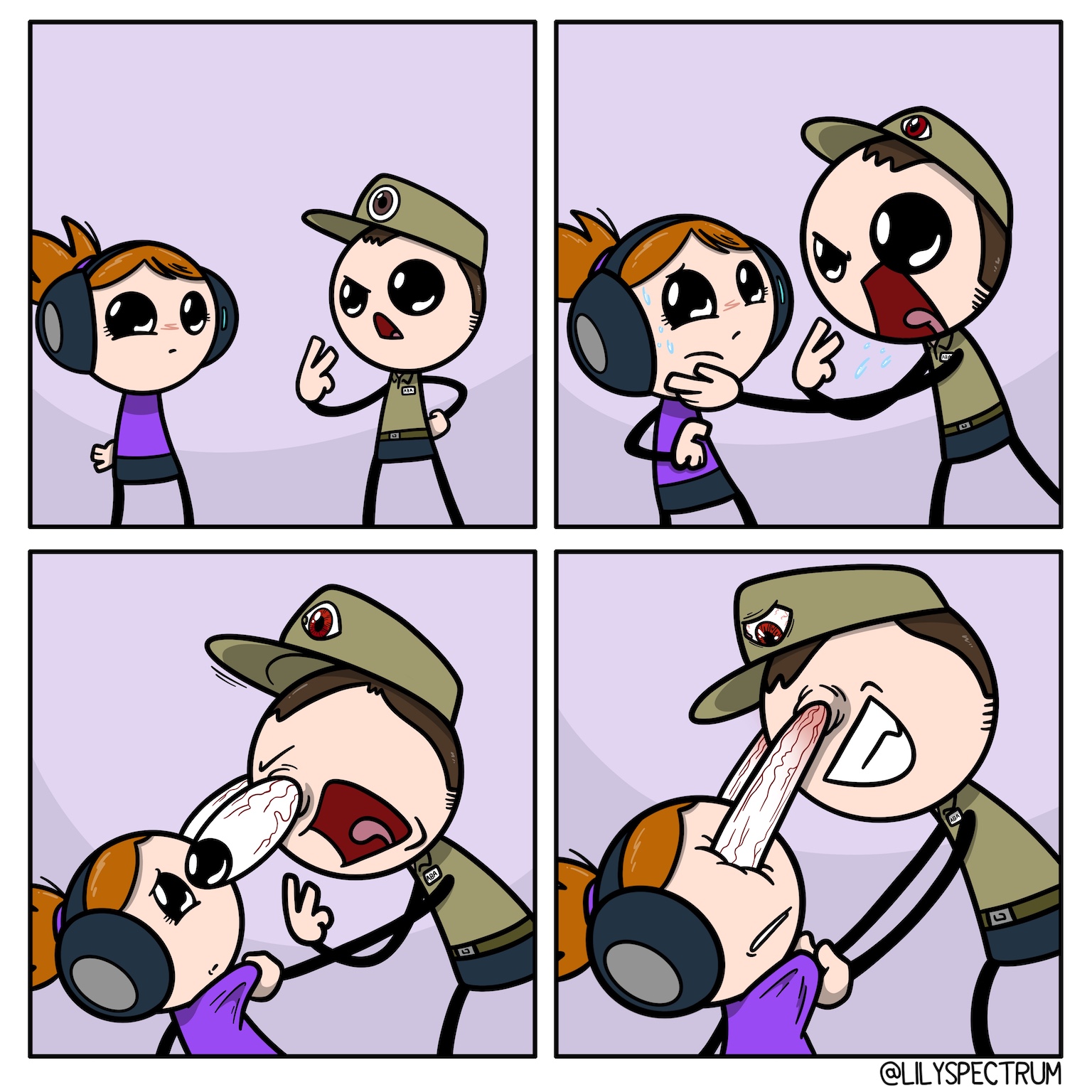
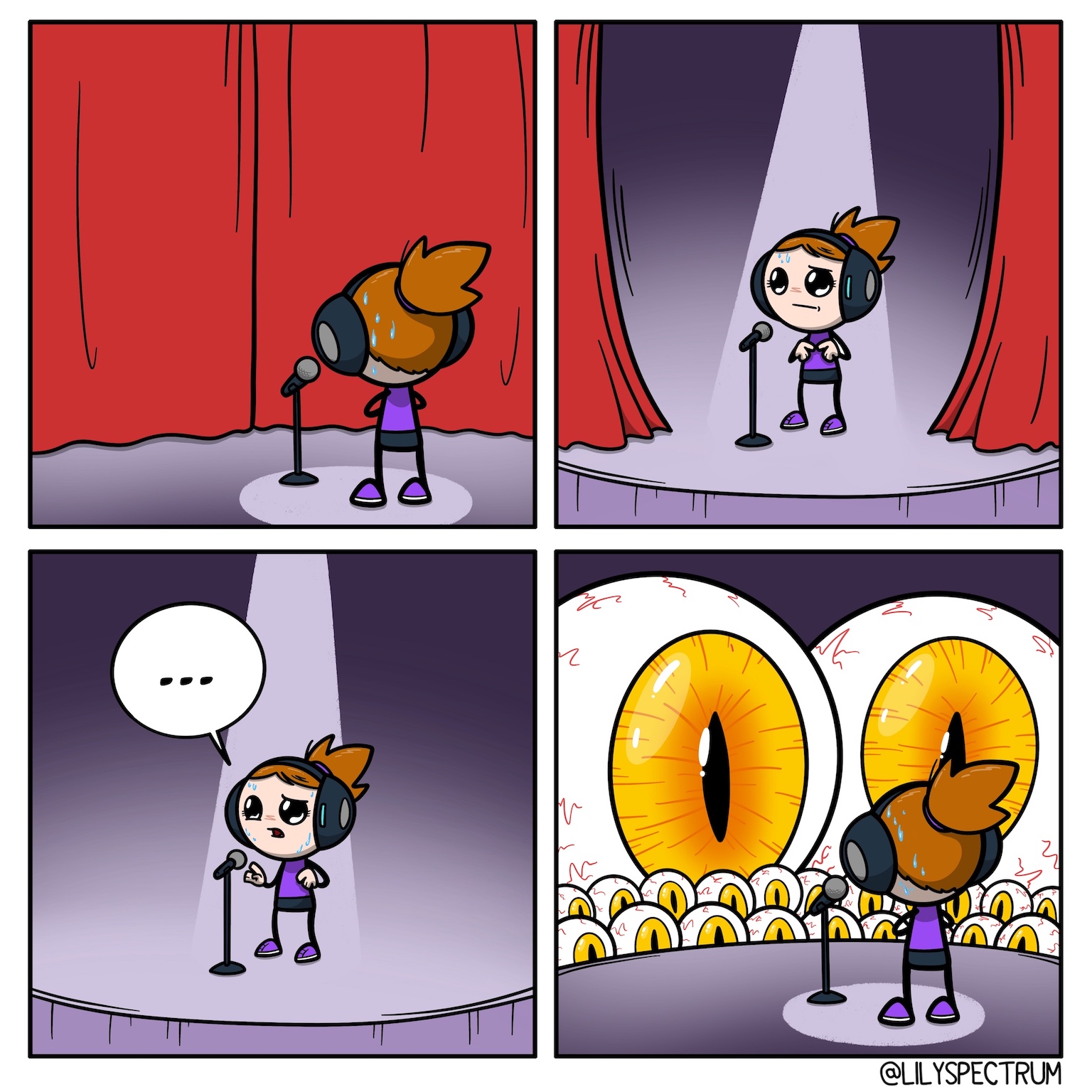
"For me, looking in the eyes feels too exposed and open. It makes me feel like I can't hide and protect myself from the people."
"Eye contact makes me uncomfortable most of the time, because of the feeling that I am being silently judged or getting talked about negatively."
"It's fine when I'm listening to someone but when I'm the one talking it makes me get stage fright like I'm being put on the spot to judge for performance lol"
"Too intimate, inappropriate… I become incredibly self conscious as well, like am I doing eye contact right? Should I be mirroring their behavior or a close approximation or complete opposite? How many times should I blink? Can they tell I’m faking this human interaction? It’s incredibly stressful."
"It feels like something is a required check box. It’s like a math problem. Look, one, two, three. Okay. Look away. Zone out if you need to. Okay, it’s been 10ish seconds. Look back. One, two, three.. okay, look away! Don’t share at them! Wait! You’ve looked away too long! Look back! …..it’s that on repeat quite often lol"
"I hate it I get so nervous and then I break down."
"I don't like it, makes me really uncomfortable. I'm "good at it", because I mask well (😬). I never know what to do, if I'm looking to much or not enough and always use a whole lot of energy just on eye contact. Generally, the more comfortable I feel the less I look someone in the eyes. (Also eyes as a body part make me feel really icky so that's that)."
"Intimidating and uncomfortable, I feel too vulnerable and keep thinking am I doing this right?"
"Ça me met vraiment mal à l'aise et j'ai peur qu'on puisse mal interpréter si je regarde pas "correctement", je sais pas si je dois regarder quelqu'un dans les yeux ou combien de temps, il faut surtout pas que je regarde autre chose chez lui que ses yeux et du coup je sais pas quoi faire je préfère regarder le mur derrière mon interlocuteur 😂"
"Eh bien, quand j’étais petit, je parlais et écoutais souvent le monde sans les regarder dans les yeux. Maintenant, ça me dérange pas de parler et écouter avec le contact visuel, mais j’peux très bien comprendre ce que le monde me dit sans obligatoirement les regarder dans les yeux. Aussi, c’est vrai que ça me rend un peu mal à l’aise quand des inconnus me fixe du regard. C’est comme s’ils me jugeaient et j’sais pas ce que j’ai fait de mal."
"Direct eye contact feels like I am being judged. It also makes me feel uncomfortable because I become unable to perceive and read the rest of their body language."
"Démunie, nue. Percée à jour. C’est très fort comme sensation, et rarement agréable. J’y arrive avec mes enfants ou mon mari, mais même dans ce cas, pas trop longtemps. Si je veux tenir une conversation, et me concentrer, alors je dois ruser. Je regarde entre les deux yeux ou le plus souvent la bouche."
"Feel nausea and anxiety, and extremely naked. Yet my mother was adamant that I learned it and therefore I am able to do it, despite the uncomfortable feelings. Absolutely love your work, for once I can tell that I am not alone"
"I feel instant stress and I have to force myself to do it and to look "natural"."
"Honestly, each time it happens to me, the most awkward feeling I have is « where should I look exactly » ? When you make eye contact, are you expected to focus one eye specifically (which one, then ?), between the eyes, not focus at all, or try a weird way of having each eye "looking" into the facing one (i.e. my left eye "looking at" their right one and vice-versa) ? I'm also never sure if/when eye contact is expected, and when it happens, is there/what is the hidden message behind this specific contact, and/or am I sending an incorrect hidden message myself ? Then, with all these questions actively consuming my brain "computing power", everything else totally miss the point (sometimes, though, I can hide this issue because I have this kind of ability to "replay" the last few words/sentence I unconsciously heard, to process it with a delay but potentially without the proper context- so it's not reliable at all !!). "
"Weird and artificial. I can actually read people's eyes now, but it took me years to learn it."
"My parents rasied me to always look into the eyes, still feels wrong. Like, I am invaiding a personal space and being rude. Like trying to stare down their soul and violating their privacy. I still try to look at people in the eyes but have learned to just looks in differents points in the face so I don't seem rude."
"Eye contact feels too intimate to me for most interactions. If I make eye contact with you, it’s because it’s important. "
"Eye contact feels very intimate. If I’m forced to hold it for too long, I feel violated, like I’ve been touched without consent."
"I really hate eye contact in almost all circumstances. About the only exception is with someone I'm very intimate with. Eye contact feels extremely intimate to me in general so it only feels natural when it's with someone I've got a suitably intimate emotional connection to. Otherwise it feels like I'm staring into someone's soul and I can see everything and they're staring into mine and seeing the same (even if I know they're not)."
"Invasive, extremely personal. I'm only comfortable looking my husband in the eyes"
"It feels like I’m standing too close to someone, I don’t know if that’s too vague of a comparison but it feels way too intimate. So I only do it when necessary or when I’m comfortable with that person."
"It feels creepy to me"
"I don't like it, makes me really uncomfortable. I'm "good at it", because I mask well (😬). I never know what to do, if I'm looking to much or not enough and always use a whole lot of energy just on eye contact. Generally, the more comfortable I feel the less I look someone in the eyes. (Also eyes as a body part make me feel really icky so that's that)."
"I hate eye contact. It almost hurts. But it’s nessesary to have a successful professional life, and my parents trained me well as a child. They would ask me people’s eye color after I met them to see if I made eye contact. Being trained like that at a very young age was incredibly difficult and felt unfair, but I’m very grateful that they pushed me now that I’m an adult."
"I can't do it, it makes me feel funny in a bad way and makes me feel kind of .. unsafe? and uncomfy I don't exactly know the word for the first one, I don't mind people looking at me but I won't look back"
"It's incredibly intimate and overwhelmingly so, particularly with strangers. And the more my emotions are revved up, the less I can tolerate it. It genuinely feels as though someone can see into my mind almost, even though I know that they can't. On the plus side, when I'm with someone I deeply, deeply love, sometimes that's okay because I want them to see how much I love them... but then that tends to make THEM feel awkward and uncomfortable too. LOL For me, it falls into the same category as standing too close, invading personal space, touching someone without consent etc. It's intimate, and can very easily become violating when you don't want it. And that;s so hard to explain to NT folk who expect you to look them in the eye all the time."
"It's okay with people I know, but I don't feel comfortable with eye contact with strangers, it almost feels like an invasion of privacy."
"eye contact feels so weird and creepy and if i have to make eye contact with someone, then ill quickly feel exhausted."
"It feels like a boundary rupture unless I completely and totally feel comfortable in a container of safety with another it probably won’t happen much."
"Well... I can't let anyone touch my eyeballs."
"Trop intrusif. Comme si l autre avait la perception de mes pensées. C est comme se montrer nue."
"Intense/ overwhelming/ fiery/ intrusive. Sometimes painful/ always difficult with strangers. Ok with intimate friends and family."
"Démunie, nue. Percée à jour. C’est très fort comme sensation, et rarement agréable. J’y arrive avec mes enfants ou mon mari, mais même dans ce cas, pas trop longtemps. Si je veux tenir une conversation, et me concentrer, alors je dois ruser. Je regarde entre les deux yeux ou le plus souvent la bouche."
"Feel nausea and anxiety, and extremely naked. Yet my mother was adamant that I learned it and therefore I am able to do it, despite the uncomfortable feelings. Absolutely love your work, for once I can tell that I am not alone"
"confronting and very intimate ..i feel naked"
"Quelque chose d'extrêmement intime, que je ne peux pas partager avec n'importe qui sinon je suis déstabilisée car je bloque sur cette sensation d'intimité forcée. Depuis le diagnostic, je me permets de ne plus regarder le visage des gens (je ne travaille pas). Quel soulagement!"
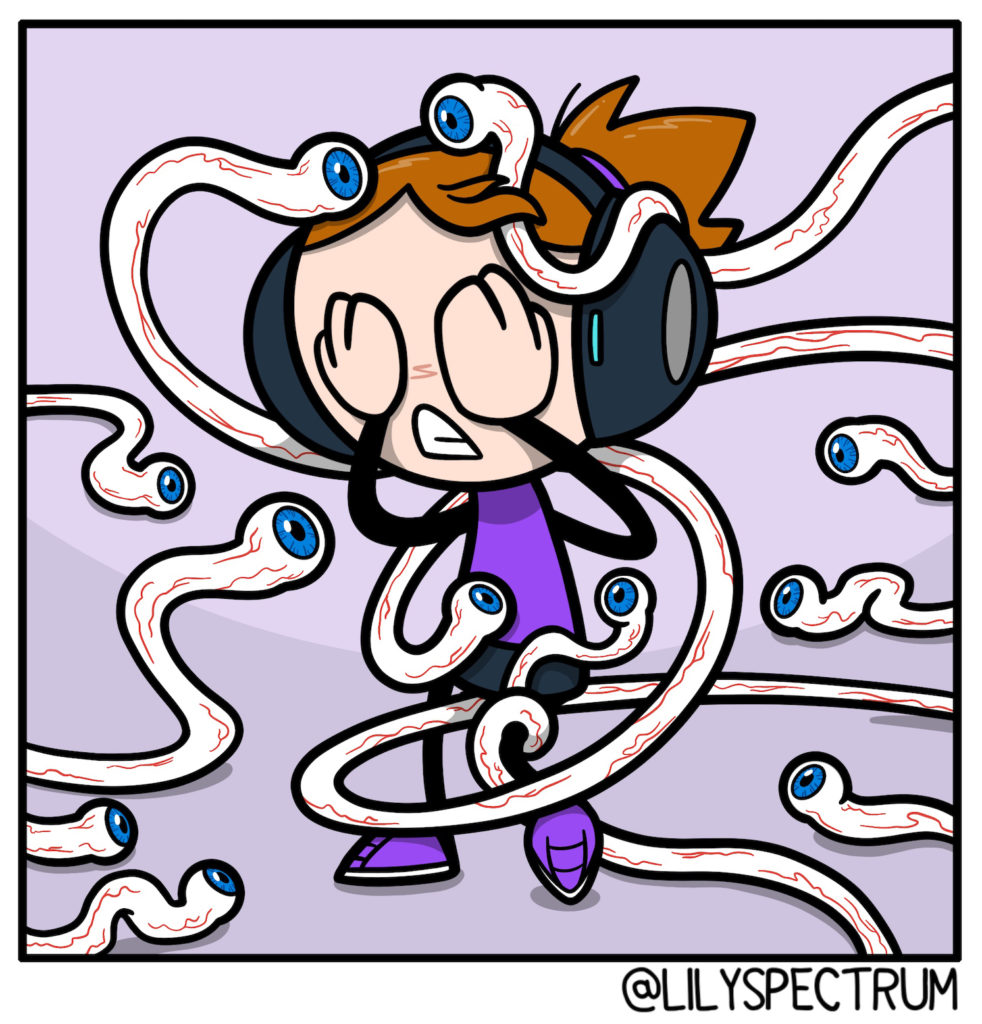
"Eye contact feels like they're staring into my soul, but with knives. I can make short eye contact before wanting to cry."
"It’s like being asked to look directly at the sun. I flinch, I can’t do it…"
"It feels like they gonna shoot me with laserbeams. Like Cyclops from X-Men. I van handle it for 10 seconds. I get panick attacks of it's to long. Even with my bf makes me on edge. I got a major panic attack during a being social etc exam (idk how it's in English is). It was so bad. They let me past because otherwise i needed to do the whole year over."
"Feels like I’m staring at the sun and I can only look a person in the eyes for 30 seconds or so before my eyes start to hurt a bit. I can only look animals in the eye."
"Like flames of intense awkwardness are scorching my retinas."
"When I was younger I always had trouble making eye contact. I’ve gotten better at it in recent years but its still painful to me."
"Eye contact feels like burning discomfort, especially when I'm being told to do it."
"Ça me demande beaucoup de concentration. J'ai l'impression que ça me fait mal aux yeux et quand j'étais plus jeune je pouvais même ne plus vraiment entendre ce que la personne me disait. Par contre ce n'est plus un problème quand je me mets vraiment en colère au point de vouloir me battre."
"Ca va de la gêne à la sensation de brûlure, ça dépend des personnes je suppose. On peut parfaitement regarder le nez, la bouche, entre les yeux sans que l'autre ne sen rende compte."
"I can’t think if I have to. Feels like pressure."
"Bad, I feel like my head is going to explode if I look at someone's eyes for too long. I suspect it's probably a blood pressure drop or adrenaline, but it feels awful. I honestly don't get why so many people require eye contact when speaking. I can make eye contact, but it's really difficult to understand what the person is saying because I'm too focused on how uncomfortable I feel and how incredibly awkward it is to stare at someone's eyes"
"It feels literally painful and I’m always afraid the other person can tell what I’m feeling/thinking. I’m comfortable with eye contact with very trusted folks in my life though."
"Painful"
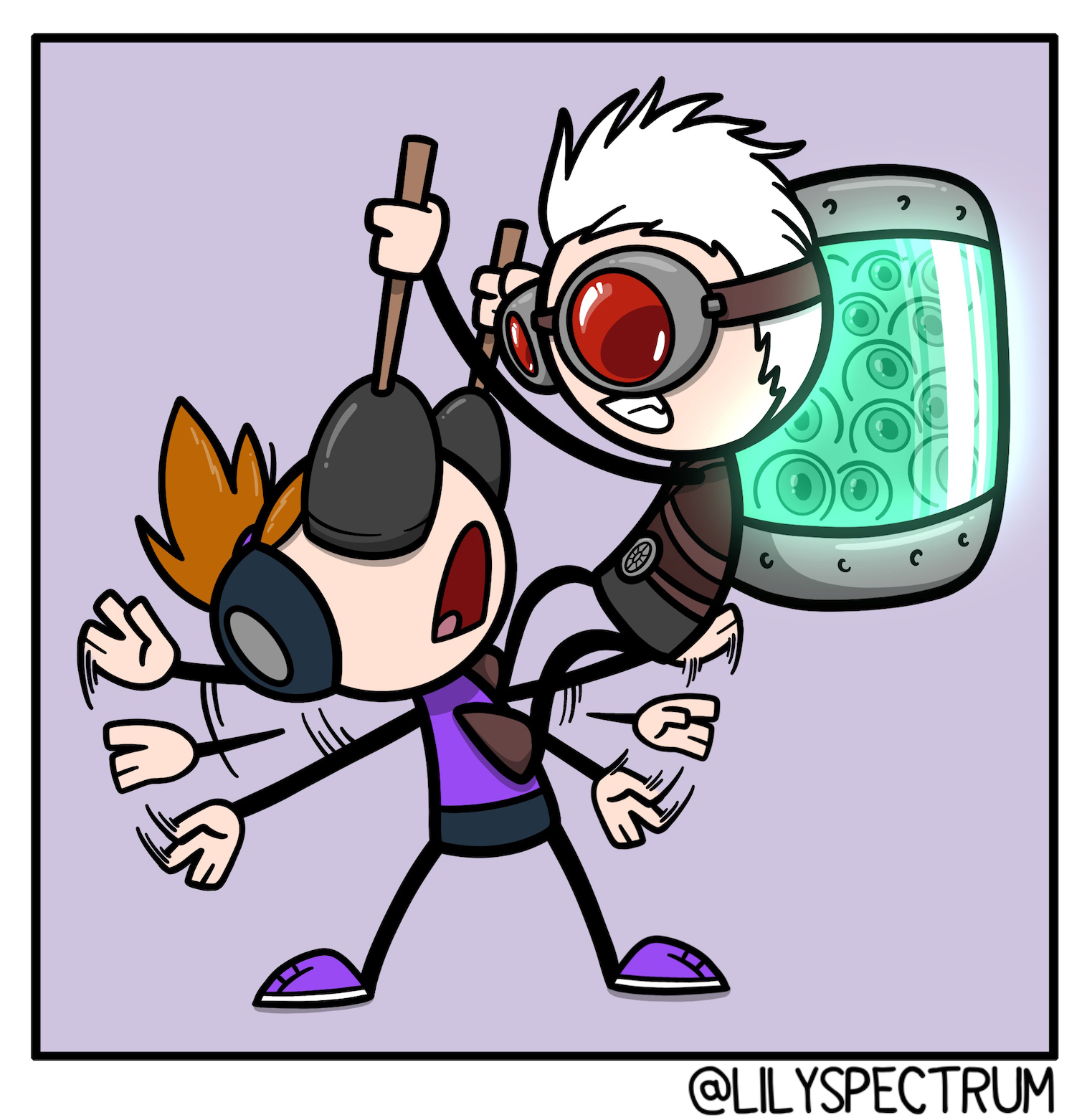
"I really hate eye contact in almost all circumstances. About the only exception is with someone I'm very intimate with. Eye contact feels extremely intimate to me in general so it only feels natural when it's with someone I've got a suitably intimate emotional connection to. Otherwise it feels like I'm staring into someone's soul and I can see everything and they're staring into mine and seeing the same (even if I know they're not)."
"I cant make eye contact with literally anyone. Its uncomfortable, and even when its not, i cant listen proberly to what people are saying when i focus on the eyes. I just cant do it at anytime with anyone, only for one second maximum. Its like staring into someone's soul, its too much."
"J’ai l’impression d’être absorbée par les yeux de la personne et en même temps comme si on pouvait voir ce qu’il y a à l’intérieur de moi."
"honestly it feels like i am being sucked into their soul… i can’t maintain it if i want a conversation because i just get lost"
"Like someone staring at my soul? I almost feel like that's the part of masking that exhausts me the most!"
"It's uncomfortable. But sometimes if I want to intimidate someone I stare deep into their eyes and make them feel unnerved like I'm looking into their soul."
"Tout dépendra de la situation, de ma fatigue et de la personne. Certains contacts peuvent être transperçants (douloureux), d'autres envoutants (confusants), d'autres destabilisants (perturbants). En tous cas, si je regarde qqn dans les yeux, je suis sûr de perdre mon fil de pensée et/ou d'accorder mes réponses à ce que la personne ressent."
"Trop intrusif. Comme si l autre avait la perception de mes pensées. C est comme se montrer nue."
"J’ai l’impression d’entrer dans l’âme de la personne. Je trouve ça trop privé. Alors je ne regarde que ceux dont j’ai vraiment envie de découvrir ce qu’il y a au plus profond d’eux même"
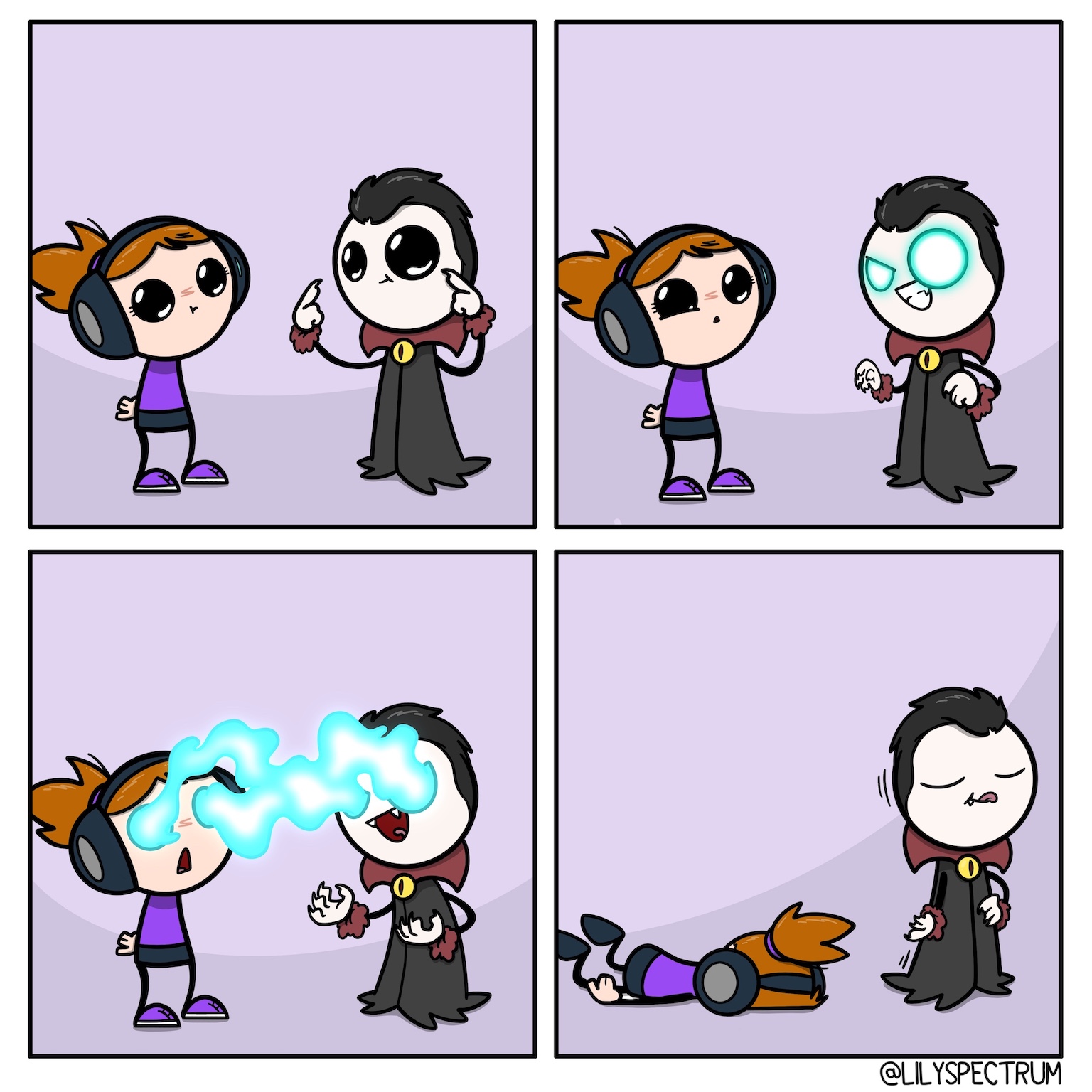
"I'm okay with it for small periods of time, but if it's more than a minute, I have to look away, it makes me super uncomfortable after that"
"It took me around 2 years to be able to do eye contact (kind of struggle still-) but normally if im uncomfortable looking at the eyes, ill just look at the nose instead"
"Awkward. The longest I can probably do it is for a few seconds, but sometimes it’s physically impossible for me to look someone in the eyes even for one second."
"Ça me met juste très mal à l’aise, et du coup je préfère regarder ailleurs et ne regarde les gens dans les yeux s’iels ne me regardent pas."
"Incapable de soutenir un eye contact sauf avec certaine personnes... Ma famille (ma mere, mon pere, ma soeur), ma nièce, mon beau frère et mon conjoint. Quelques amis specifique aussi... Mais sinon incapable. Je chercher tjrs a "évader" ses eye contact."
"Uncomfortable. I have trouble maintaining eye contact for long, especially in a conversation. However, I did figure out that talking with your hands is a great way to distract the other person's eyes from your and gives you a reason not to look at them."
"havent made eye contact with anyone (while i'm talking to them, that is) except my cats in years if that tells you anyone"
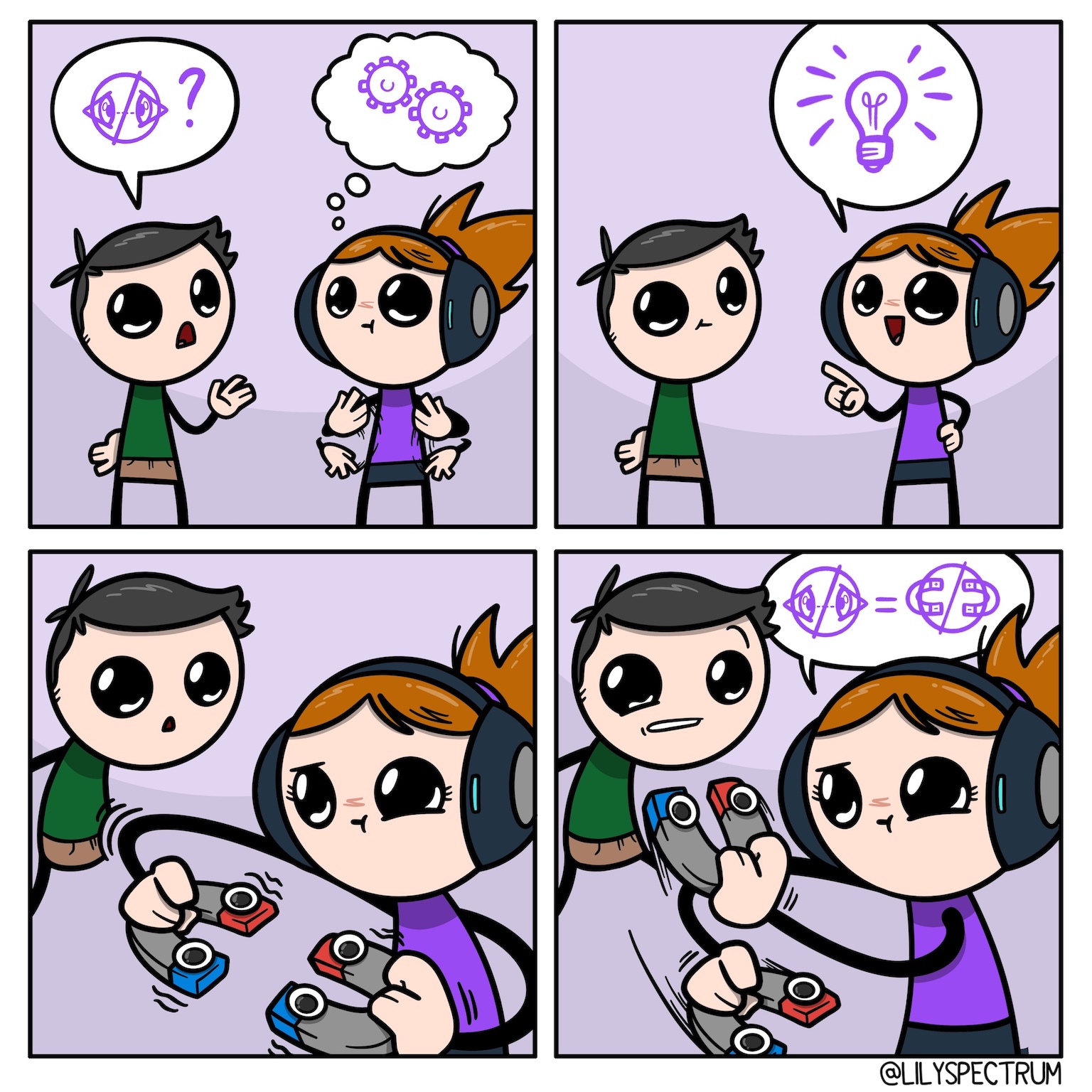
"When I was younger, it used to feel like when you held two magnets together both ends the same, it felt like no matter how hard you held them together, it would want to repel forcefully, my head wanted to repel and look past to the left or right or down or up like a magnet would, and when I managed to hold it against that feeling, my eyes would water up, not tears from sadness or anything, but they released tears, now I can manage it but it's still not comfortable to do, it depends on how comfortable I feel with the person or people or how stimulated I feel in an environment"
"It’s like when you hold two magnets with the same polarity against each other. Even if you want to put them together they won’t do it. The magnets are like my eyes. They just can’t center on the other persons eyes or it will cost a lot of energy. Like with holding magnets with the same polarity together. It’s just all in all very uncomfortable and draining. Btw I’m undiagnosed so I hope I can still answer here. Also I really really love your account and the stuff you do ^^ /g"
"Ça me met vraiment mal à l'aise et j'ai peur qu'on puisse mal interpréter si je regarde pas "correctement", je sais pas si je dois regarder quelqu'un dans les yeux ou combien de temps, il faut surtout pas que je regarde autre chose chez lui que ses yeux et du coup je sais pas quoi faire je préfère regarder le mur derrière mon interlocuteur 😂"
"Je me sens obligé de regarder chaque personne dans les yeux mais aussitôt que le contact est réciproque je baisse le regard aussi vite que mon ombre ainsi j'ai l'impression que j'ai fait ma part! haha! Par contre avec le monde avec qui je suis très, très à l'aise je vais quelque fois fixer les yeux, on dirait que j'essaie de comprendre pourquoi je fuis ceux des inconnus, alors je fixe en grand questionnement interne!"
"Awkward and physically painful , strong need to move my eyes away from it"
"Souvent trop intense… Et en plus il se passe tellement de choses autour des yeux qui m'intéressent plus et/ou me sécurisent plus! Je fixe puis je zappe, j'y reviens et je rezappe… Les sourcils, les lunettes, sont des bons compromis aussi, ou fixer mon regard dans le vague direction le visage ou le pourtour du visage… Ou fixer le visage avec une attitude très intéressée (posture corporelle de l'attention soutenue) quand la personne regarde AILLEURS, et quand son regard se tourne vers moi, fixer 1s seconde, sourire, et me tourner ailleurs vers qqn d'autre qui parle mais ne regarde pas vers moi à ce moment là, ou trouver à m'occuper avec un objet, et jongler comme ça."
"Je n'aime pas regarder sans les yeux, je ne sais pas, c'est plus fort que moi, je suis mal à l'aise, je ressens le besoin de regarder ailleurs. Du coup j'aime bien discuter quand je suis au resto ou quand on fait une activité, il y a l'excuse d'être occupée en même temps pour ne pas se regarder"
"Habituellement je regarde plutôt la bouche ou le nez des gens et ça semble passer crème pour donner l'illusion que je regarde dans les yeux (j'ai eu droit à l'expert en haute potentialité qui me disait que c'était impossible que je sois autiste car.. je le regardais dans les yeux ! Je regardais sa bouche depuis le début de l'entretien..). Je ne me force au contact visuel que de manière consciente et dans de rares cas précis : par exemple si je suis attiré romantiquement par quelqu'un et désire que cette personne le perçoive (vu que le contact visuel accru est interprété de cette façon par beaucoup de neurotypiques). Mais cela reste un sacré effort et en général je détourne les yeux très rapidement, ça me met mal à l'aise, c'en est presque physique. Récemment un de nos profs en cours nous a fait faire une série d'exercices où on devait marcher vers quelqu'un/revenir à sa place à reculons en gardant le contact visuel constant avec cette personne.. je vous laisse deviner la torture que c'était"
"Lorsque c'est quelqu'un avec qui je suis à l'aise ca va à une certaine distance mais de trop prêt je ressens un malaise assez vite. Si j'ai le malheur de croisé le regard avec un(e) inconnu(e) dans la rue ou dans un commerce, je regarde ailleurs aussitôt, gros malaise. C'est pour ça que j'évite de regarder les gens."
Thank you for joining us in this exploration!
We hope this experience was (and will be) as enriching for you as it was for us to come up with. We invite you to engage with us and the community through our posts or in the comments bellow!
ТОП-20 паровых швабр в течение 2024 году
Мы счастливы отрекомендовать вам свой рейтинг гораздо лучших паровых швабр чтобы дома, сующий наиболее пользующийся популярностью и еще лучшие модификации сверху рынке:
Паровые швабры: выкройте одну из моделей, что гарантируют превосходное штрих чистки и еще легкость на использовании.
Лучшие паровые швабры: выше список содержит устройства, какие приняли высокие балла за свою надежность равно производительность.
Рейтинг превосходнейших паровых швабр для дома: ты да я собрали элита модификации, чтобы помочь вам урвать наиболее подходящее устройство чтобы ваших нужд.
ТОП-20 паровых швабр в течение 2024 году: данные модели представляются лидерами базара да делают отличное предложение максимальную эффективность равным образом удобство использования.
Надеемся, что отечественный шкала прийти на выручку вам сделать правильный выбор да отыскать возвышенную паровую швабру для вашего дома.
Керамическая плитка это один из самых популярных материалов для отделки пола и стенок. Она обладает высочайшей прочностью, долговечностью и разнообразием дизайнов, что делает её идеальным выбором для различных стилей интерьера. В нашем магазине глиняной плитки вы найдёте громадный выбор продукции, которая удовлетворит даже самых взыскательных клиентов.
По какой причине выбирают глиняную плитку?
– Долговечность: Глиняная плитка устойчива к механическим повреждениям и воздействию воды, что делает её подходящей для любых помещений.
– Устойчивость к грязищи: Гладкая поверхность плитки просто чистится, поэтому она идеально подходит для кухонь и ванных комнат.
– Разнообразие дизайнов: В нашем магазине вы можете найти плитку различных цветов, текстур и форматов, что дает возможность с легкостью подобрать её под любой интерьер.
– Экологичность: Глиняная магазин керамической плитки плитка делается из естественных материалов, что делает её неопасной для здоровья.
Типы керамической плитки
Мы предлагаем разные виды керамической плитки:
1. Плитка для пола: Имеет специальную обработку, чтоб предупредить скольжение.
2. Стенная плитка: Легче и чаще используется в качестве декоративного элемента.
3. Фартук для кухни: Обороняет стены на кухне от загрязнений и комфортно смотрится.
4. Плитка мозаика: Для творения уникальных композиционных решений и акцентов.
Found an enthralling article, I recommend you to read https://jsbin.com/fubizuyase
купить 1 квартиру застройщика https://kvartiranovostroi.ru
купить квартиру от застройщика с отделкой https://zastroyshikekb54.ru
купить новостройку от застройщика квартиру новостройку жк купить
navigation enhance the overall gaming experience, making it accessible to players of all skill levels.
ivermectin for sale
На сайте https://travel-anapa.ru/ подберите для себя экскурсию в Анапе. Вы сможете воспользоваться как семейными, так и индивидуальными предложениями. Закажите трансфер на экскурсионный объект. И самое главное, что экскурсионная программа обойдется вам недорого. Изучите все экскурсии, которые вы сможете заказать прямо сейчас. Напротив каждого предложения указана и стоимость, а также описание маршрута. Для наглядности имеется фотография. Можно выбрать винные экскурсии, с детьми, вечерние, исторические, на весь день.
На сайте https://proxyelite.biz/ вы найдете элитные анонимные прокси, которые вы сможете использовать в своих целях. Перед вами только надежные, быстрые сервера, которые обязательно необходимо приобрести каждому. Перед покупкой пройдите тест на 60 минут. Все прокси развернуты на собственном оборудовании, а потому они надлежащего качества. Каждый клиент будет приятно удивлен скорости серверов. Работает и служба поддержка, которая обязательно ответит на все интересующие вопросы. Подберите подходящий для себя пакет, чтобы не переплачивать.
Легче сказать, чем сделать.
Марка автомобилей «volvo» предложила простым прохожим с помощью выбора коробки передач, сплава, [url=https://www.hashtap.com/@alla.novikova1/%D1%80%D0%BE%D0%BB%D1%8C-%D1%80%D0%B5%D0%BA%D0%BB%D0%B0%D0%BC%D0%BD%D0%BE%D0%B9-%D0%B2%D1%8B%D0%B2%D0%B5%D1%81%D0%BA%D0%B8-%D0%B2-%D1%80%D0%B0%D0%B7%D0%B2%D0%B8%D1%82%D0%B8%D0%B8-%D0%B1%D0%B8%D0%B7%D0%BD%D0%B5%D1%81%D0%B0-Q3w2PR79mBwd]https://www.hashtap.com/@alla.novikova1/%D1%80%D0%BE%D0%BB%D1%8C-%D1%80%D0%B5%D0%BA%D0%BB%D0%B0%D0%BC%D0%BD%D0%BE%D0%B9-%D0%B2%D1%8B%D0%B2%D0%B5%D1%81%D0%BA%D0%B8-%D0%B2-%D1%80%D0%B0%D0%B7%D0%B2%D0%B8%D1%82%D0%B8%D0%B8-%D0%B1%D0%B8%D0%B7%D0%BD%D0%B5%D1%81%D0%B0-Q3w2PR79mBwd[/url] цвета него, и иных характеристик смоделировать оптимальный для просмотра порно автомобиля.
купить двухкомнатную квартиру купить двухкомнатную квартиру в новостройке
Convenience: Play from the comfort of your home or on the go.
ivermectin cheap
범일 푸르지오 써밋 아파트 가격이 치솟으면서 ‘주거형 호텔’에 대한 호기심이 갈수록 커지고 있을 것이다. 특별히 신도시나 택지개발지구에 자리하는 주거형 호텔이 따듯한 관심을 이어가고 있어 주목된다. 입지와 주거여건이 뛰어나 주거 선호도가 높은 가운데, 아파트 준비 부담이 덜해 신도시나 택지지구에 입성할 수 있는 기회로 주목받은 것이 인기의 이유로 풀이된다.
범일 써밋
Imagine seamless indoor-outdoor living with Proper Construction Inc., your deck building specialists for over 12 years. We’re more than just deck builders; we’re a team of visionary designers who translate your dreams into reality. Our project managers bring a wealth of experience and expertise to the table, ensuring every detail is considered and your unique vision is captured from the very beginning. Working hand-in-hand with our expert craftsmen, they translate plans into stunning, functional outdoor living spaces.
These skilled builders possess a deep understanding of PVC decking materials and construction techniques, guaranteeing exceptional quality and durability in every project. We specialize in crafting not just stunning decks, but functional outdoor living environments, creating patios, pergolas, gazebos, and more.
Помощь в решении задач https://zadachireshaem-online.ru. Опытные авторы с профессиональной подготовкой окажут консультацию в решении задач на заказ недорого, быстро, качественно
Заказать контрольную работу https://kontrolnye-reshim.ru, недорого, цены. Решение контрольных работ на заказ срочно.
квартиры от застройщика жк купить квартиру недорого
mosesolmos.com
angliannews.com
я так долго этого ждал
casino ua работает меньше года, [url=https://pin-up137.win/zerkalo]https://pin-up137.win/zerkalo[/url] однако уже завоевало признание игроков и экспертов.
Заказать дипломную работу https://diplomzakazat-oline.ru недорого. Дипломные работы на заказ с гарантией.
Заказать курсовую работу https://kursovye-napishem.ru в Москве: цены на написание и выполнение, недорого
game is random and unbiased, providing a fair chance for all players to win.
ivermectin price
Скачать музыку https://shazam.pw/ в один клик в mp3 на сайте. Легкий поиск, огромная коллекция. Лучшие хиты, лучшие песни, лето 2024, подборки в авто, для машины, для луши, для отдыха, для тренировок. Релакс музыка, клубняк скачать, бодрая музыка, музыка с басами, лирические песни и много другое на сайте.
Witam serdecznie,
Chciałbym rozbić się kilkoma poglądami na prezenty walentynkowe dla niej, które potrafią być zachętę dla współczesnych, którzy chcą obdarować swoją drogą czymś dziwnym i unikatowym.
Biżuteria personalizowana: Biżuteria stale stanowi trafionym wyborem. Personalizowane naszyjniki, bransoletki czy pierścionki z wygrawerowanym imieniem, datą lub znaczącym symbolem mogą dodać swego wyglądu i zrobić prezent bardziej głębokim.
Zestawy kosmetyków luksusowych: Dla miłośniczek pielęgnacji warto poznać zestawy kosmetyków, jakie sprzedają doskonałej marki artykuły do konserwacji skóry, włosów lub ciała. Luksusowe firmy często przygotowują specjalne edycje walentynkowe, które potrafią stanowić doskonałym wyborem.
Weekendowy wypad: Romantyczny wyjazd na odpoczynek potrafi żyć dobrą sposobnością do spędzenia czasu razem a zrobienia niezapomnianych wspomnień. Że wówczas żyć pobyt w przyjemnym pensjonacie, spa czy romantycznym hotelu z wizerunkiem na głowy czy morze.
Personalizowany album fotograficzny: Stworzenie albumu z waszymi wspólnymi zdjęciami, opatrzonego osobistymi notatkami i wspomnieniami, to prezent, jaki na pewno wywoła uśmiech. Tego gatunku album można i zamówić w opcji drukowanej, co przesyła mu profesjonalny wygląd.
Subskrypcja książkowa: Jeśli obdarowywana pani jest miłośniczką literatury, subskrypcja książkowa, która co miesiąc przynosi nowe, dobrze wybrane tytuły, widać żyć strzałem w dziesiątkę. To prezent, który będzie pasował o Tobie przez dłuższy czas.
Ręcznie robione świece zapachowe: Świece zapachowe o wyjątkowych aromatach mogą wejść przyjemną treść do pomieszczenia. Warto poszukać tych ręcznie robionych, jakie nierzadko wyróżniają się wyjątkowymi kompozycjami zapachowymi.
Vouchery na wzajemne doświadczenia: Bilety na koncert ulubionego zespołu, wspólne warsztaty kulinarne, kurs tańca czy różna pracę, którą obydwoje lubicie, potrafią być niesamowitym programem na spędzenie czasu razem.
Mam koszulki z nadrukiem odwagę, że powyższe sugestie wesprą w asortymencie doskonałego prezentu walentynkowego. Sygnałem jest pomyślenie, co zrobi wiele satysfakcji jedynej głowie a usprawnienie prezentu do jej starań oraz preferencji.
Pozdrawiam serdecznie,
สล็อตเว็บตรง
Accessibility Team Meeting Notes https://make.wordpress.org/accessibility/2021/06/11/accessibility-team-meeting-notes-june-11-2021
La inestabilidad politica es un fenomeno complejo que puede manifestarse muchas formas. Una de estas formas son las disturbios, que pueden clasificarse en macropoliticas y micropoliticas. La comprension de las diferencias entre ellos, pero tambien sus interrelaciones, juega un papel clave en el analisis de la situacion sociopolitica y en la prediccion de su desarrollo.
1. Disturbios macropoliticos
– Escalar: a menudo abarcan inmensos terrenos y involucran gran numero de participantes, normalmente tales revueltas tienen raices sociales, economicas o etnicas.
– Metas: Las metas Principales pueden ser un cambio de gobierno, un cambio en el sistema sociopolitico, la lucha por la independencia o una licencia de conducir.
– Ejemplos: Levantamientos como la Primavera Arabe, Guerra Civil Libia, movimientos independentistas en varios paises.
Macropoliticas rebeliones a menudo usar protestas masivas, huelgas y otras formas de accion colectivos, a lograr propios objetivos.
2. Disturbios micropoliticos
Los disturbios micropoliticos, por otro lado, tienen un enfoque mas limitado y pueden estar relacionados con cuestiones locales o individuales. Principal caracteristicas:
– Alcance: Estas rebeliones 53445estan normalmente limitadas a un area especifica ya sea sociedad y pueden contener grupos mas pequenos numerosos.
– Objetivos: Frecuentemente enfocados a resolver situaciones especificas, como injusticia social, cuestiones ambientales o igualdad de derechos en la sociedad nivel .
– Ejemplos: Protestas contra la contaminacion ambiental, huelgas de trabajadores a nivel de empresas locales, protestas por motivos definidos.
Las revueltas micropoliticas pueden ser espontaneas y se caracterizan por un menor nivel de organizacion en comparacion con las macropoliticas.
3. Entretejido entre disturbios macro y micropoliticos
A pesar http://smorosocker.se/daal-indisk-linsgryta-med-hemmagjorda-naanbrod/?unapproved=2480773&moderation-hash=b28181fcbae34e8b0a33c2fea166513a#comment-2480773 las diferencias, las disturbios macro y micropoliticos tienen un numero considerable de puntos de contacto:
– Conexion: Las rebeliones micropoliticas podrian ser catalizadores de movimientos macropoliticos mas grandes. Por ejemplo, las protestas locales pueden desarrollarse hasta convertirse en acciones a gran escala si atraen la atencion de una audiencia amplia o provocan una respuesta de parte sociopolitica elites.
– Contexto general: Ambos tipos de rebelion suelen ocurrir bajo criterios sociopoliticos y inestabilidad social, lo que los hace interrelacionados.
– Fondo emocional: Las redes sociales y las tecnologias modernas desempenan un papel de peso en la difusion de ideas y la movilizacion de las masas tanto a nivel micro como macro. Algunas revueltas locales pueden convertirse en compartir de una agenda mas global.
Conclusion
Las rebeliones macropoliticas y micropoliticas representan aspectos distintos pero interrelacionados de la lucha sociopolitica. Sus diferencias en escala, objetivos y formas de manifestacion son principales para la conciencia de la dinamica politica, pero su entrelazamiento puede crear nuevas habilidades y riesgos para la resiliencia de comunidades. Al analizar ambos tipos de rebelion, podemos mejor prepararnos para posibles cambios y crisis soc mas adelante.
Эвакуатор
Красивая музыка https://melodia.space для души слушать онлайн.
Выбор видеокарты это один из ключевых аспектов при сборке или обновлении компьютерной системы, особенно для игроков в компьютерные игры, дизайнера или юзера, работающего с ресурсоемкими прибавленьями. Учитывая разнообразия моделей и технологических решений, главно разуметь, на какой-никакие характеристики стоит обратить внимание при выборе безупречной видеокарты.
1. Производительность
Одним из главных показателей в момент выбора видеокарты является её производительность. Как обычно она измеряется в FPS (кадрах в секунду) во время забавы или работы в графических прибавлениях. Для этого стоит осмотреть последующие свойства:
– Частота ядра: Чем выше, тем превосходнее. Она указывает на скорость обработки информации.
– Количество ядер: Огромное количество CUDA-ядр (для NVIDIA) или Stream Processors (для AMD) содействует более быстрой обработке графических задач.
– Объем видеопамяти (VRAM): Для игр в высоком разрешении (например, 1440p или 4K) рекомендуется избирать видеокарты с объемом VRAM более 6 ГБ.
2. Технологические процессы и поддержка
Современные видеокарты поддерживают разные технологические процессы, которые могут улучшить качество изображения и производительность. К ним имеют отношения:
– Ray Tracing: Эта разработка имитирует отражения и тени, делая картину более близкой к реальности.
– DLSS / FidelityFX: Технологические процессы от NVIDIA и AMD соответственно, помогающие увеличить производительность без веской потери свойства графики.
– Поддержка VR и 4K: Если вы планируете https://videocarty-spb.ru использовать виртуальную действительность или играть в 4K, убедитесь, что видео-карточка поддерживает эти технологические процессы.
3. Потребление энергии и охлаждение
На выбор видеокарты также влияет её потребление энергии. При исследовании черт реагируйте на:
– Требуемая мощность блока питания: Убедитесь, что ваш блок кормления соответствует требованиям видеокарты.
– Система охлаждения: Отменная охлаждающая система залог размеренной работы и долговечности видеоплаты. Некоторые модели имеют заводскую систему остывания, а на других можно установить дополнительные вентиляторы.
4. Бюджет
Ваш бюджет принципиальный фактор в момент выбора видеоплаты. Принципиально рассмотреть, сколько вы готовы потратить. Как обычно существует золотая середина для получения оптимального соотношения цены и производительности. Не забывайте обращать внимание на акции и акции распродажи, чтобы приобрести подходящую модель по более выгодной цене.
experiences. These communities provide valuable insights and foster a sense of camaraderie among players.
ivermectin for sale
Замечательный ответ 🙂
Сроки: регистрация на стартовый шаг олимпиады проходит ежегодно с октября по декабрь. ключевые задачи – установление наиболее талантливых учащихся, [url=http://server974265.nazwa.pl/kadraknurow/index.php/forum/donec-felis-justo/4032]http://server974265.nazwa.pl/kadraknurow/index.php/forum/donec-felis-justo/4032[/url] поддержка одарённых детей.
Выбор освещения для вашей семьи это не только вопрос практичности, но и принципиальный аспект декора. Правильно подобранные люстры и светильники могут преобразить интерьер и создать комфортную атмосферу. При приобретении в интернет-магазине стоит учитывать несколько главных моментов.
1. Обусловьте стиль интерьера
Перед тем как начать поиски, определитесь со стилем вашего интерьера. Люстры и светильники должны гармонично вписываться в общую концепцию. Пользующиеся популярностью стили включают:
– Классический: То что надо люстры с элементами хрусталя или кованого металла.
– Современный: Обычной и лаконичный дизайн, часто с использованием железных и стеклянных материалов.
– Минимализм: Обыкновенные формы и нейтральные цвета, которые не перегружают пространство.
– Ретро либо винтаж: Уникальные формы и материалы, которые создают атмосферу прошлого.
2. Подумайте о функциональности
При выборе освещения важно учитывать функциональность:
– Общий либо комнатный свет: Для больших помещений лучше избирать люстры, обеспечивающие равномерное освещение всей комнаты.
– Направленный свет: Если требуется выделить определенные зоны, стоит осмотреть настенные осветительные приборы либо точечные светильники.
– Настольные и торшеры: То что надо для создания комфортного уголка для чтения или работы.
3. Учитывайте размеры помещения
Размер и вышина потолков в вашем помещении являются необходимыми факторами при выборе люстры:
– Высокие потолки: Можно выбирать большие и выразительные модели, которые будут смотреться эффектно не потеряются в пространстве.
– Низкие потолки: Превосходнее остановиться на малогабаритных и плоских моделях, чтобы не загроможать место.
При этом стоит учитывать и размеры самой люстры. Как обычно, для правильного выбора размер люстры вычисляется по формуле: диаметр в сантиметрах = сумма длины и ширины комнаты в метрах. К примеру, для комнаты 5м x 4м, рекомендуемый поперечник 9 см.
4. Обратите внимание на освещение
Выбор источников света также имеет значение:
– Энергосберегающие лампы: Сберегают электроэнергию и имеют большой срок эксплуатации.
– Светодиоды (LED): Эффективны и имеют разнородные цвета света: от теплого до холодного.
– Лампочки с возможностью регулировки яркости: Дозволяют легко менять атмосферу в зависимости от времени суток или настроения.
5. Проверьте отзывы и рейтинги
Перед окончательной покупкой обязательно ознакомьтесь с отзывами и рейтингами товаров. Это окажет вам помощь осознать, в какой мере качественная и надежная предложенная модель. Обратите внимание на фотографии, чтобы убедиться, что светильник соответствует вашим ожиданиям.
6. Условия доставки и возврата
Покупая онлайн, также стоит https://hardstones.ru/kak-vybrat-lyustru-v-gostinuyu.html направить внимание на условия доставки и возврата. Удостоверьтесь, что магазин делает отличное предложение адекватные условия в случае повреждения товара либо несоответствия заявленным характеристикам. Также уточните сроки доставки, чтоб ваши светильники прибыли вовремя.
7. Бюджет
Обусловьте ваши денежные рамки. Цены на освещение могут варьироваться в широком диапазоне. Но не всегда высочайшая цена означает отличное качество. Лучше всего заранее изучить рынок и установить разумный бюджет, в масштабах которого вы будете искать подходящие варианты.
Заключение
Выбор люстр, ламп и светильников в веб-магазине это интересный процесс, который требует быстрой оценки стиля, функциональности и качества. Учитывая все вышеперечисленные причины, у вас есть возможность подобрать освещение, которое не только украсит ваш дом, но и создаст комфортабельную атмосферу. Истинный мир освещения это творческий процесс, который стоит абсолютно всех усилий!
Помощь студентам в выполнении рефератов https://referatkupit-oline.ru. Низкие цены и быстрое написание рефератов!
seo продвижение сайта россия продвижение сайта в топ
On the website https://intracorp.com.sg/ you will be able to use all the services offered by Intracorp. In Singapore, you can start your own business and live in a big way. This state is the center of commerce, as well as finance, and therefore whatever business you open, it will definitely bear fruit. The team that works in this company is as customer-oriented as possible. She is distinguished by her deep knowledge and understanding of all the nuances. At the same time, the transaction will be accompanied at every stage.
Изготовление стендов это важный процесс, который требует тщательной подготовки и креативного подхода. Стенды служат действенным инструментом для привлечения внимания возможных клиентов на выставках и мероприятиях. Вот несколько ключевых шагов изготовления стендов.
1. Определение целей и задач
Прежде чем начать разработку щита, необходимо верно определить цели: что вы желаете донести до аудитории? Это может быть представление нового продукта, укрепление бренда либо сбор контактной инфы.
2. Разработка концепции
Создание концепции стенда включает в себя выбор стиля, цветовой палитры и общего оформления. Важно, чтоб стенд отражал корпоративную идентичность компании и привлекал целевую аудиторию.
3. Выбор материалов
Для изготовления щитов употребляются разные материалы:
– Дерево стабильно и выглядит недешево.
– Металл прочный и долговечный, подходит для различных конструкций.
– Пластик легкий иуниверсальный, часто используется для временных щитов.
– Ткань дозволяет творить эффектные визуальные решения.
4. Создание макета
На этом деле шаге создается детальный макет стенда. Это может быть 2D или 3D-изображение, которое поможет визуализировать, как будет выглядеть щит на выставке. Главно учесть место, чтоб стенд был функциональным и удобным для посетителей.
5. Изготовка стенда
Сам процесс изготовления включает:
– Резку и обработку материалов.
– Сборку конструкции.
– Нанесение графики.
– Оснащение щита дополнительным оборудованием (к примеру, мониторами, подсветкой).
6. Установка и демонтаж
Монтаж стенда должен быть организован разработка стендов заранее, чтобы в сутки выставки все прошло гладко. По окончании мероприятия важно провести демонтаж без повреждения конструкции и сбережением всех элементов.
7. Оценка результатов
После выставки стоит проанализировать, насколько удачно стенд выполнил поставленные задачки. Оборотная связь от гостей и команда поможет в дальнейшем улучшении дизайна и функциональности.
Заключение
Изготовка стендов это творческий и продуманный процесс, который играет главную роль в продвижении бизнеса на выставках. Верный подход позволяет создать яркий и запоминающийся стенд, который привлечет внимание и оставит положительное воспоминание у посетителей.
не могу пополнить счет вавада
Origins of the Aviator Game
ivermectin where to buy
Выбор видеоплаты это один из главных качеств при сборке либо обновлении компьютерной системы, особенно для геймеров, дизайнера либо пользователя, работающего с ресурсоемкими приложениями. С учетом разнообразия моделей и научно-технических решений, важно понимать, на какой-никакие характеристики стоит обратить внимание в момент выбора идеальной видеокарты.
1. Производительность
Одним из основных показателей в момент выбора видеокарты является её производительность. Как обычно она измеряется в FPS (кадрах в секунду) во время игры или работы в графических приложениях. Для этого стоит рассмотреть последующие свойства:
– Частота ядра: Чем выше, тем лучше. Она указывает на скорость обработки инфы.
– Количество ядер: Великое количество CUDA-ядр (для NVIDIA) либо Stream Processors (для AMD) способствует более быстрой обработке графических задач.
– Объем видеопамяти (VRAM): Для игр в высочайшем разрешении (например, 1440p или 4K) рекомендуется избирать видеокарты с объемом VRAM более 6 ГБ.
2. Технологии и поддержка
Современные видеокарты поддерживают различные технологии, которые могут сделать лучше качество изображения и производительность. К ним имеют отношения:
– Ray Tracing: Эта разработка имитирует отражения и тени, делая картинку более реалистичной.
– DLSS / FidelityFX: Технологические процессы от NVIDIA и AMD соответственно, помогающие прирастить производительность без значимой потери свойства графики.
– Поддержка VR и 4K: Если вы планируете https://videocarty-spb.ru использовать виртуальную действительность или играть в 4K, убедитесь, что видеокарта поддерживает эти технологии.
3. Энергопотребление и охлаждение
На выбор видеоплаты также влияет её потребление энергии. При изучении характеристик обращайте внимание на:
– Требуемая мощность блока кормленья: Убедитесь, что ваш блок кормленья соответствует требованиям видеокарты.
– Система охлаждения: Хорошая охлаждающая система залог стабильной работы и долговечности видеоплаты. Некоторые модели имеют заводскую систему остывания, а на иных можно установить дополнительные вентиляторы.
4. Бюджет
Ваш бюджет принципиальный фактор при выборе видеокарты. Главно рассмотреть, сколько вы готовы потратить. Как обычно существует золотая середина для получения рационального соотношения цены и производительности. Не забывайте обращать внимание на акции и распродажи, чтобы приобрести подходящую модель по более выгодной цене.
Какая интересная фраза
Дата обращения: 18 января 2017. Архивировано из оригинала 2 января 2017. 1. абсолютный запрет всех [url=https://mamalovesherbargains.com/]marvelbet ????[/url] через всемирную паутину.
site link [url=https://smmpanel.one]Provider smmpanel[/url]
Выбор освещения для вашего дома это не только вопрос практичности, но и принципиальный аспект декора. Правильно подобранные люстры и осветительные приборы могут преобразить интерьер и создать уютную атмосферу. При покупке в интернет-магазине стоит учитывать несколько главных моментов.
1. Обусловьте стиль интерьера
Прежде чем начать поиски, определитесь со стилем вашего интерьера. Люстры и осветительные приборы обязаны гармонично вписываться в общую концепцию. Знаменитые стили включают:
– Классический: То что надо люстры с элементами хрусталя или кованого металла.
– Современный: Обычный и лаконичный дизайн, довольно частенько с применением металлических и стеклянных материалов.
– Минимализм: Обыкновенные формы и нейтральные цвета, которые не перегружают место.
– Ретро либо винтаж: Уникальные формы и материалы, которые создают атмосферу прошлого.
2. Подумайте о функциональности
При выборе освещения принципиально учитывать функциональность:
– Общий или комнатный свет: Для больших помещений превосходнее выбирать люстры, обеспечивающие равномерное освещение всей комнаты.
– Направленный свет: Если требуется выделить определенные зоны, стоит осмотреть настенные светильники либо точечные светильники.
– Настольные и торшеры: Подходят для сотворения комфортного уголка для чтения или работы.
3. Учитывайте размеры помещения
Размер и вышина потолков в вашем помещении являются важными факторами при выборе люстры:
– Высочайшие потолки: Можно выбирать крупные и выразительные модели, которые будут выглядеть эффектно не потеряются в пространстве.
– Низкие потолки: Превосходнее остановиться на компактных и плоских моделях, чтобы не загроможать пространство.
При этом стоит учитывать и размеры самой люстры. Обычно, для правильного выбора размер люстры определяется по формуле: диаметр в сантиметрах = сумма длины и ширины комнаты в метрах. Например, для комнаты 5м x 4м, рекомендуемый поперечник 9 см.
4. Обратите внимание на освещение
Выбор источников света также имеет значение:
– Сохраняющие энергию лампы: Сберегают электроэнергию и имеют большой срок службы.
– Светодиоды (LED): Эффективны и имеют разнородные цвета света: от теплого до прохладного.
– Лампочки с возможностью регулировки яркости: Дозволяют просто поменять атмосферу в большой зависимости от времени суток либо настроения.
5. Проверьте отзывы и рейтинги
Перед окончательной покупкой обязательно ознакомьтесь с откликами и рейтингами продуктов. Это поможет вам осознать, насколько качественная и надежная предложенная модель. Обратите внимание на фото снимки, чтобы убедиться, что светильник соответствует вашим ожиданиям.
6. Условия доставки и возврата
Приобретая онлайн, также стоит https://tattoomind.ru/info/item/lyustry-dlya-natyazhnyh-potolkov-sozdanie-uyutnogo-interera-v-vashem-dome.html направить внимание на условия доставки и возврата. Удостоверьтесь, что магазин делает отличное предложение адекватные условия в случае повреждения продукта или несоответствия заявленным чертам. Также уточните сроки доставки, чтоб ваши осветительные приборы прибыли вовремя.
7. Бюджет
Определите ваши финансовые рамки. Цены на освещение могут варьироваться в широком диапазоне. Но не всегда высокая цена означает отличное качество. Превосходнее всего заранее изучить рынок и установить разумный бюджет, в рамках которого вы будете разыскивать подходящие варианты.
Заключение
Выбор люстр и светильников в интернет-магазине это интересный процесс, который требует быстрой оценки стиля, функциональности и качества. Учитывая все вышеперечисленные факторы, у вас есть возможность подобрать освещение, которое не только лишь украсит ваш дом, но и создаст комфортную атмосферу. Истинный мир освещения это творческий процесс, который стоит всех усилий!
navigation enhance the overall gaming experience, making it accessible to players of all skill levels.
ivermectin buy
La impermanencia politica es un fenomeno dificil que puede manifestarse en diferentes formas. Una de estas formas son las disturbios, que pueden clasificarse en macropoliticas y micropoliticas. La conciencia de las diferencias entre ellos, pero tambien sus conexiones, juega un papel principal en el analisis de la situacion sociopolitica y en la prediccion de su desarrollo.
1. Disturbios macropoliticos
– Escalar: bastante a menudo abarcan inmensos terrenos y involucran gran numero de participantes, normalmente tales revueltas tienen raices sociales, economicas o etnicas.
– Metas: Las metas Principales pueden ser un cambio de gobierno, un cambio en el sistema politico, la lucha por la independencia o una licencia de conducir.
– Ejemplos: Levantamientos como la Primavera Arabe, Guerra Civil Libia, movimientos independentistas en diferentes paises.
Macropoliticas disturbios a menudo usar protestas masivas, huelgas y otras formas de accion colectivos, a lograr propios objetivos.
2. Disturbios micropoliticos
Los disturbios micropoliticos, por otro lado, tienen un enfoque mas limitado y pueden estar relacionados con cuestiones locales o individuales. Clave propiedades:
– Alcance: Estas rebeliones 53445estan normalmente limitadas a un area especifica ya sea sociedad y pueden incluir grupos mas pequenos innumerables.
– Objetivos: A menudo enfocados a resolver situaciones especificas, como injusticia social, cuestiones ambientales o igualdad de derechos en la sociedad nivel .
– Ejemplos: Protestas contra la contaminacion ambiental, huelgas de trabajadores a nivel de empresas locales, protestas por motivos especificos.
Las rebeliones micropoliticas pueden ser espontaneas y se caracterizan por un menor nivel de organizacion en comparacion con las macropoliticas.
3. Entretejido entre rebeliones macro y micropoliticos
A pesar http://bbs.ldspzs.com/home.php?mod=space&uid=49598 las diferencias, las rebeliones macro y micropoliticos tienen un numero significativo de puntos de contacto:
– Conexion: Las rebeliones micropoliticas pueden ser catalizadores de movimientos macropoliticos mas grandes. Por ejemplo, las protestas locales pueden desarrollarse hasta convertirse en eventos a gran escala si atraen la atencion de una audiencia amplia o provocan una respuesta de parte sociopolitica elites.
– Contexto general: Ambos tipos de rebelion suelen ocurrir bajo criterios politicos y inestabilidad social, lo que los hace interrelacionados.
– Fondo emocional: Las redes sociales y las tecnologias modernas desempenan un papel significativo en la difusion de ideas y la movilizacion de las masas tanto a nivel micro como macro. Algunas revueltas locales pueden convertirse en compartir de una agenda mas global.
Conclusion
Las rebeliones macropoliticas y micropoliticas representan matices distintos pero interrelacionados de la lucha politica. Sus diferencias en escala, objetivos y formas de manifestacion son importantes para la conciencia de la dinamica politica, sin embargo su entrelazamiento puede crear nuevas habilidades y peligros para la sostenibilidad de comunidades. Al analizar ambos tipos de rebelion, podemos mejor prepararnos para potenciales cambios y crisis soc en el futuro.
https://guiademidia.com.br/radios/brasil/bahia.htm
Выбор видеоплаты это один из ключевых качеств при сборке или обновлении компьютерной системы, особенно для геймеров, дизайнера либо юзера, работающего с ресурсоемкими приложениями. С учетом разнообразия моделей и научно-технических решений, главно понимать, на какие характеристики стоит обратить внимание при выборе образцовой видеоплаты.
1. Производительность
Одним из главных характеристик при выборе видеокарты является её производительность. Обычно она измеряется в FPS (кадрах за секунду) во время забавы либо работы в графических прибавленьях. Для этого стоит рассмотреть последующие свойства:
– Частота ядра: Чем выше, тем вот превосходнее. Она указывает на скорость обработки информации.
– Количество ядер: Большое количество CUDA-ядр (для NVIDIA) или Stream Processors (для AMD) способствует более быстрой обработке графических задач.
– Объем видеопамяти (VRAM): Для игр в высочайшем разрешении (например, 1440p или 4K) рекомендуется избирать видеокарты с объемом VRAM более 6 ГБ.
2. Технологические процессы и поддержка
Современные видеокарты поддерживают разные технологии, которые могут сделать лучше качество изображения и производительность. К ним относятся:
– Ray Tracing: Эта разработка имитирует отражения и тени, делая картину более близкой к реальности.
– DLSS / FidelityFX: Технологические процессы от NVIDIA и AMD соответственно, подсобляющие увеличить производительность без значительной потери качества графики.
– Поддержка VR и 4K: Ежели вы планируете https://videocarty-spb.ru использовать виртуальную реальность либо играть в 4K, убедитесь, что видеокарта поддерживает эти технологические процессы.
3. Потребление энергии и охлаждение
На выбор видеоплаты также влияет её энергопотребление. При исследовании черт реагируйте на:
– Требуемая мощность блока кормленья: Удостоверьтесь, что ваш блок кормленья соответствует требованиям видеокарты.
– Охлаждающая система: Превосходная охлаждающая система залог стабильной работы и долговечности видеокарты. Некоторые модели имеют заводскую систему остывания, а на иных устанавливают дополнительные вентиляторы.
4. Бюджет
Ваш бюджет принципиальный фактор в момент выбора видеокарты. Главно рассмотреть, сколько вы готовы потратить. Обычно существует золотая середина для получения рационального соотношения цены и производительности. Не забывайте обращать внимание на акции и акции распродажи, чтобы приобрести нужную модель по более выгодной цене.
Подтверждаю. Так бывает. Можем пообщаться на эту тему.
противопоказания для преподавателей по организации конкретного шага занятия Рекомендации Формирование мотива деятельности к деятельности Педагог может пользоваться речевыми формулами «представляете, [url=https://manueliviu03570.aboutyoublog.com/27648322/Необходимо-купить-готовые-документы-по-ФОП]https://manueliviu03570.aboutyoublog.com/27648322/Необходимо-купить-готовые-документы-по-ФОП[/url] какая произошла беда?
Playing the Aviator Game involves a few simple steps:
cost of ivermectin