"Neurodiversity through Webcomics: Using Aesthetic Experiences for Epistemic Resistance"
At the heart of the ideas proposed in today's panel is that of epistemic enablement through trajectories other than propositional, which can be offered by aesthetic experience.
PANEL
"Dancing Toward Epistemic Justice: An Embodied Account of Epistemic Agency"
Amandine Catala and Camille Zimmermann covered the example of dance, an embodied account of epistemic enablement.

PhD Candidate - Philosophy (UQAM)
Camille Zimmermann
zimmermann.camille@courrier.uqam.ca

Professor - Philosophy (UQAM)
Amandine Catala
catala.amandine@uqam.ca
"Comics and Epistemic Enablement"
Luc Faucher discussed the medium of comics in the context of neurodiversity, again as epistemic enablement.
Professor - Philosophy (UQAM)
Luc Faucher
"Neurodiversity through Webcomics: Using Aesthetic Experiences for Epistemic Resistance"
We now continue with webcomics.
PhD Candidate - Philosophy (UQAM)
Mylène Legault
legault.mylene.2@courrier.uqam.ca

PhD Candidate - Philosophy (UQAM)
Jean-Nicolas Bourdon
bourdon.jean-nicolas@courrier.uqam.ca
PREFACE
About the
Format
Force of habit leads us to take the established ways of doing things as fixed, even though they are circumstantial. We were able to explore this reality, for example, during the pandemic: going to the office for work meetings, which, in all honesty, could have been e-mails. We also know that cultural habits are not insignificant, they allow the reproduction of comfortable modalities of interaction for dominant groups: those with the power to choose these modalities.
For our part of the panel, we propose to do things differently. Don't worry, we're not criticizing power point presentations and their timely sip of water pauses. Instead, we're inviting you to explore an alternative modality for interaction.
Public Speaking
Many people hate public speaking. It generally comes with discomforts and even fears, but some people have cognitive profiles that function in ways far removed from this type of interaction. However, this practice is socially maintained and considered essential for meeting and sharing. But is it really necessary? Does the public space absolutely have to be occupied in an oratory and synchronous way? What if these modalities are, in fact, infused with neuronormativity?
Human society is permeated by collective cultural resources with which individuals can, among other things, interpret, understand and communicate various aspects of their experiences. Since they are collective resources, their genesis, maintenance and dissemination are a function of the power dynamics that permeate our societies. One of these power dynamics is organized around norms regarding what is considered appropriate cognitive functioning: the group whose cognition corresponds to the norm (i.e., neurotypicals) dominates and those whose cognition deviates from the norm (i.e., neurodivergent) are marginalized. This epistemic marginalization has the effect of limiting the access of neurodivergent individuals to so-called "collective" epistemic resources, both in their elaboration and in their use.
This norm corresponds to neuronormativity, which is presented by Amandine Catala, Luc Faucher et Pierre Poirier (2021) in their paper Autism, epistemic injustice, and epistemic disablement: a relational account of epistemic agency.
Neuronormativity refers to the prevalent, neurotypical set of assumptions, norms, and practices that construes neurotypicality as the sole acceptable or superior mode of cognition, and that stigmatizes attitudes, behaviors, or actions that reflect neu- roatypical modes of cognition as deviant or inferior. Neuronormative assumptions, norms, and practices uphold standards regarding, for example, (what is neurotypi- cally considered) appropriate eye contact, facial expressions, prosody, conversa- tional flow, processing, and responsiveness—all of which can be difficult for autistic individuals to understand, sense, or apply, due to neurocognitive differences. (Catala & al., 2021)
Catala, A., Faucher, L. & Poirier, P. Autism, epistemic injustice, and epistemic disablement: a relational account of epistemic agency. Synthese (2021).
For a presentation on these questions, see Epistemic justice and epistemic authority on autism, Philosophy of Psychiatry Webinar, Montreal (Amandine Catala)
What’s with all these neuro- words?
Neurodiversity can refer to the neurological or neurocognitive variation naturally present in the human population. The term was first introduced by Judy Singer in a book published in 1993. The term also refers to a growing sociopolitical movement that promotes the recognition and inclusion of natural neurocognitive diversity (see, for example, Autistic Self Advocacy Network (ASAN), whose slogan is "Nothing About Us Without US!").
Nick Walker (2012) describes the neurodiversity movement as a new paradigm (the neurodiversity paradigm) in response to the pathology paradigm. It should be noted, however, that this movement has not been and is not immune to certain exclusionary mechanisms. For example, the movement began with verbal autistic individuals, but although the movement has since expanded to include many cognitive profiles, autistic individuals (and more recently ADHD individuals) still seem to dominate the movement.
Walker, N. (2012). Throw away the master's tools: Liberating ourselves from the pathology paradigm. Loud hands: Autistic people, speaking, 225-237.
Some progress can also be noted with the recent publication of "Neurodiversity Studies: A New Critical Paradigm" (Rosqvist et al., 2020), which illustrates the growing acceptance of this sociopolitical movement by the scientific community.
Rosqvist, H. B., Chown, N., & Stenning, A. (2020). Neurodiversity Studies: A New Critical Paradigm. Routledge.
Refers to individuals who fit the norm of cognitive functioning.
Neurodivergence belongs to a normative vocabulary. It requires a norm, which can be qualitative or quantitative, to distinguish typical from atypical neurocognitive profiles among natural neurological variation. However, the narrative is not so simple; cognition is a complex and dynamic process, and simply distinguishing between neurotypical and neuroatypical individuals shapes, at least in part, the cognition of those same individuals. Note that these criteria, quantitative or qualitative, are generally chosen for medical, practical, economic or moral reasons: because a type is considered "more functional", "more adapted, evolutionarily", "easier to interact with", "less demanding in resources" more characteristic of a human life worth living", etc.
Refers to individuals who do not fit the norm for cognitive functioning.
For those who are curious, we address these "neuro- words" here :
- Legault, M., Bourdon, J. & Poirier, P. (2021). From neurodiversity to neurodivergence by way of epistemic marginalization, Epistemological Issues in Neurodivergence and Atypical Cognition. Synthese.
- Legault, M., Bourdon, J. & Poirier, P. (2019) Neurocognitive variety in neurotypical environments: the source of “deficits” in autism, Journal of Behavioral and Brain Science (JBBS), vol.9, 246-272.
This is all well and good in theory, but what does it have to do with our presentation?
What we are trying to say - probably with too many words - is that those with cognitive profiles similar to ours tend to feel unsafe in traditional academic frameworks. This very presentation is the perfect opportunity to experiment with an alternative format where we can occupy the epistemic space and exist as we are. When the parameters of a common space of exchange only correspond to one type of cognitive profile, neurotypical profiles in this case, there can hardly be any exchange that is fair and inclusive. Our hope is that offering this alternative might open this type of space to those who remain outside the exchange.
Although this is an aside before we get into our main topic, you will notice that the form of our presentation reproduces our subject: the online viewing of webcomics, that is, asynchronous interactions around a shared representation, or the infamous content.
What a great question! Of course. If we have different cognitive and processing profiles with different modalities of expression, we can expect adjustments in synchronicity. Strategies for better epistemic justice include suspending judgment, giving the time, respecting varied forms of exchange and being open to different modalities of exchange.
Feel free to contact us for any comments and input into this exploration:
legault.mylene.2@courrier.uqam.ca
bourdon.jean-nicolas@courrier.uqam.ca
PART I
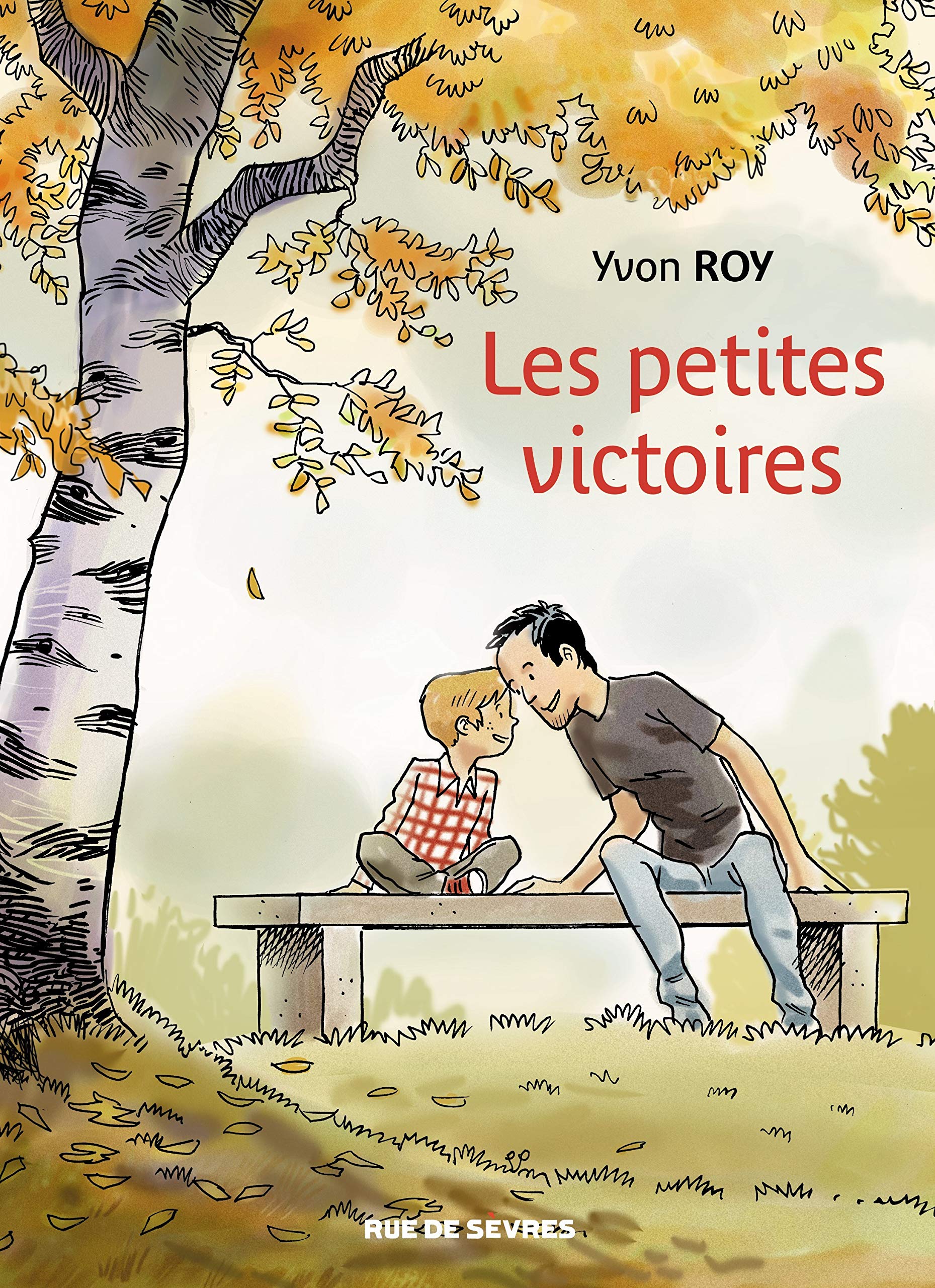
This is Marc, stand in for the author: Yvon Roy
This is his son, Olivier, who is autistic.
Les Petites Victoires showcases the fight of a father for his son, diagnosed with autism "in order to transform an announced defeat into small victories" (sic, our translation).
In his preface, Roy explains the contextualises the creation of his comic book:
"The idea was first suggested to me by a special educator who had worked with my son. She thought that what we had accomplished together was worth sharing so that other parents could find, through our experience, some useful information, if not a little hope" (our translation).
Interview
"When I started working with my boy to help him, with all the professionals in the field, I realized that often we were told, or they tried to tell us, that we had to work on living with autism, on accommodating autism. How we had to deal with different crises, different problems, whereas I thought, well, no, it's better, definitely, to try to overcome it than to live with it. And that's been kind of my master idea, let's say, for years with my boy, which is to try to push the boundaries constantly, always further." (Our translation)
Why choose this comic book?
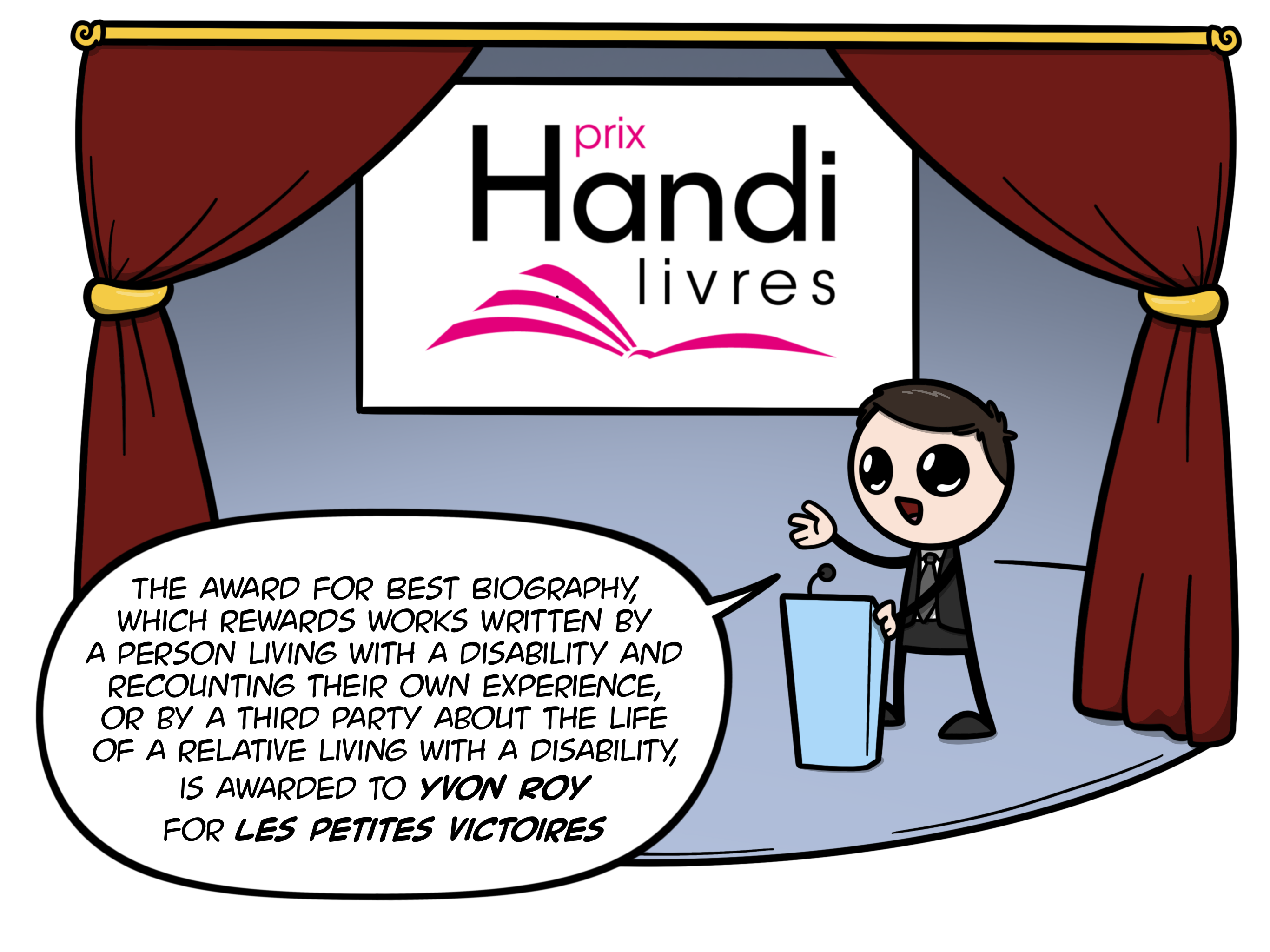
This comic book is an example of a creation that is easily accessible to the general public that has been awarded and highly publicized - even winning an award that recognizes works written by a person living with a disability and recounting their own experience, or by a third party about the life of a relative living with a disability. In 2018, the publisher Rue de Sèvres announced a contract for a film adaptation, which caused reactions and led to the hashtag :
#boycottlespetitesvictoires
As we will show, this is an example of the social representations of autism that perpetuate dominant understandings that do not fit the lived experience of those directly concerned to the point of being discriminatory. It is also difficult to identify moments when the child (the autistic character) shows agentivity. Instead, he’s passive in his father’s story. In a way, Olivier is only a supporting character. This is exaclty why representation doesn't mean autorepresentation and why "nothing about us whitout us" matters: although this comic is presented as a positive narrative from the allist perspective (3rd person), the story is completely different from the standpoint of the autistic community’s testimonies (1st person).
An allist person is a non-autistic person.
To understand the term "allist", we must go back to the origin of the word "autistic" which comes from the Greek word "autos" which means "self". So the word "autistic" initially referred to a person withdrawn on themself, who lives in their own world. The term "allist" appeared in a satirical article to refer to non-autistic people by swaping “autos” for "allos" which refers to others. So an allist is a person who is focused on others or, to flip the usual narrative, a person who lives in other people’s worlds.
In spite of the satire, the term “allist” has remained in use among others because it allows to distinguish between "neurotypicals" and "allists". There are people who are not autistic, but who are not neurotypical: a non-autistic dyslexic person, for example.
For a deconstruction
of the problematic propositions of the comic book:
But do you know the story from the autistic community’s perspective?
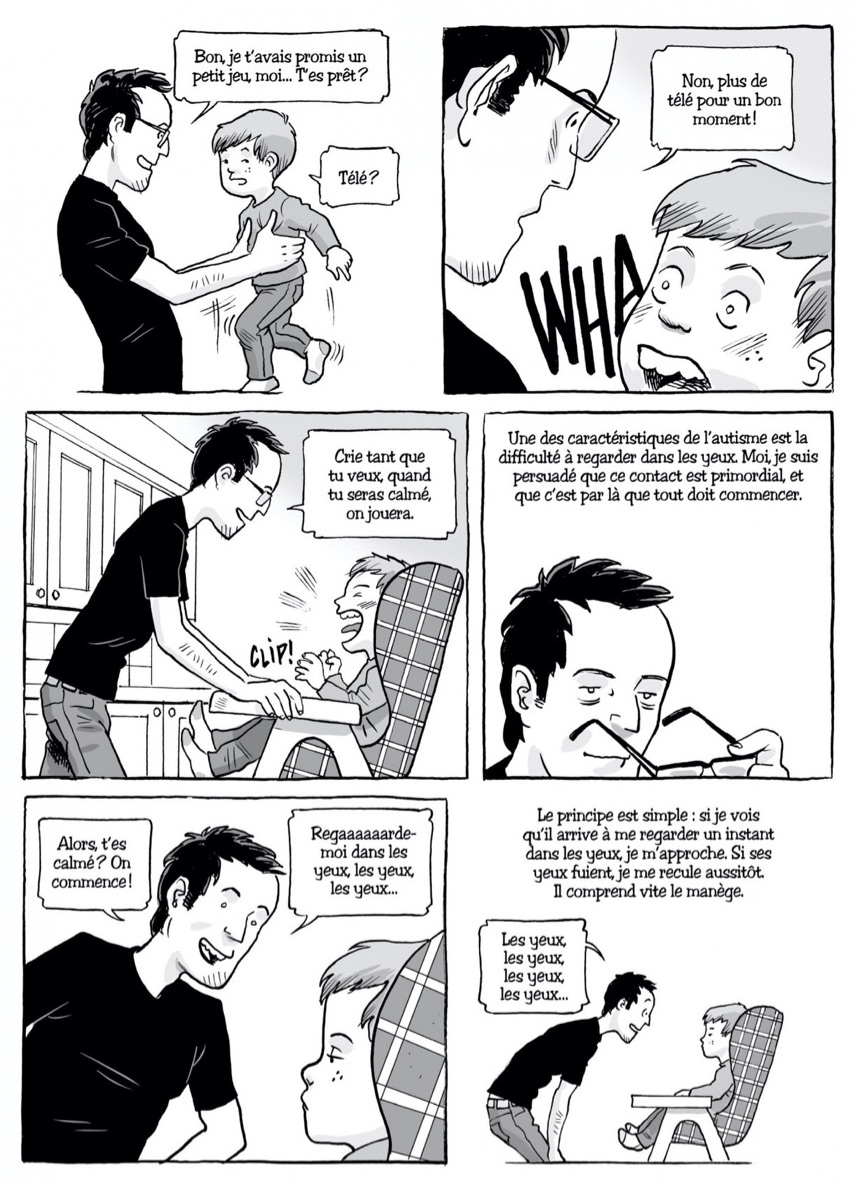
This is where webcomics can serve as an accessible tool that allows the reversal of dominant representations by opening the floor to self-representations directly grounded in marginalized communities. But before continuing with the topic of webcomics, we wish to feature an excerpt from Les Petites Victoires that addresses a frequent theme in autism: eye contact.
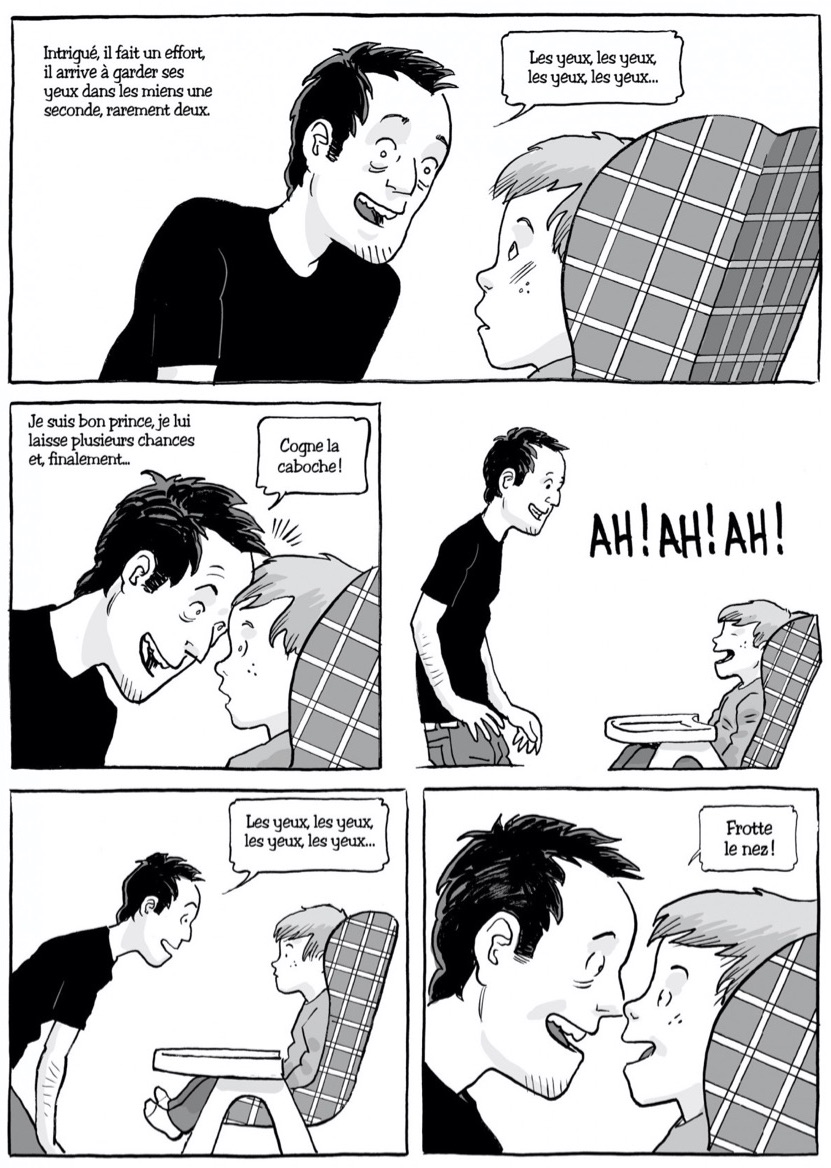
Excerpt on eye contact
English translation
English translation
Excerpt from Yvon Roy's interview
"I worked a bit like we can work to sometimes desensitize a substance. Sometimes certain people can have an allergy, we can try to desensitize them.
Several parents have contacted me regarding the trick to get the child to look in the eyes. This is the first thing we worked on together, that is to say, I considered that being able to look in the eyes - we know that autistic children have difficulty looking directly in the eyes - I said to myself, if we don't have eye contact, we have nothing. We need that, it's the beginning of human interaction." (our translation)
TW: The host uses the term “prison” in reference to autism:
"In your story that you shared with us in Les Petites Victoires, there is obviously the moment when you get up to face, to accompany your child in that reality: to learn to understand him too, inside what he lives and this prison, in a way, from which he is pressured which is basically this condition." (our translation)
Link to the interview (in French)


This scene is an example of neuronormativity
Recall that neuronormativity is the prevalent, neurotypical set of assumptions, norms, and practices that conceives of neurotypicality as the only acceptable or superior mode of cognition, and that stigmatizes attitudes, behaviors, or actions that reflect atypical modes of cognition as deviant or inferior.
This scene is told from the allist perspective and is presented with a positive outcome. In fact, as the author mentions, parents have applied this technique with their autistic children after being inspired by it.
But what if we ask autistic people how they feel about eye contact? That's exactly what we are going to do.
PART II
Why webcomics?
The medium of webcomic enables me to do something I don't know how to do otherwise: share how things feel on the inside.
Imagine. You come across a newspaper at the local coffee shop and recognize the face of a well-known personality. Yet you can't remember their name. It annoys you, you know you know it, it’s just not coming out, it stays there, on the tip of your tongue. You have time to come back to work, coffee in hand, and the name still hasn't come back to you, it still annoys you. You come across a colleague and you ask them, you describe the person, maybe clumsily at first (it would be so much easier with their name!), but you adjust to your interlocutor and, together, you can finally recall their name, it was so obvious!
It’s important to emphasize this feeling of annoyance. We rarely take the time to mention this annoyance when talking about epistemic injustices. Yet it is there, and it can even be painful: how do we make sense, to use Fricker's classic example, of our experience of sexual harassment when the concept does not yet exist? How can we share the feeling that something is wrong? This is where community comes into play and it is why the idea of "by and for" matters more than, say, a criterion of simplicity might. This is addressed by feminist epistemologies: for example, Longino argues for pragmatic values in science such as diffusion of power (as the importance of making research programs accessible to the actors involved in the research).
The impact of inadequate social representations on neurodiversity cannot be fully resolved by the traditional narrative of epistemic oppression and justice: adding new vocabulary to collective epistemic resources is not a panacea (we already have the word "autism" for example). So it is not only words that are missing, but rich and diverse lived experiences are also missing from the pool of shared resources.
The problem is that what is missing, the hermeneutical gaps, are not automatically apparent: social representations created by and for the dominant groups inadequately fill the hermeneutical gaps of marginalized groups. To that effect, let us recall here the Handi-Livre prize for the best biography which rewards works written by a person with a disability and telling his or her own experience, or by a third party on the life of a close relative with a disability: In the case of Les Petites Victoires, the award went to the biography of an allistic (non-autistic) person talking about autism. These inadequate social representations are difficult to resist: they are constantly and persistently reproduced. It is even harder when you don't have the words to replace theirs. But do we really have to wait for the right words to share our experiences? This is where illustration can become an attention grabbing action like shouting: an action that does not need words. This is what we propose here: a form of non-propositional epistemic resistance in response to hermeneutic injustice.
Webcomics are basically online comic books. They are mostly instantiated as short comics that take many forms and cover many topics. The most common form of webcomic is probably the blog (sometimes autobiographical, sometimes entirely fictional, sometimes both). Because they are mostly published independently by their artists, webcomics are an art form that is not limited by institutionalized power dynamics such as publishing houses or art galleries.
But the most important thing for us here is that webcomics are able to generate aesthetic experiences that allow viewers to better understand different aspects of the lived experience of neurodivergent people despite the inadequacy of mainstream epistemic resources.
In some ways, webcomics are a digital version of street art.
Although limited to a given geographical space for street art and to a particular digital platform for webcomics, there is this common idea where it is not so much the public that goes to the creation as the creation that goes to the public. We are no longer in a reserved and predefined space like a museum, a bookstore, a gallery or even a library.
Although a recognized artist can make street art, it is more difficult for an artist who does not belong to a complex and influential network to access some places of diffusion such as an art gallery. Webcomic is thus added to the tools that allow the production, use and transmission of more accurate social representations, participating in the collective understandings of the oppressions suffered by epistemically marginalized groups. The public and interactional aspects of social media that support webcomics make them a catalyst for direct dialogue with (but also within and between) marginalized communities.
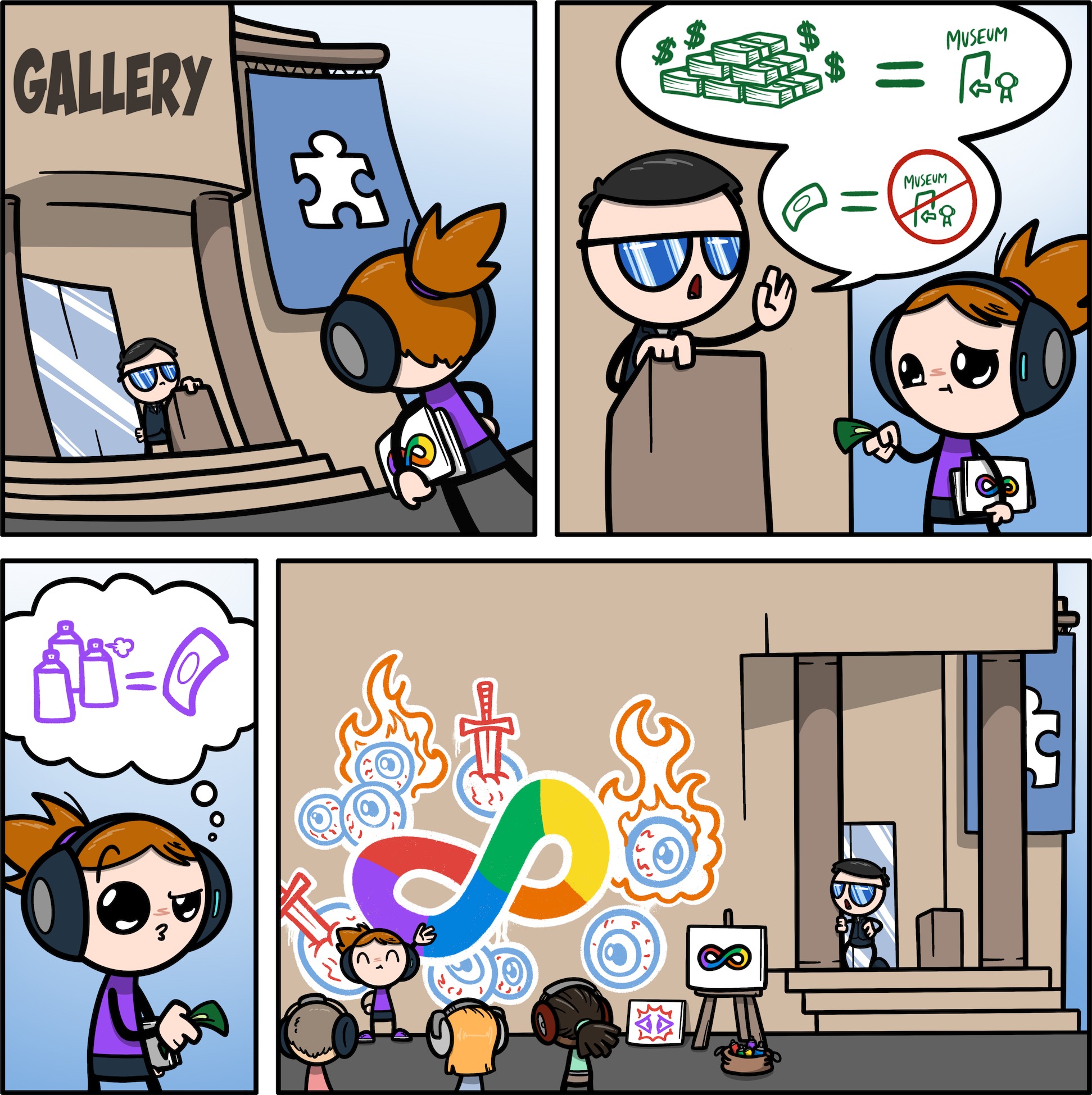
To put our epistemic resistance into action,
and to enhance our imaginative ressources, we chose to gather first-personal testimonies and descriptions of how eye contact can feel for autists.
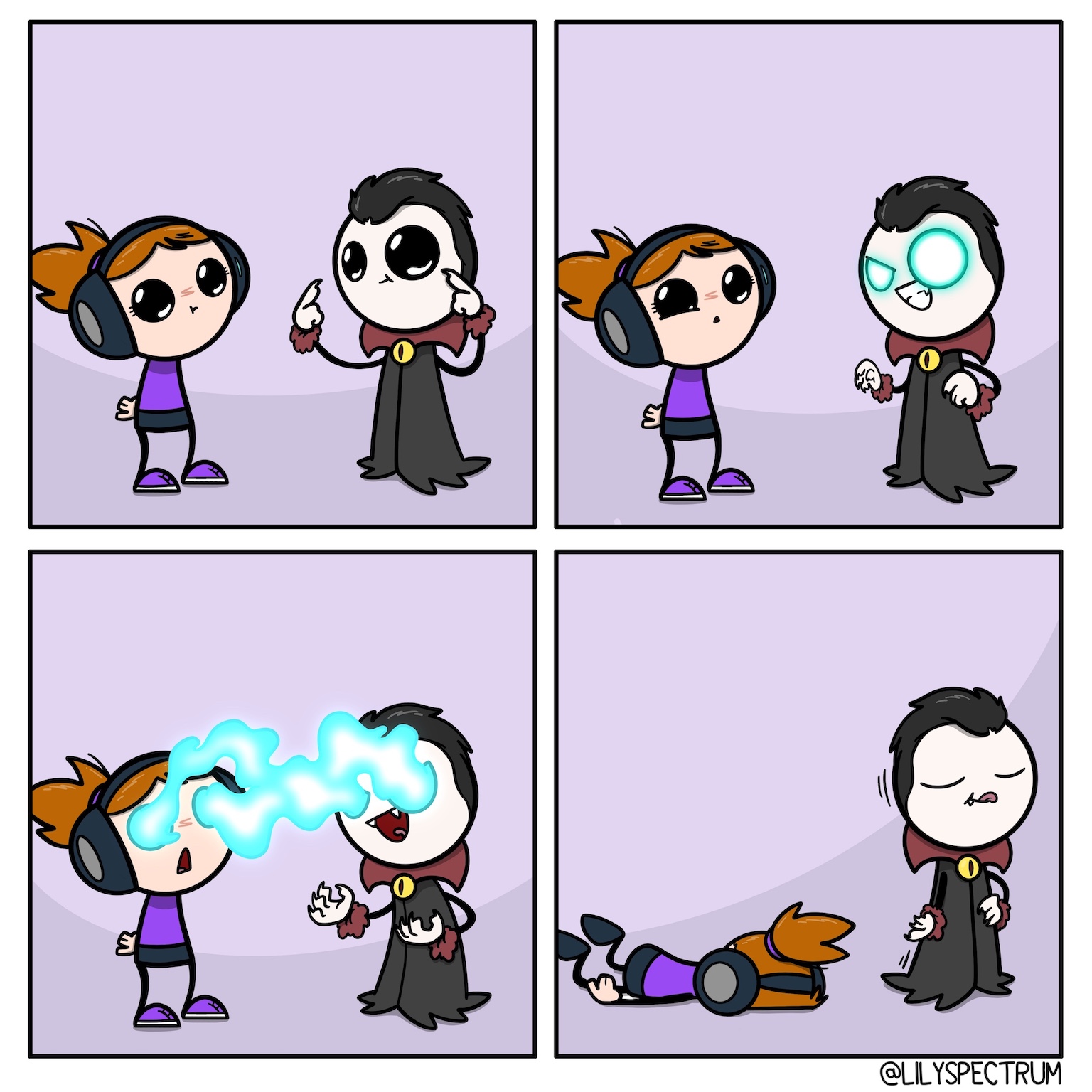
After all, who better to provide insight into a given lived experience than those who live it? To do so, we used social media (instagram and facebook) to ask autistic followers of our webcomic (@lilyspectrum): How does eye contact feel to you? Although we are neurodivergent, it was important for us to go with the community beyond our individual experiences. For instance, we would never have thought of the sunburn idea on our own, but once we read those testimonies, it felt right.
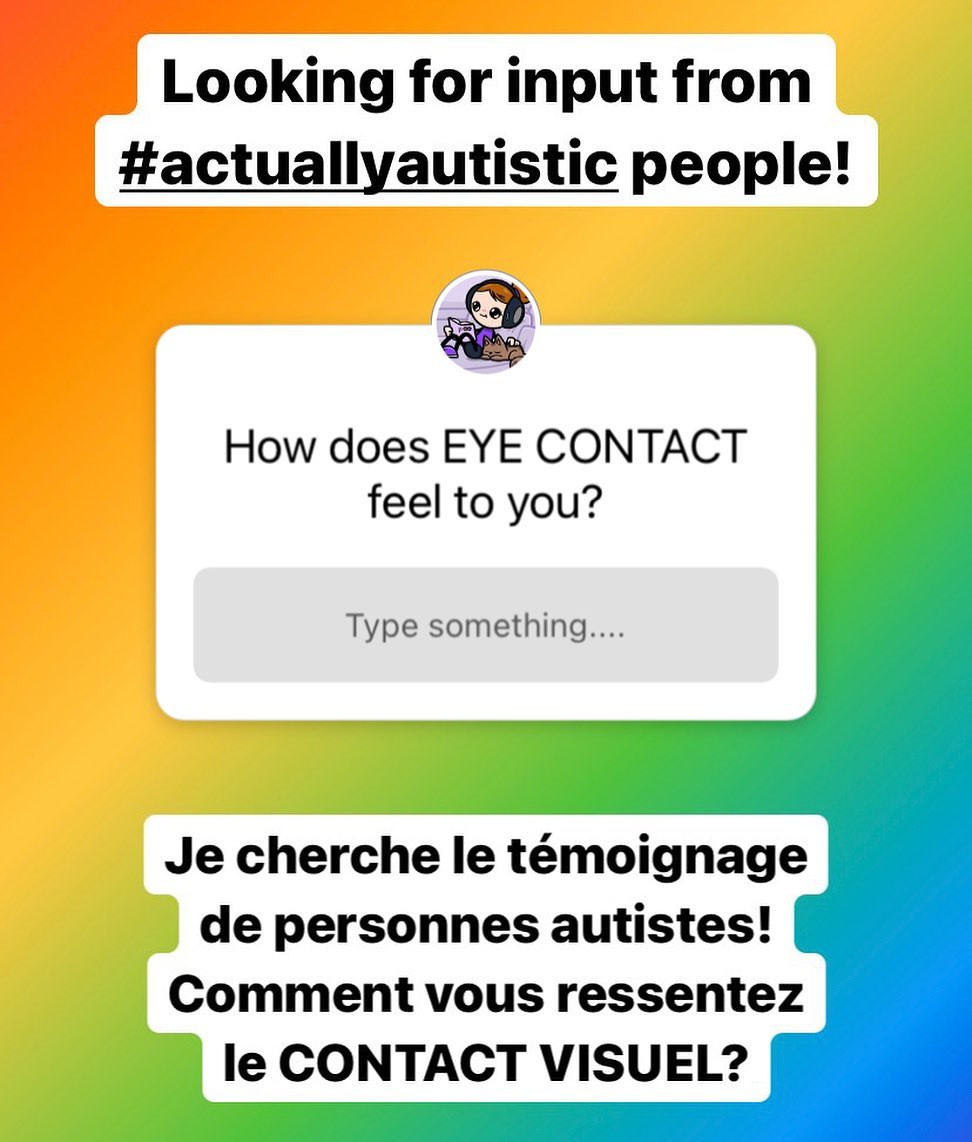
Both posts were made on November 8, and three days later, on November 11, we had received 175 testimonies. A few major themes emerged from these testimonies, which we used to base 7 webcomics or illustrations on. Keep in mind that, with this process, we do not claim to represent all there is to express about autists’ first-personal experience of eye contact. In fact, we suggest you visit these posts yourself to better understand the varied responses we got, and are still getting. And who knows, maybe this will allow you to add your own insight.
Publication
Since Monday, we have started to publish these comics on our social networks and we will continue to publish them in the following days
The interactions that take place around such webcomics are, we believe, an integral part of their complete aesthetic experience. These interactions often bring about clarifications, complementary details and descriptions or even added meaning. We thus invite you to visit these posts and interact with the community.
Webcomics
"I can do it but I can’t process anything else while doing it. My natural instinct and what feels the most right is to not look at someone’s face at all"
"It was drilled into me as a "rule" of politeness. I view it as just that, a rule. It's easy when there's multiple people because I can look around. But with one person, I have to look away or I end apparently end up staring"
"Everyone insisted on it, especially when they really wanted to correct a behavior or ensure I was paying attention. I honestly still don't love it, and prefer to look at noses or eyebrows to provide the impression I'm making eye contact"
"Eye contact was enforced during my childhood in mostly abusive ways and while it taught me to fake it, that made me hate it even more. Generally it just makes me uncomfortable and I find it quite distracting but it's also one of the most tiresome things to mask."
"Eye contact feels like they're staring into my soul, but with knives. I can make short eye contact before wanting to cry."
"It takes a concerted effort except for specific people."
"I’ve been so conditioned to make eye contact with people that when I met a lot of my friends for the first time they were kinda weirded out by me unblinkingly paying attention to them when they talked like 👁👄👁"
"It feels like someone is looking right past all my defenses and directly into my head. Not very pleasant."
"Terrifiant, j'ai vraiment l'impression qu'on me transperce à chaque fois …"
"Like I am being stabbed in the brain, itchy under the scalp, or suffocating. Anxiety is anxiety. I look at people's foreheads. They never know the difference but I am not forced to juggle the pain of eye contact and try to communicate. I am mostly non verbal and eye contact guarantees no words."
"Ça me met vraiment mal à l'aise et j'ai peur qu'on puisse mal interpréter si je regarde pas "correctement", je sais pas si je dois regarder quelqu'un dans les yeux ou combien de temps, il faut surtout pas que je regarde autre chose chez lui que ses yeux et du coup je sais pas quoi faire je préfère regarder le mur derrière mon interlocuteur 😂"
"Tout dépendra de la situation, de ma fatigue et de la personne. Certains contacts peuvent être transperçants (douloureux), d'autres envoutants (confusants), d'autres destabilisants (perturbants). En tous cas, si je regarde qqn dans les yeux, je suis sûr de perdre mon fil de pensée et/ou d'accorder mes réponses à ce que la personne ressent."
"Eye contact feels like burning discomfort, especially when I'm being told to do it."
"It’s extremely hard for me to maintain eye contact, and when people express to me that I should be looking at them when I’m talking to them, it puts me under more stress than just talking to them in the first place"
"somehow being told we should be making eye contact feels like being reprimanded as a child, at least to me.. I can't count the amount of times my mother would tell me to look her in the eyes as a child, and how humiliating/stressful it felt.. I legit forget to listen to people because I'm too busy trying to maintain eye contact."
"At best, awkward and uncomfortable. At worst, like someone's stabbed me in the eyes."
"It makes me uncomfortable but my mother forces me to look people in the eyes"
"Painful, but I feel like if I don't look ill be punished or called a liar. So I trained myself to look at something over their shoulder if not their foreheads to avoid harassment."
"Habituellement je regarde plutôt la bouche ou le nez des gens et ça semble passer crème pour donner l'illusion que je regarde dans les yeux (j'ai eu droit à l'expert en haute potentialité qui me disait que c'était impossible que je sois autiste car.. je le regardais dans les yeux ! Je regardais sa bouche depuis le début de l'entretien..). Je ne me force au contact visuel que de manière consciente et dans de rares cas précis : [suite]
(suite) par exemple si je suis attiré romantiquement par quelqu'un et désire que cette personne le perçoive (vu que le contact visuel accru est interprété de cette façon par beaucoup de neurotypiques). Mais cela reste un sacré effort et en général je détourne les yeux très rapidement, ça me met mal à l'aise, c'en est presque physique. Récemment un de nos profs en cours nous a fait faire une série d'exercices où on devait marcher vers quelqu'un/revenir à sa place à reculons en gardant le contact visuel constant avec cette personne.. je vous laisse deviner la torture que c'était"
"Transperçant!"
"J'ai l'impression que les yeux de la personne me percent à l'intérieur, je sais pas comment dire, c'est une sensation d'oppression aiguë."
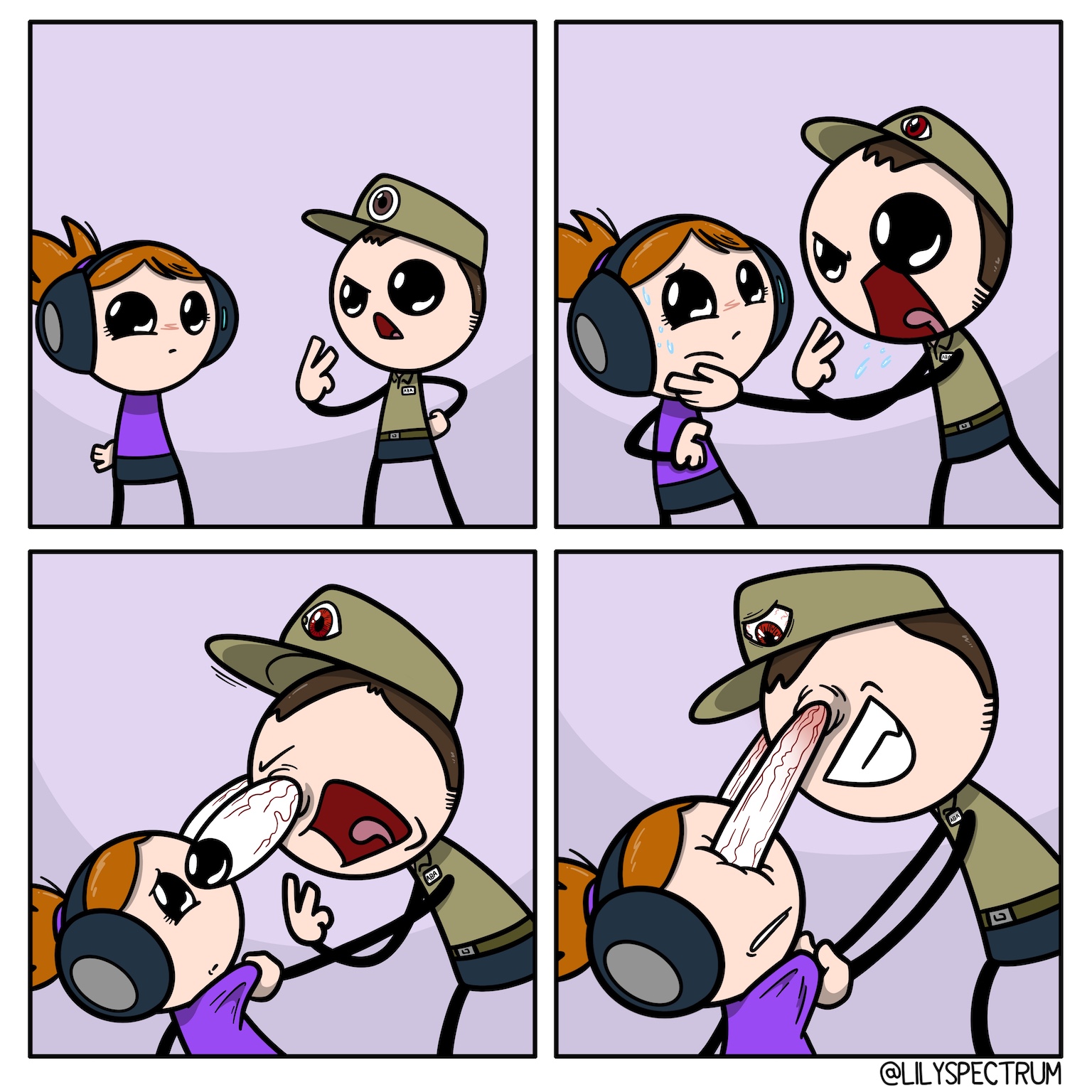
"For me, looking in the eyes feels too exposed and open. It makes me feel like I can't hide and protect myself from the people."
"Eye contact makes me uncomfortable most of the time, because of the feeling that I am being silently judged or getting talked about negatively."
"It's fine when I'm listening to someone but when I'm the one talking it makes me get stage fright like I'm being put on the spot to judge for performance lol"
"Too intimate, inappropriate… I become incredibly self conscious as well, like am I doing eye contact right? Should I be mirroring their behavior or a close approximation or complete opposite? How many times should I blink? Can they tell I’m faking this human interaction? It’s incredibly stressful."
"It feels like something is a required check box. It’s like a math problem. Look, one, two, three. Okay. Look away. Zone out if you need to. Okay, it’s been 10ish seconds. Look back. One, two, three.. okay, look away! Don’t share at them! Wait! You’ve looked away too long! Look back! …..it’s that on repeat quite often lol"
"I hate it I get so nervous and then I break down."
"I don't like it, makes me really uncomfortable. I'm "good at it", because I mask well (😬). I never know what to do, if I'm looking to much or not enough and always use a whole lot of energy just on eye contact. Generally, the more comfortable I feel the less I look someone in the eyes. (Also eyes as a body part make me feel really icky so that's that)."
"Intimidating and uncomfortable, I feel too vulnerable and keep thinking am I doing this right?"
"Ça me met vraiment mal à l'aise et j'ai peur qu'on puisse mal interpréter si je regarde pas "correctement", je sais pas si je dois regarder quelqu'un dans les yeux ou combien de temps, il faut surtout pas que je regarde autre chose chez lui que ses yeux et du coup je sais pas quoi faire je préfère regarder le mur derrière mon interlocuteur 😂"
"Eh bien, quand j’étais petit, je parlais et écoutais souvent le monde sans les regarder dans les yeux. Maintenant, ça me dérange pas de parler et écouter avec le contact visuel, mais j’peux très bien comprendre ce que le monde me dit sans obligatoirement les regarder dans les yeux. Aussi, c’est vrai que ça me rend un peu mal à l’aise quand des inconnus me fixe du regard. C’est comme s’ils me jugeaient et j’sais pas ce que j’ai fait de mal."
"Direct eye contact feels like I am being judged. It also makes me feel uncomfortable because I become unable to perceive and read the rest of their body language."
"Démunie, nue. Percée à jour. C’est très fort comme sensation, et rarement agréable. J’y arrive avec mes enfants ou mon mari, mais même dans ce cas, pas trop longtemps. Si je veux tenir une conversation, et me concentrer, alors je dois ruser. Je regarde entre les deux yeux ou le plus souvent la bouche."
"Feel nausea and anxiety, and extremely naked. Yet my mother was adamant that I learned it and therefore I am able to do it, despite the uncomfortable feelings. Absolutely love your work, for once I can tell that I am not alone"
"I feel instant stress and I have to force myself to do it and to look "natural"."
"Honestly, each time it happens to me, the most awkward feeling I have is « where should I look exactly » ? When you make eye contact, are you expected to focus one eye specifically (which one, then ?), between the eyes, not focus at all, or try a weird way of having each eye "looking" into the facing one (i.e. my left eye "looking at" their right one and vice-versa) ? I'm also never sure if/when eye contact is expected, and when it happens, is there/what is the hidden message behind this specific contact, and/or am I sending an incorrect hidden message myself ? Then, with all these questions actively consuming my brain "computing power", everything else totally miss the point (sometimes, though, I can hide this issue because I have this kind of ability to "replay" the last few words/sentence I unconsciously heard, to process it with a delay but potentially without the proper context- so it's not reliable at all !!). "
"Weird and artificial. I can actually read people's eyes now, but it took me years to learn it."
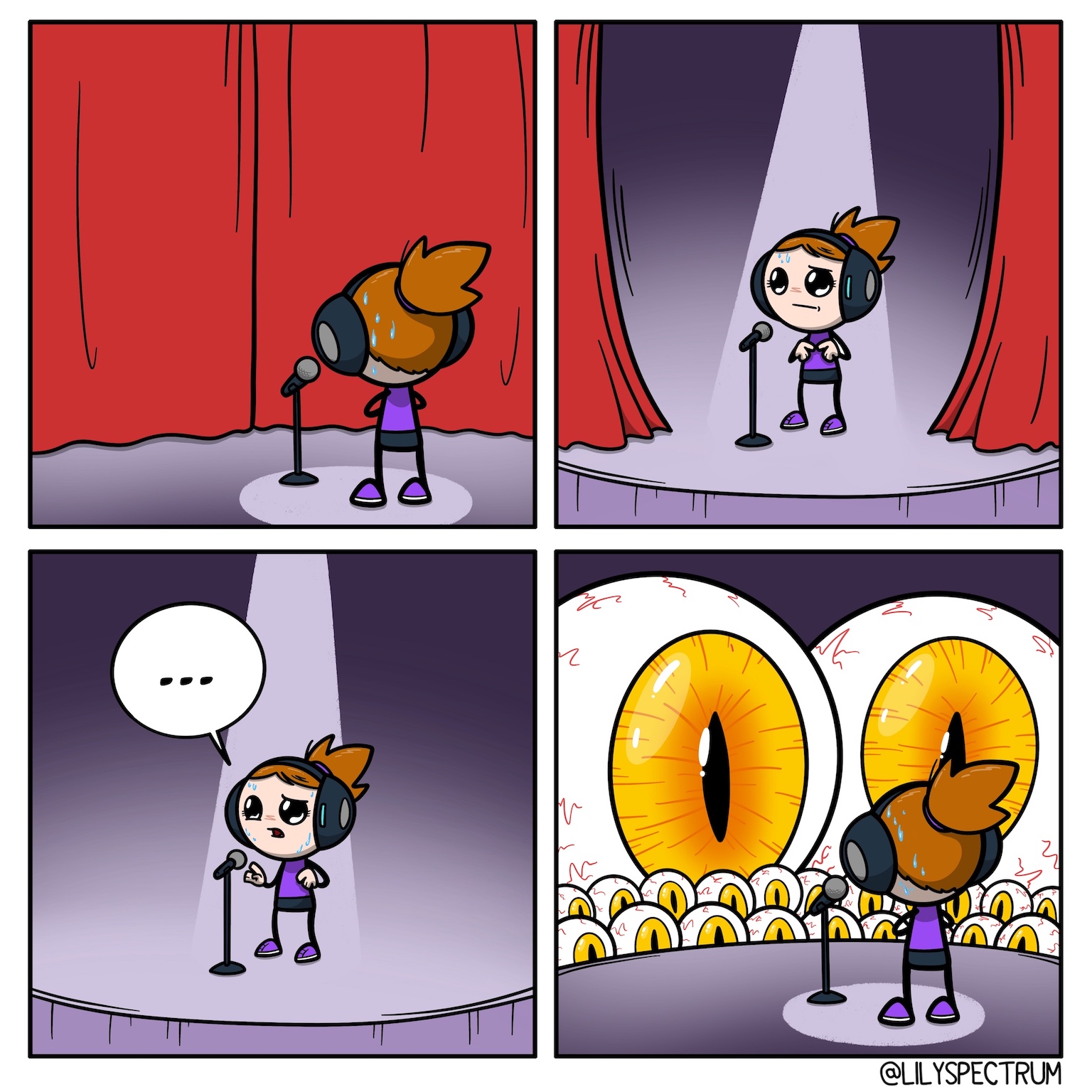
"My parents rasied me to always look into the eyes, still feels wrong. Like, I am invaiding a personal space and being rude. Like trying to stare down their soul and violating their privacy. I still try to look at people in the eyes but have learned to just looks in differents points in the face so I don't seem rude."
"Eye contact feels too intimate to me for most interactions. If I make eye contact with you, it’s because it’s important. "
"Eye contact feels very intimate. If I’m forced to hold it for too long, I feel violated, like I’ve been touched without consent."
"I really hate eye contact in almost all circumstances. About the only exception is with someone I'm very intimate with. Eye contact feels extremely intimate to me in general so it only feels natural when it's with someone I've got a suitably intimate emotional connection to. Otherwise it feels like I'm staring into someone's soul and I can see everything and they're staring into mine and seeing the same (even if I know they're not)."
"Invasive, extremely personal. I'm only comfortable looking my husband in the eyes"
"It feels like I’m standing too close to someone, I don’t know if that’s too vague of a comparison but it feels way too intimate. So I only do it when necessary or when I’m comfortable with that person."
"It feels creepy to me"
"I don't like it, makes me really uncomfortable. I'm "good at it", because I mask well (😬). I never know what to do, if I'm looking to much or not enough and always use a whole lot of energy just on eye contact. Generally, the more comfortable I feel the less I look someone in the eyes. (Also eyes as a body part make me feel really icky so that's that)."
"I hate eye contact. It almost hurts. But it’s nessesary to have a successful professional life, and my parents trained me well as a child. They would ask me people’s eye color after I met them to see if I made eye contact. Being trained like that at a very young age was incredibly difficult and felt unfair, but I’m very grateful that they pushed me now that I’m an adult."
"I can't do it, it makes me feel funny in a bad way and makes me feel kind of .. unsafe? and uncomfy I don't exactly know the word for the first one, I don't mind people looking at me but I won't look back"
"It's incredibly intimate and overwhelmingly so, particularly with strangers. And the more my emotions are revved up, the less I can tolerate it. It genuinely feels as though someone can see into my mind almost, even though I know that they can't. On the plus side, when I'm with someone I deeply, deeply love, sometimes that's okay because I want them to see how much I love them... but then that tends to make THEM feel awkward and uncomfortable too. LOL For me, it falls into the same category as standing too close, invading personal space, touching someone without consent etc. It's intimate, and can very easily become violating when you don't want it. And that;s so hard to explain to NT folk who expect you to look them in the eye all the time."
"It's okay with people I know, but I don't feel comfortable with eye contact with strangers, it almost feels like an invasion of privacy."
"eye contact feels so weird and creepy and if i have to make eye contact with someone, then ill quickly feel exhausted."
"It feels like a boundary rupture unless I completely and totally feel comfortable in a container of safety with another it probably won’t happen much."
"Well... I can't let anyone touch my eyeballs."
"Trop intrusif. Comme si l autre avait la perception de mes pensées. C est comme se montrer nue."
"Intense/ overwhelming/ fiery/ intrusive. Sometimes painful/ always difficult with strangers. Ok with intimate friends and family."
"Démunie, nue. Percée à jour. C’est très fort comme sensation, et rarement agréable. J’y arrive avec mes enfants ou mon mari, mais même dans ce cas, pas trop longtemps. Si je veux tenir une conversation, et me concentrer, alors je dois ruser. Je regarde entre les deux yeux ou le plus souvent la bouche."
"Feel nausea and anxiety, and extremely naked. Yet my mother was adamant that I learned it and therefore I am able to do it, despite the uncomfortable feelings. Absolutely love your work, for once I can tell that I am not alone"
"confronting and very intimate ..i feel naked"
"Quelque chose d'extrêmement intime, que je ne peux pas partager avec n'importe qui sinon je suis déstabilisée car je bloque sur cette sensation d'intimité forcée. Depuis le diagnostic, je me permets de ne plus regarder le visage des gens (je ne travaille pas). Quel soulagement!"
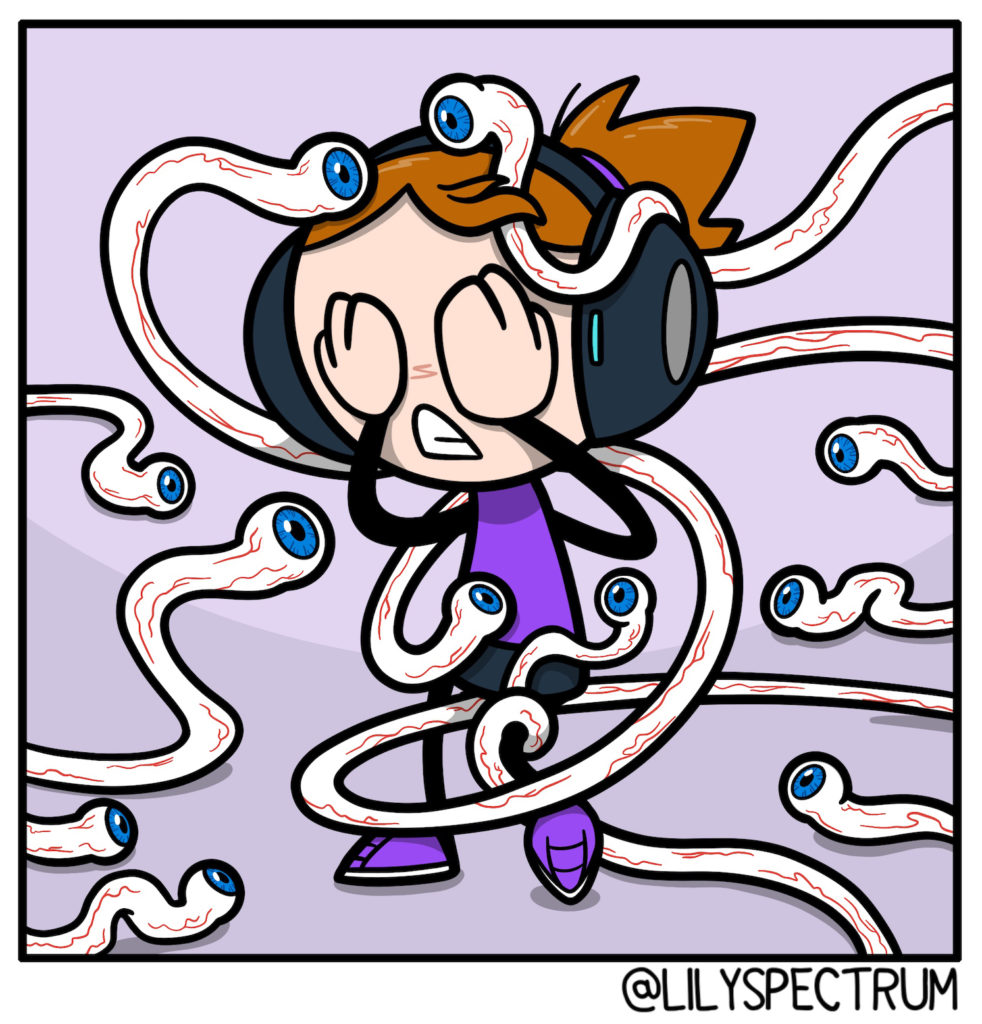
"Eye contact feels like they're staring into my soul, but with knives. I can make short eye contact before wanting to cry."
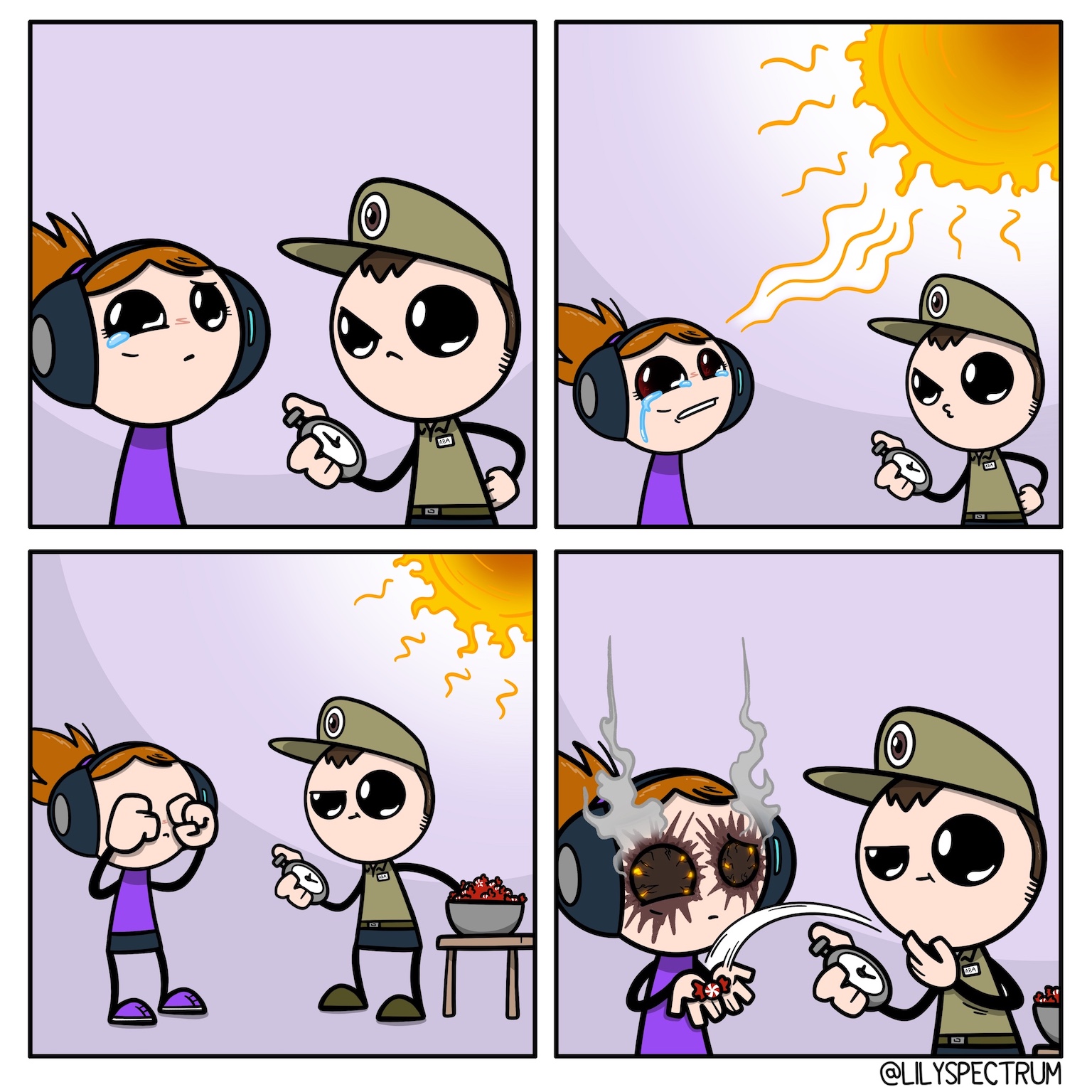
"It’s like being asked to look directly at the sun. I flinch, I can’t do it…"
"It feels like they gonna shoot me with laserbeams. Like Cyclops from X-Men. I van handle it for 10 seconds. I get panick attacks of it's to long. Even with my bf makes me on edge. I got a major panic attack during a being social etc exam (idk how it's in English is). It was so bad. They let me past because otherwise i needed to do the whole year over."
"Feels like I’m staring at the sun and I can only look a person in the eyes for 30 seconds or so before my eyes start to hurt a bit. I can only look animals in the eye."
"Like flames of intense awkwardness are scorching my retinas."
"When I was younger I always had trouble making eye contact. I’ve gotten better at it in recent years but its still painful to me."
"Eye contact feels like burning discomfort, especially when I'm being told to do it."
"Ça me demande beaucoup de concentration. J'ai l'impression que ça me fait mal aux yeux et quand j'étais plus jeune je pouvais même ne plus vraiment entendre ce que la personne me disait. Par contre ce n'est plus un problème quand je me mets vraiment en colère au point de vouloir me battre."
"Ca va de la gêne à la sensation de brûlure, ça dépend des personnes je suppose. On peut parfaitement regarder le nez, la bouche, entre les yeux sans que l'autre ne sen rende compte."
"I can’t think if I have to. Feels like pressure."
"Bad, I feel like my head is going to explode if I look at someone's eyes for too long. I suspect it's probably a blood pressure drop or adrenaline, but it feels awful. I honestly don't get why so many people require eye contact when speaking. I can make eye contact, but it's really difficult to understand what the person is saying because I'm too focused on how uncomfortable I feel and how incredibly awkward it is to stare at someone's eyes"
"It feels literally painful and I’m always afraid the other person can tell what I’m feeling/thinking. I’m comfortable with eye contact with very trusted folks in my life though."
"Painful"
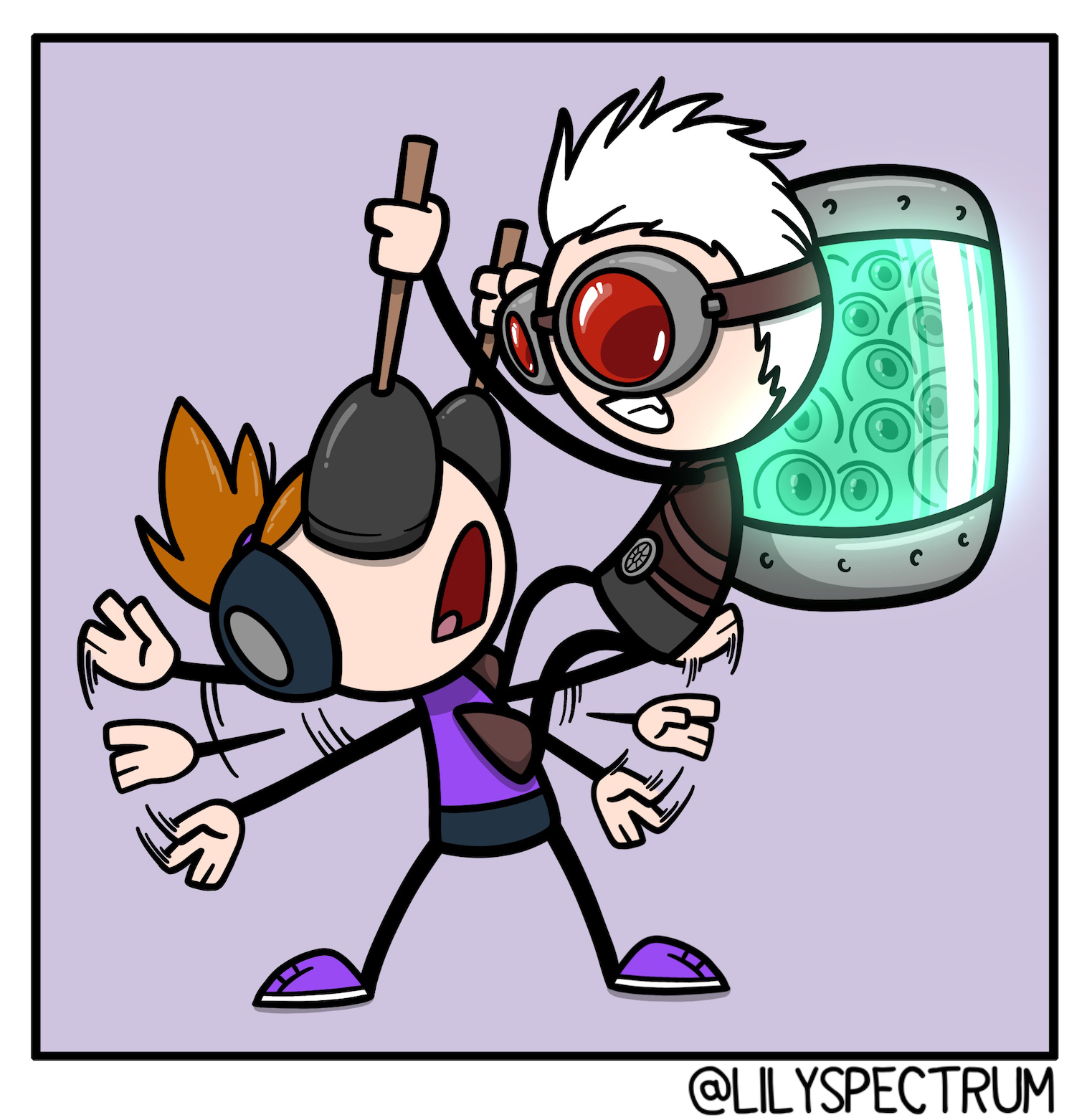
"I really hate eye contact in almost all circumstances. About the only exception is with someone I'm very intimate with. Eye contact feels extremely intimate to me in general so it only feels natural when it's with someone I've got a suitably intimate emotional connection to. Otherwise it feels like I'm staring into someone's soul and I can see everything and they're staring into mine and seeing the same (even if I know they're not)."
"I cant make eye contact with literally anyone. Its uncomfortable, and even when its not, i cant listen proberly to what people are saying when i focus on the eyes. I just cant do it at anytime with anyone, only for one second maximum. Its like staring into someone's soul, its too much."
"J’ai l’impression d’être absorbée par les yeux de la personne et en même temps comme si on pouvait voir ce qu’il y a à l’intérieur de moi."
"honestly it feels like i am being sucked into their soul… i can’t maintain it if i want a conversation because i just get lost"
"Like someone staring at my soul? I almost feel like that's the part of masking that exhausts me the most!"
"It's uncomfortable. But sometimes if I want to intimidate someone I stare deep into their eyes and make them feel unnerved like I'm looking into their soul."
"Tout dépendra de la situation, de ma fatigue et de la personne. Certains contacts peuvent être transperçants (douloureux), d'autres envoutants (confusants), d'autres destabilisants (perturbants). En tous cas, si je regarde qqn dans les yeux, je suis sûr de perdre mon fil de pensée et/ou d'accorder mes réponses à ce que la personne ressent."
"Trop intrusif. Comme si l autre avait la perception de mes pensées. C est comme se montrer nue."
"J’ai l’impression d’entrer dans l’âme de la personne. Je trouve ça trop privé. Alors je ne regarde que ceux dont j’ai vraiment envie de découvrir ce qu’il y a au plus profond d’eux même"
"I'm okay with it for small periods of time, but if it's more than a minute, I have to look away, it makes me super uncomfortable after that"
"It took me around 2 years to be able to do eye contact (kind of struggle still-) but normally if im uncomfortable looking at the eyes, ill just look at the nose instead"
"Awkward. The longest I can probably do it is for a few seconds, but sometimes it’s physically impossible for me to look someone in the eyes even for one second."
"Ça me met juste très mal à l’aise, et du coup je préfère regarder ailleurs et ne regarde les gens dans les yeux s’iels ne me regardent pas."
"Incapable de soutenir un eye contact sauf avec certaine personnes... Ma famille (ma mere, mon pere, ma soeur), ma nièce, mon beau frère et mon conjoint. Quelques amis specifique aussi... Mais sinon incapable. Je chercher tjrs a "évader" ses eye contact."
"Uncomfortable. I have trouble maintaining eye contact for long, especially in a conversation. However, I did figure out that talking with your hands is a great way to distract the other person's eyes from your and gives you a reason not to look at them."
"havent made eye contact with anyone (while i'm talking to them, that is) except my cats in years if that tells you anyone"
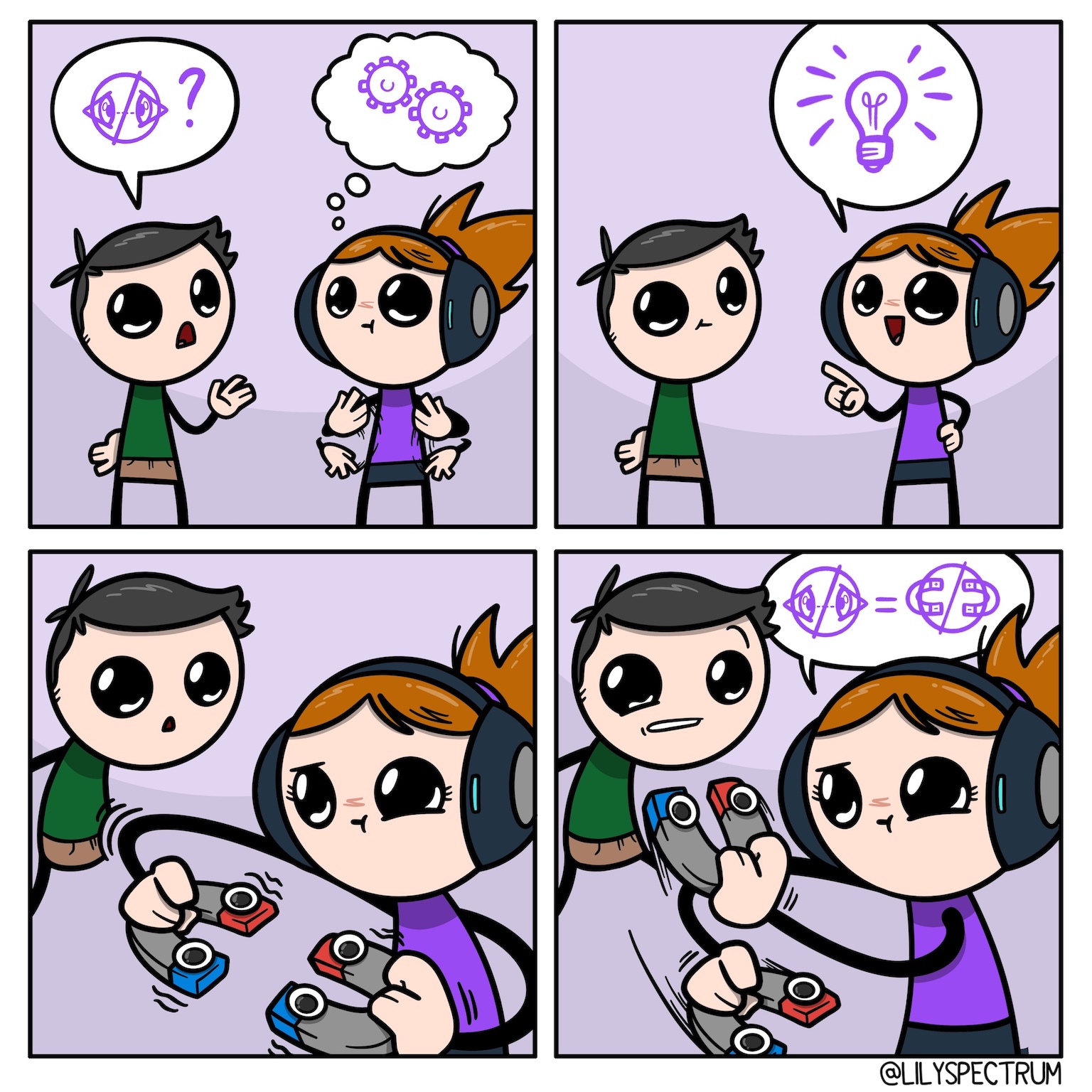
"When I was younger, it used to feel like when you held two magnets together both ends the same, it felt like no matter how hard you held them together, it would want to repel forcefully, my head wanted to repel and look past to the left or right or down or up like a magnet would, and when I managed to hold it against that feeling, my eyes would water up, not tears from sadness or anything, but they released tears, now I can manage it but it's still not comfortable to do, it depends on how comfortable I feel with the person or people or how stimulated I feel in an environment"
"It’s like when you hold two magnets with the same polarity against each other. Even if you want to put them together they won’t do it. The magnets are like my eyes. They just can’t center on the other persons eyes or it will cost a lot of energy. Like with holding magnets with the same polarity together. It’s just all in all very uncomfortable and draining. Btw I’m undiagnosed so I hope I can still answer here. Also I really really love your account and the stuff you do ^^ /g"
"Ça me met vraiment mal à l'aise et j'ai peur qu'on puisse mal interpréter si je regarde pas "correctement", je sais pas si je dois regarder quelqu'un dans les yeux ou combien de temps, il faut surtout pas que je regarde autre chose chez lui que ses yeux et du coup je sais pas quoi faire je préfère regarder le mur derrière mon interlocuteur 😂"
"Je me sens obligé de regarder chaque personne dans les yeux mais aussitôt que le contact est réciproque je baisse le regard aussi vite que mon ombre ainsi j'ai l'impression que j'ai fait ma part! haha! Par contre avec le monde avec qui je suis très, très à l'aise je vais quelque fois fixer les yeux, on dirait que j'essaie de comprendre pourquoi je fuis ceux des inconnus, alors je fixe en grand questionnement interne!"
"Awkward and physically painful , strong need to move my eyes away from it"
"Souvent trop intense… Et en plus il se passe tellement de choses autour des yeux qui m'intéressent plus et/ou me sécurisent plus! Je fixe puis je zappe, j'y reviens et je rezappe… Les sourcils, les lunettes, sont des bons compromis aussi, ou fixer mon regard dans le vague direction le visage ou le pourtour du visage… Ou fixer le visage avec une attitude très intéressée (posture corporelle de l'attention soutenue) quand la personne regarde AILLEURS, et quand son regard se tourne vers moi, fixer 1s seconde, sourire, et me tourner ailleurs vers qqn d'autre qui parle mais ne regarde pas vers moi à ce moment là, ou trouver à m'occuper avec un objet, et jongler comme ça."
"Je n'aime pas regarder sans les yeux, je ne sais pas, c'est plus fort que moi, je suis mal à l'aise, je ressens le besoin de regarder ailleurs. Du coup j'aime bien discuter quand je suis au resto ou quand on fait une activité, il y a l'excuse d'être occupée en même temps pour ne pas se regarder"
"Habituellement je regarde plutôt la bouche ou le nez des gens et ça semble passer crème pour donner l'illusion que je regarde dans les yeux (j'ai eu droit à l'expert en haute potentialité qui me disait que c'était impossible que je sois autiste car.. je le regardais dans les yeux ! Je regardais sa bouche depuis le début de l'entretien..). Je ne me force au contact visuel que de manière consciente et dans de rares cas précis : par exemple si je suis attiré romantiquement par quelqu'un et désire que cette personne le perçoive (vu que le contact visuel accru est interprété de cette façon par beaucoup de neurotypiques). Mais cela reste un sacré effort et en général je détourne les yeux très rapidement, ça me met mal à l'aise, c'en est presque physique. Récemment un de nos profs en cours nous a fait faire une série d'exercices où on devait marcher vers quelqu'un/revenir à sa place à reculons en gardant le contact visuel constant avec cette personne.. je vous laisse deviner la torture que c'était"
"Lorsque c'est quelqu'un avec qui je suis à l'aise ca va à une certaine distance mais de trop prêt je ressens un malaise assez vite. Si j'ai le malheur de croisé le regard avec un(e) inconnu(e) dans la rue ou dans un commerce, je regarde ailleurs aussitôt, gros malaise. C'est pour ça que j'évite de regarder les gens."
Thank you for joining us in this exploration!
We hope this experience was (and will be) as enriching for you as it was for us to come up with. We invite you to engage with us and the community through our posts or in the comments bellow!
If you’re browsing for the “best Chinese food near me” in St. Augustine, Ginger Bistro is a great decision! Chinese restaurants near me
For long carries from truck to door, plan ahead. Got that advice from low cost movers Cherry Hill .
Sometimes a tooth extraction is the very best choice– Whittier Square Dentistry discusses it clearly. Info conserved at root canal .
Для надежной защиты воды от загрязнений рекомендуем обратить внимание на купол для каркасного бассейна 366, которые идеально подходят для любого вида каркасного бассейна.
Отзывчивые обзоры владельцев бассейнов помогают понять эксплуатационные качества тента.
Отбор надежного игорного портала заставляет основательного анализа лицензионных документов. Новые ресурсы mad casino зеркало дают геймерам абсолютную сведения о имеющихся аккредитациях.
Процесс создания профиля охватывает множество принудительных ступеней верификации. Администраторы запрашивают справки, засвидетельствующие персону и совершеннолетие. Стандартный KYC-процесс составляет от 24 до 72 часов.
Контроль средств запускается с установления границ на вклады. Искусные игроки рекомендуют задействовать норму 5% от полного развлекательного фонда на единичную игру.
Технические блокировки провайдеров вынуждают применять дополнительные маршруты. Копии оберегают стопроцентную эффективность первичного сайта, подразумевая летопись переводов и гемблинг прогресс.
Передовые финансовые способы предоставляют мгновенные инвестиции через цифровые хранилища. Bitcoin, Ethereum и стейблкоины дают тайность и крошечные отчисления. Срок осуществления извлечений составляет 10-30 интервалов.
Схемы приверженности включают градационные статусы с накапливающимся возвратом. VIP-представители дают уникальные поощрения, улучшенные рамки и приоритетную сервис.
Определение проверенного игрового оператора в актуальных реалиях нуждается особого внимания к юридическому режиму. Знающие клиенты осознают, что типпи зеркало включает актуальную информацию о доступных провайдерах.
Механизм создания аккаунта в сертифицированных заведениях охватывает необходимую подтверждение личности. KYC-стандарты оберегают как оператора, так и клиента от обмана. Кратковременные рамки на изъятие денег до завершения контроля – нормальная подход.
Цифровые запреты на соединение к игровым ресурсам нейтрализуются через альтернативные ссылки. Функционирующие клоны обеспечивают тотальную эффективность центрального платформы. Расчетные движения, азартный прогресс и наградные планы продолжают константными.
Материальная стабильность определяется степенью применяемых платежных инструментов. SSL-кодирование, PCI DSS лицензирование и расширенная идентификация формируют безопасный заслон безопасности.
Интерактивная каталог лицензированных провайдеров включает барабаны от известных провайдеров. RTP-параметры, дисперсия и математические схемы получают независимую сертификацию в признанных учреждениях.
Планы мотивации в серьезных сервисах базируются на открытых параметрах активности. Вейджер x35-40 оценивается справедливым для машина-подарков, в то время как настольные развлечения идут в подсчет с сниженным процентом.
I have actually tried several local companies, and McGee and Sons Services is hands-down the very best pressure washer in St. Augustine pressure washing st augustine
Each check out to Ginger Bistro reminds me why it’s the most effective sushi restaurant near me in St Augustine. So fresh and delicious! Sushi St Augustine
Официальные площадки развлекательных опций дают участникам возможность к премиальному развлечениям через целевые платформы, включая лаки Р±РёСЂ , которые соблюдают международные критерии конфиденциальности.
Процедура открытия счёта necessita заполнения верификационных данных через шифрованные SSL-линии. Букмекеры запрашивают official удостоверение дееспособности и региона регистрации для выполнения нормативных требований.
Multi-factor аутентификация представляет необходимым aspect современных механизмов защиты. Участники получают SMS-ключи, push-алерты или применяют профессиональные софт вроде Google Authenticator.
Зеркальные URL нейтрализуют препятствия региональных барьеров и DDoS-атак. Технически реплики составляют идентичные dublicates главного платформы с удержанием возможностей и индивидуальных параметров.
Профессиональные игроки советуют удерживать свежие перечни функционирующих mirrors в bookmark обозревателя. Management рассылают сведения о fresh адресах через почтовые сервисы, Telegram-группы и телефонные apps.
Payment переводы через legal платформы гарантированы шифровальными технологиями стандарта банковского индустрии. Вывод финансов реализуется единственно на подтверждённые данные обладателя профиля.
Thinking about a mini facelift vs. full facelift—Newport Beach experts weigh in on cosmetic surgery trends .
Finding movers who actually care about your belongings is hard — glad I found a professional Smithtown moving company! international moving services Smithtown
Bird-proofing solar panels was new to me. I found a guide on pest control service reviews .
Фермерские продукты: натуральная польза для вашего здоровья
Современный ритм жизни заставляет нас задуматься о качестве питания. Фермерские продукты становятся выбором тех, кто ценит настоящий вкус, пользу и заботится о здоровье своей семьи. Это не просто еда — это философия качества, где каждый продукт создается с душой и без химических добавок.
Что такое фермерские продукты и почему они особенные
Фермерская продукция — это натуральные продукты питания, произведенные небольшими хозяйствами без использования консервантов, усилителей вкуса, гормонов роста и химических удобрений. В отличие от массового производства, фермеры создают продукты малыми партиями, часто под конкретный заказ, что гарантирует максимальную свежесть и сохранение полезных свойств.
Животные на фермах содержатся в естественных условиях, получают натуральные корма, а овощи и фрукты выращиваются на экологически чистых территориях. Результат — продукты с насыщенным вкусом, богатые витаминами, минералами, клетчаткой и другими жизненно важными элементами.
Широкий ассортимент фермерских продуктов
Молочные продукты и сыры
Фермерское молоко — это настоящая основа здорового питания. В ассортименте представлены:
• Молоко — цельное, жирное, с насыщенным сливочным вкусом
• Кисломолочные продукты: кефир, простокваша, йогурт, ряженка, варенец, сметана
• Творог — зернистый и нежный, идеален для детского питания
• Сливки и сливочное масло — натуральные, без растительных жиров
• Сыры фермерские: мягкие, полутвердые, твердые, из коровьего и козьего молока
• Продукция из козьего и овечьего молока — настоящий деликатес для гурманов
Ремесленные сыры создаются по старинным рецептам, каждая головка обладает уникальным характером и непревзойденным вкусом.
Мясо и птица
Фермерское мясо выращивается без антибиотиков и гормонов:
• Говядина — мраморная, сочная, с натуральным вкусом
• Свинина — нежная, без лишнего жира
• Баранина и телятина — диетические варианты
• Крольчатина — гипоаллергенное мясо для детей
• Птица: курица, цыпленок, утка, гусь, индейка, цесарка, перепела
• Сало — настоящее деревенское
Мясные изделия и деликатесы
• Колбасы: вареные, варено-копченые, сырокопченые, сыровяленые
• Ветчина и деликатесы — из отборного мяса
• Сосиски и сардельки — без сои и крахмала
• Паштеты и тушенка — домашнего приготовления
• Холодец — по традиционным рецептам
Полуфабрикаты
Для тех, кто ценит время, но не хочет жертвовать качеством:
• Котлеты, биточки, зразы — из натурального фарша
• Пельмени и вареники — с настоящей мясной начинкой
• Манты, купаты, люля-кебаб
• Шашлык — маринованный по фирменным рецептам
• Блинчики, сырники, наггетсы
Яйца фермерские
Яйца от кур свободного выгула с ярким оранжевым желтком — источник белка и витаминов.
Рыба и морепродукты
• Свежемороженая рыба
• Рыба копченая: холодного и горячего копчения
• Соленая и вяленая рыба
• Икра — черная и красная
• Морепродукты
Овощи, фрукты, ягоды
• Свежие овощи — выращенные без пестицидов
• Зелень и салатные миксы
• Сезонные фрукты и ягоды
• Замороженные овощи и ягоды — сохраняют все витамины
• Грибы: свежие, замороженные, сушеные, маринованные
Хлеб и выпечка
Продукция семейных пекарен:
• Хлеб — из цельнозерновой муки, бездрожжевой
• Пироги, булочки, печенье — по домашним рецептам
• Вафли и десерты
Соления и домашние заготовки
• Маринованные и соленые овощи
• Грибная икра
• Квашеная капуста
• Соусы домашние
Мед, варенье, сладости
• Натуральный мед — с частных пасек
• Домашнее варенье — без консервантов
• Сырое варенье — живые витамины
• Шоколад, зефир, конфеты — без химии
Бакалея
• Крупы, мука, макароны — из качественного зерна
• Растительные масла — холодного отжима
• Орехи и сухофрукты
• Чай и иван-чай — травяные сборы
Преимущества фермерских продуктов
Максимальная польза: высокое содержание витаминов, минералов, белка, незаменимых аминокислот и жирных кислот омега-3.
Безопасность: отсутствие ГМО, антибиотиков, гормонов роста, пестицидов и синтетических добавок. Вся продукция проходит строгий лабораторный контроль и имеет сертификаты качества.
Настоящий вкус: фермерские продукты обладают насыщенным, природным вкусом, который невозможно воспроизвести промышленным способом.
Свежесть: продукция изготавливается небольшими партиями и доставляется напрямую от производителя, минуя длительное хранение на складах полуфабрикаты москва
Экологичность: поддержка малого бизнеса и ответственного отношения к природе.
Для кого фермерские продукты особенно важны
• Детское питание: гипоаллергенные продукты без химии
• Здоровое питание: для тех, кто следит за фигурой и самочувствием
• Люди с аллергиями: чистый состав без добавок
• Беременные и кормящие женщины: максимум пользы
• Спортсмены: качественный белок для восстановления
Доставка фермерских продуктов на дом
Современные интернет-магазины предлагают удобный сервис с доставкой свежих фермерских продуктов прямо к вашему порогу. Вы можете заказать готовые наборы или сформировать индивидуальную корзину, выбрав любимые позиции из богатого ассортимента.
Фермерские продукты — это инвестиция в здоровье, энергию и долголетие вашей семьи. Почувствуйте разницу и верните настоящий вкус детства на свой стол!
купить кокаин, мефедрон, бошки, марихуану так я там всем давно ответил ты пишешь с опозданием. Зайди почту проверь.Не прогадал) Искупался, доставили пиццу, вискарика дернул со льдом… Хороший магазин,менеджер приятный по общению,недовесов не было у меня
Be cautious signing medical authorizations. A limited release form on Workers compensation lawyer near me helped me.
I value just how local hairdresser outlets foster area sense! It’s always nice to converse with somebody while acquiring a slick. Find out more concerning neighborhood in barbering at barber shop !
Thanks for the valuable insights. More at abogada en Vigo .
Welcome to this ultimate hub for online gaming, magicbet casino, magicbet casino! With exciting games, lucrative bonuses, and a simple interface, it features an amazing experience for players. Join immediately and step into a world of limitless fun and rewards!
Если вы ищете эффективный способ сбросить вес, обратите внимание на санаторий для похудения недорого, которая поможет вам добиться отличных результатов без вреда для здоровья.
Суть метода заключается в смене фаз еды и голодания.
Well explained. Discover more at powiększanie ust .
Just had a fresh discolor at the Barber Shop in Murrieta, CA! They definitely recognize how to make you look sharp. Check them out online at murrieta barber shop .
Платформа Rutor давно известна на русскоязычном даркнете, благодаря своей заслуженной репутации, анонимизации пользователей и инструментам надёжной передачи средств в Rutor.Rutor: Ветеран русскоязычного даркнета
www rutor — это один из первых и известнейших русскоязычных ресурсов даркнета, неразрывно связанный с анонимной онлайн-экосистемой. Основное направление работы ресурса — предоставление обширной базы файлов, утилит, новостей и прочего контента, в том числе, связанного с темами безопасности и взлома.
Как устроена система работы Rutor
Система курирует доступ к огромному количеству информации и файлов, сохраняя дополнительную конфиденциальность и анонимность своих пользователей. Работа сервиса построена на использовании анонимной сети Rutor, что помогает свести к минимуму угрозы идентификации и утечки данных. С течением времени площадка превратилась в важный архив событий и истории русскоязычного даркнета.
Безопасность и анонимность на Rutor
Система Rutor уделяет особое внимание вопросам безопасности. Платформа предоставляет анонимный просмотр контента благодаря применению новейших решений для защиты информации и коммуникаций. Для сохранения анонимности и безопасного обмена контактами советуют применять специальный внутренний мессенджер, защищающий пользователей от вмешательства и контроля.
Роль Rutor в экосистеме русскоязычного даркнета
Rutor продолжает оставаться важным каналом для получения новых данных и свежих новостей по теме взлома и безопасности. Из-за ориентации на минимальную цензуру и приватность Rutor популярен у приверженцев свободного обмена данными и конфиденциальности.
Платформа функционирует стабильно, обеспечивая равный доступ для новых и опытных участников даркнета. Каждый из разделов сайта — магазин, новостные ленты или руководства по взлому — образуют отдельную звено в масштабном сообществе, где главными ценностями выступают конфиденциальность и защита анонимности.
Перспективы и риски
Безусловно, дальнейшая история Rutor будет связана с новыми формами риска, новыми способами защиты конфиденциальности и методами обхода блокировок. Пользователи должны осознавать, что даже самая анонимная система не гарантирует полной безопасности.
Этот сервис по-прежнему служит площадкой для информирования, обсуждений безопасности и отслеживания новшеств в даркнет-сообществе. Развитие технологий, расширение базы пользователей и появление новых возможностей делают Rutor одним из центров русскоязычного сообщества в сети.
– Принцип анонимности
– Надёжность проведения операций
– Возможность получения эксклюзивных данных
– Обеспечение приватности взаимодействий
Уникальный путь Rutor делает платформу значимой для тех, кто высоко ценит свободу, личную приватность и защиту от внешнего контроля в цифровую эпоху.
The post nailed aftercare for sensitive skin. Witch hazel and cold rinse do wonders. I first learned that combo from barber near me and it’s been my go-to ever since.
Yo, legend, I literally just stumbled upon something weirdly brilliant, I had to shut my tabs and scream about it.
This creation is a pixel miracle. It’s packed with smooth UX, bold vibes, and just the right amount of interface wizardry.
Sound too good? Alright, take a peek right here!
Still scrolling? Fine. Imagine a caffeinated unicorn whipped up a site after binging inspiration. That’s the vibe this beauty gives.
So don’t be shy, and share the love. Because on my Wi-Fi, this is worth it.
Boom.
Беспроигрышный ответ 😉
online casino, http://www.meteotemplate.com/template/pages/station/redirect.php?url=www.audar-info.ru%2Fbbii%2Fforum%2Ftopic%2Fid%2F16716%2F is a popular choice for those seeking excitement. Offering numerous games, players can enjoy slots and board games. Exciting promotions enhance the experience, making it more enticing.
Если вы ищете детейлинг мойка кузова, наш сервис предлагает профессиональный уход и восстановление вашего автомобиля на высшем уровне.
Для долгосрочной защиты после полировки кузов покрывают специальными составами.
Действующие mirror-ссылки проверенных казино на лова казино создают стабильный вход к геймерским порталам. Схема копирования генерирует эквивалентные клоны центрального ресурса с сохранением всех инструментов.
Система активации через дублирующий портал абсолютно дублирует базовую шаблон. Только пришедшие участники указывают активный email, устанавливают защищенный пароль и фиксируют операционную платежное средство.
Валидация учетной записи включает предоставления удостоверений по KYC-требованиям. Изображение национального документа, валидация резиденции и финансовые данные подвергаются программную проверку в течение 24-72 часа.
Вход действующих клиентов производится через классическую модуль с усиленной идентификацией. Сессионные пароли поступают на мобильный номер или мейл.
Возможности входящего блока через mirror-сайты поддерживает топовые расчетные сервисы. Visa, Mastercard, онлайн кошельки Skrill, Neteller, блокчейн-токены Bitcoin, Ethereum выполняются с оптимизированными сборами 0-3%.
Гемблинг каталог дублируется целиком включая spinning games, классические забавы, live-операторов и прогрессивы. RTP-коэффициенты, дисперсия и проигрыш остаются такими же.
Промо механизм оперирует идентично главному порталу. Welcome-комплекты, даровые прокруты, refund и VIP-курсы запускаются системно при реализации заданных параметров.
The history of Murrieta is so fascinating! Finding out about its past includes so much depth to living here. I explored this topic carefully at barbers in murrieta .
domeo отзывы domeo отзывы .
Great insights on choosing the right professional roofer! It’s so crucial to do your research study. For those trying to find even more ideas, have a look at local roofing businesses near me for valuable sources.
Don’t forget insurance! The coverage breakdown on affordable full service movers Huntington helped me pick the best option for my furniture.
Функционирующие зеркала надежных азартных клубов на РЎСѓРєР° регистрация предоставляют непрерывный коннект к развлекательным системам. Система клонирования создает эквивалентные клоны корневого веб-площадки с поддержанием всех инструментов.
Система оформления профиля через mirror-сайт в точности копирует оригинальную шаблон. Новые участники регистрируют действующий email, формируют надежный секретную комбинацию и устанавливают рабочую денежную единицу.
Аутентификация счета подразумевает передачи документов в соответствии с KYC-стандартам. Снимок национального документа, подтверждение регистрации и платежные сведения проверяются через программную валидацию в течение 24-72 часа.
Подключение верифицированных клиентов происходит через стандартную окно с многоступенчатой верификацией. Разовые коды доставляются на мессенджер гаджет или email.
Механизмы денежного модуля через зеркала включает популярные расчетные платформы. Visa, Mastercard, веб кошельки Skrill, Neteller, блокчейн-токены Bitcoin, Ethereum обрабатываются с сокращенными процентами 0-3%.
Развлекательная каталог клонируется в точности включая барабаны, настольные игры, live-хостов и максимальные награды. RTP-значения, волатильность и вейджер сохраняются точными.
Бонусная схема оперирует схоже главному сайту. Welcome-пакеты, free spins, кешбэк и VIP-программы инициируются программно при реализации заданных условий.
Ресторан в Москве: как выбрать идеальное место для незабываемого вечера
Выбрать ресторан в Москве сегодня — задача не из простых. Столица предлагает тысячи заведений: от мишленовских храмов гастрономии до уютных семейных бистро. Но как найти место, где сочетаются изысканная кухня, душевная атмосфера и искренняя забота о гостях? Рассказываем о главных трендах московской ресторанной сцены и о том, почему Гастродача Вселуг (gvrest.ru) — это особенное место, которое стоит посетить.
Тренды ресторанов Москвы 2026
Московская гастросцена динамично развивается, предлагая гостям новые форматы и концепции:
Концепция Farm-to-Table — главный тренд последних лет. Рестораны отказываются от массовых поставщиков в пользу прямого сотрудничества с фермерами. Это гарантирует свежесть продуктов, поддерживает локальных производителей и позволяет создавать уникальные авторские блюда.
Иммерсивные шоу-рестораны набирают популярность: Krasota, Chef’s Table удивляют визуальными перформансами и театрализованными ужинами.
Авторская кухня с региональными продуктами — шеф-повара всё чаще обращаются к русским традициям, переосмысливая классические рецепты через призму современной гастрономии.
Экологичность и осознанность — гости ценят честные составы, минимум химии и понятное происхождение каждого ингредиента.
Топ-рестораны Москвы: что предлагает рынок
По версии престижных рейтингов Where to Eat, Ultima Guide от Яндекс Еды и Tripadvisor, среди лучших ресторанов Москвы выделяются:
• Olluco — перуанская кухня от Вирхилио Мартинеса
• White Rabbit — панорамные виды и молекулярная гастрономия
• Twins Garden — собственный огород и философия zero waste
• Cafe Puskin — русская классика в историческом интерьере
• Северяне — блюда из дровяной печи от Владимира Тютенкова
• Sage, Savva, Bruno — авторская кухня мирового уровня
Эти заведения заслуженно находятся на вершине гастрономического Олимпа, предлагая высокую кухню, виртуозную подачу и средний счёт от 5000 до 15000 рублей на человека.
Гастродача Вселуг: фермерский премиум-ресторан нового поколения
Но что делать, если вам хочется не только кулинарного шоу, но и настоящего тепла, искренности и продуктов, которым можно доверять? Именно для таких гостей создан ресторан «Гастродача Вселуг» (gvrest.ru) на Тульской в Москве.
Что делает Гастродачу особенной
1. Собственная ферма и сыроварня
Это не просто красивые слова в меню. Гастродача Вселуг владеет полным производственным циклом: собственное фермерское хозяйство под Тверью поставляет в ресторан свежайшие продукты напрямую, без посредников. Концепция Farm-to-Table реализована здесь в чистом виде:
• Мясо и птица выращиваются без антибиотиков и гормонов
• Молочные продукты — из молока собственных коров
• Ремесленные сыры изготавливаются на собственной сыроварне
• Овощи и зелень — сезонные, экологически чистые
Вы не просто заказываете блюдо — вы знаете его историю от момента посадки овоща до подачи на стол.
2. Атмосфера загородной дачи в центре Москвы
Интерьер ресторана оформлен в стиле light loft с дачной эстетикой: живые растения, мягкие диваны, плетёные кресла, приглушённый свет и природная пастельная палитра. Это не официозная торжественность, а уютное пространство, где чувствуешь себя как на любимой даче у близкого друга.
3. Авторская кухня от талантливых шефов
Меню Гастродачи Вселуг — это симбиоз русской и европейской кухни, где каждое блюдо раскрывает первозданный вкус натуральных продуктов:
• Фермерская утиная грудка с тыквенным пюре
• Азовский судак дикого вылова с молодым горошком
• Камамбер собственного производства с клюквенным вареньем в бурбоне
• Омлет из перепелиных яиц с мясом дальневосточного краба
• Тыквенный крем-суп с фермерским сыром
Сезонное обновление меню позволяет гостям каждый раз открывать новые грани вкуса.
4. Философия честной гастрономии
В эпоху, когда многие рестораны скрывают происхождение продуктов за красивыми формулировками, Гастродача выбирает прозрачность. Каждый ингредиент проходит лабораторный контроль, имеет сертификаты качества. Никаких усилителей вкуса, консервантов или химических добавок — только то, что можно давать детям без опасений.
5. Винная карта и работа сомелье
Профессиональные сомелье помогут подобрать идеальное сопровождение к каждому блюду из обширной винной карты, включающей как европейские, так и российские вина ресторан премиум
6. Универсальный формат для любого события
Гастродача Вселуг идеально подходит для:
• Романтических свиданий
• Деловых встреч и обедов
• Семейных ужинов с детьми
• Празднования дней рождения и банкетов
• Свадеб и крестин
Отдельные зоны и возможность аренды позволяют организовать мероприятие любого формата.
7. Лавка фермерских продуктов
После ужина вы можете приобрести понравившиеся продукты в фермерской лавке или оформить доставку на дом через интернет-магазин gastrodachavselug.ru
Почему Гастродача превосходит конкурентов
Критерий Типичные премиум-рестораны Гастродача Вселуг
Происхождение продуктов Поставщики, посредники Собственная ферма
Концепция Высокая кухня, шоу Честная гастрономия, душевность
Атмосфера Официозная, пафосная Уютная, как на даче
Средний чек 7000-15000 ? 2000-4000 ?
Для семей с детьми Не всегда комфортно Идеально подходит
Прозрачность состава Не всегда 100%
Как выбрать ресторан в Москве: чек-лист
При выборе ресторана обращайте внимание на:
? Происхождение продуктов — локальные фермеры или массовые поставщики?
? Атмосферу — комфортно ли вам в интерьере?
? Кухню — авторские блюда или стандартное меню?
? Соотношение цена/качество — оправдывает ли счёт впечатления?
? Отзывы — что говорят реальные гости?
? Сервис — внимательны ли официанты?
? Локация — удобно ли добираться?
Гастродача Вселуг уверенно набирает максимальные баллы по всем пунктам.
Расположение и контакты
Адрес: Москва, Холодильный переулок, 3 (м. Тульская)
Бронирование: через сайт gvrest.ru
Режим работы: ежедневно с 10:00 до 23:00
Гастродача Вселуг — больше, чем ресторан
Это философия качества жизни, где еда становится частью заботы о себе и близких. Здесь не нужно выбирать между вкусом и пользой, между высокой кухней и душевной атмосферой, между премиальным уровнем и разумными ценами.
Гастродача Вселуг — это место, куда хочется возвращаться. Как на дачу к доброму другу, где тебя всегда ждут, где всё по-настоящему, где можно быть собой.
Выбирая ресторан в Москве, выбирайте не просто еду, а опыт, эмоции и заботу о здоровье. Выбирайте Гастродачу Вселуг — ресторан нового поколения, где фермерская честность встречается с высокой гастрономией.
Забронируйте столик на gvrest.ru и откройте для себя вкус настоящего!
If you need Spanish-speaking crews, request it. I found bilingual teams through junk removal companies .
If your injuries limit daily activities, car accident lawyer has tips from car accident lawyers on documenting lifestyle changes.
I lately found a new barbershop in my area that uses traditional hairstyles and cuts. It’s outstanding exactly how a fresh cut can increase your self-confidence! Look into even more ideas on grooming at Barbers .
If you’re in Temecula and need a trim, don’t forget the local barber shops. They offer fantastic service at affordable prices! temecula barber shop
Азартная индустрия показывает динамичный подъём, привлекая множество участников. Опытные сайты дают качественную обстановку для ставок. Подробную сведения о этих организациях реально получить на казино Голд .
Аттестация выступает ключевым показателем выбора ресурса. Контролёры Кюрасао дают качественный мониторинг расчётных действий. Каждая лицензированная портал реализует периодические инспекции RNG-механизмов.
Технические аспекты инновационных казино объединяют SSL-криптографию экономического уровня. Провайдеры цифрового обеспечения вроде Microgaming, NetEnt, Pragmatic Play подключают продвинутые схемы произвольных параметров.
Процедура верификации личного кабинета предусматривает подачи бумаг KYC-класса. Документ, выписка о финансах, валидация адреса — стандартный комплект для финального доступа.
Дублирующие адреса устраняют барьеры с блокировками провайдеров. Актуальные альтернативы изменяются постоянно программными специалистами. Смартфонные утилиты нередко работают лучше веб модификаций.
Банкролл-менеджмент создаёт длительную эффективность азартных партий. Квалифицированные пользователи предлагают ограничивать величину пари до 1-2% от совокупного фонда.
After my car accident in Kent, visiting Kent Car Accident Chiropractic made a huge difference. Their expert care helped me recover quickly without relying on painkillers. Kent WA Chiropractor
I was excited to uncover this page. I need to to thank
you for your time due to this fantastic read!!
I definitely savored every bit of it and i also have
you saved as a favorite to check out new information in your blog.
Review my blog خرید بک لینک
Great explanation of gas valve modulation. Two-stage and modulating furnaces smooth temperature swings. Benefits and controls at heating service .
I’ve tried a few services, however Eagle Pest Solutions genuinely stands apart as the best pest control near me in St Augustine. pest control near me
Insightful points about e-scooter and micromobility incidents. Local laws guide: Lyft accident lawyer
For residential concrete work, understanding the planning process can make a noticeable difference. Many homeowners research local contractors through Google Maps profiles such as https://maps.app.goo
Подробный каталог настольных компьютеров включает игровые системы на базе Intel Core i7/i9 и AMD Ryzen 7/9, офисные ПК для бизнеса, творческие станции для дизайнеров и монтажеров. Каждая модель сопровождается детальным описанием технических характеристик, отзывами покупателей и возможностью сравнения. Официальная гарантия производителя, профессиональная сборка, помощь в выборе комплектующих https://telegra.ph/Gde-kupit-gotovyj-kompyuter-v-Kazahstane-Putevoditel-dlya-pokupatelya-02-05
Wall Family Chiropractic Center offers chiropractic care tailored to the unique needs of families and seniors in Tacoma. Tacoma Chiropractor
Hair salons are not simply puts to get a hairstyle; they’re social centers for many neighborhoods. Discover more regarding their influence on society at barbershop .
Really informative read. For anyone considering insulation, insulation companies is a reliable contractor.
Every weekend i used to pay a quick visit this website,
because i want enjoyment, as this this site conations genuinely fastidious
funny stuff too.
Top rated solution every time with SI Service Group! They’re unquestionably the very best air conditioning repair in Tupelo.
Had them out recently and the techs were timely, specialist, and had my system cooling quick ac repair tupelo