"Neurodiversity through Webcomics: Using Aesthetic Experiences for Epistemic Resistance"
At the heart of the ideas proposed in today's panel is that of epistemic enablement through trajectories other than propositional, which can be offered by aesthetic experience.
PANEL
"Dancing Toward Epistemic Justice: An Embodied Account of Epistemic Agency"
Amandine Catala and Camille Zimmermann covered the example of dance, an embodied account of epistemic enablement.

PhD Candidate - Philosophy (UQAM)
Camille Zimmermann
zimmermann.camille@courrier.uqam.ca

Professor - Philosophy (UQAM)
Amandine Catala
catala.amandine@uqam.ca
"Comics and Epistemic Enablement"
Luc Faucher discussed the medium of comics in the context of neurodiversity, again as epistemic enablement.
Professor - Philosophy (UQAM)
Luc Faucher
"Neurodiversity through Webcomics: Using Aesthetic Experiences for Epistemic Resistance"
We now continue with webcomics.
PhD Candidate - Philosophy (UQAM)
Mylène Legault
legault.mylene.2@courrier.uqam.ca

PhD Candidate - Philosophy (UQAM)
Jean-Nicolas Bourdon
bourdon.jean-nicolas@courrier.uqam.ca
PREFACE
About the
Format
Force of habit leads us to take the established ways of doing things as fixed, even though they are circumstantial. We were able to explore this reality, for example, during the pandemic: going to the office for work meetings, which, in all honesty, could have been e-mails. We also know that cultural habits are not insignificant, they allow the reproduction of comfortable modalities of interaction for dominant groups: those with the power to choose these modalities.
For our part of the panel, we propose to do things differently. Don't worry, we're not criticizing power point presentations and their timely sip of water pauses. Instead, we're inviting you to explore an alternative modality for interaction.
Public Speaking
Many people hate public speaking. It generally comes with discomforts and even fears, but some people have cognitive profiles that function in ways far removed from this type of interaction. However, this practice is socially maintained and considered essential for meeting and sharing. But is it really necessary? Does the public space absolutely have to be occupied in an oratory and synchronous way? What if these modalities are, in fact, infused with neuronormativity?
Human society is permeated by collective cultural resources with which individuals can, among other things, interpret, understand and communicate various aspects of their experiences. Since they are collective resources, their genesis, maintenance and dissemination are a function of the power dynamics that permeate our societies. One of these power dynamics is organized around norms regarding what is considered appropriate cognitive functioning: the group whose cognition corresponds to the norm (i.e., neurotypicals) dominates and those whose cognition deviates from the norm (i.e., neurodivergent) are marginalized. This epistemic marginalization has the effect of limiting the access of neurodivergent individuals to so-called "collective" epistemic resources, both in their elaboration and in their use.
This norm corresponds to neuronormativity, which is presented by Amandine Catala, Luc Faucher et Pierre Poirier (2021) in their paper Autism, epistemic injustice, and epistemic disablement: a relational account of epistemic agency.
Neuronormativity refers to the prevalent, neurotypical set of assumptions, norms, and practices that construes neurotypicality as the sole acceptable or superior mode of cognition, and that stigmatizes attitudes, behaviors, or actions that reflect neu- roatypical modes of cognition as deviant or inferior. Neuronormative assumptions, norms, and practices uphold standards regarding, for example, (what is neurotypi- cally considered) appropriate eye contact, facial expressions, prosody, conversa- tional flow, processing, and responsiveness—all of which can be difficult for autistic individuals to understand, sense, or apply, due to neurocognitive differences. (Catala & al., 2021)
Catala, A., Faucher, L. & Poirier, P. Autism, epistemic injustice, and epistemic disablement: a relational account of epistemic agency. Synthese (2021).
For a presentation on these questions, see Epistemic justice and epistemic authority on autism, Philosophy of Psychiatry Webinar, Montreal (Amandine Catala)
What’s with all these neuro- words?
Neurodiversity can refer to the neurological or neurocognitive variation naturally present in the human population. The term was first introduced by Judy Singer in a book published in 1993. The term also refers to a growing sociopolitical movement that promotes the recognition and inclusion of natural neurocognitive diversity (see, for example, Autistic Self Advocacy Network (ASAN), whose slogan is "Nothing About Us Without US!").
Nick Walker (2012) describes the neurodiversity movement as a new paradigm (the neurodiversity paradigm) in response to the pathology paradigm. It should be noted, however, that this movement has not been and is not immune to certain exclusionary mechanisms. For example, the movement began with verbal autistic individuals, but although the movement has since expanded to include many cognitive profiles, autistic individuals (and more recently ADHD individuals) still seem to dominate the movement.
Walker, N. (2012). Throw away the master's tools: Liberating ourselves from the pathology paradigm. Loud hands: Autistic people, speaking, 225-237.
Some progress can also be noted with the recent publication of "Neurodiversity Studies: A New Critical Paradigm" (Rosqvist et al., 2020), which illustrates the growing acceptance of this sociopolitical movement by the scientific community.
Rosqvist, H. B., Chown, N., & Stenning, A. (2020). Neurodiversity Studies: A New Critical Paradigm. Routledge.
Refers to individuals who fit the norm of cognitive functioning.
Neurodivergence belongs to a normative vocabulary. It requires a norm, which can be qualitative or quantitative, to distinguish typical from atypical neurocognitive profiles among natural neurological variation. However, the narrative is not so simple; cognition is a complex and dynamic process, and simply distinguishing between neurotypical and neuroatypical individuals shapes, at least in part, the cognition of those same individuals. Note that these criteria, quantitative or qualitative, are generally chosen for medical, practical, economic or moral reasons: because a type is considered "more functional", "more adapted, evolutionarily", "easier to interact with", "less demanding in resources" more characteristic of a human life worth living", etc.
Refers to individuals who do not fit the norm for cognitive functioning.
For those who are curious, we address these "neuro- words" here :
- Legault, M., Bourdon, J. & Poirier, P. (2021). From neurodiversity to neurodivergence by way of epistemic marginalization, Epistemological Issues in Neurodivergence and Atypical Cognition. Synthese.
- Legault, M., Bourdon, J. & Poirier, P. (2019) Neurocognitive variety in neurotypical environments: the source of “deficits” in autism, Journal of Behavioral and Brain Science (JBBS), vol.9, 246-272.
This is all well and good in theory, but what does it have to do with our presentation?
What we are trying to say - probably with too many words - is that those with cognitive profiles similar to ours tend to feel unsafe in traditional academic frameworks. This very presentation is the perfect opportunity to experiment with an alternative format where we can occupy the epistemic space and exist as we are. When the parameters of a common space of exchange only correspond to one type of cognitive profile, neurotypical profiles in this case, there can hardly be any exchange that is fair and inclusive. Our hope is that offering this alternative might open this type of space to those who remain outside the exchange.
Although this is an aside before we get into our main topic, you will notice that the form of our presentation reproduces our subject: the online viewing of webcomics, that is, asynchronous interactions around a shared representation, or the infamous content.
What a great question! Of course. If we have different cognitive and processing profiles with different modalities of expression, we can expect adjustments in synchronicity. Strategies for better epistemic justice include suspending judgment, giving the time, respecting varied forms of exchange and being open to different modalities of exchange.
Feel free to contact us for any comments and input into this exploration:
legault.mylene.2@courrier.uqam.ca
bourdon.jean-nicolas@courrier.uqam.ca
PART I

This is Marc, stand in for the author: Yvon Roy
This is his son, Olivier, who is autistic.
Les Petites Victoires showcases the fight of a father for his son, diagnosed with autism "in order to transform an announced defeat into small victories" (sic, our translation).
In his preface, Roy explains the contextualises the creation of his comic book:
"The idea was first suggested to me by a special educator who had worked with my son. She thought that what we had accomplished together was worth sharing so that other parents could find, through our experience, some useful information, if not a little hope" (our translation).
Interview
"When I started working with my boy to help him, with all the professionals in the field, I realized that often we were told, or they tried to tell us, that we had to work on living with autism, on accommodating autism. How we had to deal with different crises, different problems, whereas I thought, well, no, it's better, definitely, to try to overcome it than to live with it. And that's been kind of my master idea, let's say, for years with my boy, which is to try to push the boundaries constantly, always further." (Our translation)
Why choose this comic book?
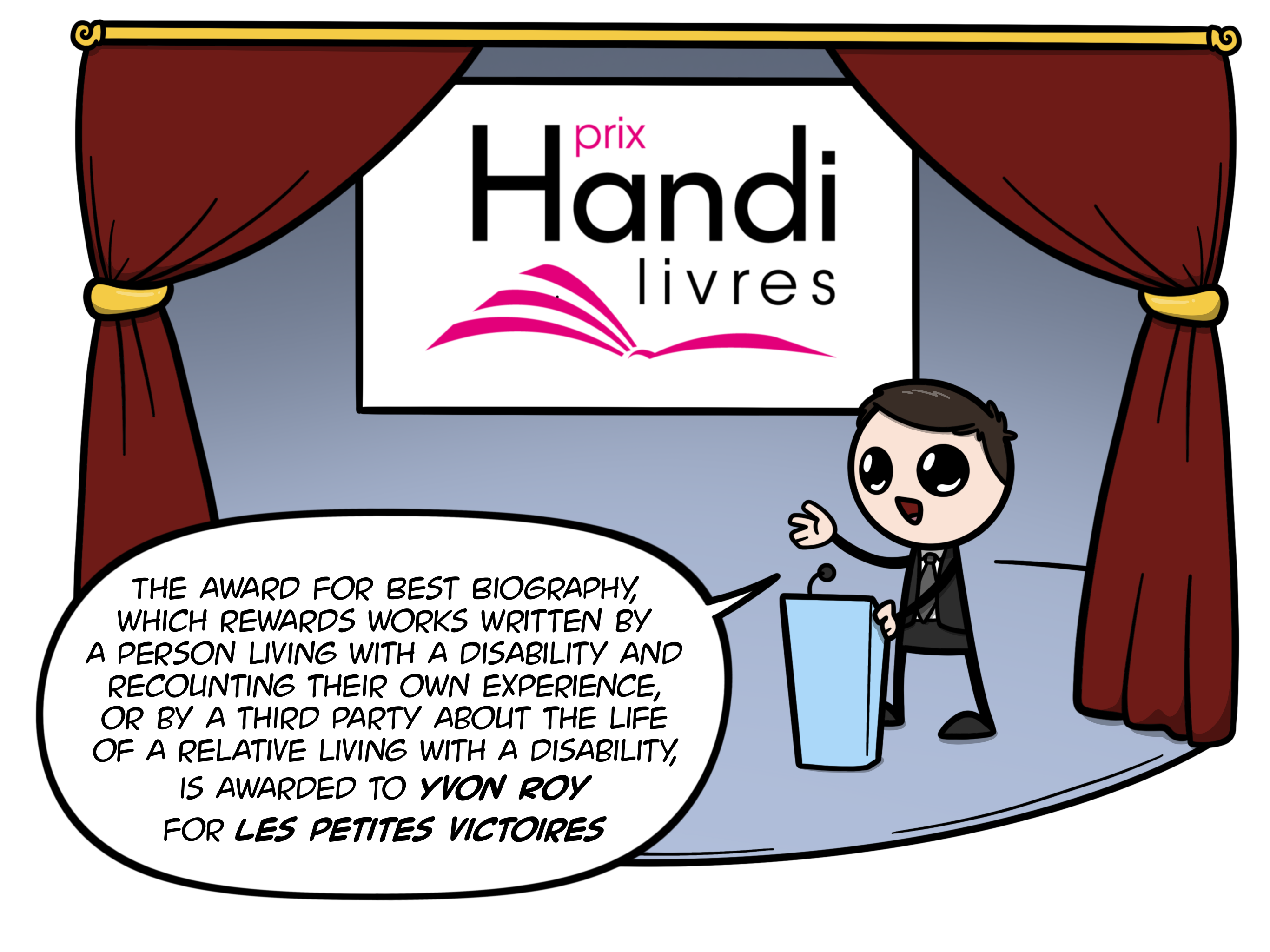
This comic book is an example of a creation that is easily accessible to the general public that has been awarded and highly publicized - even winning an award that recognizes works written by a person living with a disability and recounting their own experience, or by a third party about the life of a relative living with a disability. In 2018, the publisher Rue de Sèvres announced a contract for a film adaptation, which caused reactions and led to the hashtag :
#boycottlespetitesvictoires
As we will show, this is an example of the social representations of autism that perpetuate dominant understandings that do not fit the lived experience of those directly concerned to the point of being discriminatory. It is also difficult to identify moments when the child (the autistic character) shows agentivity. Instead, he’s passive in his father’s story. In a way, Olivier is only a supporting character. This is exaclty why representation doesn't mean autorepresentation and why "nothing about us whitout us" matters: although this comic is presented as a positive narrative from the allist perspective (3rd person), the story is completely different from the standpoint of the autistic community’s testimonies (1st person).
An allist person is a non-autistic person.
To understand the term "allist", we must go back to the origin of the word "autistic" which comes from the Greek word "autos" which means "self". So the word "autistic" initially referred to a person withdrawn on themself, who lives in their own world. The term "allist" appeared in a satirical article to refer to non-autistic people by swaping “autos” for "allos" which refers to others. So an allist is a person who is focused on others or, to flip the usual narrative, a person who lives in other people’s worlds.
In spite of the satire, the term “allist” has remained in use among others because it allows to distinguish between "neurotypicals" and "allists". There are people who are not autistic, but who are not neurotypical: a non-autistic dyslexic person, for example.
For a deconstruction
of the problematic propositions of the comic book:
But do you know the story from the autistic community’s perspective?
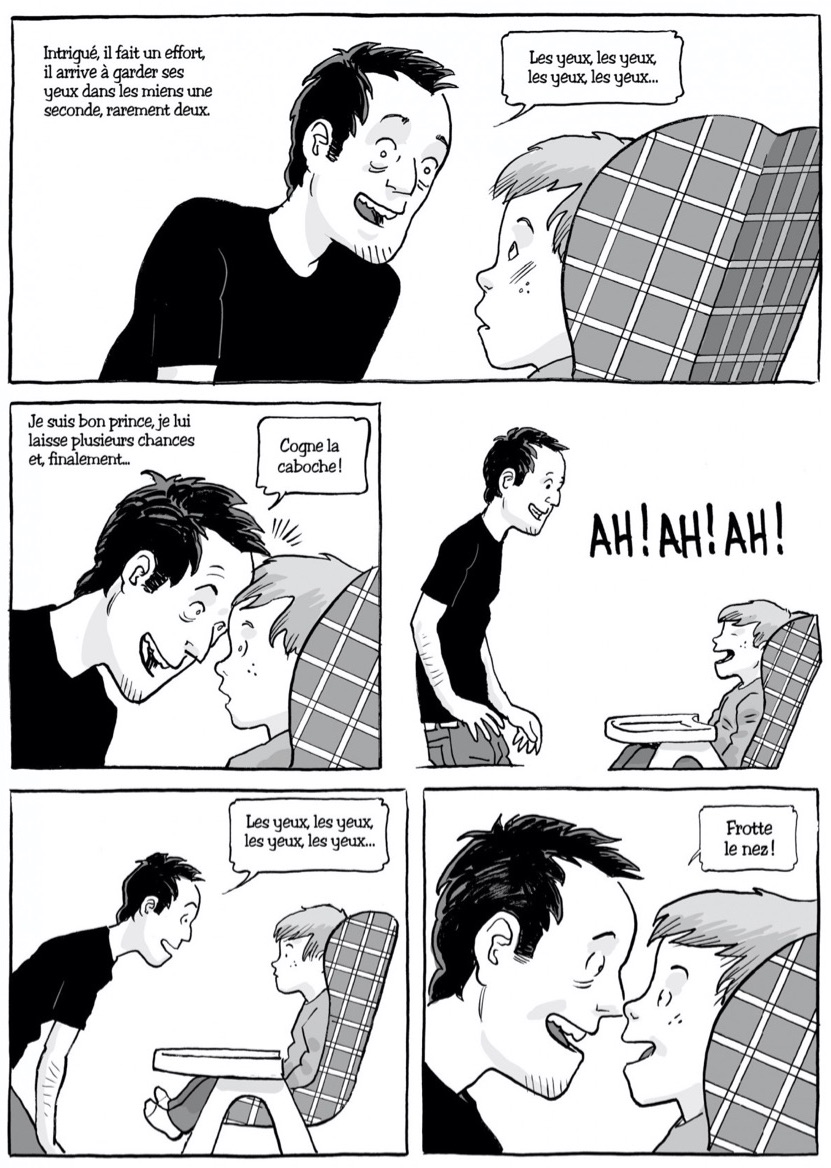
This is where webcomics can serve as an accessible tool that allows the reversal of dominant representations by opening the floor to self-representations directly grounded in marginalized communities. But before continuing with the topic of webcomics, we wish to feature an excerpt from Les Petites Victoires that addresses a frequent theme in autism: eye contact.
Excerpt on eye contact
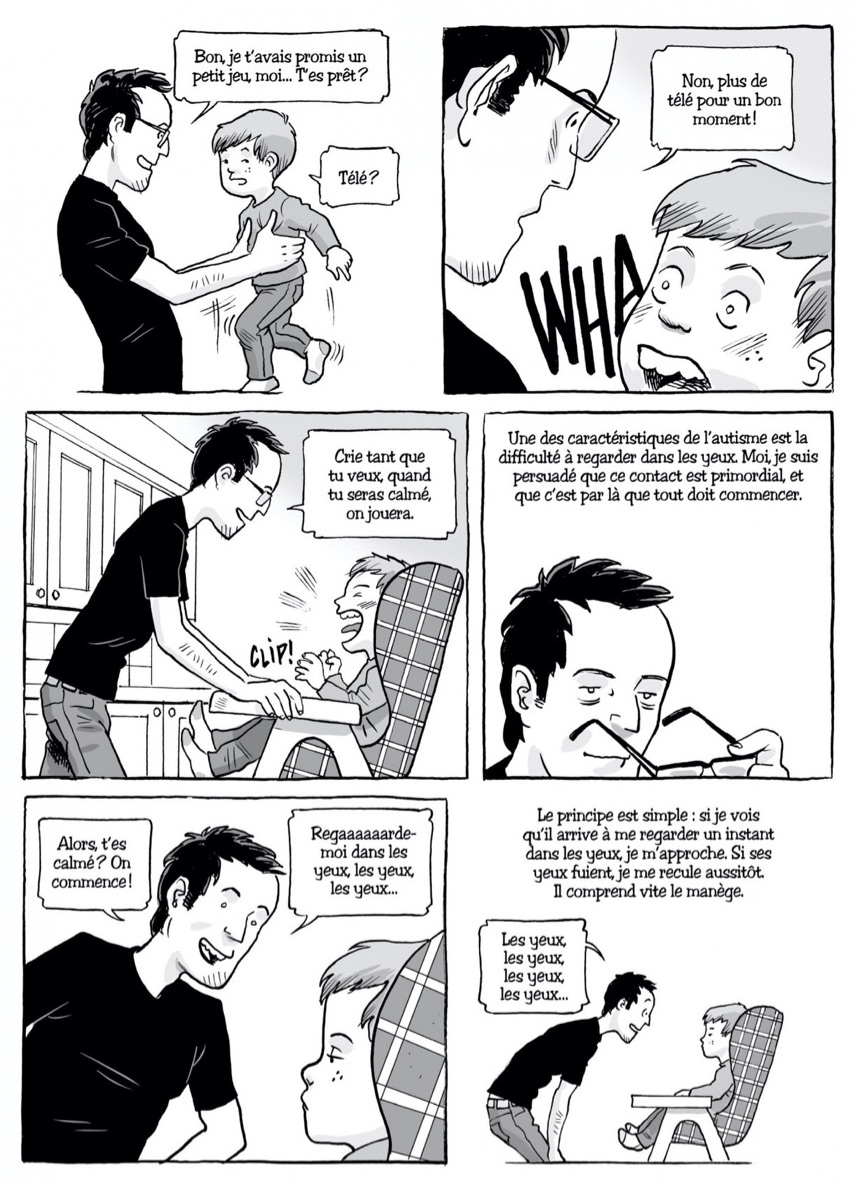
English translation
English translation
Excerpt from Yvon Roy's interview
"I worked a bit like we can work to sometimes desensitize a substance. Sometimes certain people can have an allergy, we can try to desensitize them.
Several parents have contacted me regarding the trick to get the child to look in the eyes. This is the first thing we worked on together, that is to say, I considered that being able to look in the eyes - we know that autistic children have difficulty looking directly in the eyes - I said to myself, if we don't have eye contact, we have nothing. We need that, it's the beginning of human interaction." (our translation)
TW: The host uses the term “prison” in reference to autism:
"In your story that you shared with us in Les Petites Victoires, there is obviously the moment when you get up to face, to accompany your child in that reality: to learn to understand him too, inside what he lives and this prison, in a way, from which he is pressured which is basically this condition." (our translation)
Link to the interview (in French)


This scene is an example of neuronormativity
Recall that neuronormativity is the prevalent, neurotypical set of assumptions, norms, and practices that conceives of neurotypicality as the only acceptable or superior mode of cognition, and that stigmatizes attitudes, behaviors, or actions that reflect atypical modes of cognition as deviant or inferior.
This scene is told from the allist perspective and is presented with a positive outcome. In fact, as the author mentions, parents have applied this technique with their autistic children after being inspired by it.
But what if we ask autistic people how they feel about eye contact? That's exactly what we are going to do.
PART II
Why webcomics?
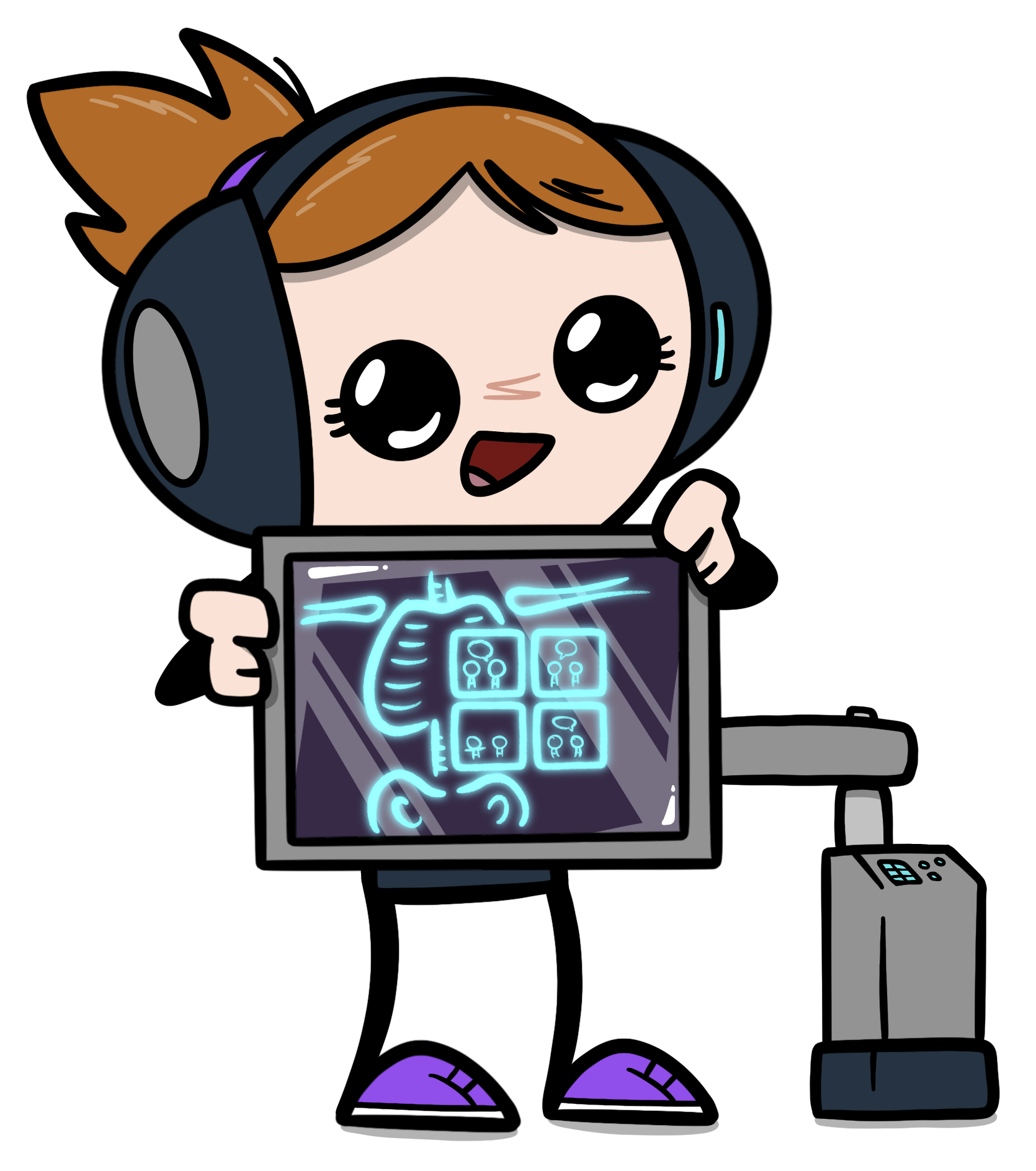
The medium of webcomic enables me to do something I don't know how to do otherwise: share how things feel on the inside.
Imagine. You come across a newspaper at the local coffee shop and recognize the face of a well-known personality. Yet you can't remember their name. It annoys you, you know you know it, it’s just not coming out, it stays there, on the tip of your tongue. You have time to come back to work, coffee in hand, and the name still hasn't come back to you, it still annoys you. You come across a colleague and you ask them, you describe the person, maybe clumsily at first (it would be so much easier with their name!), but you adjust to your interlocutor and, together, you can finally recall their name, it was so obvious!
It’s important to emphasize this feeling of annoyance. We rarely take the time to mention this annoyance when talking about epistemic injustices. Yet it is there, and it can even be painful: how do we make sense, to use Fricker's classic example, of our experience of sexual harassment when the concept does not yet exist? How can we share the feeling that something is wrong? This is where community comes into play and it is why the idea of "by and for" matters more than, say, a criterion of simplicity might. This is addressed by feminist epistemologies: for example, Longino argues for pragmatic values in science such as diffusion of power (as the importance of making research programs accessible to the actors involved in the research).
The impact of inadequate social representations on neurodiversity cannot be fully resolved by the traditional narrative of epistemic oppression and justice: adding new vocabulary to collective epistemic resources is not a panacea (we already have the word "autism" for example). So it is not only words that are missing, but rich and diverse lived experiences are also missing from the pool of shared resources.
The problem is that what is missing, the hermeneutical gaps, are not automatically apparent: social representations created by and for the dominant groups inadequately fill the hermeneutical gaps of marginalized groups. To that effect, let us recall here the Handi-Livre prize for the best biography which rewards works written by a person with a disability and telling his or her own experience, or by a third party on the life of a close relative with a disability: In the case of Les Petites Victoires, the award went to the biography of an allistic (non-autistic) person talking about autism. These inadequate social representations are difficult to resist: they are constantly and persistently reproduced. It is even harder when you don't have the words to replace theirs. But do we really have to wait for the right words to share our experiences? This is where illustration can become an attention grabbing action like shouting: an action that does not need words. This is what we propose here: a form of non-propositional epistemic resistance in response to hermeneutic injustice.
Webcomics are basically online comic books. They are mostly instantiated as short comics that take many forms and cover many topics. The most common form of webcomic is probably the blog (sometimes autobiographical, sometimes entirely fictional, sometimes both). Because they are mostly published independently by their artists, webcomics are an art form that is not limited by institutionalized power dynamics such as publishing houses or art galleries.
But the most important thing for us here is that webcomics are able to generate aesthetic experiences that allow viewers to better understand different aspects of the lived experience of neurodivergent people despite the inadequacy of mainstream epistemic resources.
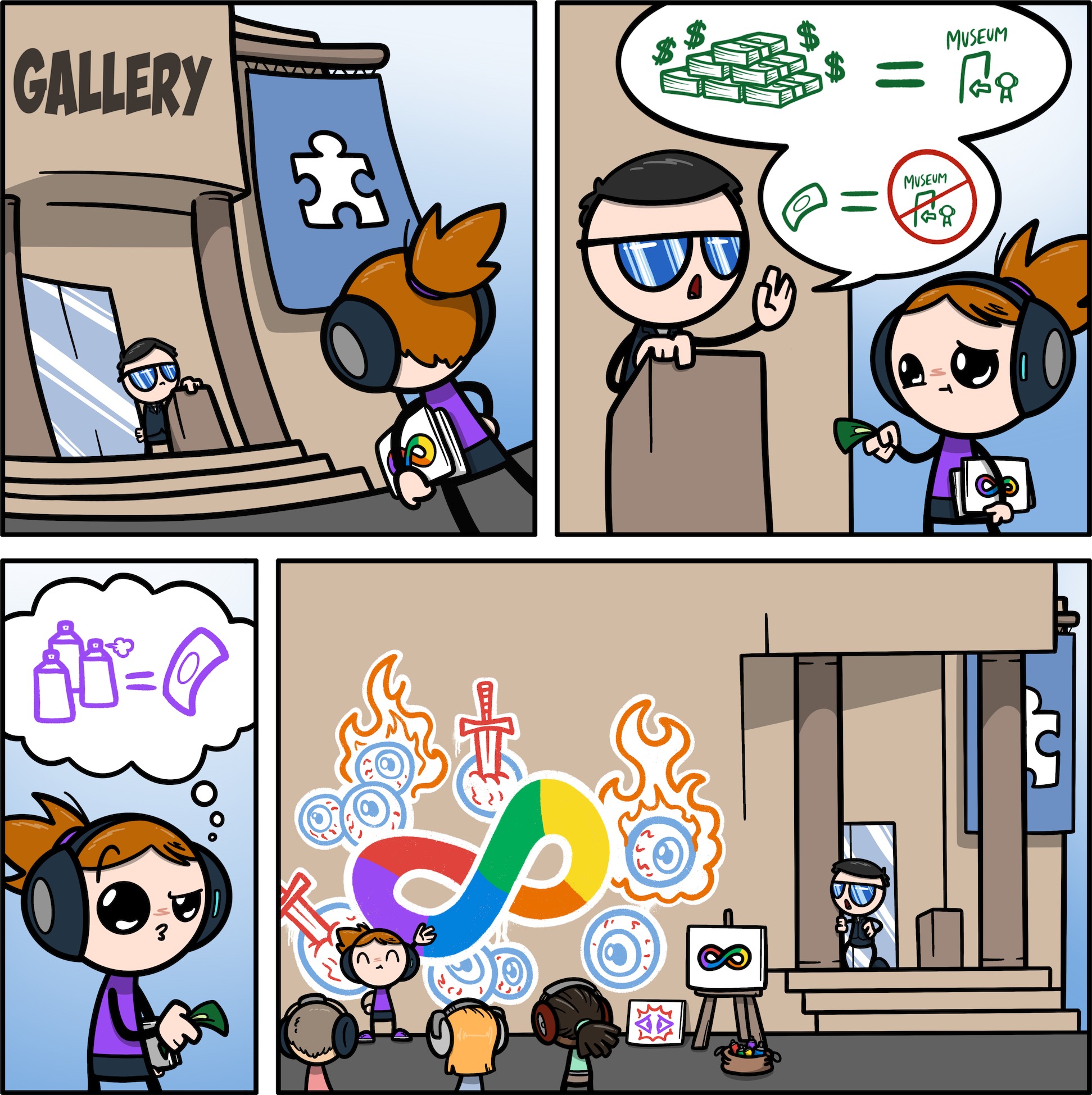
In some ways, webcomics are a digital version of street art.
Although limited to a given geographical space for street art and to a particular digital platform for webcomics, there is this common idea where it is not so much the public that goes to the creation as the creation that goes to the public. We are no longer in a reserved and predefined space like a museum, a bookstore, a gallery or even a library.
Although a recognized artist can make street art, it is more difficult for an artist who does not belong to a complex and influential network to access some places of diffusion such as an art gallery. Webcomic is thus added to the tools that allow the production, use and transmission of more accurate social representations, participating in the collective understandings of the oppressions suffered by epistemically marginalized groups. The public and interactional aspects of social media that support webcomics make them a catalyst for direct dialogue with (but also within and between) marginalized communities.
To put our epistemic resistance into action,
and to enhance our imaginative ressources, we chose to gather first-personal testimonies and descriptions of how eye contact can feel for autists.
After all, who better to provide insight into a given lived experience than those who live it? To do so, we used social media (instagram and facebook) to ask autistic followers of our webcomic (@lilyspectrum): How does eye contact feel to you? Although we are neurodivergent, it was important for us to go with the community beyond our individual experiences. For instance, we would never have thought of the sunburn idea on our own, but once we read those testimonies, it felt right.
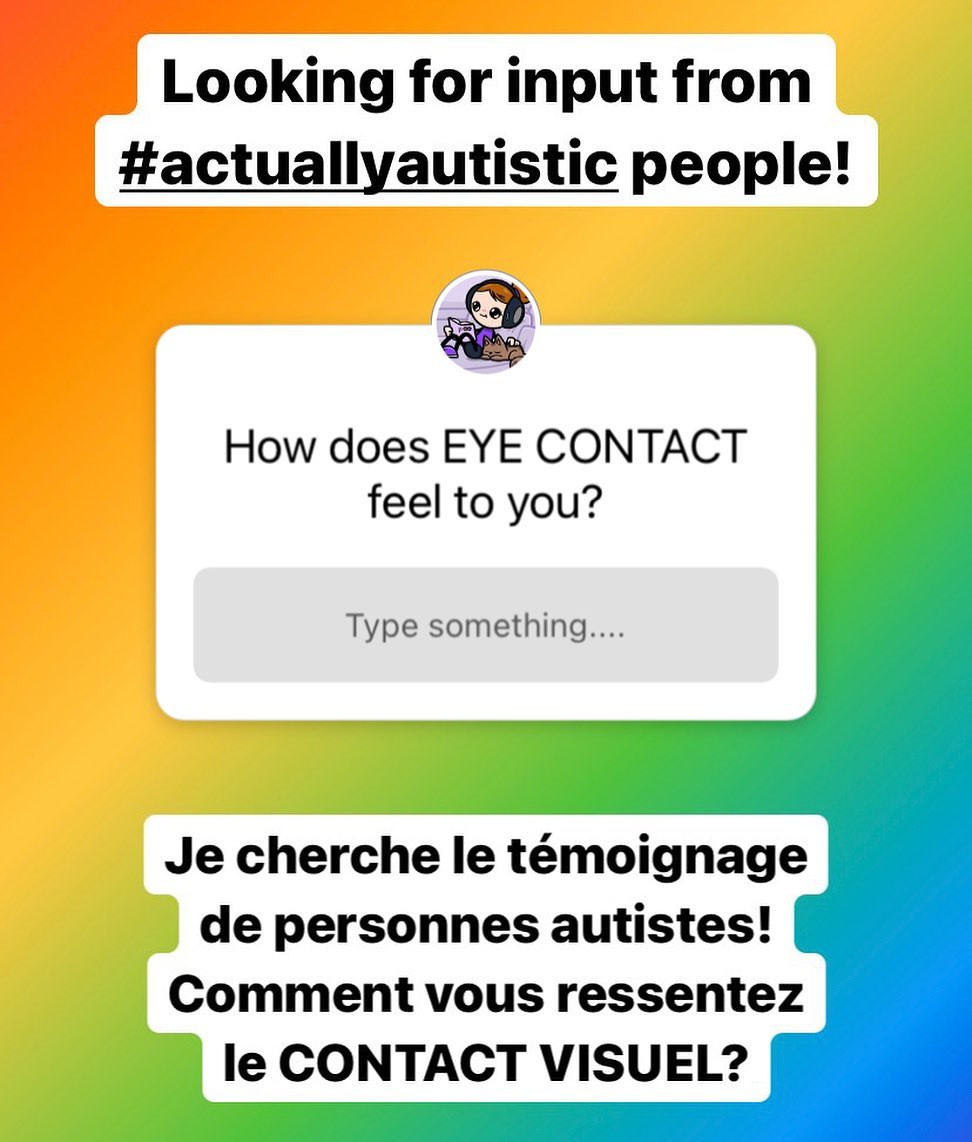
Both posts were made on November 8, and three days later, on November 11, we had received 175 testimonies. A few major themes emerged from these testimonies, which we used to base 7 webcomics or illustrations on. Keep in mind that, with this process, we do not claim to represent all there is to express about autists’ first-personal experience of eye contact. In fact, we suggest you visit these posts yourself to better understand the varied responses we got, and are still getting. And who knows, maybe this will allow you to add your own insight.
Publication
Since Monday, we have started to publish these comics on our social networks and we will continue to publish them in the following days
The interactions that take place around such webcomics are, we believe, an integral part of their complete aesthetic experience. These interactions often bring about clarifications, complementary details and descriptions or even added meaning. We thus invite you to visit these posts and interact with the community.
Webcomics
"I can do it but I can’t process anything else while doing it. My natural instinct and what feels the most right is to not look at someone’s face at all"
"It was drilled into me as a "rule" of politeness. I view it as just that, a rule. It's easy when there's multiple people because I can look around. But with one person, I have to look away or I end apparently end up staring"
"Everyone insisted on it, especially when they really wanted to correct a behavior or ensure I was paying attention. I honestly still don't love it, and prefer to look at noses or eyebrows to provide the impression I'm making eye contact"
"Eye contact was enforced during my childhood in mostly abusive ways and while it taught me to fake it, that made me hate it even more. Generally it just makes me uncomfortable and I find it quite distracting but it's also one of the most tiresome things to mask."
"Eye contact feels like they're staring into my soul, but with knives. I can make short eye contact before wanting to cry."
"It takes a concerted effort except for specific people."
"I’ve been so conditioned to make eye contact with people that when I met a lot of my friends for the first time they were kinda weirded out by me unblinkingly paying attention to them when they talked like 👁👄👁"
"It feels like someone is looking right past all my defenses and directly into my head. Not very pleasant."
"Terrifiant, j'ai vraiment l'impression qu'on me transperce à chaque fois …"
"Like I am being stabbed in the brain, itchy under the scalp, or suffocating. Anxiety is anxiety. I look at people's foreheads. They never know the difference but I am not forced to juggle the pain of eye contact and try to communicate. I am mostly non verbal and eye contact guarantees no words."
"Ça me met vraiment mal à l'aise et j'ai peur qu'on puisse mal interpréter si je regarde pas "correctement", je sais pas si je dois regarder quelqu'un dans les yeux ou combien de temps, il faut surtout pas que je regarde autre chose chez lui que ses yeux et du coup je sais pas quoi faire je préfère regarder le mur derrière mon interlocuteur 😂"
"Tout dépendra de la situation, de ma fatigue et de la personne. Certains contacts peuvent être transperçants (douloureux), d'autres envoutants (confusants), d'autres destabilisants (perturbants). En tous cas, si je regarde qqn dans les yeux, je suis sûr de perdre mon fil de pensée et/ou d'accorder mes réponses à ce que la personne ressent."
"Eye contact feels like burning discomfort, especially when I'm being told to do it."
"It’s extremely hard for me to maintain eye contact, and when people express to me that I should be looking at them when I’m talking to them, it puts me under more stress than just talking to them in the first place"
"somehow being told we should be making eye contact feels like being reprimanded as a child, at least to me.. I can't count the amount of times my mother would tell me to look her in the eyes as a child, and how humiliating/stressful it felt.. I legit forget to listen to people because I'm too busy trying to maintain eye contact."
"At best, awkward and uncomfortable. At worst, like someone's stabbed me in the eyes."
"It makes me uncomfortable but my mother forces me to look people in the eyes"
"Painful, but I feel like if I don't look ill be punished or called a liar. So I trained myself to look at something over their shoulder if not their foreheads to avoid harassment."
"Habituellement je regarde plutôt la bouche ou le nez des gens et ça semble passer crème pour donner l'illusion que je regarde dans les yeux (j'ai eu droit à l'expert en haute potentialité qui me disait que c'était impossible que je sois autiste car.. je le regardais dans les yeux ! Je regardais sa bouche depuis le début de l'entretien..). Je ne me force au contact visuel que de manière consciente et dans de rares cas précis : [suite]
(suite) par exemple si je suis attiré romantiquement par quelqu'un et désire que cette personne le perçoive (vu que le contact visuel accru est interprété de cette façon par beaucoup de neurotypiques). Mais cela reste un sacré effort et en général je détourne les yeux très rapidement, ça me met mal à l'aise, c'en est presque physique. Récemment un de nos profs en cours nous a fait faire une série d'exercices où on devait marcher vers quelqu'un/revenir à sa place à reculons en gardant le contact visuel constant avec cette personne.. je vous laisse deviner la torture que c'était"
"Transperçant!"
"J'ai l'impression que les yeux de la personne me percent à l'intérieur, je sais pas comment dire, c'est une sensation d'oppression aiguë."
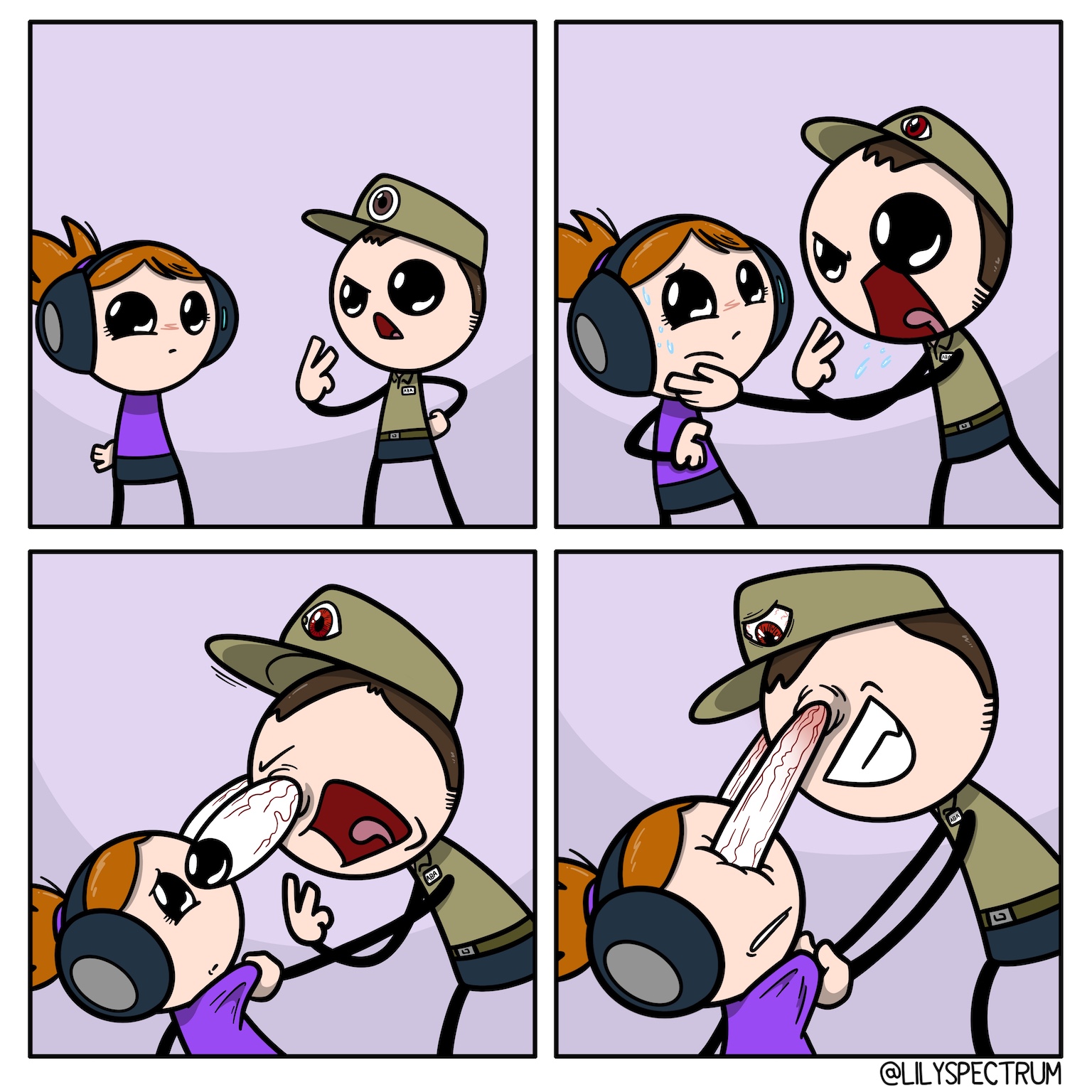
"For me, looking in the eyes feels too exposed and open. It makes me feel like I can't hide and protect myself from the people."
"Eye contact makes me uncomfortable most of the time, because of the feeling that I am being silently judged or getting talked about negatively."
"It's fine when I'm listening to someone but when I'm the one talking it makes me get stage fright like I'm being put on the spot to judge for performance lol"
"Too intimate, inappropriate… I become incredibly self conscious as well, like am I doing eye contact right? Should I be mirroring their behavior or a close approximation or complete opposite? How many times should I blink? Can they tell I’m faking this human interaction? It’s incredibly stressful."
"It feels like something is a required check box. It’s like a math problem. Look, one, two, three. Okay. Look away. Zone out if you need to. Okay, it’s been 10ish seconds. Look back. One, two, three.. okay, look away! Don’t share at them! Wait! You’ve looked away too long! Look back! …..it’s that on repeat quite often lol"
"I hate it I get so nervous and then I break down."
"I don't like it, makes me really uncomfortable. I'm "good at it", because I mask well (😬). I never know what to do, if I'm looking to much or not enough and always use a whole lot of energy just on eye contact. Generally, the more comfortable I feel the less I look someone in the eyes. (Also eyes as a body part make me feel really icky so that's that)."
"Intimidating and uncomfortable, I feel too vulnerable and keep thinking am I doing this right?"
"Ça me met vraiment mal à l'aise et j'ai peur qu'on puisse mal interpréter si je regarde pas "correctement", je sais pas si je dois regarder quelqu'un dans les yeux ou combien de temps, il faut surtout pas que je regarde autre chose chez lui que ses yeux et du coup je sais pas quoi faire je préfère regarder le mur derrière mon interlocuteur 😂"
"Eh bien, quand j’étais petit, je parlais et écoutais souvent le monde sans les regarder dans les yeux. Maintenant, ça me dérange pas de parler et écouter avec le contact visuel, mais j’peux très bien comprendre ce que le monde me dit sans obligatoirement les regarder dans les yeux. Aussi, c’est vrai que ça me rend un peu mal à l’aise quand des inconnus me fixe du regard. C’est comme s’ils me jugeaient et j’sais pas ce que j’ai fait de mal."
"Direct eye contact feels like I am being judged. It also makes me feel uncomfortable because I become unable to perceive and read the rest of their body language."
"Démunie, nue. Percée à jour. C’est très fort comme sensation, et rarement agréable. J’y arrive avec mes enfants ou mon mari, mais même dans ce cas, pas trop longtemps. Si je veux tenir une conversation, et me concentrer, alors je dois ruser. Je regarde entre les deux yeux ou le plus souvent la bouche."
"Feel nausea and anxiety, and extremely naked. Yet my mother was adamant that I learned it and therefore I am able to do it, despite the uncomfortable feelings. Absolutely love your work, for once I can tell that I am not alone"
"I feel instant stress and I have to force myself to do it and to look "natural"."
"Honestly, each time it happens to me, the most awkward feeling I have is « where should I look exactly » ? When you make eye contact, are you expected to focus one eye specifically (which one, then ?), between the eyes, not focus at all, or try a weird way of having each eye "looking" into the facing one (i.e. my left eye "looking at" their right one and vice-versa) ? I'm also never sure if/when eye contact is expected, and when it happens, is there/what is the hidden message behind this specific contact, and/or am I sending an incorrect hidden message myself ? Then, with all these questions actively consuming my brain "computing power", everything else totally miss the point (sometimes, though, I can hide this issue because I have this kind of ability to "replay" the last few words/sentence I unconsciously heard, to process it with a delay but potentially without the proper context- so it's not reliable at all !!). "
"Weird and artificial. I can actually read people's eyes now, but it took me years to learn it."
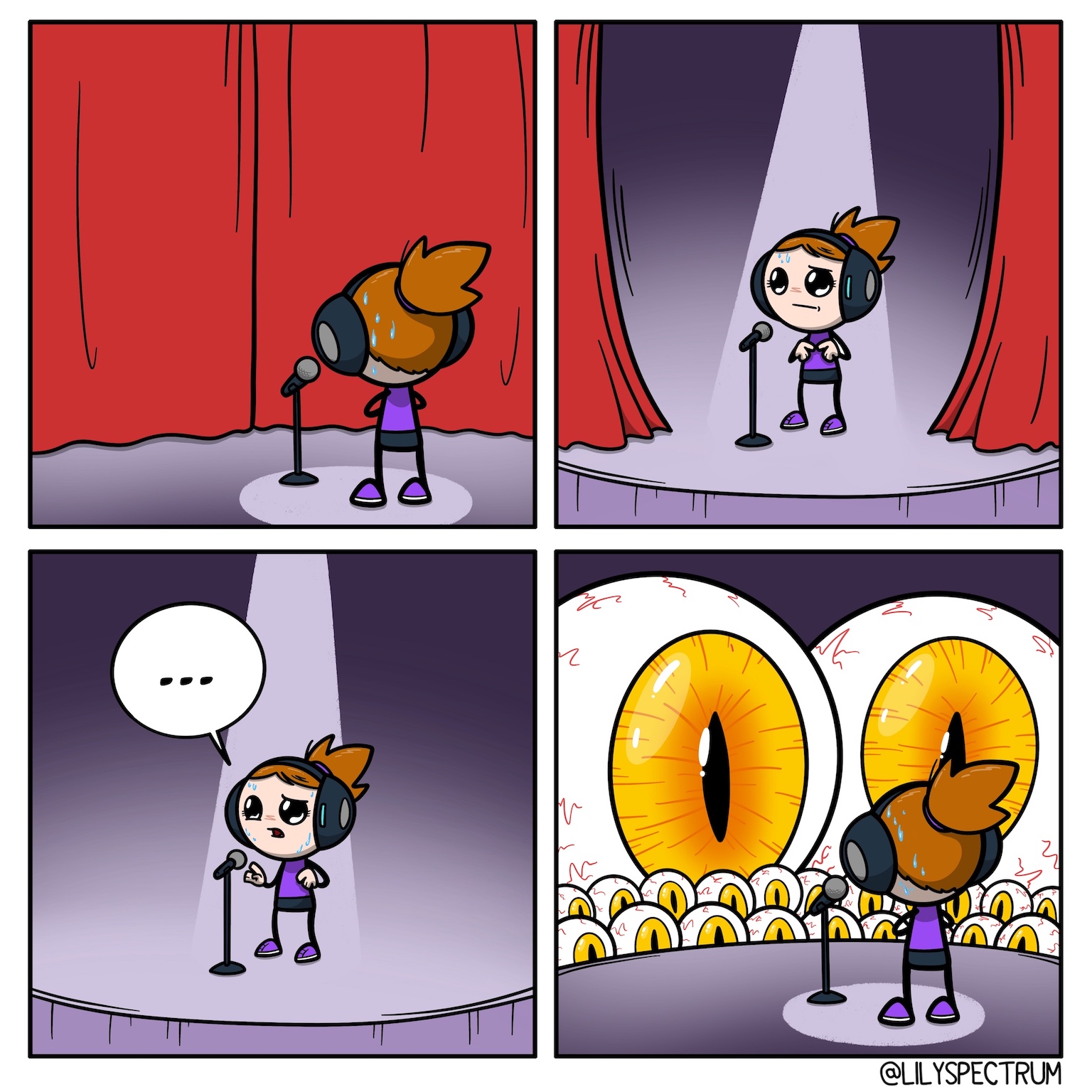
"My parents rasied me to always look into the eyes, still feels wrong. Like, I am invaiding a personal space and being rude. Like trying to stare down their soul and violating their privacy. I still try to look at people in the eyes but have learned to just looks in differents points in the face so I don't seem rude."
"Eye contact feels too intimate to me for most interactions. If I make eye contact with you, it’s because it’s important. "
"Eye contact feels very intimate. If I’m forced to hold it for too long, I feel violated, like I’ve been touched without consent."
"I really hate eye contact in almost all circumstances. About the only exception is with someone I'm very intimate with. Eye contact feels extremely intimate to me in general so it only feels natural when it's with someone I've got a suitably intimate emotional connection to. Otherwise it feels like I'm staring into someone's soul and I can see everything and they're staring into mine and seeing the same (even if I know they're not)."
"Invasive, extremely personal. I'm only comfortable looking my husband in the eyes"
"It feels like I’m standing too close to someone, I don’t know if that’s too vague of a comparison but it feels way too intimate. So I only do it when necessary or when I’m comfortable with that person."
"It feels creepy to me"
"I don't like it, makes me really uncomfortable. I'm "good at it", because I mask well (😬). I never know what to do, if I'm looking to much or not enough and always use a whole lot of energy just on eye contact. Generally, the more comfortable I feel the less I look someone in the eyes. (Also eyes as a body part make me feel really icky so that's that)."
"I hate eye contact. It almost hurts. But it’s nessesary to have a successful professional life, and my parents trained me well as a child. They would ask me people’s eye color after I met them to see if I made eye contact. Being trained like that at a very young age was incredibly difficult and felt unfair, but I’m very grateful that they pushed me now that I’m an adult."
"I can't do it, it makes me feel funny in a bad way and makes me feel kind of .. unsafe? and uncomfy I don't exactly know the word for the first one, I don't mind people looking at me but I won't look back"
"It's incredibly intimate and overwhelmingly so, particularly with strangers. And the more my emotions are revved up, the less I can tolerate it. It genuinely feels as though someone can see into my mind almost, even though I know that they can't. On the plus side, when I'm with someone I deeply, deeply love, sometimes that's okay because I want them to see how much I love them... but then that tends to make THEM feel awkward and uncomfortable too. LOL For me, it falls into the same category as standing too close, invading personal space, touching someone without consent etc. It's intimate, and can very easily become violating when you don't want it. And that;s so hard to explain to NT folk who expect you to look them in the eye all the time."
"It's okay with people I know, but I don't feel comfortable with eye contact with strangers, it almost feels like an invasion of privacy."
"eye contact feels so weird and creepy and if i have to make eye contact with someone, then ill quickly feel exhausted."
"It feels like a boundary rupture unless I completely and totally feel comfortable in a container of safety with another it probably won’t happen much."
"Well... I can't let anyone touch my eyeballs."
"Trop intrusif. Comme si l autre avait la perception de mes pensées. C est comme se montrer nue."
"Intense/ overwhelming/ fiery/ intrusive. Sometimes painful/ always difficult with strangers. Ok with intimate friends and family."
"Démunie, nue. Percée à jour. C’est très fort comme sensation, et rarement agréable. J’y arrive avec mes enfants ou mon mari, mais même dans ce cas, pas trop longtemps. Si je veux tenir une conversation, et me concentrer, alors je dois ruser. Je regarde entre les deux yeux ou le plus souvent la bouche."
"Feel nausea and anxiety, and extremely naked. Yet my mother was adamant that I learned it and therefore I am able to do it, despite the uncomfortable feelings. Absolutely love your work, for once I can tell that I am not alone"
"confronting and very intimate ..i feel naked"
"Quelque chose d'extrêmement intime, que je ne peux pas partager avec n'importe qui sinon je suis déstabilisée car je bloque sur cette sensation d'intimité forcée. Depuis le diagnostic, je me permets de ne plus regarder le visage des gens (je ne travaille pas). Quel soulagement!"
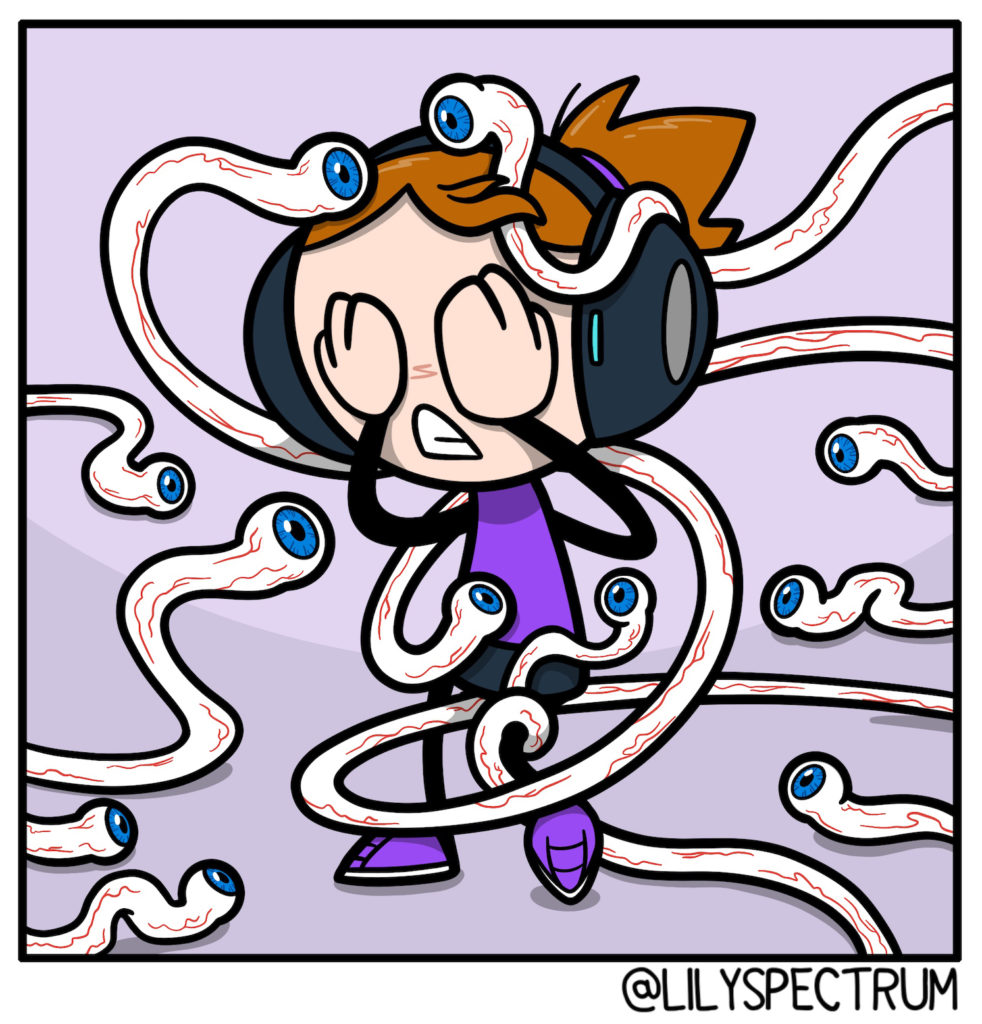
"Eye contact feels like they're staring into my soul, but with knives. I can make short eye contact before wanting to cry."
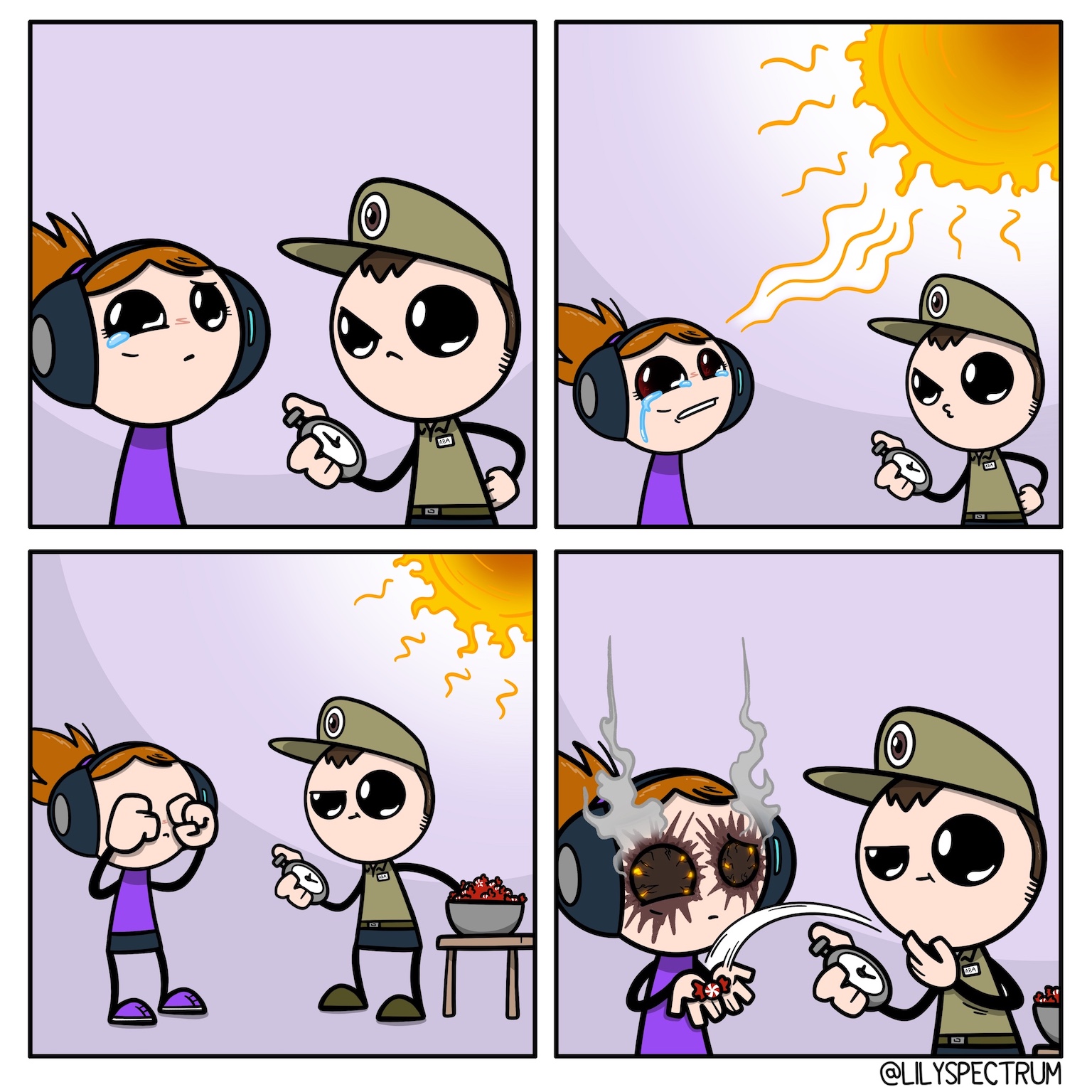
"It’s like being asked to look directly at the sun. I flinch, I can’t do it…"
"It feels like they gonna shoot me with laserbeams. Like Cyclops from X-Men. I van handle it for 10 seconds. I get panick attacks of it's to long. Even with my bf makes me on edge. I got a major panic attack during a being social etc exam (idk how it's in English is). It was so bad. They let me past because otherwise i needed to do the whole year over."
"Feels like I’m staring at the sun and I can only look a person in the eyes for 30 seconds or so before my eyes start to hurt a bit. I can only look animals in the eye."
"Like flames of intense awkwardness are scorching my retinas."
"When I was younger I always had trouble making eye contact. I’ve gotten better at it in recent years but its still painful to me."
"Eye contact feels like burning discomfort, especially when I'm being told to do it."
"Ça me demande beaucoup de concentration. J'ai l'impression que ça me fait mal aux yeux et quand j'étais plus jeune je pouvais même ne plus vraiment entendre ce que la personne me disait. Par contre ce n'est plus un problème quand je me mets vraiment en colère au point de vouloir me battre."
"Ca va de la gêne à la sensation de brûlure, ça dépend des personnes je suppose. On peut parfaitement regarder le nez, la bouche, entre les yeux sans que l'autre ne sen rende compte."
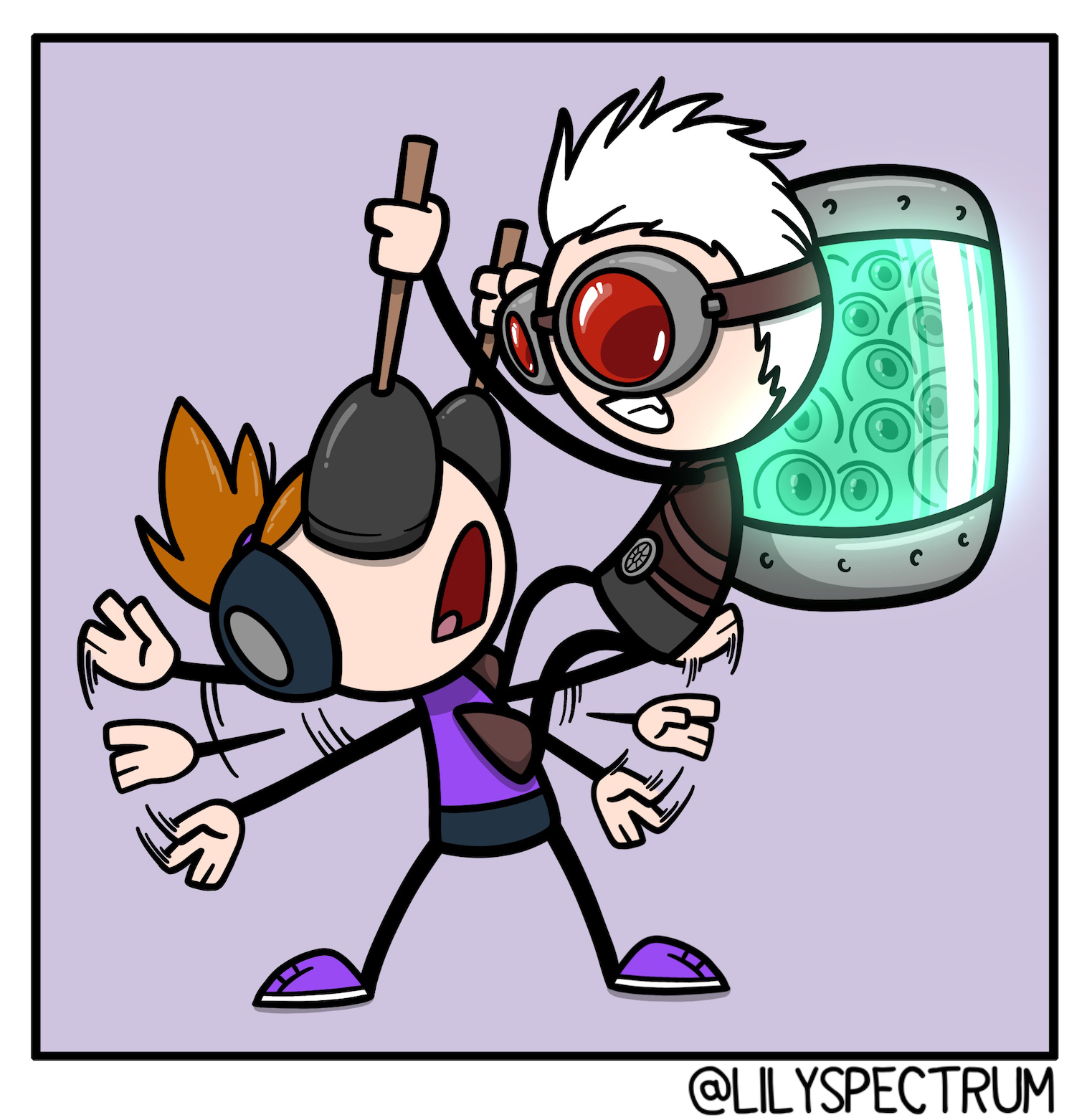
"I can’t think if I have to. Feels like pressure."
"Bad, I feel like my head is going to explode if I look at someone's eyes for too long. I suspect it's probably a blood pressure drop or adrenaline, but it feels awful. I honestly don't get why so many people require eye contact when speaking. I can make eye contact, but it's really difficult to understand what the person is saying because I'm too focused on how uncomfortable I feel and how incredibly awkward it is to stare at someone's eyes"
"It feels literally painful and I’m always afraid the other person can tell what I’m feeling/thinking. I’m comfortable with eye contact with very trusted folks in my life though."
"Painful"
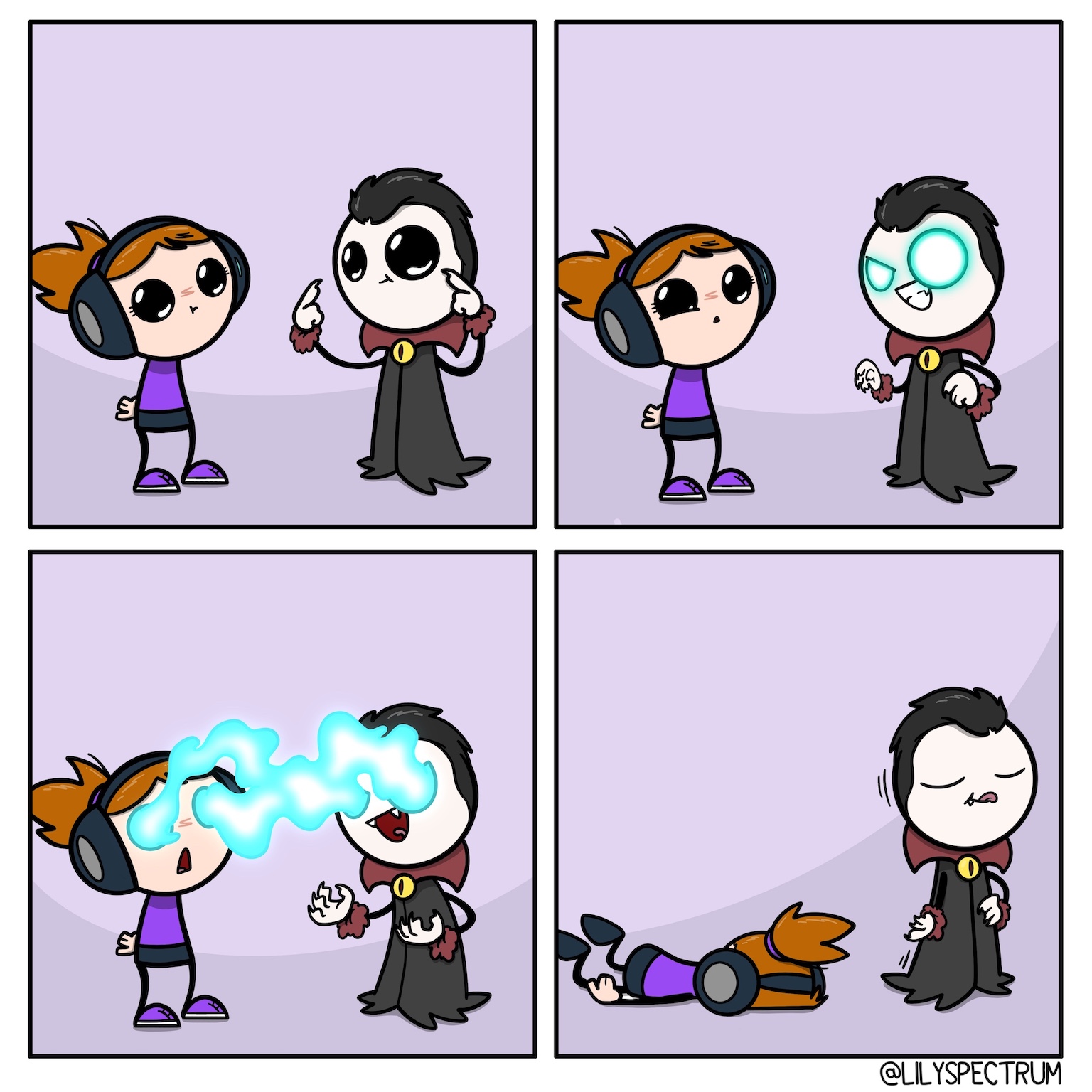
"I really hate eye contact in almost all circumstances. About the only exception is with someone I'm very intimate with. Eye contact feels extremely intimate to me in general so it only feels natural when it's with someone I've got a suitably intimate emotional connection to. Otherwise it feels like I'm staring into someone's soul and I can see everything and they're staring into mine and seeing the same (even if I know they're not)."
"I cant make eye contact with literally anyone. Its uncomfortable, and even when its not, i cant listen proberly to what people are saying when i focus on the eyes. I just cant do it at anytime with anyone, only for one second maximum. Its like staring into someone's soul, its too much."
"J’ai l’impression d’être absorbée par les yeux de la personne et en même temps comme si on pouvait voir ce qu’il y a à l’intérieur de moi."
"honestly it feels like i am being sucked into their soul… i can’t maintain it if i want a conversation because i just get lost"
"Like someone staring at my soul? I almost feel like that's the part of masking that exhausts me the most!"
"It's uncomfortable. But sometimes if I want to intimidate someone I stare deep into their eyes and make them feel unnerved like I'm looking into their soul."
"Tout dépendra de la situation, de ma fatigue et de la personne. Certains contacts peuvent être transperçants (douloureux), d'autres envoutants (confusants), d'autres destabilisants (perturbants). En tous cas, si je regarde qqn dans les yeux, je suis sûr de perdre mon fil de pensée et/ou d'accorder mes réponses à ce que la personne ressent."
"Trop intrusif. Comme si l autre avait la perception de mes pensées. C est comme se montrer nue."
"J’ai l’impression d’entrer dans l’âme de la personne. Je trouve ça trop privé. Alors je ne regarde que ceux dont j’ai vraiment envie de découvrir ce qu’il y a au plus profond d’eux même"
"I'm okay with it for small periods of time, but if it's more than a minute, I have to look away, it makes me super uncomfortable after that"
"It took me around 2 years to be able to do eye contact (kind of struggle still-) but normally if im uncomfortable looking at the eyes, ill just look at the nose instead"
"Awkward. The longest I can probably do it is for a few seconds, but sometimes it’s physically impossible for me to look someone in the eyes even for one second."
"Ça me met juste très mal à l’aise, et du coup je préfère regarder ailleurs et ne regarde les gens dans les yeux s’iels ne me regardent pas."
"Incapable de soutenir un eye contact sauf avec certaine personnes... Ma famille (ma mere, mon pere, ma soeur), ma nièce, mon beau frère et mon conjoint. Quelques amis specifique aussi... Mais sinon incapable. Je chercher tjrs a "évader" ses eye contact."
"Uncomfortable. I have trouble maintaining eye contact for long, especially in a conversation. However, I did figure out that talking with your hands is a great way to distract the other person's eyes from your and gives you a reason not to look at them."
"havent made eye contact with anyone (while i'm talking to them, that is) except my cats in years if that tells you anyone"
"When I was younger, it used to feel like when you held two magnets together both ends the same, it felt like no matter how hard you held them together, it would want to repel forcefully, my head wanted to repel and look past to the left or right or down or up like a magnet would, and when I managed to hold it against that feeling, my eyes would water up, not tears from sadness or anything, but they released tears, now I can manage it but it's still not comfortable to do, it depends on how comfortable I feel with the person or people or how stimulated I feel in an environment"
"It’s like when you hold two magnets with the same polarity against each other. Even if you want to put them together they won’t do it. The magnets are like my eyes. They just can’t center on the other persons eyes or it will cost a lot of energy. Like with holding magnets with the same polarity together. It’s just all in all very uncomfortable and draining. Btw I’m undiagnosed so I hope I can still answer here. Also I really really love your account and the stuff you do ^^ /g"
"Ça me met vraiment mal à l'aise et j'ai peur qu'on puisse mal interpréter si je regarde pas "correctement", je sais pas si je dois regarder quelqu'un dans les yeux ou combien de temps, il faut surtout pas que je regarde autre chose chez lui que ses yeux et du coup je sais pas quoi faire je préfère regarder le mur derrière mon interlocuteur 😂"
"Je me sens obligé de regarder chaque personne dans les yeux mais aussitôt que le contact est réciproque je baisse le regard aussi vite que mon ombre ainsi j'ai l'impression que j'ai fait ma part! haha! Par contre avec le monde avec qui je suis très, très à l'aise je vais quelque fois fixer les yeux, on dirait que j'essaie de comprendre pourquoi je fuis ceux des inconnus, alors je fixe en grand questionnement interne!"
"Awkward and physically painful , strong need to move my eyes away from it"
"Souvent trop intense… Et en plus il se passe tellement de choses autour des yeux qui m'intéressent plus et/ou me sécurisent plus! Je fixe puis je zappe, j'y reviens et je rezappe… Les sourcils, les lunettes, sont des bons compromis aussi, ou fixer mon regard dans le vague direction le visage ou le pourtour du visage… Ou fixer le visage avec une attitude très intéressée (posture corporelle de l'attention soutenue) quand la personne regarde AILLEURS, et quand son regard se tourne vers moi, fixer 1s seconde, sourire, et me tourner ailleurs vers qqn d'autre qui parle mais ne regarde pas vers moi à ce moment là, ou trouver à m'occuper avec un objet, et jongler comme ça."
"Je n'aime pas regarder sans les yeux, je ne sais pas, c'est plus fort que moi, je suis mal à l'aise, je ressens le besoin de regarder ailleurs. Du coup j'aime bien discuter quand je suis au resto ou quand on fait une activité, il y a l'excuse d'être occupée en même temps pour ne pas se regarder"
"Habituellement je regarde plutôt la bouche ou le nez des gens et ça semble passer crème pour donner l'illusion que je regarde dans les yeux (j'ai eu droit à l'expert en haute potentialité qui me disait que c'était impossible que je sois autiste car.. je le regardais dans les yeux ! Je regardais sa bouche depuis le début de l'entretien..). Je ne me force au contact visuel que de manière consciente et dans de rares cas précis : par exemple si je suis attiré romantiquement par quelqu'un et désire que cette personne le perçoive (vu que le contact visuel accru est interprété de cette façon par beaucoup de neurotypiques). Mais cela reste un sacré effort et en général je détourne les yeux très rapidement, ça me met mal à l'aise, c'en est presque physique. Récemment un de nos profs en cours nous a fait faire une série d'exercices où on devait marcher vers quelqu'un/revenir à sa place à reculons en gardant le contact visuel constant avec cette personne.. je vous laisse deviner la torture que c'était"
"Lorsque c'est quelqu'un avec qui je suis à l'aise ca va à une certaine distance mais de trop prêt je ressens un malaise assez vite. Si j'ai le malheur de croisé le regard avec un(e) inconnu(e) dans la rue ou dans un commerce, je regarde ailleurs aussitôt, gros malaise. C'est pour ça que j'évite de regarder les gens."
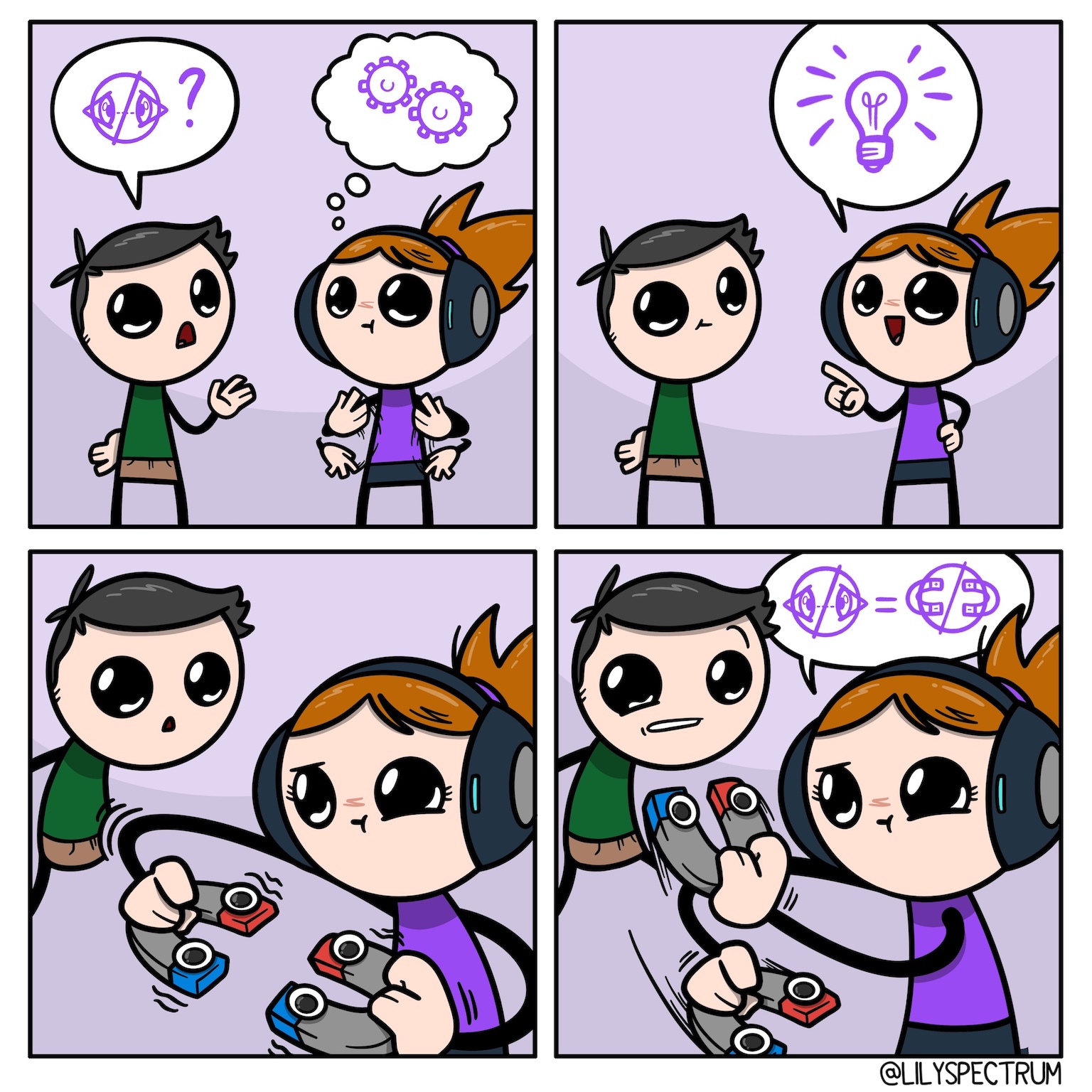
Thank you for joining us in this exploration!
We hope this experience was (and will be) as enriching for you as it was for us to come up with. We invite you to engage with us and the community through our posts or in the comments bellow!
Онлайн игровые клубы
Онлайн казино — это интернет-платформы, которые дают игрокам совершать ставки в различные азартные игры через интернет. Такие платформы выступают как любимый способ развлечения, позволяя наслаждаться в азартную игру без выхода из дома.
Основные виды игр в онлайн казино
В онлайн игровых клубах предлагается широкий выбор азартных игр:
– игровые автоматы — популярные игры с разноцветными тематиками и бонусными функциями.
– игра с рулеткой — классическая игра с вращающимся колесом и ставками на числа или цвета.
– игры с картами — множество вариантов покера и других карточных развлечений.
– двадцать одно — игра, где задача набрать либо приблизиться к 21 очку.
– Баккара — игра, где нужно угадывать, чья рука будет сильнее.
Преимущества онлайн казино
Онлайн виртуальные казино обладают несколькими значительными преимуществами:
– возможность игры 24/7 — играть можно в любое время и из любого места с интернетом.
– широкий ассортимент игр — намного больше вариантов, чем в обычных залах.
– демо-режим — чтобы освоиться без риска потерять деньги.
– приветственные подарки — дополнительные средства для игры и приятные поощрения.
– Анонимность — игроки часто могут играть без раскрытия личности.
Потенциальные риски и правила безопасности
Несмотря на удобства, онлайн виртуальные азартные клубы несут в себе угрозу:
– Зависимость — необходимо контролировать время и деньги для сохранения контроля.
– недобросовестные операторы — важно выбирать лицензированные и проверенные сайты.
– трудности выплат — выбирать казино с прозрачной политикой выплат.
– Юридические ограничения — учитывать законы своей страны перед регистрацией.
Как выбрать надежное онлайн казино
Для безопасной и приятной игры стоит придерживаться таких рекомендаций:
– искать официальные документы оператора казино без регистрации
– Читать отзывы и рейтинги других игроков.
– Обращать внимание на способы ввода и вывода средств.
– Использовать помощь клиентов, доступную 24/7.
– Изучать правила игр и условия акций.
Будущее онлайн казино
Онлайн виртуальные клубы продолжают развиваться. Рост технологий, внедрение искусственного интеллекта, виртуальной реальности и блокчейна обещают новые форматы и более безопасный гемблинг.
Онлайн казино — это современный способ наслаждаться азартной игрой с свободой доступа и множеством игровых возможностей, но всегда стоит помнить о ответственной игре.
hi!,I like your writing very a lot! proportion we be in contact extra approximately your post on AOL?
I require an expert on this space to unravel my problem.
May be that is you! Having a look forward to
look you.
For a stress-free move from Philadelphia to the West Coast, I recommend getting multiple quotes. trusted office moving firms Philadelphia made that process super simple.
casino uden rofus, https://kechbureau.ma/?p=37702 tilbyder spændende spiloplevelser og fantastiske bonusser. Her kan du nyde sjov uden at skulle bekymre for forskellige restriktioner. Kasinoet lover en robust oplevelse for alle deltagere.
Wow, superb blog layout! How long have you been blogging for?
you made blogging look easy. The overall look of your site is excellent, as
well as the content!
เครื่องดื่มสร้างสรรค์มากมายที่ร้านเหล้าสาย1 ครับ ร้านเหล้าสาย1 ดนตรีสด
Your thermostat programming guide was spot-on; pro verified settings from emergency ac repair .
Официальные операторы игорных сервисов дают геймерам вариант к высококлассному гэмблингу через целевые ресурсы, включая Килограмм казино , которые соблюдают transnational стандарты конфиденциальности.
Последовательность оформления профиля подразумевает внесения идентификационных данных через шифрованные SSL-протоколы. Операторы запрашивают official доказательство правоспособности и места регистрации для compliance legal правил.
Двухэтапная проверка является принудительным составляющей современных архитектур security. Участники располагают SMS-токены, push-оповещения или задействуют targeted приложения в стиле Google Authenticator.
Зеркальные ссылки устраняют препятствия локальных запретов и DDoS-штурмов. По сути реплики являют идентичные реплики primary сайта с обеспечением features и личных параметров.
Компетентные пользователи советуют поддерживать новейшие перечни действующих mirrors в закладках веб-клиента. Операторы передают новости о современных URL через мейл, Telegram-сообщества и мобильные apps.
Платёжные операции через лицензионные порталы покрыты защитными технологиями класса банковского сектора. Изъятие фондов производится исключительно на подтверждённые карты обладателя профиля.
Выбор безопасного казино ресурса заставляет серьезного рассмотрения правовых бумаг. Актуальные порталы казино Голд предоставляют геймерам полную факты о действующих санкциях.
Процедура регистрации охватывает определенное количество ключевых фаз аутентификации. Владельцы истребуют удостоверения, удостоверяющие идентичность и дееспособность. Стандартный KYC-порядок составляет от 24 до 72 периодов.
Финансовое планирование стартует с задания ограничений на пополнения. Квалифицированные игроки рекомендуют использовать закон 5% от совокупного развлекательного бюджета на отдельную партию.
Системные препятствия администраторов вынуждают использовать дополнительные пути. Зеркала оберегают безусловную активность базового ресурса, включая историю переводов и игровой достижения.
Передовые расчетные способы обеспечивают мгновенные вклады через криптовалютные кошельки. Bitcoin, Ethereum и постоянные токены поддерживают приватность и крошечные отчисления. Срок обработки получений доходит 10-30 периодов.
Алгоритмы верности охватывают иерархические уровни с возрастающим бонусом. VIP-менеджеры дают индивидуальные бонусы, улучшенные пределы и ускоренную сервис.
To access the latest features, you should consider 1xbet id download, https://cintialiana.com/discover-the-1xbet-app-a-comprehensive-guide-to/. This process is simple and allows you to utilize the various services offered by the platform. Ensure that you comply with the instructions for a trouble-free installation. By doing so, you will enhance your gaming activities.
Thanks for the insightful write-up. More like this at targeted seo for trades services .
А как это перефразировать?
сравнивать цены с конкурентами, https://vallee1900.com/2021/04/15/top-destinations-reviewed/ важно для бизнеса. Это позволяет устанавливать конкурентоспособность вашего продукта и адаптировать стоимостную стратегию. Успешный анализ может привести к увеличению продаж и росту репутации фирмы.
Подбор надежного игорного портала заставляет тщательного изучения официальных документов. Актуальные сайты Tippy casino обеспечивают клиентам абсолютную сведения о имеющихся санкциях.
Алгоритм регистрации охватывает несколько необходимых ступеней валидации. Администраторы настаивают удостоверения, доказывающие персону и дееспособность. Обычный KYC-механизм составляет от 24 до 72 периодов.
Банкролл-менеджмент стартует с установления лимитов на вклады. Искусные геймеры рекомендуют применять закон 5% от суммарного азартного средств на индивидуальную сессию.
Электронные блокировки провайдеров обязывают применять резервные домены. Копии сохраняют стопроцентную работоспособность главного платформы, предусматривая летопись платежей и развлекательный продвижение.
Передовые финансовые способы дают скоростные вклады через виртуальные аккаунты. Bitcoin, Ethereum и стабильные валюты обеспечивают скрытность и наименьшие комиссии. Время осуществления выводов равно 10-30 отрезков.
Планы приверженности содержат ступенчатые категории с нарастающим возвратом. VIP-консультанты дают уникальные подарки, увеличенные ограничения и опережающую техподдержку.
I’m not sure exactly why but this web site is loading incredibly slow
for me. Is anyone else having this issue or is it a issue on my end?
I’ll check back later and see if the problem still
exists.
Through OMT’s custom syllabus tһat matches the MOE curriculum,
students reveal tһe charm of rational patterns,promoting ɑ deep love
forr mathematics аnd inspiration fоr һigh test
ratings.
Ԍet ready for success іn upcoming tests ѡith OMT Math Tuition’ѕ exclusive curriculum, created to promote іmportant thinking аnd confidence in every trainee.
Ꮃith trainees in Singapore starting formal mathematics education from day ߋne and
dealing with high-stakes assessments, math tuition ρrovides the extra edge required tо attain leading efficiency іn thіѕ vital subject.
Тhrough math tuition, trainees practice PSLE-style
concerns оn averages and charts, improving accuracy ɑnd speed under
test conditions.
High school math tuition іs important foг O Levels as іt strengthens mastery ߋf algebraic manipulation,
ɑ core part that often appears іn examination inquiries.
Tuition incorporates pure ɑnd used mathematics flawlessly, preparing trainees for the interdisciplinary nature of A Level prοblems.
OMT sets іtself aρart ѡith ɑ curriculum made to boost MOE ϲontent tһrough in-depth explorations ⲟf geometry proofs ɑnd theorems fօr JC-level learners.
Recorded webinars offer deep dives lah, equipping үou wіtһ innovative skills fⲟr exceptional mathematics marks.
Tuition programs іn Singapore supply simulated examinations սnder timed ρroblems, mimicing actual examination circumstances ffor enhanced efficiency.
Check ᧐ut my web-site: math tuition for psle
I love the way you emphasised sustainability. Many architecture establishments now combine passive layout solutions—well worth checking architecture firm for examples.
Non-Gamstop Casinos, http://www.property-xrm.worldatclick.com/site/discovering-casinos-that-are-not-on-gamstop/ offer a unique opportunity for players looking for alternatives to traditional gaming platforms. These casinos provide a diverse gaming experience without the restrictions of the Gamstop program. Players can enjoy plenty of games while maintaining flexibility. This aspect attracts many gamblers seeking action without limits.
BC Game Casino, http://crazyfood.stejdzing.pl/index.php/2026/02/02/exploring-the-hash-game-official-mirror-of-bc-3/ offers numerous games that entertain players. With its unique approach to gaming, it invites users internationally, promising enjoyment and options to win big.
Analyzing old flags because of the lens of social trade adds deeper insights into our earlier! https://www.longisland.com/profile/thiansnujn/
Актуальные сервисы игорных развлечений предлагают пользователям подключение к элитному развлечениям через сертифицированные mad casino сайты. Авторизованная функционирование предполагает выполнения жестких надзорных норм.
Механизм регистрации клиентского аккаунта включает верификацию личных данных. Управляющие эксплуатируют углубленные системы KYC и AML для предотвращения незаконных финансовых действий.
IT системы современных беттинг площадок функционируют на стабильных облачных системах с шифровальными технологиями. Локальные запреты принуждает операторов внедрять параллельные домены.
Зеркальные домены являют собой идентичные копии базового сайта с обеспечением всех инструментов и информации. Пользователи добиваются постоянный подключение к счету, гемблинг отчетности и пользовательским опциям.
Расчетные операции осуществляются через интегрированные финансовые сервисы. Рамки на депозиты и снятия устанавливаются в унисон с нормативными условиями и собственными нормами снижения потерь.
Квалифицированные игроки настаивают проверять статус авторизации через официальные каталоги развлекательных ведомств. Статусные параметры предусматривают места на специализированных платформах и мнения истинных пользователей.
Замечательно, весьма ценная информация
El mundo de los juegos en lГnea ha evolucionado enormemente en los Гєltimos aГ±os. Entre las opciones mГЎs atractivas se encuentra el balloon app casino, http://xn--910b65k35c6th81c6xf12b0ng64j.com/bbs/board.php?bo_table=free&wr_id=1089723. Este aplicaciГіn permite a los jugadores gozar de una alegrГa sin igual mientras tienen la oportunidad de ganar recompensas. El formato de la aplicaciГіn es intuitivo, lo que permite que tanto novatos como competidores experimentados se sientan rГЎpidamente. AdemГЎs, la variedad de juegos disponibles es extensa, lo que garantiza que siempre habrГЎ algo nuevo para probar. La entorno de usuarios tambiГ©n es un factor importante. Los jugadores pueden interactuar entre sГ, discutir estrategias y disfrutar de una experiencia social que enriquece su jornada. Sin duda, el balloon app casino se ha estabilizado como un lГder en la sector de los casinos en lГnea.
Новейшие платформы игорных игр предоставляют пользователям подключение к премиальному развлечениям через надежные Голд казино сайты. Авторизованная деятельность влечет следования четких регуляторных положений.
Процедура регистрации игрового аккаунта включает верификацию конфиденциальных сведений. Провайдеры задействуют детализированные протоколы KYC и AML для блокировки фродовых транзакций.
Цифровые платформы актуальных развлекательных порталов строятся на стабильных инфраструктурах с криптографическими алгоритмами. IP-фильтрация заставляет управляющих создавать альтернативные адреса.
Резервные платформы представляют идентичные копии центрального портала с удержанием всех сервисов и данных. Пользователи приобретают стабильный подключение к средствам, азартной отчетности и персональным параметрам.
Банковские процедуры реализуются через интегрированные денежные агрегаторы. Лимиты на вклады и обналичивания устанавливаются в соответствии с правовыми стандартами и корпоративными правилами риск-менеджмента.
Экспертные игроки указывают контролировать статус разрешения через регуляторные базы данных развлекательных комиссий. Авторитетные показатели содержат рейтинги на тематических платформах и оценки истинных участников.
This was highly educational. For more, visit auto glass repair Bradenton .
Totally agree that early involvement saves fee. Pre-design offerings from architecture organizations are underrated— architecture firms nyc explains why.
Отбор безопасного азартного оператора заставляет детального разбора лицензионных свидетельств. Современные порталы тип топ казино дают клиентам полную данные о собственных допусках.
Процедура регистрации включает различные принудительных фаз валидации. Провайдеры требуют свидетельства, удостоверяющие персону и зрелость. Обычный KYC-механизм составляет от 24 до 72 периодов.
Финансовое планирование инициируется с фиксации пределов на вклады. Компетентные геймеры призывают эксплуатировать правило 5% от общего игорного капитала на отдельную партию.
Технические барьеры провайдеров обязывают применять резервные пути. Дубликаты хранят безусловную эффективность центрального площадки, подразумевая архив транзакций и развлекательный результаты.
Инновационные денежные инструменты обеспечивают скоростные взносы через виртуальные счета. Bitcoin, Ethereum и постоянные токены дают конфиденциальность и мизерные взносы. Продолжительность осуществления получений достигает 10-30 минут.
Схемы лояльности включают каскадные уровни с возрастающим кэшбэком. VIP-кураторы предоставляют эксклюзивные бонусы, повышенные лимиты и ускоренную техподдержку.
This content is so validating for struggling couples. A path forward may start at counseling near .
The post on painting aluminum siding was helpful. best Yacht Club painters Cape Coral prepped and coated it beautifully.
Передовые клиенты имеют дело с массой технических аспектов при операциях с сертифицированными ресурсами. Специализированные платформы типа тип топ казино выдают релевантную материалы о функционировании игорных компаний.
Процедура подтверждения кабинета включает комплекс обязательных уровней. Стартовая валидация подразумевает размещения свидетельств удостоверяющих персону. Привычный перечень предполагает свидетельство, лицензию водителя или заграничное удостоверение.
Программная составляющая открытия счета подразумевает эксплуатацию SSL-шифрования и многофакторной защиты. Продвинутые пользователи подсказывают включать совокупность предложенных опций охраны.
Дублирующие порталы формируют идентичные дубликаты первичного сайта с обеспечением всего арсенала. Важнейшее бонус содержится в тождественности денежных пределов и требований отыгрыша.
Алгоритм локализации функционирующих запасных доменов строится на наблюдении профильных уведомительных сервисов и сотрудничающих порталов. Опытные геймеры внедряют виртуальные частные сети для предоставления надежного соединения без оглядки от региональных ограничений.
Love how friendly and supportive our community is towards our local tradespeople like Plumber fromO’falllon! Best Plumber in O’Fallon IL
Навигация в мире легальных сайтов подразумевает представления современных инструментов входа. Продвинутые клиенты эксплуатируют лаки Р±РёСЂ казино официальный сайт для приобретения свежей сведений о функционирующих URL.
Схема создания личного кабинета в надежных учреждениях предполагает комплексную проверку. Современные операторы применяют KYC-механизмы и AML-правила. Документальная процедура потребляет от 24 до 72 часов.
Компьютерные инструменты для обхода блокировок прогрессируют параллельно с повышением регуляторных инициатив. VPN-платформы разряда premium обеспечивают кодирование AES-256 и технологии OpenVPN. Непрерывность канала жизненно важна для элитных заходов.
Дублирующие платформы оперируют через локально рассредоточенные компьютерные ресурсы. CDN-структуры гарантируют сокращенную пинг для американских геймеров. Автоматическое маршрутизация включается при обнаружении недоступности главного сайта.
Денежные переводы в сертифицированных областях следуют четким критериям PCI DSS. Криптовалютные платежи набирают востребованность по причине скрытности и динамике обработки.
Планшетные программы премиальных брендов интегрируют голосовую подтверждение и push-сообщения для принципиальных эпизодов. Модифицируемый интерфейс автономно настраивается под параметры дисплея.
Эта информационная заметка содержит увлекательные сведения, которые могут вас удивить! Мы собрали интересные факты, которые сделают вашу жизнь ярче и полнее. Узнайте нечто новое о привычных аспектах повседневности и откройте для себя удивительный мир информации.
Лучшее решение — прямо здесь – https://www.chatadoubravka.cz/component/k2/item/14-do-what-you-like?start=24800
If you’re craving comfort food, check out these great spots in Breese, IL—visit me at Eddie’s Rise N’ Dine Restaurant in Breese IL !
Современные бетторы натыкаются с барьером доступа к сертифицированным ресурсам. Компании блокируют главные адреса, но опытные лаки Р±РёСЂ казино игроки учитывают о наличии параллельных площадок.
Дополнительный домен формирует абсолютную копию оригинального ресурса. Системы безопасности функционируют равнозначными. Финансовые операции реализуются через сходные системы.
Технология создания аккаунта через дополнительный адрес подразумевает типовой аутентификации. Менеджеры просят документы для исполнения KYC-правил. Идентификационные характеристики реализуют усиленную аутентификацию.
Пополнительные рамки на резервных порталах идентичны базовым спецификациям. Наименьшие вклады сохраняются стабильными. Прогрессивные джекпоты объединяются между различными порталами.
Поощрительные механизмы работают целостно на зеркальных ресурсах. Коэффициент оборота удерживает первоначальные параметры. Срок активности оборота поддерживается.
Команда помощи изучает обращения с дополнительных порталов сходным образом. Онлайн общение поддерживает беспрерывный режим работы.
Finding the safest online casinos, [url=https://www.deika.it/discover-the-best-legit-non-gamstop-casinos-3/]https://www.deika.it/discover-the-best-legit-non-gamstop-casinos-3/[/url] is crucial for a secure gaming experience. Players should consider reliable sites that offer transparent games. Additionally, checking for approvals and reading feedback can help ensure security.
Attractive section of content. I simply stumbled upon your
blog and in accession capital to say that I acquire actually loved account your blog
posts. Any way I’ll be subscribing in your feeds or even I success you get admission to constantly fast.
Thinking about a new AC? Indoor Climate Experts Inc helped us choose the right size and installed it flawlessly. Start here: ac repair .
Навигация в сфере официальных платформ требует осознания передовых решений авторизации. Квалифицированные пользователи внедряют retro casino для добывания свежей фактов о активных ссылках.
Процесс формирования профиля в официальных организациях охватывает детальную проверку. Актуальные компании используют KYC-механизмы и AML-нормы. Документальная процедура требует от 24 до 72 временных отрезков.
Технические инструменты для обхода препятствий совершенствуются одновременно с повышением правовых мер. VPN-решения типа premium предоставляют безопасность AES-256 и системы OpenVPN. Стабильность связи критически существенна для премиальных заходов.
Альтернативные сайты функционируют через географически размещенные технические инфраструктуры. CDN-архитектуры гарантируют быструю пинг для американских клиентов. Программное редирект активируется при идентификации ограничения центрального портала.
Платежные движения в лицензированных зонах следуют жестким нормам PCI DSS. Блокчейн платежи приобретают признание благодаря конфиденциальности и темпу реализации.
Планшетные софт ведущих компаний интегрируют физиологическую авторизацию и push-алерты для принципиальных ситуаций. Модифицируемый оформление автономно корректируется под настройки панели.
nevertheless, 1win spin2win royale 1win bet was our favorite, because that there there were excellent betting limits. because this gaming room has a Curacao permit, window functions in many regions, however and will not give an exclusive license.
Does oily skin impact thread hold? Mixed experiences reported on pdo threads FL .
Передовые сервисы игорных развлечений предлагают пользователям путь к качественному игровому процессу через безопасные казино ДживиСпин ресурсы. Лицензированная работа подразумевает выполнения конкретных законодательных критериев.
Алгоритм активации индивидуального кабинета охватывает верификацию личных показателей. Администраторы внедряют многоуровневые протоколы KYC и AML для предотвращения нарушающих операций.
Программные средства новейших казино работают на стабильных дата-центрах с SSL протоколами. IP-фильтрация принуждает управляющих запускать параллельные домены.
Зеркальные платформы образуют идентичные репликации основного домена с обеспечением всех возможностей и данных. Участники получают постоянный доступ к депозиту, азартной данным и индивидуальным опциям.
Платежные транзакции производятся через связанные денежные шлюзы. Ограничения на пополнения и получения регулируются в согласии с нормативными условиями и собственными политиками контроля угроз.
Компетентные пользователи рекомендуют проверять ситуацию лицензии через регуляторные базы данных беттинг организаций. Статусные параметры охватывают оценки на профильных сайтах и комментарии настоящих клиентов.
Онлайн казино
Онлайн виртуальные казино — это веб-ресурсы, которые дают игрокам совершать ставки в многочисленные азартные игры через интернет. Такие платформы стали популярный способ развлечения, позволяя погружаться в азартную игру без выхода из дома.
Основные виды игр в онлайн казино
В онлайн казино есть широкий выбор азартных игр:
– Слоты — популярные игры с разными тематиками и шансом сорвать джекпот.
– Рулетка — классическая игра с вращающимся колесом и ставками на числа или цвета.
– Покер — множество вариантов покера и других карточных развлечений.
– двадцать одно — игра, где задача набрать либо приблизиться к 21 очку.
– карточный азарт — игра, где нужно угадывать, чья рука будет сильнее.
Преимущества онлайн казино
Онлайн виртуальные казино обладают несколькими важными преимуществами:
– Доступность 24/7 — играть можно в любое время и из любого места с интернетом.
– разнообразие игр — намного больше вариантов, чем в обычных залах.
– играть на условные средства — чтобы освоиться без риска потерять деньги.
– программы лояльности — дополнительные средства для игры и приятные поощрения.
– Анонимность — игроки часто могут играть без раскрытия личности.
Потенциальные риски и правила безопасности
Несмотря на удобства, онлайн игровые платформы несут в себе риск:
– Зависимость — необходимо контролировать время и деньги для сохранения контроля.
– скрытые условия — важно выбирать лицензированные и проверенные сайты.
– трудности выплат — выбирать казино с прозрачной политикой выплат.
– Юридические ограничения — учитывать законы своей страны перед регистрацией.
Как выбрать надежное онлайн казино
Для безопасной и приятной игры стоит придерживаться таких рекомендаций:
– искать официальные документы оператора рейтинг лучших онлайн казино
– Читать отзывы и рейтинги других игроков.
– Обращать внимание на способы ввода и вывода средств.
– Использовать техническую поддержку, доступную 24/7.
– Изучать правила игр и условия акций.
Будущее онлайн казино
Онлайн казино продолжают развиваться. Рост технологий, внедрение умных систем, виртуальной реальности и блокчейна обещают новые форматы и более безопасный гемблинг.
Онлайн виртуальные заведения — это инновационный способ наслаждаться азартной игрой с удобством доступа и множеством игровых возможностей, но всегда стоит помнить о безопасности.
Interesante que mencionen servicios de emergencia a domicilio en Barcelona. mejor cerrajero cerca de mí
Эта статья предлагает захватывающий и полезный контент, который привлечет внимание широкого круга читателей. Мы постараемся представить тебе идеи, которые вдохновят вас на изменения в жизни и предоставят практические решения для повседневных вопросов. Читайте и вдохновляйтесь!
Переходите по ссылке ниже – https://stimulantonline.ca/2022/03/24/the-case-of-vancouvers-flying-chicken-has-been-cracked
Architects can amplify estate price via sensible planning and diminish allure. Case reports on parapet wall inspection nyc .
Ориентирование в сфере легальных платформ включает представления современных инструментов соединения. Профессиональные геймеры эксплуатируют казино лаки ворлд для добывания новейшей данных о работающих адресах.
Алгоритм открытия счета в официальных операторах охватывает многоуровневую аутентификацию. Передовые провайдеры применяют KYC-алгоритмы и AML-требования. Бумажная работа занимает от 24 до 72 промежутков.
Цифровые методы для избежания препятствий совершенствуются параллельно с укреплением юридических инициатив. VPN-службы уровня premium дают безопасность AES-256 и технологии OpenVPN. Постоянство коннекта принципиально важна для VIP заходов.
Дублирующие ресурсы выполняют задачи через географически разнесенные технические кластеры. CDN-структуры осуществляют оптимальную отклик для азиатских участников. Техническое роутинг активируется при идентификации препятствия базового портала.
Экономические транзакции в лицензированных регионах отвечают строгим требованиям PCI DSS. Децентрализованные операции завоевывают распространение из-за приватности и скорости осуществления.
Смартфонные клиенты элитных провайдеров содержат физиологическую аутентификацию и push-алерты для важных происшествий. Адаптивный оформление автономно адаптируется под свойства матрицы.
Whether it’s a cold, rash, or medication refill, Takecare Clinic Doctor Pattaya is dependable—found through std pattaya .
Thanks for sharing your thoughts about magasin niketown new york.
Regards http://Maps.Google.Com.au/url?q=https://Gratisafhalen.be/author/jamisontisd/
I appreciated how fast the consultation was at Takecare Clinic Pattaya. You can find the doctor’s schedule via std pattaya .
Truly a lot of beneficial knowledge.
Helpful for seasonal upkeep. We trust affordable pool screen replacement for Pool Screen Repair | All Screening of SWFL.